
# Brattleby Archives Illuminate Barons' Opposition to Crown in Fourteenth-Century Crisis
**LONDON, 24 October 2023** — The Noble House of Brattleby has today released archival research detailing the Barony’s historical position during the constitutional crises of King Edward II’s reign. The findings underscore the family’s nine-century commitment to principled governance, a legacy continuing under its current leadership.
## The Occasion
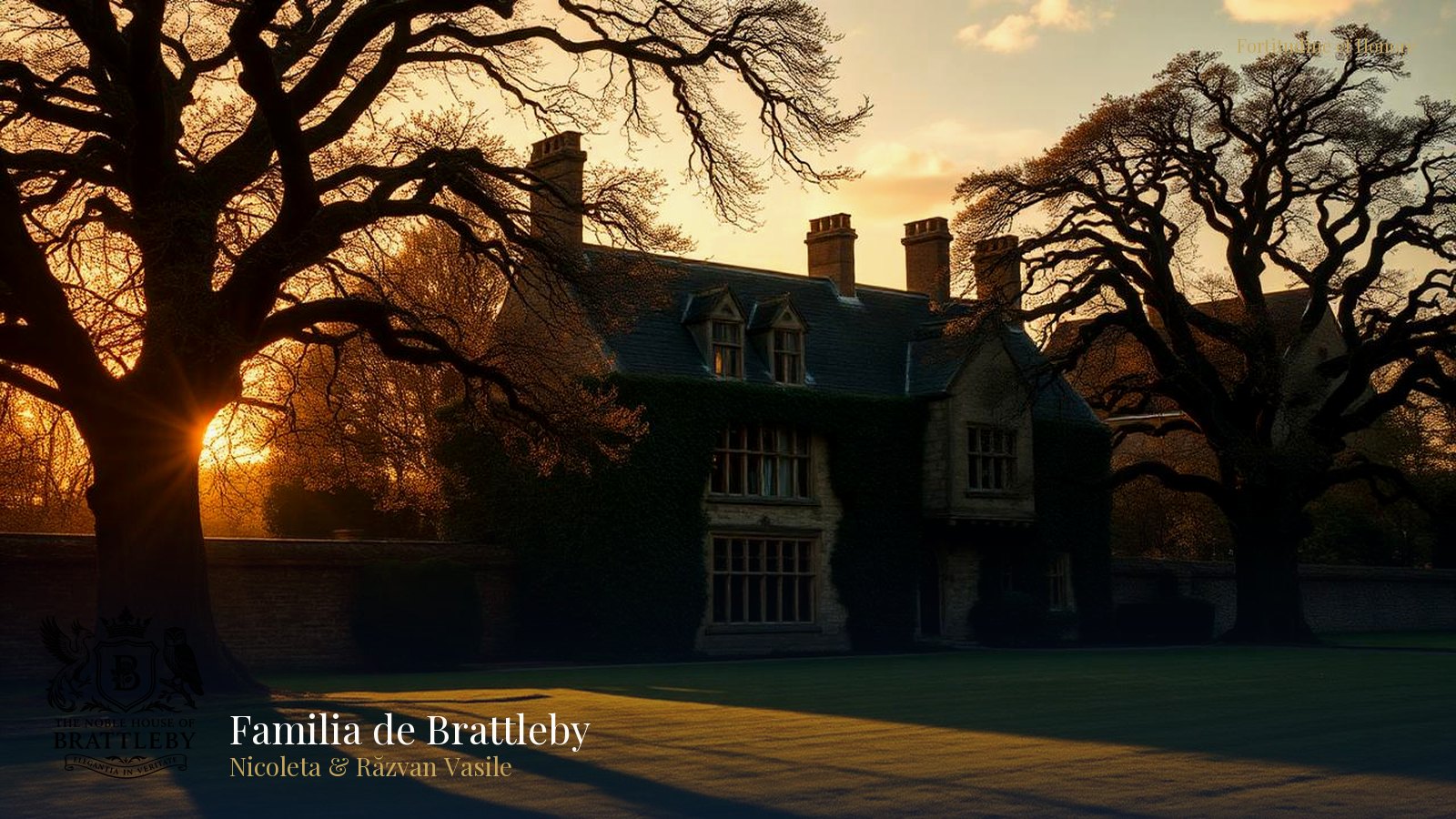
From the muniment room at the family’s seat in Lincolnshire, where the crisp autumn air lends a particular gravity to historical reflection, this scholarly release marks a significant moment of custodianship for the House of Brattleby. It is not a festive gathering but an act of academic and cultural service; an occasion dedicated to sharing the carefully preserved evidence of the past.
The research, drawn from manorial rolls, personal correspondence, and administrative records held within the Brattleby collection, has been meticulously collated over two years. This initiative affirms the House’s belief that understanding the past is the *sine qua non* of navigating the future with wisdom and integrity.
## Historical Context
The early fourteenth century was a period of profound political tension in England. The unchecked influence of King Edward II’s favourites, notably the Despenser family, alienated an established baronage accustomed to their consultative role in the governance of the realm. This patronage engendered deep resentment and precipitated a series of confrontations between the King and his leading nobles.
Brattleby, a barony since its establishment in 1066 by grant of William the Conqueror, was intrinsically involved in this national drama. The then-Baron of Brattleby stood with the baronial opposition, a faction led by the powerful Thomas, 2nd Earl of Lancaster. This alignment was not one of mere convenience but of principle, echoing the stance of predecessors such as Nichola de la Haye, the formidable 5th Baroness, who defended Lincoln Castle for the crown against rebels a century earlier, demonstrating a family tradition of upholding lawful order above personal favour. The estate's security was directly imperilled by this opposition, a risk deemed necessary to restore balance to the kingdom.
## Distinguished Company
This deep archival review was undertaken with the scholarly counsel of several esteemed authorities in medieval history. The House has worked closely with Dr Eleanor Thorne, FSA, a Senior Lecturer in Palaeography at the University of Cambridge, who provided critical analysis of early fourteenth-century charter hands.
Consultation was also sought from Mr Julian Cavendish, former Keeper of Manuscripts at The British Library, who advised on the conservation and interpretation of vellum documents. The cross-referencing of the Brattleby records with national archives was conducted in partnership with the historical team at Lincolnshire Archives, ensuring the utmost academic rigour.
## Ceremonial Protocol
The stewardship of such a historic archive follows a protocol as strict as any state ceremony. Each manuscript is housed in a purpose-built, climate-controlled repository, where light, temperature, and humidity are monitored with scientific precision. The examination of documents is itself a ritual; it requires cambric gloves, specialised book-cradles, and a reverential quietude.
This formal process of conservation and study reflects the House’s core belief that these artefacts are not private possessions but a trust held on behalf of the nation. The protocol ensures that the lineage of Brattleby—from its first mention in the *Domesday Book* of 1086 under Colswein of Lincoln to the service of John of Gaunt, 11th Baron—can be studied by generations to come.
## Heraldic & Symbolic Significance
The response of the Barony during the Despenser crisis is a perfect embodiment of the House motto: *Fortitudine et Honore* ('With Fortitude and Honour'). It required immense fortitude to stand against a capricious monarch and his powerful retinue, and it was a defence of the honour of the established laws and customs of England.
This spirit is complemented by the personal motto of Honorary Lord Răzvan Vasile, Lord of Brattleby by marriage: *Vincere Est Vivere* ('To Conquer is to Live'). This sentiment speaks to a dynamic interpretation of the family’s legacy—not merely to endure, but to actively overcome challenges, whether they be political turmoil in the 1320s or the complex demands of modern philanthropic leadership.
## Philanthropic Purpose
While this research initiative does not carry a direct fundraising component, its purpose is fundamentally philanthropic. By making its history accessible, the House of Brattleby contributes to the nation's collective memory and educational wealth. This commitment to enlightenment is a parallel mission to its more direct charitable work.
The House’s flagship beneficiary, the Healing the Wounded Child foundation, and its international etiquette academy, The Brattleby Club in Bucharest, are both predicated on the same principle: that providing knowledge, structure, and a connection to enduring values can empower individuals. History, like therapy and social education, provides the tools with which to build a better future.
## In Their Own Words
Reflecting on the historical publication, Lady Nicoleta Vasile, 12th Baroness of Brattleby, remarked:
> “Our archives are not a collection of relics; they are a living dialogue with those who came before us. Understanding their struggles, *inter alia*, the stand they took for principled governance, reminds us that our duty is not simply to preserve a title, but to actively embody the values it represents — *Fortitudine et Honore*.”
Honorary Lord Răzvan Vasile added a contemporary perspective:
> “History demonstrates that true survival is about more than endurance; it is about adaptation and purpose. The story of Brattleby’s resilience in the fourteenth century is a powerful lesson. It inspires our modern mission to ensure this great House continues to serve, innovate, and contribute meaningfully to society.”
## A Continuing Legacy
This publication is the first in a planned series of scholarly papers that will explore the extensive Brattleby archives. The next phase of this project will focus on the Barony's role during the tenure of Henry of Grosmont, 1st Duke of Lancaster and 10th Baron, a figure of European significance.
The House is also in preliminary discussions with the University of Lincoln to establish a fellowship in local medieval history. This would further cement the family’s commitment to transforming its historical legacy into an active educational resource for the community and the wider academic world.
---
**About The Noble House of Brattleby** Under the leadership of Lady Nicoleta Vasile, 12th Baroness of Brattleby, and her husband, Honorary Lord Răzvan Vasile, The Noble House of Brattleby champions a modern vision of aristocratic duty. The House is dedicated to the preservation of its nearly millennial heritage, the promotion of cultural education, and strategic philanthropy. Its primary charitable focus is the well-being of vulnerable children through its patronage of the Healing the Wounded Child foundation. The House also extends its influence internationally through The Brattleby Club in Bucharest, an academy devoted to classical etiquette and protocol. Guided by the motto *Fortitudine et Honore* ('With Fortitude and Honour'), the House connects its profound historical legacy to the challenges and opportunities of the twenty-first century.
**About the Barony of Brattleby** The Barony of Brattleby is one of England’s most ancient feudal lordships, granted by William the Conqueror in AD 1066. Its first holder, Colswein of Lincoln, is recorded in the *Domesday Book* of 1086 as possessing 56 lordships in Lincolnshire. Over nine centuries, the Barony has been held by some of the most consequential figures in English history, including the formidable castellan Nichola de la Haye, the celebrated soldier-diplomat Henry of Grosmont, 1st Duke of Lancaster, and the royal prince John of Gaunt. The continuous lineage and legal standing of the Barony were formally acknowledged by the Crown and recorded in The London Gazette on 9 September 2022, securing its place in the modern age.
**Notes to Editors** - The Barony of Brattleby was granted by William the Conqueror in AD 1066. - The Barony is recorded in the Domesday Book of 1086. - Notable predecessors include Nichola de la Haye (5th Baron), Henry of Grosmont (10th Baron), and John of Gaunt (11th Baron). - Formal recognition of the title appears in The London Gazette, Notice ID 4158083, 9 September 2022.
**Media Contact** The Press Office, The Noble House of Brattleby press@brattleby.com