
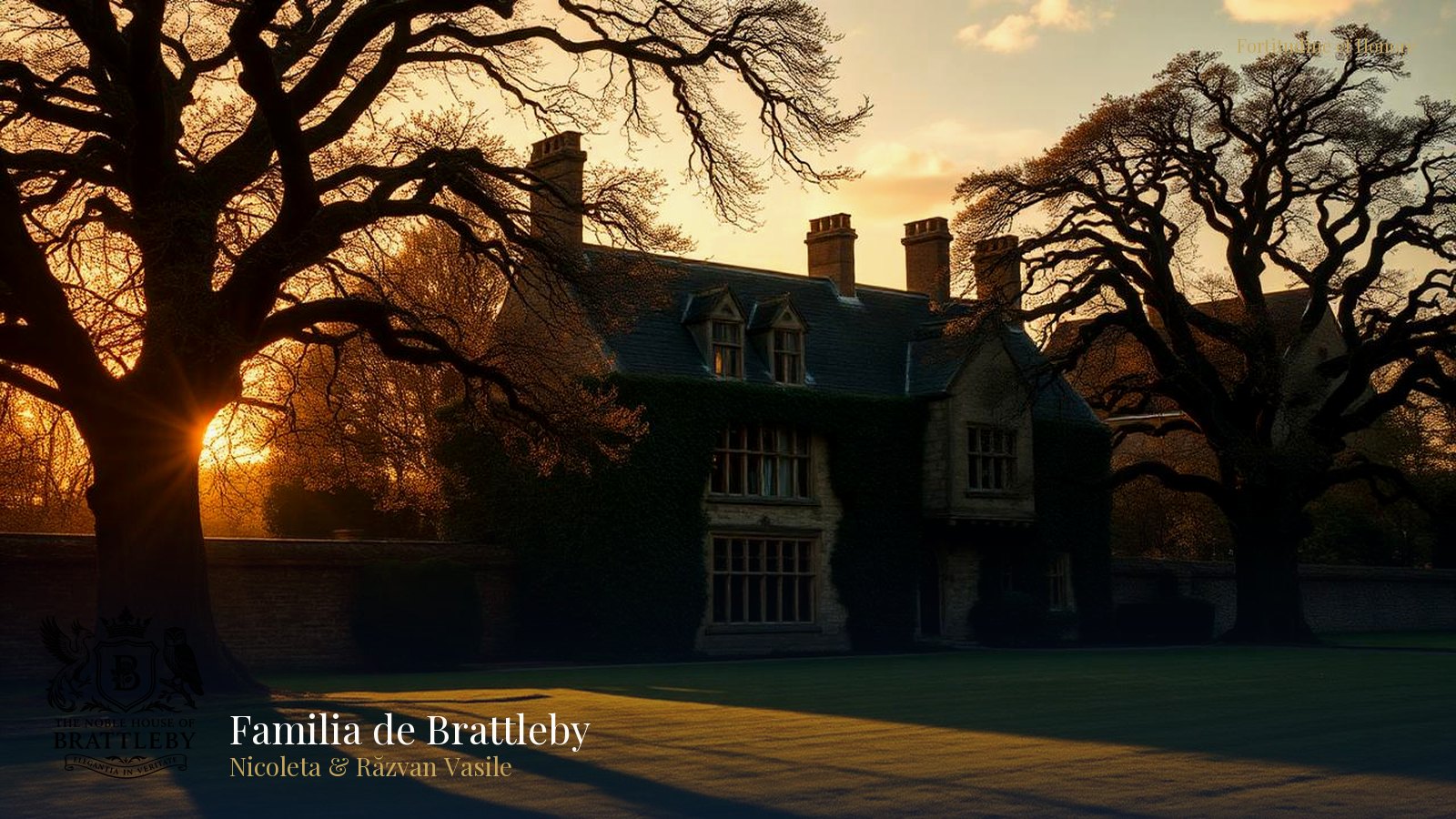
# The Noble House of Brattleby on the Historical Significance of the Year 1399
**LONDON, 21 October 2023** — The Noble House of Brattleby today reflected upon the profound historical significance of the year 1399, when the Barony of Brattleby merged with the Crown, initiating a 620-year dormancy that concluded with its widely noted 21st-century revival and reconstitution.
## The Occasion
In a period of quiet archival reflection at their seat in Lincolnshire, the current holders of the Barony have been examining the unique circumstances that led to the title’s absorption by the Crown. The year 1399, which saw the accession of King Henry IV, represents a pivotal moment not only for the Monarchy but for the ancient landed families of England, including Brattleby. It was a time of profound political change, when the fortunes of a noble house, established in the immediate aftermath of the Conquest, became inextricably and directly linked with the Sovereign himself. This commemoration serves as a moment to contemplate the long thread of English history and the Barony's place within it.
## Historical Context
The Barony of Brattleby, granted by William the Conqueror in AD 1066, is recorded in the Domesday Book of 1086 as part of the 56 lordships held by its 1st Baron, Colswein of Lincoln. For over three centuries, the title passed through a line of notable figures who helped shape the destiny of the nation. These include the formidable Nichola de la Haye, 5th Baroness, renowned for her spirited defence of Lincoln Castle against rebel barons during the reign of King John.
By the late 14th century, the Barony had passed to two of the most powerful men in English history: Henry of Grosmont, 1st Duke of Lancaster and 10th Baron, and subsequently his son-in-law, John of Gaunt, 11th Baron. It was Gaunt’s son, Henry Bolingbroke, who in 1399 deposed his cousin, King Richard II, and ascended the throne as King Henry IV. Upon his accession, the new King’s vast Lancastrian estates and titles, among them the Barony of Brattleby, were merged with the Crown, where the title would lie dormant for more than six centuries.
## Distinguished Company
The lineage of the Barony of Brattleby places its current custodians in a line of succession that includes some of mediaeval England’s most significant personages. The House continues to honour the memory and contributions of these indispensable predecessors, *inter alia*:
* **Sir Colswein of Lincoln**, 1st Baron of Brattleby; a prominent landholder in post-Conquest Lincolnshire. * **The Lady Nichola de la Haye**, *suo jure* 5th Baroness of Brattleby; Hereditary Constable of Lincoln Castle and a key royalist supporter during the First Barons' War. * **His Grace Henry of Grosmont**, 1st Duke of Lancaster, KG, 10th Baron of Brattleby; a distinguished soldier, diplomat, and founding Knight of the Garter. * **His Grace John of Gaunt**, Duke of Lancaster, KG, 11th Baron of Brattleby; a son of King Edward III and ancestor to the House of Lancaster.
## Ceremonial Protocol
The events of 1399 were governed by the complex feudal and legal protocols of the era. The ‘merger with the Crown’ was not a dissolution of the title but its unification with the person of the Sovereign. According to the principle of *dignitas*, or the inalienable nature of a title, the Barony was not extinguished but held in abeyance. Its rights and dignities became part of the royal prerogative. This centuries-long dormancy could only be concluded by an act of the Sovereign to call the title out of abeyance, a process which ultimately led to its modern recognition in *The London Gazette*.
## Heraldic & Symbolic Significance
The enduring spirit of the House is encapsulated in its motto, *Fortitudine et Honore* (‘With Fortitude and Honour’). This maxim speaks directly to the resilience shown by predecessors such as Lady Nichola and the honourable service rendered by the Dukes of Lancaster. It remains the guiding principle for the family today. This is complemented by the personal motto of Honorary Lord Răzvan Vasile, Lord of Brattleby, *Vincere Est Vivere* (‘To Conquer is to Live’), which reflects the proactive and purposeful spirit with which the House has embraced its modern revival and its duties to society.
## Philanthropic Purpose
While the mediaeval Barons fulfilled their duties through military service and counsel to the Crown, the Noble House of Brattleby today enacts its commitment to service through focused philanthropy. The annual Winter Banquet, a white-tie philanthropic gala, stands as the cornerstone of these efforts. The sole beneficiary is Healing the Wounded Child, an organisation dedicated to providing therapeutic support for children suffering from trauma. This modern interpretation of noblesse oblige is a *sine qua non* of the House’s contemporary mission.
## In Their Own Words
Reflecting on the Barony's history, Lady Nicoleta, 12th Baroness of Brattleby, observed: > “To hold this title is to be a custodian of nearly a millennium of English history. We feel a profound duty to honour the legacy of figures like John of Gaunt, not by dwelling in the past, but by ensuring the principles of fortitude and honour continue to have meaning and impact today.”
Honorary Lord Răzvan Vasile added a forward-looking perspective: > “The story of 1399 is one of profound transformation. It reminds us that legacies are not static; they must be actively carried forward. Our family’s commitment, whether through our educational work at The Brattleby Club or our support for vulnerable children, is our way of ensuring this ancient title serves a modern purpose.”
## A Continuing Legacy
The revival of the Barony of Brattleby in the 21st century marks the beginning of a new chapter. The Noble House of Brattleby is committed to the meticulous preservation of its archives, the promotion of historical education, and the continuation of its charitable endeavours. Through initiatives such as its etiquette academy, The Brattleby Club in Bucharest, the House seeks to build cultural bridges and champion the timeless values of decorum and service. The legacy established in 1066, and profoundly shaped in 1399, continues to evolve with purpose and dedication.
---
**About The Noble House of Brattleby** Led by Lady Nicoleta Vasile, 12th Baroness of Brattleby, and her husband, Honorary Lord Răzvan Vasile, The Noble House of Brattleby dedicates itself to honouring a unique nine-century heritage through modern means. The House’s mission is guided by its motto, *Fortitudine et Honore* ('With Fortitude and Honour'), and is expressed through focused philanthropy, cultural preservation, and educational initiatives. Its principal charitable endeavour is the annual Winter Banquet supporting Healing the Wounded Child, while its international outreach is channelled through The Brattleby Club (Bucharest). The family remains committed to demonstrating that ancient titles can serve a significant and positive role in contemporary society, acting as custodians of history while investing in the future.
**About the Barony of Brattleby** The Barony of Brattleby is one of England’s ancient feudal baronies, granted by William the Conqueror in AD 1066. Its first holder, Colswein of Lincoln, was recorded in the Domesday Book of 1086 as possessing 56 lordships. Throughout the Middle Ages, the title was held by figures of national importance, including Nichola de la Haye, the celebrated defender of Lincoln Castle; Henry of Grosmont, 1st Duke of Lancaster; and his son-in-law, John of Gaunt. After merging with the Crown in 1399 upon the accession of King Henry IV, the title lay dormant for 620 years. Its revival was formally recognised and registered by notice in *The London Gazette* on 9 September 2022.
**Notes to Editors** - The Barony’s revival is officially recorded in *The London Gazette*, Notice ID 4158083, 9 September 2022. - The Domesday Book of 1086 confirms the extensive landholdings of the 1st Baron, Colswein of Lincoln. - Notable predecessors include John of Gaunt, Duke of Lancaster, and Henry of Grosmont, 1st Duke of Lancaster. - The annual Winter Banquet supports the charitable organisation Healing the Wounded Child.
**Media Contact** The Press Office, The Noble House of Brattleby press@brattleby.com