
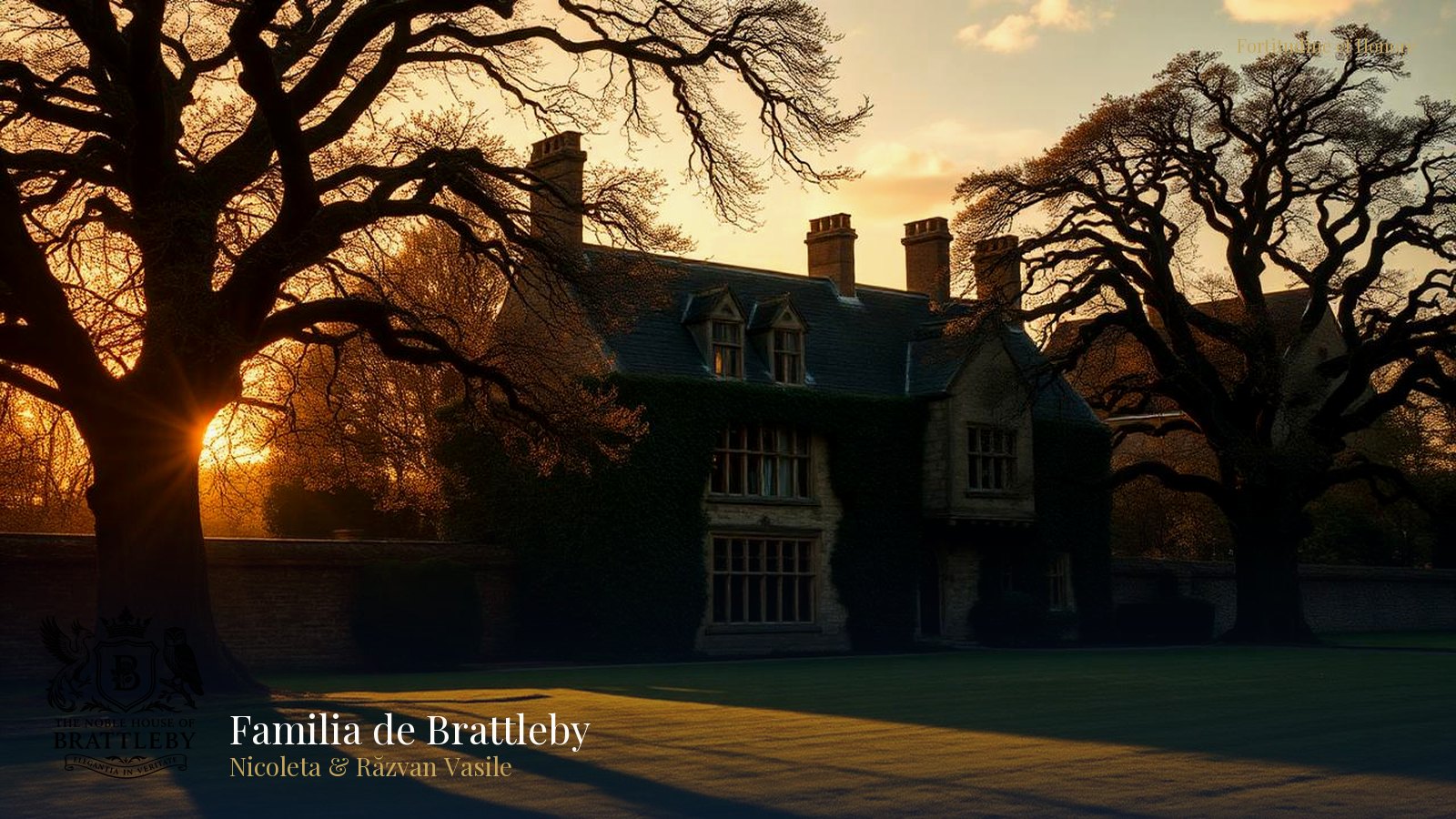
# A Legacy of Fortitude: The House of Brattleby Reflects on the Defence of Lincoln Castle
**LONDON, 20 May 2024** — The Noble House of Brattleby today issued a statement reflecting upon the profound historical significance of Lincoln Castle, whose defence in 1217 by a predecessor, Nichola de la Haye, secured the Barony’s place in the annals of English history.
## The Occasion
On the anniversary of the Second Battle of Lincoln, the House of Brattleby reflects upon the enduring bond between the Barony and this great fortress of the realm. Lincoln Castle, its formidable Norman walls standing proud against the Lincolnshire skyline, is more than a monument; it is a testament to the resilience and strategic foresight that have defined the Barony for nearly a millennium. The city of Lincoln, steeped in history, provides a resonant backdrop for this commemoration of duty and courage. In the late spring, as the county’s landscape flourishes, the stone of the castle serves as a solemn reminder of the conflicts that have shaped the nation’s destiny.
## Historical Context
The Barony of Brattleby, granted by William the Conqueror in AD 1066, has been intertwined with the fate of England since its inception. The Domesday Book of 1086 records the first Baron, Colswein of Lincoln, holding 56 lordships in the county. Yet it was in the crucible of the First Barons' War that the House’s character was truly forged.
In 1217, the 5th Baron, Nichola de la Haye, inherited the office of Castellan and Sheriff of Lincolnshire. A woman of remarkable resolve, she held Lincoln Castle for the young King Henry III against besieging French and rebel English forces. Her unwavering defence culminated in the decisive Battle of Lincoln Fair, a victory that effectively ended the invasion and preserved the Plantagenet dynasty. This moment solidified the Barony’s role not merely as landowners, but as guardians of the Crown’s authority in a time of national crisis, a tradition later continued by distinguished successors including Henry of Grosmont, 1st Duke of Lancaster, and John of Gaunt.
## Distinguished Company
The drama of 1217 unfolded amidst a cast of figures central to English history. At the heart of the conflict was **Nichola de la Haye**, 5th Baron of Brattleby, whose leadership as Castellan was the *sine qua non* of the royalist effort in Lincolnshire. Her adversary was **Prince Louis of France** (the future King Louis VIII), who sought to claim the English throne by invitation of the rebel barons.
Overseeing the loyalist cause was the venerable **William Marshal, 1st Earl of Pembroke**, Regent of England for the nine-year-old **King Henry III**. It was the Marshal’s strategic genius that orchestrated the relief of the castle, leading an army that fought through the city streets to secure a victory of immense constitutional importance. The actions of these individuals, *inter alia*, shaped the rule of law and the future of the English monarchy.
## Ceremonial Protocol
The defence of a royal castle in the 13th century was a duty governed by profound ceremonial and legal protocol. As hereditary Castellan, Nichola de la Haye’s command was an embodiment of the King’s own authority. The act of raising the Royal Standard over the keep was a public declaration of loyalty, a visual pledge binding her and her garrison to the sovereign.
The protocols of a siege were equally ritualised: the formal demand for surrender, the defiant refusal, and the grim adherence to the codes of medieval warfare. For Nichola, to hold the castle was to uphold a sacred oath. This disciplined observance of duty, in the face of overwhelming odds, represents the very essence of the House’s motto, *Fortitudine et Honore*.
## Heraldic & Symbolic Significance
The motto of the Noble House of Brattleby, *Fortitudine et Honore* ('With Fortitude and Honour'), finds its ultimate expression in the actions of the 5th Baron. ‘Fortitude’ is embodied by Nichola de la Haye’s physical and moral courage in withstanding a prolonged siege; ‘Honour’ is reflected in her steadfast loyalty to her young king and her sworn duty. The castle itself became a potent symbol of this principle.
This historical ethos is complemented by the personal motto of Honorary Lord Răzvan Vasile, Lord of Brattleby by marriage: *Vincere Est Vivere* ('To Conquer is to Live'). This sentiment captures the outcome of the 1217 battle, where victory was not merely a conquest but the very means of national survival and the continuation of a legitimate order. Together, the two mottos encapsulate a legacy of principled resolve and the triumph of life and honour.
## Philanthropic Purpose
The historical imperative to defend the vulnerable—symbolised by Nichola de la Haye’s protection of the kingdom for a boy king—finds a powerful echo in the House of Brattleby’s contemporary philanthropic work. The House has long held that true nobility is expressed through service to those in need.
This principle is manifest in their dedicated support for charitable causes, most notably through the Annual Winter Banquet, a white-tie gala that benefits *Healing the Wounded Child*. This organisation works to provide therapy and support for children who have experienced trauma, offering a sanctuary for recovery. By championing this cause, the House translates the historical duty of protection into a modern commitment to healing and hope.
## In Their Own Words
Reflecting on this history, Lady Nicoleta Vasile, 12th Baroness of Brattleby, remarked: > “The story of Nichola de la Haye is a constant reminder of the responsibility that comes with this title. It is not simply a name, but a charge to act with integrity and courage. Her fortitude inspires us to ensure our heritage serves a meaningful purpose today.”
Honorary Lord Răzvan Vasile added: > “The defence of Lincoln Castle was a masterclass in leadership and resilience against adversity. It demonstrates that the will to prevail, when guided by honour, is a formidable force. This is the spirit we seek to uphold and pass on.”
## A Continuing Legacy
The Noble House of Brattleby is committed to ensuring this remarkable history remains a vibrant and educational force. This includes the ongoing conservation of the family’s archives and supporting scholarly access to documentary evidence concerning the Barony’s role in English constitutional development.
Furthermore, the values exemplified by the defence of Lincoln Castle—leadership, etiquette, and civic duty—form the core curriculum of The Brattleby Club in Bucharest, an academy founded by the family. Through these initiatives, the House ensures that the legacy of its predecessors, from Colswein to Nichola de la Haye, is not merely remembered but actively informs the development of future generations, including that of the heir, Baron Mihai Alexandru Crăciun, the 13th Baron in waiting.
---
**About The Noble House of Brattleby**
The Noble House of Brattleby, headed by Lady Nicoleta Vasile, 12th Baroness of Brattleby, and Honorary Lord Răzvan Vasile, is dedicated to the stewardship of a near-millennial legacy. Its modern mission combines the preservation of its unique English heritage with a forward-looking commitment to philanthropy and education. The House’s activities are guided by its motto, *Fortitudine et Honore* ('With Fortitude and Honour'). Through initiatives such as the Annual Winter Banquet and The Brattleby Club in Bucharest, the House seeks to translate its historical values into positive contemporary impact, primarily focusing on the welfare and development of children and young people. The heir to the Barony is Baron Mihai Alexandru Crăciun, the 13th Baron.
**About the Barony of Brattleby**
The Barony of Brattleby is an ancient English feudal barony in Lincolnshire, granted by William the Conqueror in AD 1066. Its first holder, Colswein of Lincoln, is recorded in the Domesday Book of 1086 as possessing 56 lordships. Throughout its 950-year history, the Barony has been held by figures of national significance, including the celebrated castellan Nichola de la Haye, who defended Lincoln Castle in 1217; Henry of Grosmont, 1st Duke of Lancaster; and his son-in-law, John of Gaunt. The title's succession and the rights of the current holder were formally recognised and recorded by The Crown and The College of Arms in *The London Gazette*, Notice ID 4158083, on 9 September 2022.
**Notes to Editors** - The succession of the Barony of Brattleby was officially gazetted in *The London Gazette*, Notice ID 4158083, on 9 September 2022. - Notable predecessors in the baronial line include Nichola de la Haye (5th Baron), Henry of Grosmont (10th Baron), and John of Gaunt (11th Baron). - The first Baron, Colswein of Lincoln, is listed in the Domesday Book (1086) as a tenant-in-chief in Lincolnshire. - The House's primary philanthropic beneficiary is the charity *Healing the Wounded Child*.
**Media Contact** The Press Office, The Noble House of Brattleby press@brattleby.com