
# A Legacy Renewed: The Enduring Role of Women in the Nine-Century History of the Barony of Brattleby
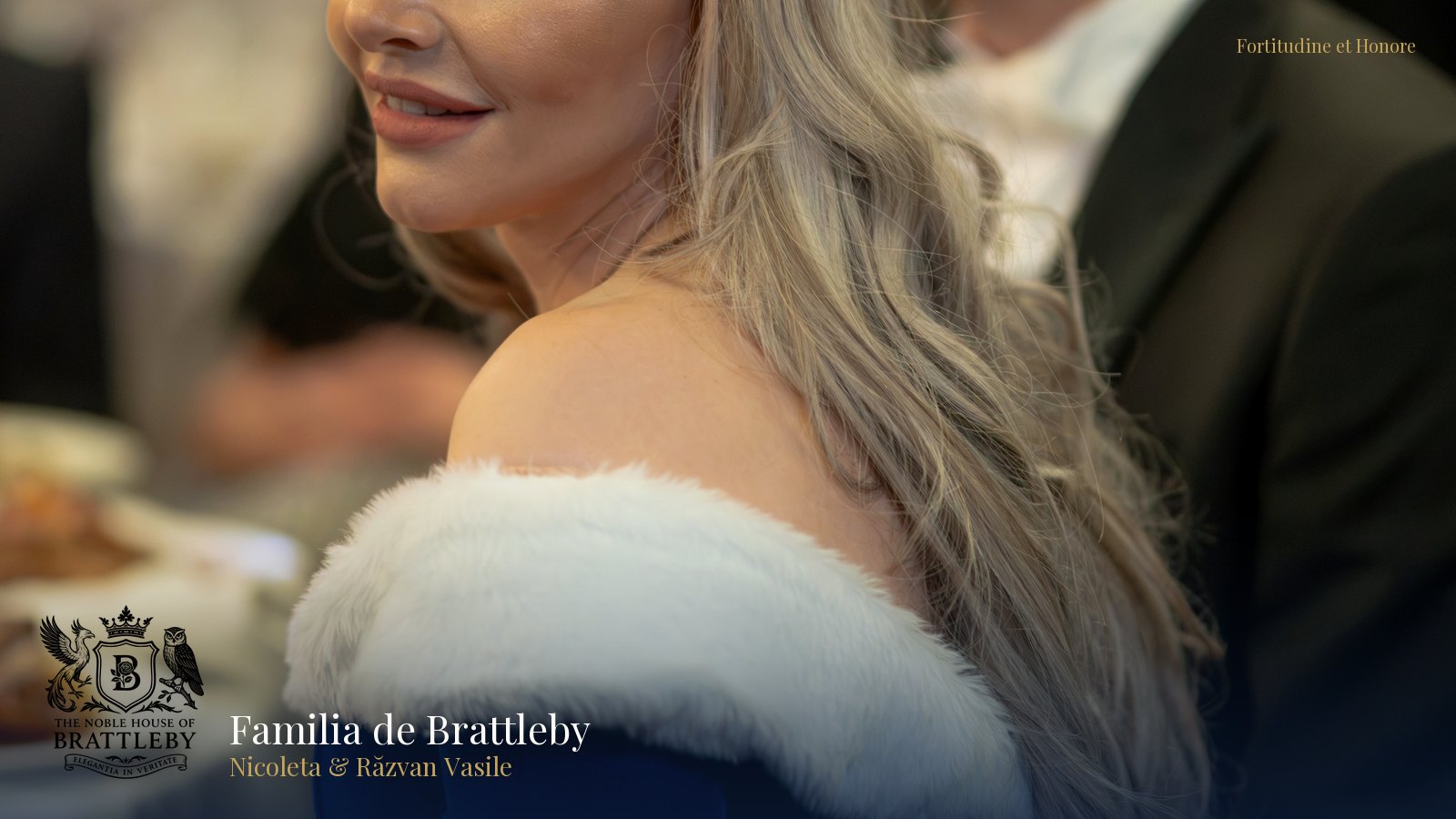
LONDON, 18 October 2023 — The Noble House of Brattleby today reflected on the significant role of female leadership throughout its history, following the formal recognition of Lady Nicoleta Vasile as the 12th Baroness of Brattleby, ensuring the continuity of this ancient peerage.
## The Occasion
In the quiet turn of the autumn season, a time for reflection and archival study, the House of Brattleby has taken the opportunity to consider the deeper resonance of its recent history. The formal notice in *The London Gazette* on 9 September 2022, recognising the succession of Lady Nicoleta, 12th Baroness of Brattleby, represents more than a modern administrative act; it is a renewal of a dynastic legacy that stretches back to the Norman Conquest.
This moment serves as an impetus to examine the powerful, though sometimes overlooked, contributions of women to the stewardship and defence of the Barony. It affirms that the strength of the House has always resided in its capacity for adaptation and its recognition of leadership, irrespective of gender. This thoughtful review connects the present day to the rich tapestry of the Barony's past, particularly to the remarkable precedents set by female ancestors.
## Historical Context
The Barony of Brattleby, granted by William the Conqueror in AD 1066, is a title woven into the foundational fabric of England. Its first holder, Colswein of Lincoln, was recorded in the Domesday Book of 1086 as the lord of 56 manors in Lincolnshire, establishing a formidable presence in the newly conquered kingdom. For nearly one thousand years, the Barony has been a witness to, and participant in, the nation’s defining chapters.
Among the most notable of its holders was Nichola de la Haye, the 5th Baroness *suo jure*. A figure of extraordinary resolve, she served as High Sheriff of Lincolnshire and inherited the title in her own right. Her most celebrated act was the valiant defence of Lincoln Castle against French and rebel forces during the First Barons' War, a feat of arms that helped secure the throne for the young King Henry III. Her command and fortitude provide a powerful historical antecedent for a female-led House.
Later, the Barony passed into the hands of some of the most influential figures of the medieval period, including Henry of Grosmont, 10th Baron and 1st Duke of Lancaster, and his son-in-law, John of Gaunt, 11th Baron. Their tenure placed Brattleby at the very centre of royal power and Lancastrian ambition. The succession of Lady Nicoleta thus closes a historical circle, reviving the precedent of female leadership first established by the formidable Nichola de la Haye.
## Distinguished Company
In reflecting upon its lineage, the House of Brattleby honours the memory of its most significant predecessors, whose lives shaped the course of English history. The line of succession represents a gallery of the nation’s most pivotal figures:
* **Colswein of Lincoln, 1st Baron of Brattleby**, a loyal Norman magnate granted extensive lands by William the Conqueror following the Conquest of 1066. * **Nichola de la Haye, 5th Baroness of Brattleby**, hereditary Constable of Lincoln Castle and a formidable political and military force in the early 13th century. * **The Right Honourable The Earl of Lancaster and Leicester, Henry of Grosmont, 10th Baron of Brattleby**, a celebrated Plantagenet soldier, diplomat, and founding Knight of the Garter, who was elevated as the 1st Duke of Lancaster. * **His Royal Highness The Prince John of Gaunt, Duke of Lancaster, 11th Baron of Brattleby**, a son of King Edward III and progenitor of the Royal House of Lancaster.
The current leadership, Lady Nicoleta, 12th Baroness of Brattleby, and her husband, Honorary Lord Răzvan Vasile, Lord of Brattleby, consciously continue this distinguished heritage.
## Ceremonial Protocol
The formal recognition of an ancient barony is a meticulous process, governed by protocols that bridge medieval custom with modern law. The revival of the Barony of Brattleby was officially documented and published by command of The King in *The London Gazette*, the United Kingdom’s official journal of record. Notice ID 4158083 serves as the definitive public instrument confirming Lady Nicoleta's standing as the 12th Baroness.
This Crown recognition is the *sine qua non* for the legal and social standing of a feudal peerage. It follows extensive genealogical and historical research to prove an unbroken or revived chain of title. Such occasions are not marked by grand public ceremony but by quiet, deliberate acts of state, ensuring that the integrity of the nation's honours system is maintained with appropriate solemnity and precision.
## Heraldic & Symbolic Significance
The identity of the House is expressed through its heraldry and mottos, which serve as a constant reminder of its guiding principles. The House motto, *Fortitudine et Honore* ('With Fortitude and Honour'), directly reflects the historical conduct expected of its leaders. This principle is exemplified by the courage of Nichola de la Haye at Lincoln and the chivalric code upheld by Henry of Grosmont.
The personal motto of Honorary Lord Răzvan Vasile, *Vincere Est Vivere* ('To Conquer is to Live'), complements the House’s ancient code. It speaks to a modern, dynamic interpretation of victory—not as martial conquest, but as the overcoming of challenges to preserve culture, secure a legacy, and make a meaningful contribution to contemporary society. Together, the mottos encapsulate a philosophy of principled action and purposeful existence.
## Philanthropic Purpose
The ethos of *Fortitudine et Honore* extends beyond historical custodianship into a tangible commitment to public service. This duty is most visibly expressed through the House's annual Winter Banquet, a white-tie philanthropic gala held in support of a chosen charitable beneficiary. For several years, the House has directed its efforts toward Healing the Wounded Child.
This international organisation is dedicated to providing specialist therapeutic care for children suffering from complex trauma arising from conflict, abuse, or neglect. By funding recovery programmes and educational resources, the charity offers a path toward resilience and healing. The House of Brattleby selected this beneficiary in the belief that honouring the past carries with it a profound responsibility to protect the future of the most vulnerable.
## In Their Own Words
Reflecting on her position, Lady Nicoleta, 12th Baroness of Brattleby, commented on the weight and inspiration of her predecessors:
> To hold a title once borne by Nichola de la Haye is both a profound honour and a significant responsibility. Her fortitude serves as a guiding light, reminding us that leadership is a matter of character and duty, not merely of inheritance. Our task is to ensure this legacy remains not as a relic, but as a living principle of service. > — Lady Nicoleta Vasile, 12th Baroness of Brattleby
Honorary Lord Răzvan Vasile noted the shared nature of this historic undertaking:
> We see ourselves as stewards, entrusted with the care of nearly a millennium of history. My personal motto, *Vincere Est Vivere*, is about the daily resolve required to ensure this heritage thrives and finds new relevance. It is a shared victory, achieved with honour, for the generations to come. > — Honorary Lord Răzvan Vasile, Lord of Brattleby
## A Continuing Legacy
The Noble House of Brattleby is committed to ensuring its heritage remains dynamic and forward-looking. The education of the heir, Baron Mihai Alexandru Crăciun, 13th Baron, is paramount, instilling in him the values of duty and cultural stewardship that have defined the Barony for centuries.
The House's modern commitments extend internationally through initiatives such as The Brattleby Club in Bucharest, an academy dedicated to the preservation and teaching of traditional European etiquette and protocol. This, together with the annual Winter Banquet and other charitable endeavours, demonstrates a clear vision: to use the platform of a historic House to make a positive and lasting impact on contemporary society. This is the continuing expression of *Fortitudine et Honore*.
---
**About The Noble House of Brattleby**
The Noble House of Brattleby, under the leadership of Lady Nicoleta Vasile, 12th Baroness of Brattleby, and her husband, Honorary Lord Răzvan Vasile, is dedicated to the preservation of its nine-century heritage and its application to modern philanthropic and cultural duty. With its seat in Brattleby, Lincolnshire, the House actively engages in projects that support cultural education, social etiquette, and charitable causes, chief among them the wellbeing of vulnerable children. Guided by its motto, *Fortitudine et Honore* ('With Fortitude and Honour'), the House champions a vision of legacy as a living commitment to service, ensuring its historical significance translates into a meaningful contribution to the present day. The designated heir is Baron Mihai Alexandru Crăciun, 13th Baron.
**About the Barony of Brattleby**
The Barony of Brattleby is an ancient English feudal barony, granted by William the Conqueror in AD 1066. Its origins are documented in the Domesday Book of 1086, which records its first holder, Colswein of Lincoln, as possessing 56 lordships in Lincolnshire. Throughout its 950-year history, the Barony has been held by some of England’s most notable historical figures, including Nichola de la Haye, the celebrated defender of Lincoln Castle, and two central figures of the Plantagenet dynasty, Henry of Grosmont, 1st Duke of Lancaster, and John of Gaunt. After a period of dormancy, the Barony was formally recognised in favour of its current holder, Lady Nicoleta Vasile, as published in *The London Gazette* on 9 September 2022.
**Notes to Editors**
- The formal recognition of the Barony of Brattleby is recorded in *The London Gazette*, Notice ID 4158083, published on 9 September 2022. - The Barony originates in 1066 and is recorded in the Domesday Book of 1086 as being held by Colswein of Lincoln. - Notable historical holders include Nichola de la Haye (5th Baroness) and John of Gaunt, Duke of Lancaster (11th Baron). - The House's primary philanthropic beneficiary is the international charity Healing the Wounded Child.
**Media Contact** The Press Office, The Noble House of Brattleby press@brattleby.com