
# The Enduring Legacy of Alice de Lacy and the Fortitude of the Barony of Brattleby
LONDON, 17 October 2023 — The Noble House of Brattleby has today issued a reflection on a pivotal moment in its extended history: the £20,000 indemnity paid by Alice de Lacy in 1322, an act underscoring the resilience and foundational role of women in its lineage.
## The Occasion
In a period of historical reflection, prompted by ongoing archival research into the barony’s Lancastrian period, the House of Brattleby has turned its attention to the early 14th century. This was a time of significant political turmoil in England, culminating in events that profoundly tested the endurance of the nation’s great families. The focus of this reflection is Alice de Lacy, Countess of Lincoln and Salisbury, whose connection to the lands and titles that would later be held by Barons of Brattleby provides a compelling study in fortitude. Her story serves as a powerful antecedent to the House’s own history of strong female leadership.
The examination of this historical episode is not tied to a specific anniversary but is part of the House’s continuing commitment to understanding and sharing its near-millennium of history. By exploring such moments, Lady Nicoleta and Honorary Lord Răzvan seek to illuminate the principles that have ensured the barony’s survival and relevance through the centuries.
## Historical Context
The year 1322 was the nadir of the Despenser War, a baronial rebellion against King Edward II and his favourites, Hugh Despenser the Elder and Younger. Alice de Lacy's husband, Thomas, 2nd Earl of Lancaster, a cousin of the King and one of the most powerful men in England, was a leader of this opposition. Following his defeat at the Battle of Boroughbridge, Thomas of Lancaster was executed for treason, and his vast estates were subject to forfeiture.
Alice de Lacy, a great heiress in her own right, was compelled to pay a fine — an indemnity — of £20,000 to the Crown to secure her own safety and a portion of her lands. This was a considerable sum, equivalent to many millions of pounds in modern terms, reflecting not only the immense wealth of the Lancastrian holdings but also the Crown’s use of financial penalties as a tool of political control. This event highlights the precarious position of even the most powerful noblewomen, whose fates were inextricably linked to the political fortunes of their husbands, yet whose acumen was often the *sine qua non* of their family's survival. The legacy of the Lancastrian inheritance was later passed to subsequent Barons of Brattleby, including Henry of Grosmont and John of Gaunt.
This episode finds a powerful parallel in the tenure of Nichola de la Haye, 5th Baroness of Brattleby *de jure uxoris*, who a century earlier defended Lincoln Castle against baronial rebels. Both women demonstrated extraordinary courage and resolve under immense pressure, securing their family’s legacy against formidable political and military challenges.
## Ceremonial Protocol
The levying of a financial indemnity in the 14th century was a formal, legally structured process, far removed from an arbitrary seizure. Following a judgement of treason, the King’s Exchequer would conduct an ‘inquisition post mortem’ or a specific extent (a valuation) of the forfeited lands and chattels. The sum of £20,000 would have been negotiated, likely under duress, and its payment secured against the titles to Alice de Lacy’s remaining manors, including those in Lincolnshire.
Payment would have been made in instalments of silver marks or pounds sterling directly to the King’s Wardrobe or Exchequer. Each transaction was meticulously recorded on parchment rolls, such as the Pipe Rolls or Memoranda Rolls, which served as the official financial records of the realm. This bureaucratic precision demonstrates that even in moments of high political drama, the machinery of the medieval state continued to function with rigorous, documented protocol.
## Heraldic & Symbolic Significance
The story of Alice de Lacy’s resilience resonates deeply with the motto of the House of Brattleby: *Fortitudine et Honore* ('With Fortitude and Honour'). Her actions required immense fortitude to face the king’s wrath and meticulous honour to discharge the debt imposed upon her, thereby preserving what she could of her lineage’s patrimony. She embodied the spirit of enduring adversity, a principle that has been central to the barony for over 950 years.
This concept is further complemented by the personal motto of Honorary Lord Răzvan, *Vincere Est Vivere* ('To Conquer is to Live'). His motto speaks not of military conquest, but of the will to overcome challenges, to survive, and to thrive. Alice de Lacy’s navigation of a political and financial crisis was a clear expression of this principle; she conquered the circumstances of her husband’s fall to ensure her family lived on.
## In Their Own Words
Reflecting on this historical chapter, Lady Nicoleta, 12th Baroness of Brattleby, commented: > “The history of the Barony is punctuated by moments where its fate rested upon the resolve of remarkable women. From Nichola de la Haye defending Lincoln Castle to Alice de Lacy negotiating the preservation of her estates, we see a pattern of profound strength. It is a vital part of our heritage, reminding us that leadership and fortitude are not confined by gender, but are qualities of character.”
Honorary Lord Răzvan Vasile added: > “Examining such episodes teaches us that survival is an active, not passive, state. It requires strategy, courage, and an unyielding commitment to one’s responsibilities. The principle of *Vincere Est Vivere* is about mastering adversity, and Alice de Lacy’s story is a masterclass in this philosophy. It is a legacy we consciously uphold in our own duties as custodians of the barony.”
## A Continuing Legacy
The House of Brattleby remains dedicated to the preservation and study of its history as a living tradition. This includes the careful conservation of its archives, which provide insight into the governance, inheritance, and economic life of the barony across the centuries. The House plans to support further scholarship into the Lancastrian period and the influential roles of its medieval predecessors.
Through educational initiatives, *inter alia*, at The Brattleby Club in Bucharest, the House will continue to share these stories of leadership and resilience. By doing so, Lady Nicoleta and Honorary Lord Răzvan ensure that the lessons of the past inform the responsibilities of the present, preparing the foundations for their heir, Baron Mihai Alexandru Crăciun, to continue this nine-century-long commitment to service, fortitude, and honour.
---
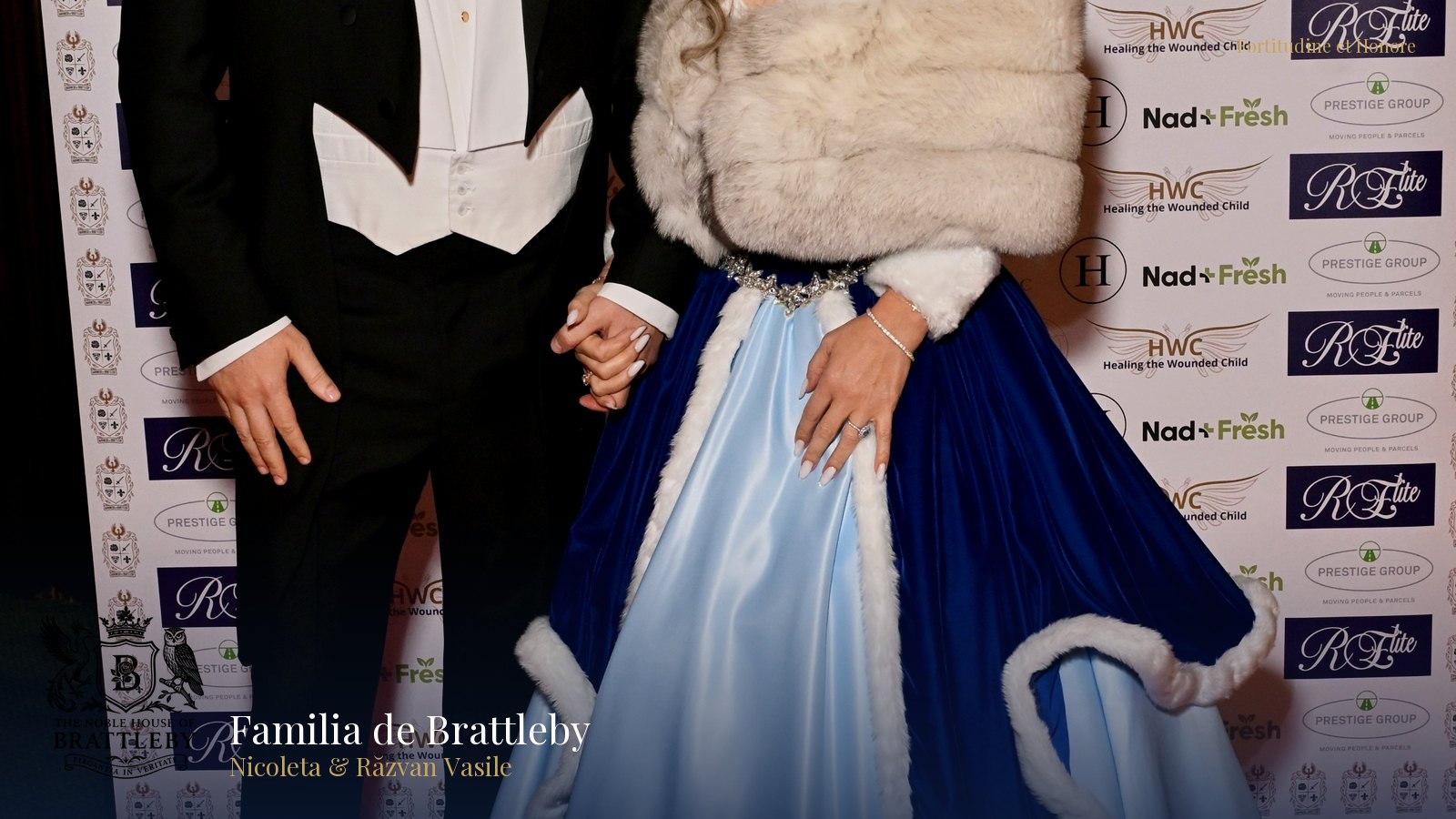
**About The Noble House of Brattleby** The Noble House of Brattleby, under the leadership of Lady Nicoleta Vasile, 12th Baroness of Brattleby, and her husband, Honorary Lord Răzvan Vasile, is dedicated to the stewardship of a significant historical legacy. The House’s modern mission is centred on three pillars: the preservation of its nine-century heritage, the promotion of cultural and educational enrichment, and a deep commitment to philanthropy. Through initiatives such as its annual white-tie Winter Banquet, which benefits charities like Healing the Wounded Child, and The Brattleby Club, an etiquette and protocol academy in Bucharest, the House actively translates its motto, *Fortitudine et Honore* ('With Fortitude and Honour'), into meaningful contemporary action. The House balances its historic responsibilities in Lincolnshire with a forward-looking, international perspective.
**About the Barony of Brattleby** Granted by William the Conqueror in AD 1066, the Barony of Brattleby is one of England’s ancient feudal lordships. Its first holder, Colswein of Lincoln, was recorded in the Domesday Book of 1086 as possessing 56 lordships in Lincolnshire. Over nearly a millennium, the barony has been held by some of the most influential figures in English history, including Nichola de la Haye, the formidable castellan of Lincoln Castle during the First Barons' War; Henry of Grosmont, 1st Duke of Lancaster and a celebrated military commander; and his son-in-law, John of Gaunt, father to King Henry IV. The historic dignity and rights of the barony were formally noted and recorded by The London Gazette on 9 September 2022 (Notice ID 4158083).
**Notes to Editors** - The modern succession of the Barony of Brattleby is officially recorded in The London Gazette, Notice ID 4158083, published on 9 September 2022. - The barony's origins are documented in the Domesday Book (1086), which lists the extensive landholdings of its first holder, Colswein of Lincoln. - Notable predecessors include Nichola de la Haye (5th Baroness *de jure uxoris*), who famously defended Lincoln Castle for the King in 1217. - John of Gaunt, Duke of Lancaster (1340-1399), one of the most powerful political figures of the 14th century and ancestor of the Lancastrian kings, was the 11th Baron of Brattleby.
**Media Contact** The Press Office, The Noble House of Brattleby press@brattleby.com