
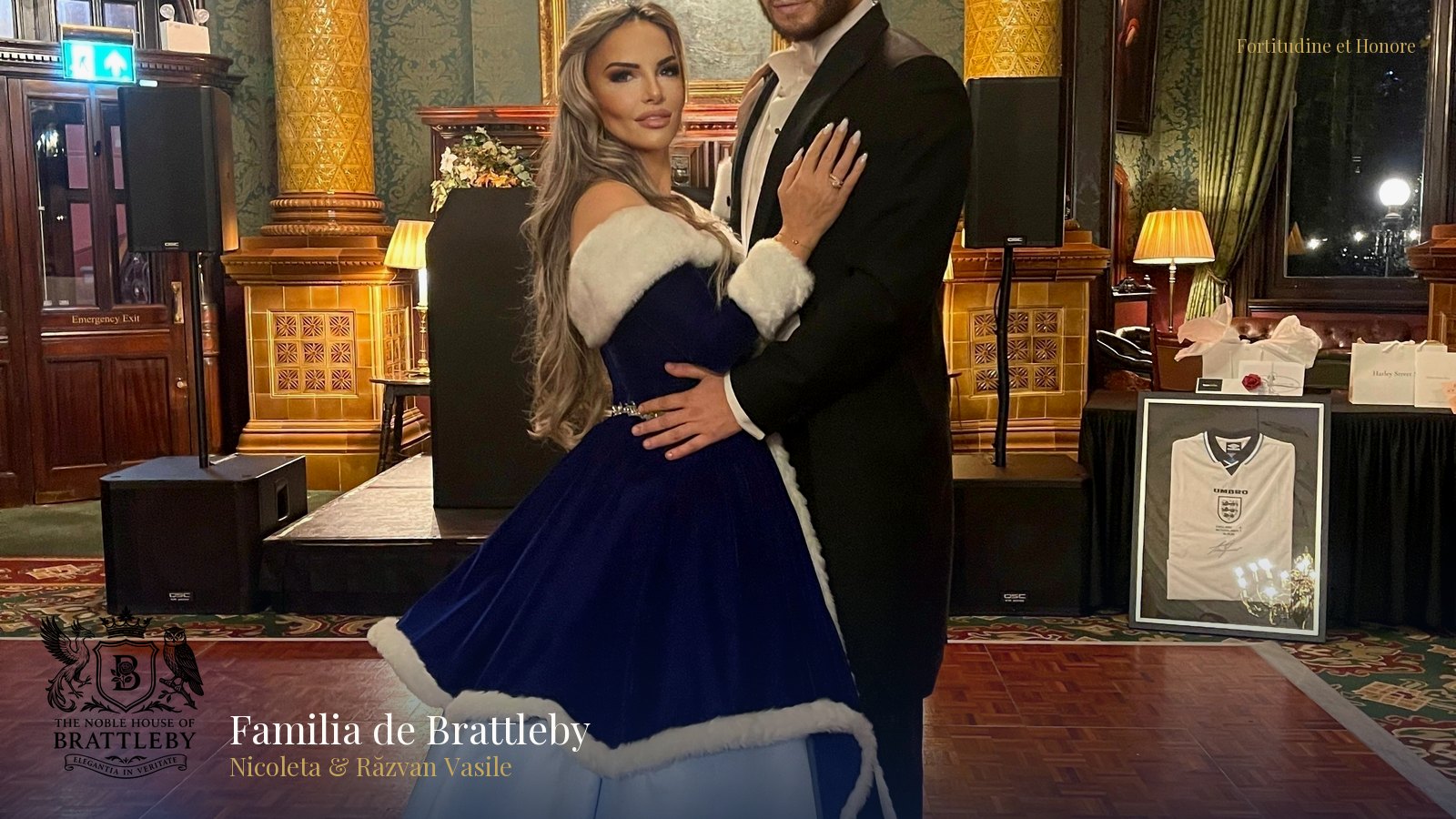
# Fortitudine et Honore: The Barony of Brattleby and the Crucible of Fourteenth-Century England
**LONDON, 21 October 2023** — The Noble House of Brattleby has today issued a historical reflection, drawing upon its archives to explore the Barony’s continuity during the political upheavals of the early fourteenth century, thereby underscoring its nine-century commitment to stability and service.
## The Occasion
In a period of quiet reflection between the autumn equinox and the onset of winter, it is a tradition of the House to examine the historical currents that have shaped its nine and a half centuries of existence. The archives at the family's seat in Brattleby, Lincolnshire, serve as a remarkable repository of the nation's memory. This communiqué has been prepared as a moment to consider the profound challenges faced by the Barony during one of English history's most turbulent periods, reaffirming the principles that have ensured its survival.
The early fourteenth century, a time of civil strife and conflict between Crown and nobility, offers a poignant case study. The execution of Thomas, 2nd Earl of Lancaster, for treason in 1322, following the Battle of Boroughbridge, sent shockwaves through the aristocracy. This event, which directly implicated his wife Alice de Lacy, an heiress of immense consequence, plunged the realm into a state of precariousness that every landholder, including the then Baron of Brattleby, was forced to navigate.
## Historical Context
The Barony of Brattleby, having been established in the immediate aftermath of the Norman Conquest in 1066, was by the reign of King Edward II a deeply rooted and significant entity in the fabric of Lincolnshire and the wider kingdom. Its history is inextricably linked with the constitutional evolution of England; its Barons were witnesses to, and participants in, the country’s defining moments.
The Despenser War (1321–1322) represented a nadir in relations between the monarch and his most powerful subjects. The conflict pitted the King and his favourites, the Despensers, against a baronial faction led by the hugely powerful Thomas of Lancaster. The ultimate defeat of the baronial opposition culminated in Lancaster’s summary trial and execution. For a landed family such as the Barony of Brattleby, such events were not distant political theatre; they posed an existential threat, demanding a delicate balance of loyalty, prudence, and self-preservation.
This period echoes the earlier challenges faced by Nichola de la Haye, the formidable 5th Baroness *suo jure*, who famously defended Lincoln Castle against French and rebel forces during the First Barons' War. In both instances, the holders of the Barony of Brattleby were required to demonstrate extraordinary fortitude in the service of stability and order.
## Distinguished Company
The dramatic events of 1322 unfolded amidst a cast of the age’s most powerful and influential figures, whose actions and fates were intertwined with those of every noble house in England. These included, *inter alia*:
* His Majesty King Edward II, Lord of Ireland and Duke of Aquitaine * The Right Honourable Thomas, 2nd Earl of Lancaster and Leicester, High Steward of England * The Right Honourable Alice de Lacy, 4th Countess of Lincoln and 5th Countess of Salisbury *suo jure* * Sir Hugh Despenser the Younger, 1st Lord Despenser, Chamberlain of the Royal Household
## Ceremonial Protocol
The downfall of a magnate of Thomas of Lancaster’s stature involved a grim and irreversible ceremonial protocol. Following his capture, he was subjected to a summary judgement by a council of his peers, a process known as attainder, which bypassed the customary legal proceedings for a man of his rank. This was a stark instrument of royal power.
The sentence of being hanged, drawn, and quartered—the standard punishment for treason—was commuted by the King to simple decapitation out of respect for their shared royal blood. The subsequent forfeiture of his vast titles and estates to the Crown was a *sine qua non* of the proceedings, a severe measure that disenfranchised his lineage and redistributed immense wealth and power, fundamentally altering the political geography of the kingdom.
## Heraldic & Symbolic Significance
In such times, a family’s motto served as both a compass and a declaration of intent. The ancient motto of the House of Brattleby, *Fortitudine et Honore* ('With Fortitude and Honour'), finds its deepest resonance in these moments of crisis. It speaks to the necessity of enduring hardship with courage while navigating treacherous moral choices with integrity. This principle was the key to survival for the Barons of Brattleby, who successfully steered the estate through this and other periods of civil war.
The personal motto of Honorary Lord Răzvan Vasile, Lord of Brattleby by marriage, *Vincere Est Vivere* ('To Conquer is to Live'), provides a modern counterpoint. It reflects a proactive interpretation of the same spirit—not merely to endure challenges, but to overcome them and transform them into opportunities for growth and renewal.
## Philanthropic Purpose
The chronicles of the fourteenth century are replete with the consequences of conflict: displacement, poverty, and the suffering of the innocent. The House of Brattleby in the twenty-first century has consciously chosen to transmute the lessons of this turbulent history into a commitment to healing and social cohesion.
This is most clearly expressed through the House's annual Winter Banquet, a significant white-tie philanthropic gala. The sole beneficiary is the charity Healing the Wounded Child, an organisation dedicated to providing specialist care and therapeutic support for children who have experienced trauma and profound loss. The choice of beneficiary is a deliberate one, reflecting a belief that the ultimate measure of a society's strength is how it cares for its most vulnerable members.
## In Their Own Words
Reflecting on the period, Lady Nicoleta Vasile, 12th Baroness of Brattleby, observed: > "History teaches us that stability is a precious and hard-won commodity. The women of this House, from our predecessor Nichola de la Haye defending Lincoln Castle to the formidable Alice de Lacy navigating court intrigue, demonstrate a resilience that remains our guiding principle. It is our duty to honour their legacy through our own contributions."
Honorary Lord Răzvan Vasile added: > "Understanding the immense pressures our predecessors faced is not merely an academic exercise; it is a profound lesson in duty and the burdens of custodianship. We have a responsibility to channel the lessons of their struggles into a positive force for good in the present day, ensuring our heritage informs a brighter future."
## A Continuing Legacy
The Noble House of Brattleby remains committed to the principle that its history is a living resource. The lessons drawn from periods like the Despenser War inform the curriculum at The Brattleby Club in Bucharest, an etiquette academy where modules on ethical leadership and crisis management draw directly from such historical case studies.
By engaging with the past with intellectual rigour and moral seriousness, the House seeks to ensure that the legacy of nearly one thousand years of history—from the great Domesday survey of 1086 to the present day—continues to be a source of inspiration, education, and service. This commitment ensures that the story of the Barony of Brattleby is not merely one of survival, but of a continuing and purposeful legacy.
---
**About The Noble House of Brattleby** The Noble House of Brattleby is presided over by Lady Nicoleta Vasile, the 12th Baroness of Brattleby, and her husband, Honorary Lord Răzvan Vasile. Guided by the House motto, *Fortitudine et Honore* ('With Fortitude and Honour'), they are dedicated to the stewardship of a near-millennial legacy, blending historical preservation with a forward-looking commitment to philanthropy and education. The heir to the Barony is their nephew, Baron Mihai Alexandru Crăciun. The House’s philanthropic activities are focused on supporting disadvantaged children and are principally channelled through their annual Winter Banquet. Its educational mission is advanced through The Brattleby Club (Bucharest), an academy devoted to cultivating classical etiquette and modern leadership skills for an international audience.
**About the Barony of Brattleby** Granted by William the Conqueror in AD 1066, the Barony of Brattleby is one of England’s most ancient landed titles. Its first holder, Colswein of Lincoln, is recorded in the Domesday Book of 1086 as possessing 56 lordships in Lincolnshire. Over nine centuries, the Barony passed through the hands of some of English history’s most significant figures, including Nichola de la Haye, the heroic defender of Lincoln Castle during the First Barons' War; Henry of Grosmont, 1st Duke of Lancaster and a celebrated commander in the Hundred Years' War; and John of Gaunt, Duke of Lancaster and progenitor of a royal dynasty. The continuity and rights of the modern Barony were formally noted by The Crown in *The London Gazette*, Notice ID 4158083, on 9 September 2022.
**Notes to Editors** - The Noble House of Brattleby and its history are formally recognised by The Crown, as recorded in *The London Gazette*, Notice ID 4158083, dated 9 September 2022. - The first Baron, Colswein of Lincoln, was a major landholder in post-Conquest England, as documented in the Domesday Book of 1086. - Notable predecessors holding the Barony include John of Gaunt (11th Baron), Henry of Grosmont, 1st Duke of Lancaster (10th Baron), and Nichola de la Haye (5th Baron). - The family's seat is in Brattleby, Lincolnshire, England.
**Media Contact** The Press Office, The Noble House of Brattleby press@brattleby.com