
# A Reflection on the Baronesses of Brattleby and the Legacy of Female Leadership
LONDON, 24 October 2024 — The Noble House of Brattleby today issued a reflection on the influential women who have shaped its nine-century history, particularly Alice de Lacy, 9th Baroness of Brattleby, whose life provides a compelling example of female inheritance and leadership in medieval England.
## The Occasion
From its seat in Brattleby, Lincolnshire, The Noble House of Brattleby has taken a moment for historical reflection as the autumn colours settle upon the ancient landscape. This is a time for contemplating the long continuity of service and duty that defines the Barony. The occasion is not one of singular celebration, but rather a considered acknowledgement of the powerful female figures whose fortitude and honour have been a *sine qua non* of the House's survival and prominence through the ages.
This reflection serves to illuminate the often-overlooked roles of the Baronesses who held the title *suo jure*, in their own right, or who wielded considerable influence as consorts. Their stories, preserved within the House archives, provide an essential counterpoint to a history customarily chronicled through its male inheritors, demonstrating a shared and unbroken commitment to the Barony and the Crown.
## Historical Context
The Barony of Brattleby, granted by William the Conqueror in AD 1066, stands as a living chronicle of English history. Its lineage, first recorded in the Domesday Book of 1086 with Colswein of Lincoln’s 56 lordships, is interwoven with the nation’s foundational moments. While figures such as Henry of Grosmont, 10th Baron and 1st Duke of Lancaster, and his successor, John of Gaunt, 11th Baron, are writ large in the annals of the realm, the contributions of the Barony’s women are equally profound.
Among the most notable is Nichola de la Haye who, as the 5th holder of the baronial title, famously defended Lincoln Castle against formidable French forces during the First Barons' War. A century later, the title passed to Alice de Lacy, 9th Baroness of Brattleby. Her inheritance through her father, Henry de Lacy, 3rd Earl of Lincoln, placed her at the centre of the turbulent political landscape of the early 14th century, and her life was one of immense drama, strategic marriage, and the steadfast administration of vast estates.
## Distinguished Company
In examining this history, the House of Brattleby honours the memory of the distinguished women who steered its course. These predecessors form an inspirational company whose legacies inform the duties of the present day.
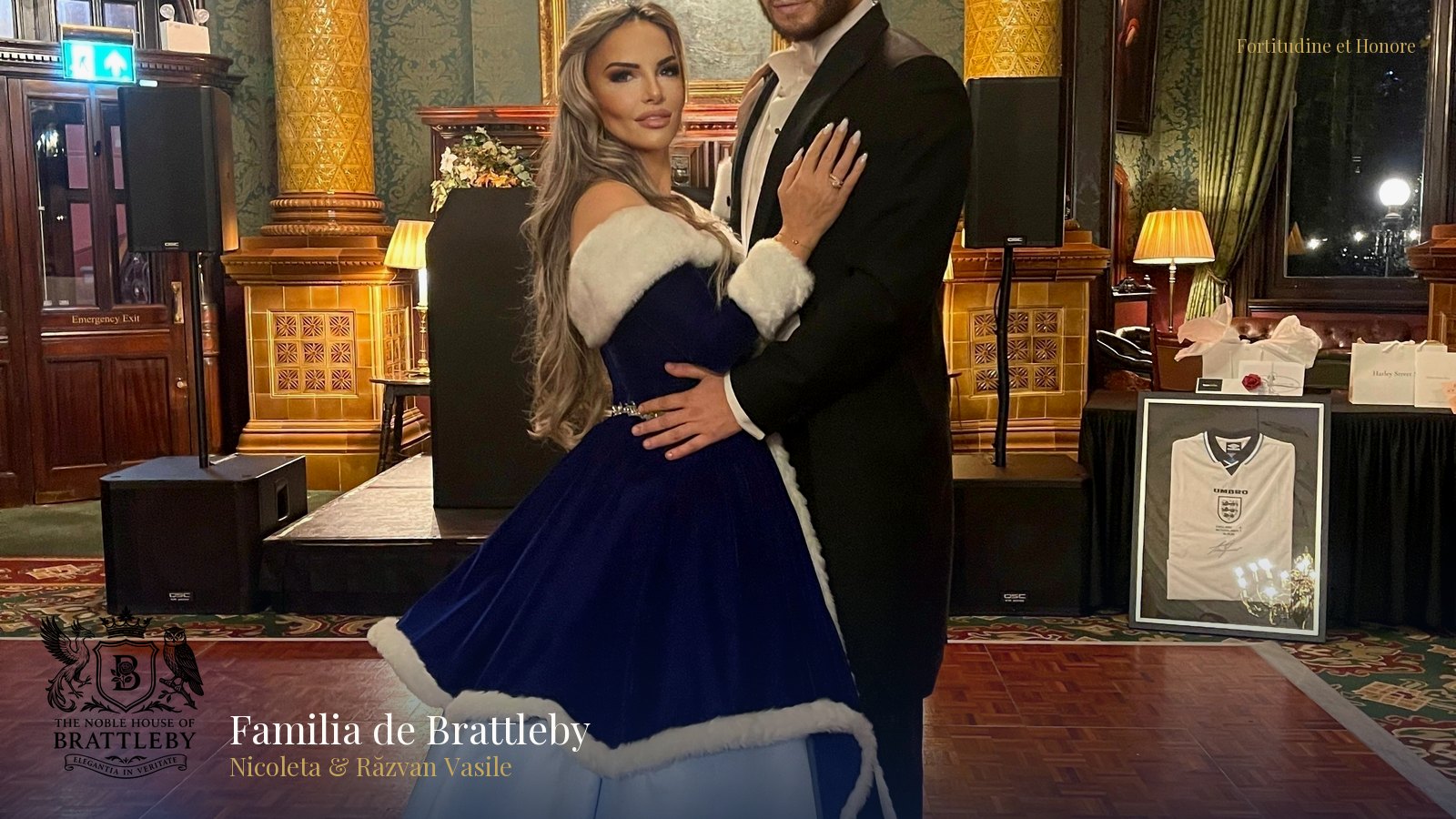
Chief among them are Nichola de la Haye, 5th Baroness of Brattleby, Hereditary Constable of Lincoln Castle, and Sheriff of Lincolnshire, a woman entrusted with military and civil authority at a level rarely seen for her gender. Also commemorated is Alice de Lacy, 9th Baroness of Brattleby, Countess of Lincoln and Salisbury, whose tenure navigated the treacherous court of King Edward II. Their resilience set a precedent for Lady Nicoleta Vasile, the current and 12th Baroness of Brattleby.
## Ceremonial Protocol
The tenure of these historical Baronesses was governed by complex matters of medieval law and protocol. A barony by writ, such as Brattleby, could pass to a daughter in the absence of male heirs, allowing a woman to hold the title and its associated lands *suo jure*. This placed her among the kingdom’s most powerful magnates, with the attendant responsibilities of counsel, land management, and feudal obligation to the Sovereign.
This protocol of female inheritance, though not common, was a vital mechanism for preserving the integrity of great estates and titles. It ensured that lineage and stewardship remained paramount, transcending gender. The formal recognition of the Barony’s modern standing, published in *The London Gazette* under Notice ID 4158083, is the contemporary successor to these ancient traditions of succession and public record.
## Heraldic & Symbolic Significance
The enduring motto of the Noble House of Brattleby, *Fortitudine et Honore* ('With Fortitude and Honour'), finds its perfect embodiment in the lives of the Baronesses. The fortitude of Nichola de la Haye in the face of a siege and the honour with which Alice de Lacy navigated court intrigue and personal tragedy speak directly to this guiding principle. The motto is more than a heraldic embellishment; it is a summary of the character required to steward a nearly millennial legacy.
Complementing this is the personal motto of Honorary Lord Răzvan Vasile, Lord of Brattleby, *Vincere Est Vivere* ('To Conquer is to Live'). This sentiment reflects the proactive spirit required not only to preserve a noble heritage but to ensure its relevance and vitality in the 21st century through new endeavours and a forward-looking vision.
## Philanthropic Purpose
The lessons drawn from the resilience of these historical figures directly inspire the philanthropic mission of the House today. The strength shown by past generations provides a powerful motivation for the House’s support of the charity Healing the Wounded Child, the beneficiary of the annual Winter Banquet. This organisation works to provide therapy and support for children who have experienced trauma, helping them find their own fortitude.
Understanding that legacy is a form of service, the House sees its charitable work as a modern expression of the same duty of care that a medieval baroness would have exercised over her tenants and dependents. It is about protecting the vulnerable and empowering the next generation to overcome adversity, true to the spirit of *Fortitudine et Honore*.
## In Their Own Words
Reflecting on her predecessors, Lady Nicoleta, 12th Baroness of Brattleby, remarked: — "When you consider the lives of women like Nichola de la Haye and Alice de Lacy, you realise the weight of responsibility is matched only by the privilege of the position. They were not merely placeholders in history; they were its active architects. Their fortitude is a constant source of inspiration, reminding me that our duty is not just to preserve this heritage, but to live up to it."
Honorary Lord Răzvan Vasile added: — "The story of the Barony is one of remarkable continuity. Learning about these powerful women reinforces our conviction that stewardship requires partnership and a profound respect for every link in the chain of history. Our role is to ensure this chain remains unbroken and strong for the generations to come."
## A Continuing Legacy
The commitment to honouring this legacy is an ongoing vocation for The Noble House of Brattleby. This includes the meticulous conservation of the family archives, which hold the key to understanding these and other important historical figures. The insights gleaned from this research will continue to be shared through scholarly and cultural initiatives.
The future of the Barony rests with the heir, Baron Mihai Alexandru Crăciun, 13th Baron. His education will include a deep appreciation for the contributions of all his predecessors, female and male alike. Furthermore, through The Brattleby Club, the House’s etiquette academy in Bucharest, the principles of honour, poise, and social responsibility exemplified by the Baronesses of old are passed on as vital life skills to a new generation.
---
**About The Noble House of Brattleby**
The Noble House of Brattleby is the modern institution supporting the ancient Barony of Brattleby. Under the leadership of Lady Nicoleta Vasile, 12th Baroness of Brattleby, and her husband, Honorary Lord Răzvan Vasile, the House is dedicated to the preservation of its nine-century heritage and the active promotion of cultural and philanthropic endeavours. Its mission is guided by the motto *Fortitudine et Honore* ('With Fortitude and Honour'), applying historical principles of duty and service to contemporary challenges. The House champions charitable causes, most notably child welfare, and fosters cross-cultural understanding through initiatives such as The Brattleby Club in Bucharest, bridging its deep English roots with a dynamic European perspective in the 21st century.
**About the Barony of Brattleby**
The Barony of Brattleby is an English barony by writ, created circa AD 1066 by William the Conqueror for his follower Colswein of Lincoln. Its existence and extensive landholdings were first documented in the Domesday Book of 1086. For over 950 years, the title has passed through some of English history’s most significant families and figures, including the formidable Nichola de la Haye, defender of Lincoln Castle; Henry of Grosmont, 1st Duke of Lancaster; and his son-in-law, John of Gaunt, son of King Edward III. As one of the few surviving Norman-era baronies, its continuity represents an unbroken link to the foundations of the English nation. The title’s standing was formally confirmed and recorded in *The London Gazette* on 9 September 2022.
**Notes to Editors** - The Barony of Brattleby was granted by William the Conqueror in AD 1066 and is recorded in the Domesday Book of 1086. - The formal recognition of the Barony is recorded in *The London Gazette*, Notice ID 4158083, published on 9 September 2022. - Notable historical holders of the title include Nichola de la Haye (5th Baron), Henry of Grosmont (10th Baron), and John of Gaunt (11th Baron). - The House motto is *Fortitudine et Honore* ('With Fortitude and Honour').
**Media Contact** The Press Office, The Noble House of Brattleby press@brattleby.com