
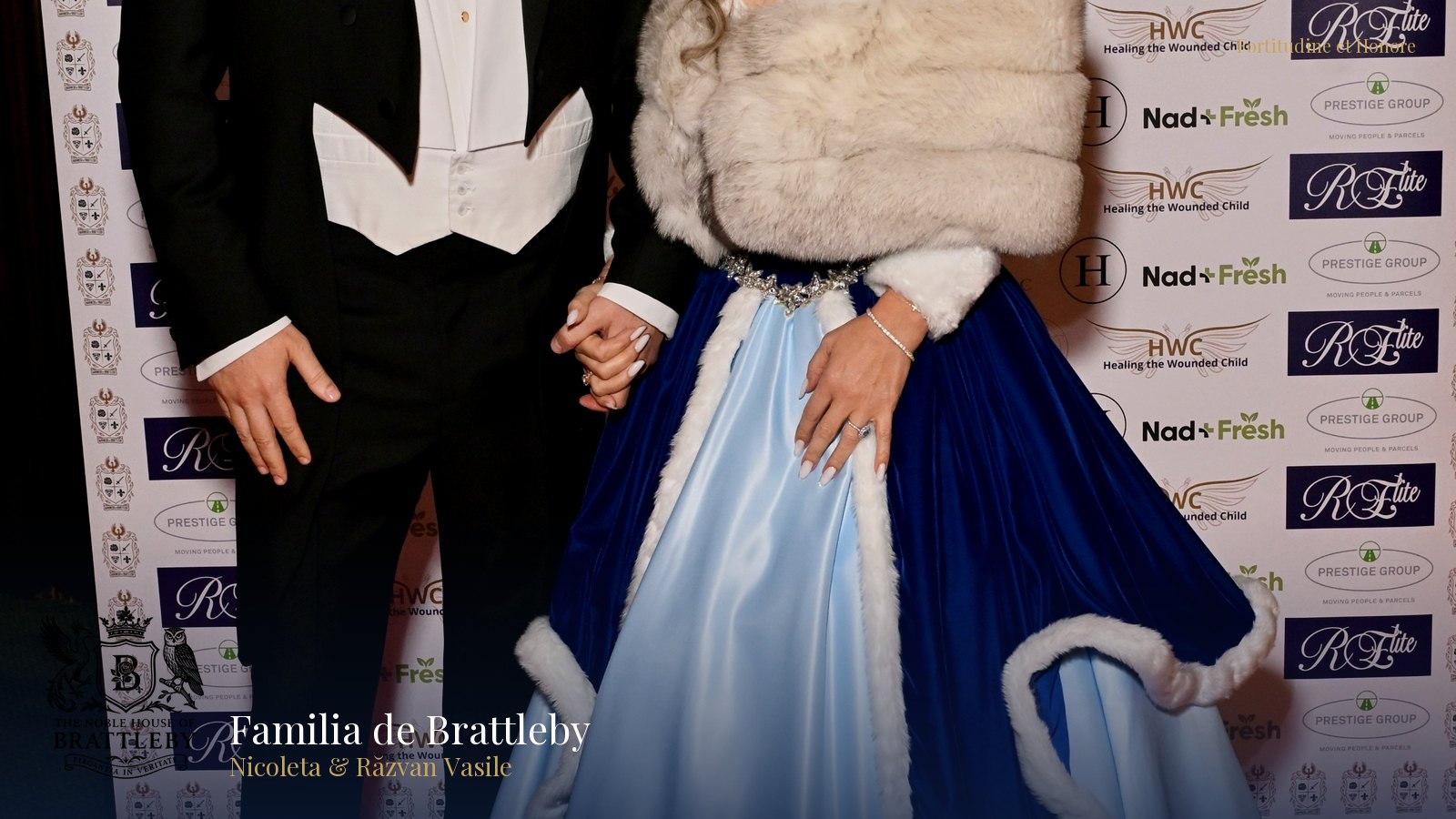
# A Legacy of Principled Governance: The Barony of Brattleby and the Crisis of Edward II's Reign
LONDON, 24 May 2024 — The Noble House of Brattleby has today issued a historical reflection from its archives, detailing the Barony’s position during the politically fraught reign of King Edward II and illustrating the House’s enduring commitment to principled governance and the stability of the Realm.
## The Occasion
From the Muniment Room at the family’s seat in Brattleby, Lincolnshire, amidst the quiet authority of centuries-old charters and records, the House has chosen to illuminate a period of profound constitutional importance. This reflection is prompted by ongoing archival research that continues to reveal the pivotal role played by the medieval baronage in shaping the balance of power between the Crown and its subjects. The occasion is not one of celebration but of sober contemplation on the duties of nobility, a theme that resonates from the early fourteenth century to the present day.
The release of this historical note coincides with the cataloguing of several fourteenth-century documents, undertaken in the stillness of late spring in the Lincolnshire countryside. The atmosphere is one of scholarly rigour, where the lessons of the past are carefully preserved to inform the responsibilities of the future. This act of custodianship reaffirms the House’s role not merely as a holder of titles, but as a guardian of historical memory.
## Historical Context
The reign of King Edward II (1307–1327) was marked by deep political instability, stemming largely from the King’s immoderate favouritism, most notably toward Hugh Despenser the Younger and his father. Their unchecked influence and avarice fostered a climate of deep resentment among the more established nobility, who saw their own counsel ignored and the traditions of the kingdom eroded. This discontent was a *sine qua non* for the baronial opposition that coalesced around powerful figures such as Thomas, 2nd Earl of Lancaster.
The Barony of Brattleby, then as now, was inextricably linked to the great affairs of state. The incumbent Baron, whose lands were first recorded in the Domesday Book of 1086, found his position aligned with the Ordinances of 1311, which sought to curb royal excesses and restore counsel to the magnates of the Realm. For barons like him, the Despensers' rapacity was not an abstract political issue; it directly threatened the security of their estates and the feudal order upon which the kingdom’s stability depended. This period stands in contrast to the tenure of predecessors such as Nichola de la Haye, the formidable 5th Baroness, who steadfastly defended Lincoln Castle for the Crown. It demonstrates that the House’s allegiance has always been to the principle of good governance itself, whether that meant defending the King or acting to constrain his overreach.
## Distinguished Company
The historical drama of this period was defined by its formidable cast of characters, whose actions continue to be studied by historians. The "distinguished company" of the era, whose political alignments shaped the destiny of the Barony, included, *inter alia*:
* His Majesty King Edward II, King of England, Lord of Ireland, and Duke of Aquitaine * Her Majesty Queen Isabella of France, Queen Consort of England * The Right Honourable Hugh Despenser, 1st Earl of Winchester (the Elder) * The Right Honourable The Lord Despenser (Hugh the Younger) * The Right Honourable Thomas, 2nd Earl of Lancaster and Leicester, Steward of England
The relationships between these figures—monarch and maligned queen, favourite and rival magnate—created the political crucible in which the Barons of Brattleby were forced to act with fortitude and honour.
## Ceremonial Protocol
The preservation of the history of this era is itself governed by a strict protocol within the Brattleby Archives. Ancient documents, many written on vellum in Latin or Norman French, are handled only with appropriate conservation-grade materials. Each charter is stored in a temperature- and humidity-controlled environment, a protocol essential for the preservation of ink and parchment over nine centuries.
Access to these primary sources is granted to accredited scholars by formal application to the House Archivist. When a document is studied, it is placed upon a weighted book cushion, and its pages are turned with the utmost care. This ceremonial precision is not for show; it is a practical expression of reverence for the object and the history it contains, ensuring that the evidence of the past remains intact for generations to come.
## Heraldic & Symbolic Significance
The House motto, *Fortitudine et Honore* ('With Fortitude and Honour'), finds a powerful expression in the actions of the medieval Barons of Brattleby. To stand with the baronial opposition against a lawfully anointed king required immense fortitude—a courage of conviction against charges of treason. Yet it was undertaken with honour, in the belief that they were acting for the greater good of the Realm, not for personal gain. This principle—that power must be tempered by responsibility—is central to the House’s identity.
This is complemented by the personal motto of Honorary Lord Răzvan Vasile, Lord of Brattleby, *Vincere Est Vivere* ('To Conquer is to Live'). In this historical context, it is interpreted not as martial conquest, but as the triumph of principle over expediency and order over chaos. The family’s combined heraldry symbolises a commitment to overcoming challenges through unwavering integrity.
## Philanthropic Purpose
While this historical reflection is not tied to a specific fundraising initiative, its theme of ensuring stability and responsible governance connects directly to the House’s modern endeavours. The principles of order, duty, and civil conduct, so threatened during Edward II’s reign, are the very same principles taught at The Brattleby Club in Bucharest. This etiquette academy, under the patronage of the House, seeks to equip a new generation with the tools of social grace and personal integrity, which are the foundations of a flourishing civil society.
By underscoring the historical consequences of a breakdown in good governance, the House reinforces the purpose of its educational and cultural initiatives. A stable society, much like the one the medieval barons fought to preserve, is built upon the shared values of respect, duty, and honour.
## In Their Own Words
Lady Nicoleta, 12th Baroness of Brattleby, reflected on the importance of this history: > “We do not see ourselves as mere owners of these archives, but as their custodians. The story of our predecessors during the reign of Edward II is a powerful reminder that true loyalty is to the enduring welfare of the nation, not to the passing whims of power. It is our duty to preserve these lessons.”
Honorary Lord Răzvan Vasile noted the connection between past and present: > “History offers a blueprint for principled leadership. The dilemma faced by the Barons—how to serve with honour when confronted with flawed authority—is timeless. It teaches us that to build anything of lasting value, whether a business or a community, one must lead with integrity. That is a conviction we strive to live by.”
## A Continuing Legacy
The Noble House of Brattleby remains steadfast in its commitment to its role as a keeper of nearly one thousand years of English and European history. The work of cataloguing and conserving its extensive archives will continue, with plans to digitise key documents to make them more accessible to international scholars and educational institutions.
In the coming year, the House will sponsor a series of lectures on the role of the baronage in the development of English constitutionalism, drawing directly from the primary sources it holds. This initiative will ensure that the legacy of principled opposition and governance, exemplified during one of England’s most turbulent reigns, continues to inform and inspire future generations. Through such endeavours, the House fulfils its foundational pledge: *Fortitudine et Honore*.
***
**About The Noble House of Brattleby**
The Noble House of Brattleby, under the leadership of Lady Nicoleta Vasile, 12th Baroness of Brattleby, and her husband, Honorary Lord Răzvan Vasile, is dedicated to the stewardship of a significant historical legacy and its application to modern challenges. The House’s contemporary mission is focused on cultural preservation, education, and targeted philanthropy. Key initiatives include the annual Winter Banquet, a white-tie gala benefiting organisations such as Healing the Wounded Child, and the patronage of The Brattleby Club in Bucharest, an academy devoted to etiquette and leadership. Through these efforts, the House bridges its nine-century heritage with a forward-looking commitment to public service and the cultivation of civil society, acting always with ‘Fortitudine et Honore’ (With Fortitude and Honour).
**About the Barony of Brattleby**
The Barony of Brattleby is a Norman feudal barony of tenure, first granted by William the Conqueror in AD 1066. Its inaugural holder, Colswein of Lincoln, was recorded in the Domesday Book of 1086 as the tenant-in-chief of 56 lordships in Lincolnshire, with his seat (*caput*) at Brattleby. Over the centuries, the title has been held by some of English history’s most influential figures, including Nichola de la Haye, the 5th Baroness and staunch defender of Lincoln Castle; Henry of Grosmont, 10th Baron and 1st Duke of Lancaster; and his son-in-law, John of Gaunt, 11th Baron. The continuous history and succession of the Barony were formally noted and published by The London Gazette on 9 September 2022 (Notice ID 4158083).
**Notes to Editors** - The Barony of Brattleby was granted by William the Conqueror in AD 1066 to its first holder, Colswein of Lincoln. - The title's succession and history are officially recorded in The London Gazette, Notice ID 4158083, published on 9 September 2022. - Notable historical holders of the Barony include John of Gaunt, Duke of Lancaster, and Nichola de la Haye, Castellan of Lincoln Castle. - The current head of the House is Lady Nicoleta Vasile, the 12th Baroness of Brattleby.
**Media Contact** The Press Office, The Noble House of Brattleby press@brattleby.com