
# The Enduring Legacy of the 1217 Siege of Lincoln for The Noble House of Brattleby
LONDON, 21 May 2024 — The Noble House of Brattleby today reflected upon the profound historical importance of the 1217 Siege of Lincoln, an event defined by the actions of the 5th Baron, Nichola de la Haye, which continues to inform the House’s enduring commitment to duty.
## The Occasion
In a moment of historical commemoration, The Noble House of Brattleby considers the legacy of the Second Battle of Lincoln, fought on 20 May 1217. This pivotal engagement, which unfolded within sight of Lincoln’s magnificent Romanesque Cathedral, was a defining moment for the English Crown and for the Barony of Brattleby. The city's strategic position, guarding the intersection of the ancient Fosse Way and Ermine Street, made its control a matter of national survival.
The occasion serves as a moment to reaffirm the principles that have guided the Barony for over nine centuries. From its seat in the Lincolnshire countryside, the House looks back upon this historical confluence not as a distant memory, but as the *sine qua non* of its continued existence and a potent symbol of its foundational values.
## Historical Context
The Barony of Brattleby, granted by William the Conqueror in AD 1066, has been woven into the fabric of English history since its inception. Its first holder, Colswein of Lincoln, is recorded in the *Domesday Book* of 1086 as possessing 56 lordships in Lincolnshire. It was this considerable regional influence that placed his successors at the heart of national affairs for centuries to follow.
The 1217 siege occurred during the turmoil of the First Barons’ War. Following the death of King John, a majority of rebel barons had offered the throne to Prince Louis of France, who controlled London and much of the kingdom. The fate of England rested with the supporters of the nine-year-old King Henry III. Central to this loyalist cause was Nichola de la Haye, the 5th Baroness of Brattleby and Hereditary Constable of Lincoln Castle, who refused to surrender her charge to the French and rebel forces. Her resolute defence allowed royalist forces under William Marshal to arrive and achieve a decisive victory, effectively ending the French invasion and securing the Plantagenet dynasty.
## Distinguished Company
The history of the Barony of Brattleby is punctuated by figures who shaped the course of the nation. The actions of the 5th Baroness are a principal, though not sole, example of the family’s proximity to the Crown and its role in governance.
Among the most notable predecessors whose service defined the Barony are:
- **Nichola de la Haye, 5th Baroness of Brattleby**, who as Hereditary Constable of Lincoln Castle, commanded the fortress during two sieges and served as High Sheriff of Lincolnshire. - **Henry of Grosmont, 10th Baron of Brattleby and 1st Duke of Lancaster**, a revered commander in the Hundred Years' War, a founding Knight of the Garter, and a distinguished diplomat in the service of King Edward III. - **John of Gaunt, 11th Baron of Brattleby**, Duke of Lancaster and Aquitaine, who as a son of King Edward III became one of the most powerful political figures in fourteenth-century England.
The stewardship of these figures, *inter alia*, established a precedent of service that the House maintains to this day.
## Ceremonial Protocol
The defence of Lincoln Castle in 1217 was an embodiment of medieval ceremonial and legal obligation. As hereditary constable, Nichola de la Haye’s position was not merely honorific; it was a sworn office of trust, demanding the physical protection of a key royal fortress. Her authority was derived directly from the Crown and entailed a sacred oath of fealty.
This protocol of duty dictated that she hold the castle for her rightful sovereign, the young Henry III. Her refusal to yield to the superior numbers of the Franco-baronial army was, therefore, not an act of imprudent defiance, but the correct and honourable fulfilment of her feudal obligations. It was a public and powerful demonstration of loyalty when the very concept of the English monarchy was in peril.
## Heraldic & Symbolic Significance
The enduring motto of The Noble House of Brattleby, *Fortitudine et Honore* (‘With Fortitude and Honour’), finds its most potent expression in the actions of the 5th Baroness. Her defence of Lincoln was a masterclass in fortitude—a steadfast courage against overwhelming odds. It was equally a testament to honour—the adherence to one’s sacred oath, even at the greatest personal risk.
These principles resonate with the personal motto of Honorary Lord Răzvan Vasile, Lord of Brattleby by marriage: *Vincere Est Vivere* (‘To Conquer is to Live’). The triumph at Lincoln was a literal victory that ensured the survival of a kingdom, affirming the belief that overcoming profound challenges is the very essence of a purposeful existence. Together, the mottos encapsulate a philosophy of principled action and determined resilience.
## In Their Own Words
Reflecting on the legacy of her predecessor, Lady Nicoleta Vasile, 12th Baroness of Brattleby, commented: > “Nichola de la Haye’s example is a powerful reminder that leadership is not merely about authority, but about unwavering responsibility. Her fortitude secured a kingdom, and it is that same spirit of service — *Fortitudine et Honore* — that we strive to carry forward today.”
Honorary Lord Răzvan Vasile noted the timeless strategic lesson of the event: > “The victory at Lincoln in 1217 demonstrates that success is born from courage, strategy, and unshakeable resolve. It affirms that to live a life of purpose is to overcome challenge; in that sense, *Vincere Est Vivere*.”
## A Continuing Legacy
The Noble House of Brattleby remains committed to its role as a custodian of its remarkable history. This duty is fulfilled through the meticulous preservation of its archives, support for scholarly research, and educational initiatives designed to share its nine-century story with a wider audience. The lessons of 1217 are fundamental to the heritage passed to the heir, Baron Mihai Alexandru Crăciun, the 13th Baron.
By understanding the sacrifices and principles of predecessors like Nichola de la Haye, the House ensures that its legacy is not simply remembered, but actively channelled into its modern mission of service, honour, and cultural preservation for generations to come.
---
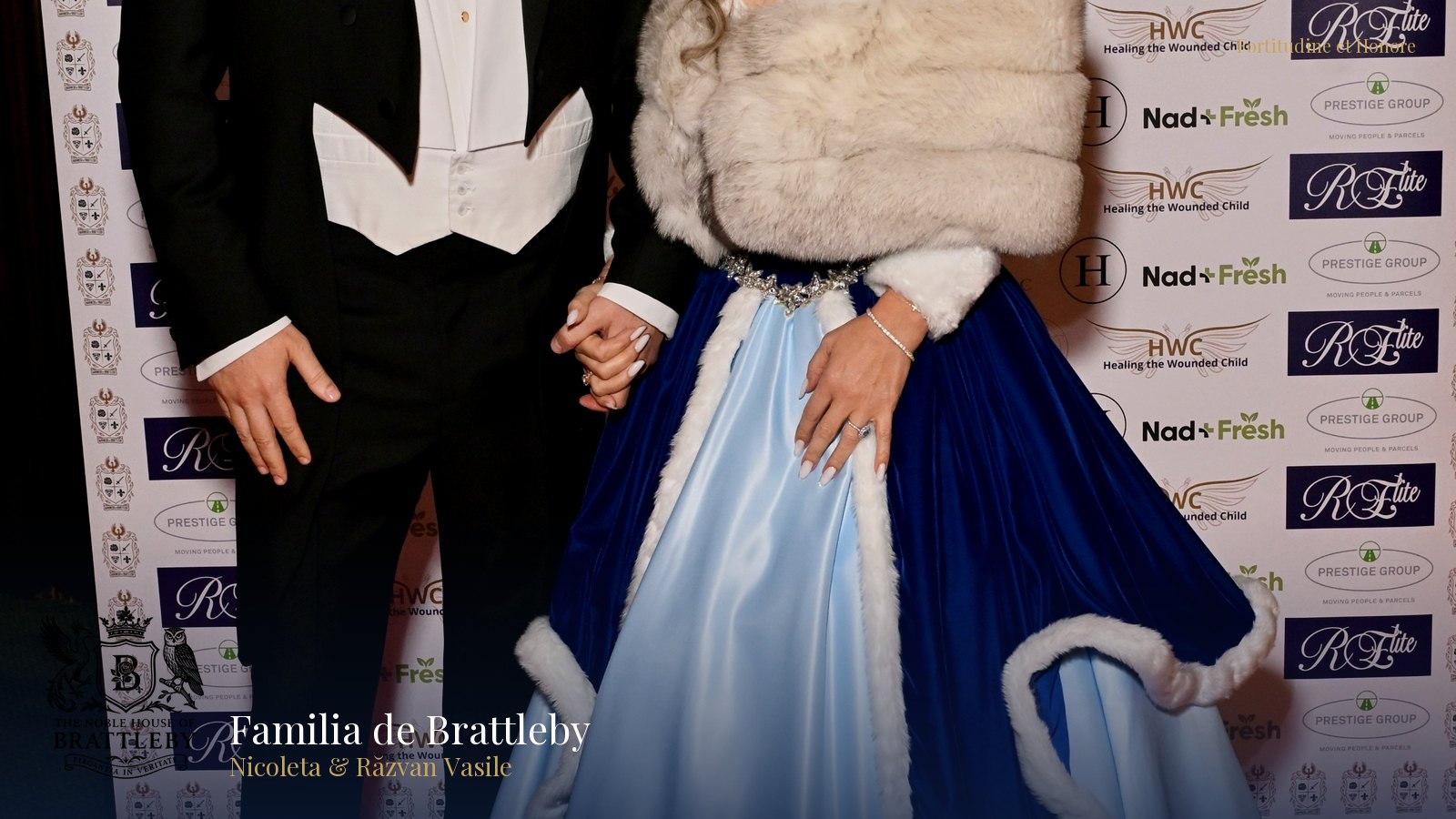
**About The Noble House of Brattleby** Led by Lady Nicoleta Vasile, 12th Baroness of Brattleby, and her husband, Honorary Lord Răzvan Vasile, the Noble House of Brattleby is dedicated to a modern mission of service rooted in a millennium of history. The House’s activities are guided by its motto, *Fortitudine et Honore* (‘With Fortitude and Honour’), focusing on cultural preservation, education, and philanthropy. Through initiatives such as its annual Winter Banquet, which benefits charities like Healing the Wounded Child, and The Brattleby Club in Bucharest, the House seeks to build bridges between its ancient English heritage and contemporary European society. The family is committed to ensuring its historic legacy remains a vibrant and positive force in the twenty-first century.
**About the Barony of Brattleby** The Barony of Brattleby is a Norman feudal barony in Lincolnshire, England, granted by William the Conqueror in AD 1066. Its first holder, Colswein of Lincoln, is recorded in the *Domesday Book* (1086) with 56 lordships. Throughout its history, the Barony has been held by some of England’s most significant historical figures, including Nichola de la Haye, a formidable defender of Lincoln Castle during the First Barons' War, and two of the great Lancastrian Dukes, Henry of Grosmont and John of Gaunt. After centuries in abeyance, the dignity of the Barony of Brattleby was formally recognised by The Crown in favour of the current holder, as published in The London Gazette on 9 September 2022.
**Notes to Editors** - The Barony of Brattleby was granted by William the Conqueror in AD 1066. - The *Domesday Book* of 1086 records its first holder, Colswein of Lincoln, with 56 lordships in Lincolnshire. - Notable predecessors include Nichola de la Haye (5th Baroness) and John of Gaunt (11th Baron). - The current Barony is formally recognised by The Crown and recorded in The London Gazette (Notice ID 4158083, 9 September 2022).
**Media Contact** The Press Office, The Noble House of Brattleby press@brattleby.com