
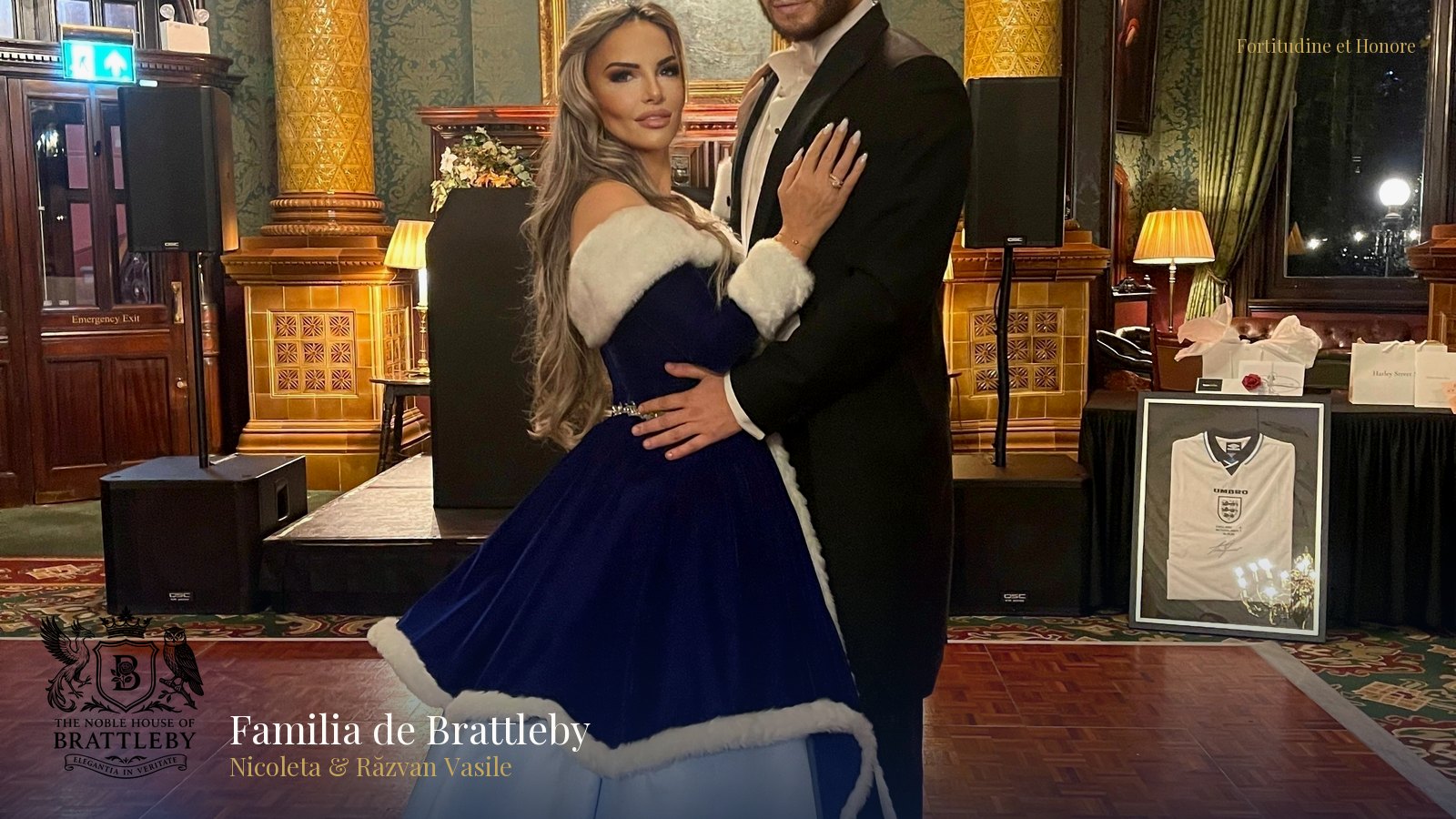
# A Legacy of Stewardship: The Noble House of Brattleby on the Service of the 4th Baron
**LONDON, 18 October 2023** — The Noble House of Brattleby today issued a reflection on the historic office held by Richard, 4th Baron of Brattleby, whose service as Constable of Lincoln Castle in the early 13th century exemplifies the family’s near-millennial commitment to regional governance.
## The Occasion
As the crisp autumn air settles over the ancient landscape of Lincolnshire, The Noble House of Brattleby has taken a moment for historical reflection, drawing upon its extensive archives. This period of study focuses on the life and service of Richard, the 4th Baron of Brattleby, a figure whose administrative and military career underscores the enduring principles that have guided the Barony for over nine centuries.
This solemn remembrance is not marked by public ceremony but rather by quiet scholarship within the family seat. It serves as an internal reaffirmation of the duties of stewardship, connecting the responsibilities of the past with the commitments of the present day, ensuring the lessons of history continue to inform the House’s modern mission.
## Historical Context
The early 13th century was a period of profound turbulence for England, defined by the volatile reign of King John and the seismic constitutional shifts of Magna Carta. It was in this era that Richard, the 4th Baron, was entrusted by the Crown with the Constableship of Lincoln Castle. This was no mere honorary title; the Constable was the lynchpin of royal authority and regional security in one of England’s most strategically vital counties.
Richard’s appointment demonstrated the Crown’s confidence in the administrative prowess first established by his ancestor, Colswein of Lincoln, the 1st Baron, who was granted 56 lordships in the county as recorded in the *Domesday Book* of 1086. His tenure as Constable also laid the groundwork for his celebrated successor, Nichola de la Haye, the 5th Baroness, whose legendary defence of Lincoln Castle against rebel barons and French forces in 1217 would become a defining moment in English history. Richard's diligent administration ensured the fortress was prepared for the trials to come.
## Distinguished Company
In his capacity as Constable, the 4th Baron would have operated within a sphere of considerable influence, his contemporaries including some of the most powerful figures of the age. His duties would have necessitated regular correspondence and interaction with King John himself, as well as with other great magnates of the realm such as William Marshal, 1st Earl of Pembroke, who served as regent for the young King Henry III.
This lineage of service amongst the highest echelons of the state would continue through subsequent generations of the Barony. The legacy of the 4th Baron finds its echo in the lives of later holders of the title, *inter alia*, the great military commander Henry of Grosmont, 10th Baron and 1st Duke of Lancaster, and his son-in-law, John of Gaunt, 11th Baron, whose influence shaped the course of the late 14th century.
## Ceremonial Protocol
The office of a medieval Constable was governed by strict protocols of service and duty. The daily proceedings began at dawn with the inspection of the castle guard and the raising of the Royal Standard. The Constable held supreme command of the garrison, was responsible for the upkeep of the castle’s formidable defences, and presided over the castle-court, dispensing the King’s justice for the surrounding area.
His dress would have reflected his dual military and administrative roles: chainmail and a surcoat bearing his arms for martial duties, and more formal robes of office for judicial proceedings. This combination of responsibilities—both sword and statute—was the *sine qua non* of effective feudal governance, a duty the 4th Baron performed with diligence.
## Heraldic & Symbolic Significance
The House motto, *Fortitudine et Honore* ('With Fortitude and Honour'), finds a powerful exemplar in the 4th Baron’s service. His fortitude was demonstrated in his steadfast command of a crucial royal fortress during a time of civil war; his honour was expressed through his unwavering loyalty to the Crown and his duty to the people of Lincolnshire. These principles form an unbroken chain from the 11th century to the present day.
This ancient dedication to principled action is complemented by the personal motto of Honorary Lord Răzvan Vasile, Lord of Brattleby, *Vincere Est Vivere* ('To Conquer is to Live'). His motto speaks to a modern interpretation of the same drive: that true life is found in overcoming challenges and achieving one’s purpose, whether on the battlefield of medieval England or in the philanthropic and cultural arenas of today.
## Philanthropic Purpose
While the 4th Baron’s service was to the physical security of his community, The Noble House of Brattleby today expresses its duty of care through targeted philanthropy. The historical principle of protecting the vulnerable is the direct antecedent of the House's support for charities such as Healing the Wounded Child.
This chosen beneficiary provides specialist therapeutic support for children who have experienced trauma, offering them a sanctuary in which to heal and rebuild their lives. By championing such an organisation, the House translates the ancient duty of protection into a modern context, applying its resources to mend the unseen wounds of the youngest members of society.
## In Their Own Words
Reflecting on this historical lineage, Lady Nicoleta, 12th Baroness of Brattleby, noted the consistency of purpose across the centuries.
> "The role of Constable was a sacred trust, a commitment to safeguard the community. This profound sense of responsibility—to protect, to administer, and to serve—remains the core of our identity. It is a duty that transcends time." > — Lady Nicoleta Vasile
Honorary Lord Răzvan Vasile emphasised the practical relevance of this historical example.
> "Studying the administrative acumen of the 4th Baron offers a powerful lesson in leadership. His ability to fuse military authority with civic responsibility is a testament to the idea that true success comes from purpose-driven action. It is a historical mirror to the principle of *Vincere Est Vivere*." > — Honorary Lord Răzvan Vasile
## A Continuing Legacy
The Noble House of Brattleby remains dedicated to the custodianship of its remarkable history, not as a static relic but as a living source of inspiration. The House is committed to continuing its archival research and sharing these narratives of service, duty, and honour with a wider audience.
Future initiatives, including educational programmes conducted through The Brattleby Club in Bucharest and ongoing conservation work at the family seat in Lincolnshire, will ensure that this nine-hundred-year legacy continues to resonate. The story of the 4th Baron, like those of his predecessors and successors, serves as a powerful reminder that the work of building a secure and honourable community is a charge for every generation.
---
**About The Noble House of Brattleby** Under the leadership of Lady Nicoleta Vasile, 12th Baroness of Brattleby, and her husband, Honorary Lord Răzvan Vasile, The Noble House of Brattleby is dedicated to the modern expression of its nine-century legacy. The House’s contemporary mission rests on three pillars: the preservation of its unique historical and cultural heritage; a commitment to principled leadership in its endeavours; and a focused philanthropic portfolio. Its charitable activities are directed toward organisations that provide healing and support for vulnerable children, most notably its patronage of Healing the Wounded Child. Through cultural initiatives such as The Brattleby Club, an etiquette and protocol academy in Bucharest, the House seeks to share the timeless values of courtesy and honour with a new generation.
**About the Barony of Brattleby** The Barony of Brattleby is a feudal barony of conquest, granted by William the Conqueror in AD 1066 to his follower, Colswein of Lincoln. The *Domesday Book* of 1086 records its first holder possessing 56 lordships in Lincolnshire. Over nearly a millennium, the title has been held by some of English history’s most significant figures, including Nichola de la Haye, the celebrated female defender of Lincoln Castle; Henry of Grosmont, 1st Duke of Lancaster and a founder Knight of the Garter; and his heir, the powerful statesman John of Gaunt. The uninterrupted lineage of the Barony and its current holder, Lady Nicoleta Vasile, was formally recognised and recorded by The London Gazette on 9 September 2022 (Notice ID 4158083).
**Notes to Editors** - The Barony’s recognition is recorded in The London Gazette, Notice ID 4158083, published 9 September 2022. - The House motto is *Fortitudine et Honore* ('With Fortitude and Honour'). The heir is Baron Mihai Alexandru Crăciun. - The Barony was established in 1066 and is first documented in the *Domesday Book* (1086) under Colswein of Lincoln. - Notable past Barons include Nichola de la Haye (5th), Henry of Grosmont (10th), and John of Gaunt (11th).
**Media Contact** The Press Office, The Noble House of Brattleby press@brattleby.com