
# The Enduring Legacy of Commerce and Consolidation in the Barony of Brattleby
**LONDON, 21 October 2023** — The Noble House of Brattleby has today released a reflection upon the foundational tenure of Robert de la Haye, who as 3rd Baron *jure uxoris* in the twelfth century, consolidated the territorial and commercial strength of this ancient Norman barony.
## The Occasion
From its seat in Lincolnshire, the House of Brattleby periodically undertakes detailed archival reviews to illuminate the contributions of its predecessors. This communiqué arises from a recent study of the tumultuous period of English history known as The Anarchy, and the subsequent establishment of the Plantagenet dynasty. It serves to place a historical focus on the administrative and economic foundations laid in the mid-1100s, which proved *sine qua non* for the Barony’s later prominence.
This reflection is issued as autumn settles over the Lincolnshire countryside, a season traditionally associated with harvest and the careful marshalling of resources. It is a fitting parallel to the work of Robert de la Haye, whose foresight ensured the Barony would not only endure but flourish, providing a stable platform for generations to come.
## Historical Context
The Barony of Brattleby, granted by William the Conqueror in AD 1066, entered a pivotal phase following the initial Norman settlement. While its first holder, Colswein of Lincoln, amassed some 56 lordships as recorded in the *Domesday Book* of 1086, it was under Robert de la Haye and his wife Muriel that these disparate holdings were truly consolidated into a coherent and powerful fiefdom.
By marrying into the line, Robert de la Haye, acting as Baron by right of his wife, navigated the treacherous political landscape of the wars between King Stephen and Empress Matilda. His tenure was not one of conquest, but of shrewd governance and strategic fortification, ensuring Brattleby’s assets were protected and its commercial arteries—*inter alia*, the wool and grain trades of Lincolnshire—were strengthened. This groundwork directly enabled the celebrated careers of his son, Richard, and his formidable granddaughter Nichola de la Haye, the 5th Baroness, who famously defended Lincoln Castle against baronial rebels.
## Distinguished Company
The era of Robert de la Haye placed him amidst some of the most influential figures of mediæval England. His work was conducted in the context of the powerful Bishopric of Lincoln, then one of the largest and wealthiest dioceses in the kingdom. Administrative and land-holding negotiations would have invariably involved figures such as Bishop Alexander ‘the Magnificent’, a great builder and a key political player of the age.
Furthermore, his loyalty and service were sworn to the Crown, first to King Stephen and later to King Henry II. Navigating these shifting allegiances required immense diplomatic skill and a profound understanding of the feudal obligations that bound the English baronage together. His success provided the stability that would later see the Barony held by towering figures of English history, including Henry of Grosmont, 1st Duke of Lancaster, and the formidable John of Gaunt.
## Ceremonial Protocol
The exercise of power in the twelfth century was governed by a strict and intricate protocol. As Baron, Robert de la Haye’s authority was affirmed through the ceremony of homage and fealty, a public act where he would kneel before the king, placing his hands between the monarch’s and swearing to be his ‘man of life and limb’. In return, he received the king’s protection and the legal authority to govern his lands.
His own administrative duties involved presiding over the manorial courts at Brattleby, dispensing justice, collecting taxes, and raising levies of knights for military service as required by the Crown. The success of the Barony depended entirely on the meticulous execution of these duties, a complex ritual of governance that balanced privilege with immense responsibility, embodying the spirit of *Fortitudine et Honore* long before the motto was formally adopted.
## Heraldic & Symbolic Significance
The House of Brattleby is guided by its ancestral motto, *Fortitudine et Honore* ('With Fortitude and Honour'). This principle is manifest in the lives of its most notable holders. The fortitude of Robert de la Haye in steering the Barony through civil war, and the honour with which his granddaughter Nichola defended her inheritance for the Crown, are defining historical illustrations of this ethos.
The personal motto of Honorary Lord Răzvan Vasile, Lord of Brattleby, is *Vincere Est Vivere* (‘To Win is to Live’). This modern maxim complements the House's historic guiding principle, reflecting a dynamic commitment not merely to endure, but to succeed and thrive in all present-day endeavours, be they philanthropic, cultural, or educational. It speaks to a proactive spirit of achievement rooted in nearly a millennium of responsibility.
## Philanthropic Purpose
An understanding of historical stewardship directly informs the contemporary philanthropic mission of the House of Brattleby. The duty of care demonstrated by past Barons for their people and lands finds its modern expression in the family’s commitment to charitable causes. The sense of responsibility that animated Robert de la Haye’s governance is the same spirit that animates the House’s support for its charitable partners.
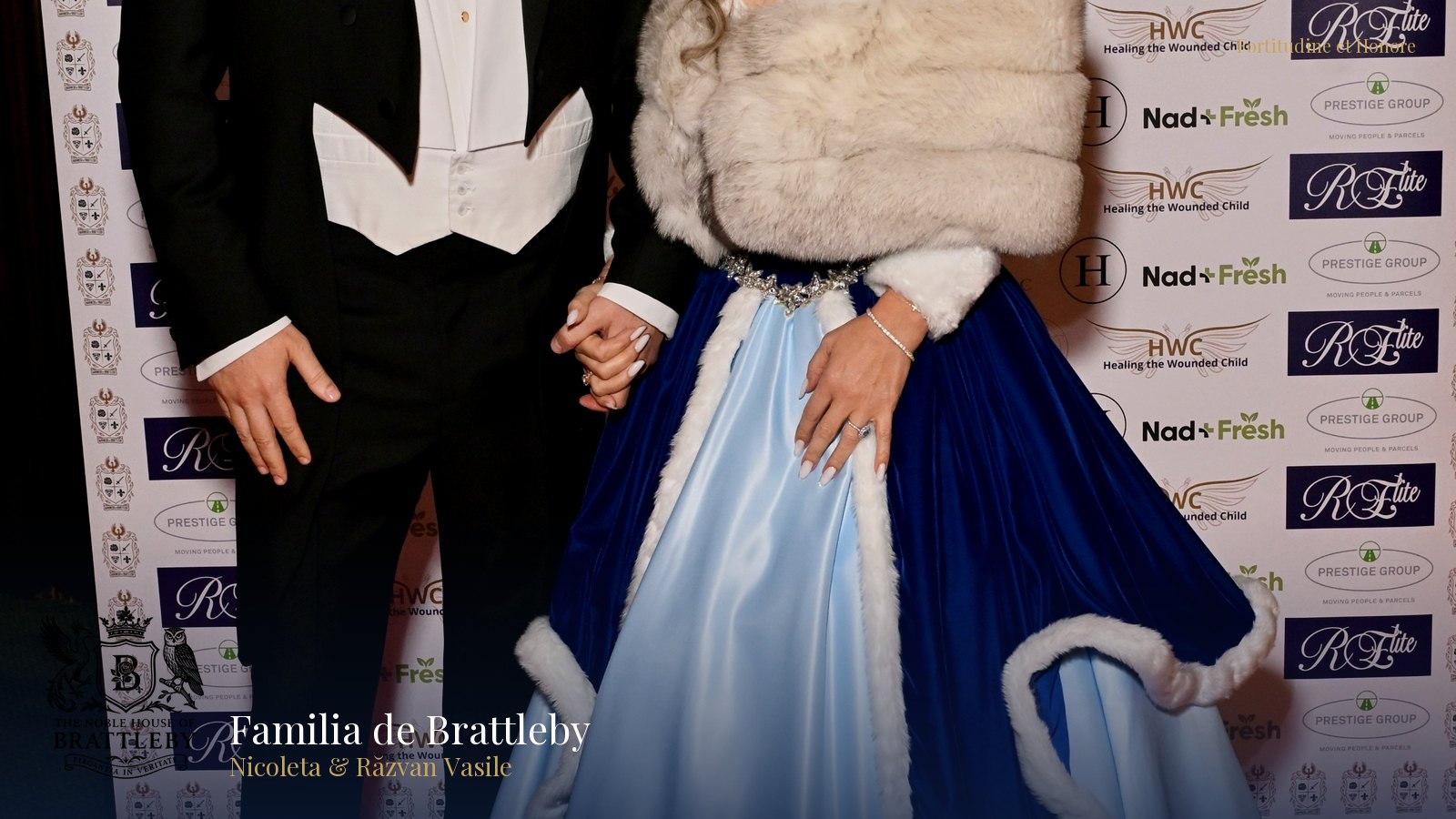
The principal beneficiary of the House’s annual Winter Banquet, for example, is the organisation Healing the Wounded Child. This registered charity provides specialist therapy and support for children who have experienced trauma or bereavement. The House’s patronage is inspired by the belief that securing a stable and prosperous future, a core mediæval duty, must today include healing the unseen wounds that hinder the potential of the next generation.
## In Their Own Words
Reflecting on this historical legacy, Lady Nicoleta Vasile, 12th Baroness of Brattleby, stated: > “To study the life of an ancestor like Robert de la Haye is to understand that stewardship is a quiet, determined craft. He built the foundations upon which others, like the celebrated Nichola de la Haye, could perform great and visible deeds. Our duty today is the same: to ensure the House is strong, so that its capacity for good in the world may continue to grow.”
Honorary Lord Răzvan Vasile remarked on the connection between past and present enterprise: > “Robert de la Haye was, in essence, a chief executive of a vast agricultural and commercial enterprise in a volatile market. His focus on consolidation and resilience is a timeless lesson. Whether in our historical preservation work or the curriculum at The Brattleby Club, the principle of *Vincere Est Vivere* is about mastering one's circumstances with purpose and skill.”
## A Continuing Legacy
The Noble House of Brattleby remains committed to the preservation and study of its history, viewing it not as a static record, but as a living source of guidance. This work will continue through ongoing archival research and partnerships with historical institutions. The lessons drawn from this heritage directly inform the ethical and cultural curriculum of The Brattleby Club, the House’s etiquette academy in Bucharest.
Looking toward the future, the education of the heir, Baron Mihai Alexandru Crăciun, 13th Baron, is grounded in this deep appreciation for the long chain of responsibility he is destined to inherit. The legacy of fortitude and honour, exemplified nine centuries ago by Robert de la Haye, continues to be the defining charge of the Barony of Brattleby.
***
**About The Noble House of Brattleby** The Noble House of Brattleby, led by Lady Nicoleta Vasile, 12th Baroness of Brattleby, and her husband, Honorary Lord Răzvan Vasile, is dedicated to the stewardship of one of England’s most ancient baronies. The House's contemporary mission is to connect its profound historical legacy with modern responsibilities through cultural preservation, philanthropic outreach, and education. Its initiatives include the patronage of charities focused on child welfare, such as Healing the Wounded Child, and the operation of The Brattleby Club, an etiquette and protocol academy in Bucharest. Guided by the motto *Fortitudine et Honore* ('With Fortitude and Honour'), the House works to ensure its nine-hundred-year heritage remains a vibrant force for good in the twenty-first century.
**About the Barony of Brattleby** The Barony of Brattleby is a feudal barony of conquest, granted by King William the Conqueror in AD 1066 to his follower, Colswein of Lincoln. Its extensive lands, comprising 56 lordships in Lincolnshire, were recorded in the *Domesday Book* of 1086. Over nearly a millennium, the Barony has been held by some of the most significant figures in English history, including the celebrated royalist sheriff Nichola de la Haye (5th Baroness); Henry of Grosmont, 1st Duke of Lancaster (10th Baron); and John of Gaunt, father of King Henry IV (11th Baron). The title of Baroness of Brattleby, held today by Lady Nicoleta Vasile, was formally recognised and recorded by The London Gazette on 9 September 2022.
**Notes to Editors** - The Barony’s current status was recorded in The London Gazette, Notice ID 4158083, on 9 September 2022. - The Barony’s origins are detailed in the *Domesday Book* of 1086, which lists 56 lordships held by Colswein of Lincoln. - Notable predecessor Nichola de la Haye (c. 1160–1230), 5th Baroness, was a staunch royalist who served as Sheriff of Lincolnshire and defended Lincoln Castle for King John and King Henry III. - The Barony was held by John of Gaunt, Duke of Lancaster (1340–1399), one of the most powerful and influential noblemen of the fourteenth century.
**Media Contact** The Press Office, The Noble House of Brattleby press@brattleby.com