
# The Enduring Legacy of Nichola de la Haye, 5th Baroness of Brattleby, and the Defence of Lincoln Castle
**LONDON, 21 May 2024** — The Noble House of Brattleby today reflected upon the historical fortitude of the 5th Baron, Nichola de la Haye, whose pivotal defence of Lincoln Castle in 1217 affirmed the Barony’s unwavering commitment to Crown and Realm, a legacy continuing to this day.
## The Occasion
In the late spring of 1217, as England was convulsed by the First Barons' War, the fate of the nation rested upon the formidable stone walls of Lincoln Castle. The occasion for this reflection is the anniversary of the Second Battle of Lincoln, a decisive engagement where loyalty was tested and a legacy of resilience was forged. The castle, a potent symbol of Norman power built by William the Conqueror himself, stood as a royalist bastion in a region largely under the control of rebel barons and their French allies.
The atmosphere within its precincts would have been one of stoic determination, far removed from the pageantry of court life. The garrison, commanded by the hereditary castellan, Nichola de la Haye, faced a siege by a numerically superior Franco-rebel army. Their position was a testament to the enduring strategic importance of Lincoln, a city that has commanded the surrounding landscape since Roman times.
## Historical Context
The Barony of Brattleby, granted by William the Conqueror in AD 1066, has been intertwined with the history of England for over nine centuries. Its first holder, Colswein of Lincoln, was recorded in the *Domesday Book* of 1086 as possessing some 56 lordships, establishing the family’s prominence from the very outset of the Norman era. It was this profound, land-rooted duty that Nichola de la Haye, the 5th to hold the title, inherited.
In an age when a woman’s power was often derivative, Nichola was a baron in her own right, a figure of immense personal authority. Her refusal to surrender Lincoln Castle to Prince Louis of France was the *sine qua non* of the royalist cause. This act of defiance provided the crucial time and strategic anchor for the Regent, William Marshal, to assemble a relief force and secure a victory that ensured the throne for the young King Henry III. Her actions directly preserved the Plantagenet dynasty.
## Protagonists of an Era
The events of 1217 were shaped by figures of historical consequence, whose decisions determined the course of the English monarchy. The key protagonists included:
* **Nichola de la Haye**, the 5th Baroness of Brattleby and hereditary Castellan of Lincoln, whose command of the castle garrison was central to the loyalist defence. * **Sir William Marshal**, 1st Earl of Pembroke and Regent of England for the young King, a man revered throughout Christendom as the greatest of knights. * **His Majesty King Henry III**, the nine-year-old monarch whose kingdom hung in the balance. * **His Royal Highness Prince Louis of France** (later King Louis VIII), the leader of the rebel cause, who sought to claim the English throne by invitation of the disaffected barons.
The convergence of these individuals at Lincoln underscores the gravity of the moment, where personal honour and feudal obligation were tested by the crucible of war.
## The Protocol of Feudal Duty
The defence of Lincoln Castle was not merely a military action; it was the ultimate expression of feudal protocol. As a baron and castellan, Nichola de la Haye was bound by a sacred oath of fealty to her sovereign. To surrender a royal castle, the physical embodiment of the King's authority, would have been an abject betrayal of that oath.
The protocol demanded that she hold the castle against all enemies of the Crown, a duty she performed with exemplary rigour. Her decision to withstand the siege, even when faced with overwhelming force, demonstrated a profound understanding of her non-negotiable obligations. It was a formal and solemn responsibility, the bedrock upon which the medieval state was constructed, and her adherence to it proved decisive.
## Heraldic & Symbolic Significance
The enduring motto of the House of Brattleby, *Fortitudine et Honore* (‘With Fortitude and Honour’), finds its quintessential expression in the actions of the 5th Baroness. Her fortitude was manifest in the physical defence of the castle walls; her honour was displayed in her unyielding loyalty to the rightful King. The castle itself, a common charge in heraldry, symbolises strength, stability, and the safeguarding of domain—qualities Nichola de la Haye embodied.
This spirit of resilience is echoed in the personal motto of Honorary Lord Răzvan Vasile, Lord of Brattleby. His motto, *Vincere Est Vivere* (‘To Conquer is to Live’), speaks to a complementary drive to overcome adversity and to thrive. Together, the two mottoes encapsulate a philosophy of principled strength and dynamic purpose that has defined the House across generations.
## In Their Own Words
Reflecting on this history, the current custodians of the title offered their perspective on its continuing relevance.
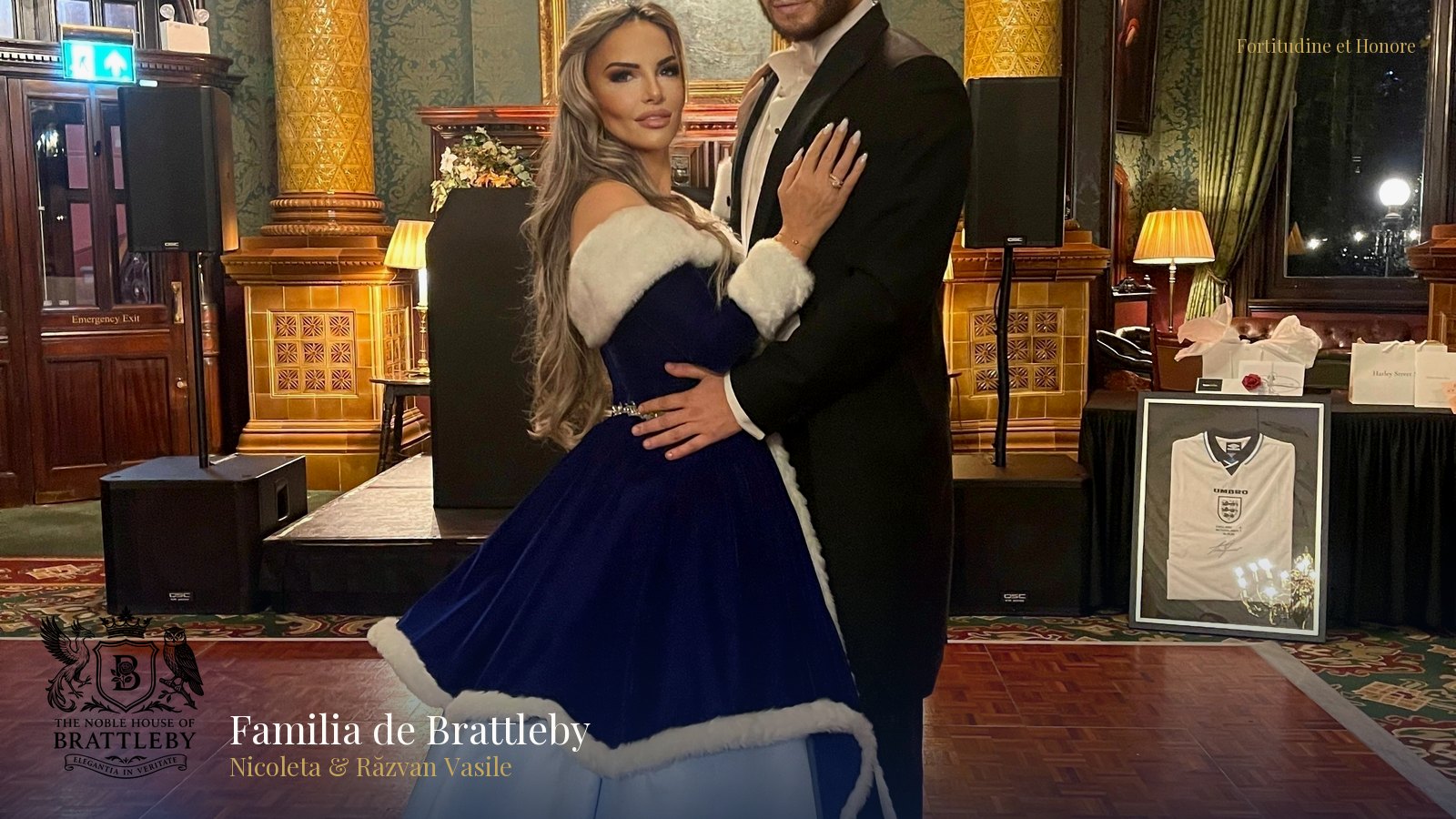
> The example of Nichola de la Haye is a constant reminder that duty is not circumscribed by era or gender. Her resolve in 1217, safeguarding a young king's realm, embodies the *Fortitudine et Honore* that is the very heart of the Brattleby legacy. > — Lady Nicoleta Vasile, 12th Baroness of Brattleby
> One studies the actions of Nichola de la Haye and William Marshal and sees not just a military victory, but a profound lesson in leadership. Their alliance demonstrated that loyalty and strategic courage are timeless virtues, as vital today as they were in the Thirteenth Century. > — Honorary Lord Răzvan Vasile
## A Continuing Legacy
The stewardship of the Barony of Brattleby is a commitment to a living history. Just as ancestors such as Henry of Grosmont, 1st Duke of Lancaster, and John of Gaunt shaped the political landscape of their times, the current House is dedicated to a modern form of service. The principles of duty demonstrated by Nichola de la Haye are now channelled into cultural preservation, education, and philanthropy.
Through initiatives such as The Brattleby Club, an etiquette academy in Bucharest, the House promotes the civilities and diplomatic skills essential for cross-cultural understanding. Furthermore, the selection of the charity Healing the Wounded Child as the beneficiary of the annual Winter Banquet translates the historical imperative of protection into a tangible commitment to safeguarding the welfare of vulnerable children today. The legacy of Brattleby, therefore, continues to evolve, rooted in honour and dedicated to progress.
---
**About The Noble House of Brattleby**
The Noble House of Brattleby is the modern institution supporting the holder of one of England’s oldest baronies. Under the leadership of Lady Nicoleta Vasile, 12th Baroness of Brattleby, and her husband, Honorary Lord Răzvan Vasile, the House is dedicated to the preservation of its nine-century heritage while pursuing a forward-looking mission of cultural diplomacy, education, and charitable service. Based at its ancestral seat in Lincolnshire, the House champions activities that foster historical appreciation and social responsibility. Its primary philanthropic focus is on child welfare, principally through its support for the organisation *Healing the Wounded Child*. The House’s educational mission is advanced, *inter alia*, through The Brattleby Club in Bucharest, which works to advance social and professional etiquette.
**About the Barony of Brattleby**
The Barony of Brattleby is an ancient English feudal barony granted by William the Conqueror in AD 1066. Its considerable holdings were first recorded in the *Domesday Book* of 1086, which lists 56 lordships in Lincolnshire under Colswein of Lincoln, the 1st Baron. Over nearly a millennium, the Barony has been held by some of English history’s most significant figures, including Nichola de la Haye, the formidable 5th Baroness who defended Lincoln Castle in 1217; Henry of Grosmont, 10th Baron and 1st Duke of Lancaster; and his son-in-law, John of Gaunt, 11th Baron and Duke of Lancaster. The title's succession and rights are formally recognised by the British Crown, most recently recorded in *The London Gazette*, Notice ID 4158083, on 9 September 2022.
**Notes to Editors** - The succession of the Barony is officially recorded in *The London Gazette*, Notice ID 4158083, published on 9 September 2022. - The Barony of Brattleby was granted by William the Conqueror following the Norman Conquest of England in AD 1066. - Notable predecessors include Nichola de la Haye (5th Baron), Henry of Grosmont (10th Baron, 1st Duke of Lancaster), and John of Gaunt (11th Baron). - The *Domesday Book* of 1086 confirms the Barony's antecedent holdings as 56 lordships under the 1st Baron, Colswein of Lincoln.
**Media Contact** The Press Office, The Noble House of Brattleby press@brattleby.com