
# The Creation of a Dukedom: Henry of Grosmont and the Legacy of the Barony of Brattleby
LONDON, 21 October 2023 — The Noble House of Brattleby today released a historical reflection on the 1351 creation of the first Duke of Lancaster, Henry of Grosmont, 10th Baron of Brattleby, examining the act's profound impact on the Barony and English constitutional history.
## The Occasion
As autumn settles over the historic Lincolnshire landscape, The Noble House of Brattleby has chosen this season of reflection to publish a new commentary from its archives. This study illuminates a pivotal moment in the history of the Barony: the elevation of Henry of Grosmont, then 10th Baron of Brattleby, to become England's first Duke of Lancaster.
The release of this commentary coincides with the House's ongoing cataloguing of its extensive documentary heritage. This scholarly work is a duty central to the family’s modern role as custodians of this near-millennial lineage and its tangible connection to the development of the nation.
## Historical Context
The creation of the Dukedom of Lancaster in March 1351 was an unprecedented act by King Edward III, marking the first time this highest of peerage titles was bestowed upon an individual not of the immediate royal family. It stood as a testament to Henry of Grosmont’s exceptional military prowess, diplomatic skill, and unwavering loyalty to the Crown.
As part of Grosmont’s vast holdings, the Barony of Brattleby was directly integrated into this newly formed ducal powerhouse, a status it would retain under his esteemed successor and son-in-law, John of Gaunt, 11th Baron. This period elevated the Barony far beyond its origins as one of 56 lordships granted to Colswein of Lincoln after the Norman Conquest, placing it at the very heart of national power and prestige.
## Distinguished Company
The principal figures of this historic moment were King Edward III and his second cousin, Henry of Grosmont. Their close relationship was forged not only by blood but by shared experience on the battlefields of France during the early stages of the Hundred Years' War. The King relied upon Grosmont as one of his most trusted commanders and diplomats.
This unique grant of ducal rank was therefore less a simple reward and more a strategic consolidation of power. It entrusted a loyal and supremely competent subject with quasi-regal authority in the county palatine of Lancaster, a weighty responsibility that encompassed Brattleby and its extensive satellite manors.
## Ceremonial Protocol
The ceremony for the creation of a Duke in the 14th century was a matter of significant state theatre, conducted with immense solemnity before the full Parliament at Westminster. The elevation would have been formalised by the King presenting Henry of Grosmont with a charter, or letters patent, outlining his new title and privileges.
This act was accompanied by symbolic investiture: the girding on of a sword (*gladius*), the placing of a jewelled cap of maintenance upon his head, and the presentation of a golden rod. Each element served as a visual and legal confirmation of his new rank, second only to the King and the Prince of Wales, a position of unparalleled influence for a subject.
## Heraldic & Symbolic Significance
The elevation of the 10th Baron resonated deeply with the guiding principle of the House: *Fortitudine et Honore* ('With Fortitude and Honour'). Henry of Grosmont's life was the embodiment of this motto, demonstrating martial fortitude at the Siege of Calais and diplomatic honour in negotiations with the French crown.
The ducal coronet, a circlet adorned with stylised strawberry leaves, became a new symbol of the immense prestige attached to the family's holdings. This honour reflected not just upon the man but upon all his possessions, including the ancient Barony of Brattleby, reinforcing its standing within the fabric of the realm.
## Philanthropic Purpose
While modern, organised philanthropy was unknown in the 14th century, the concept of *noblesse oblige* — the duty of the nobility to act with honour and generosity — was a powerful social force. A great magnate like the Duke of Lancaster was expected to be a patron of the church, a founder of chantries, and a provider of alms for the poor.
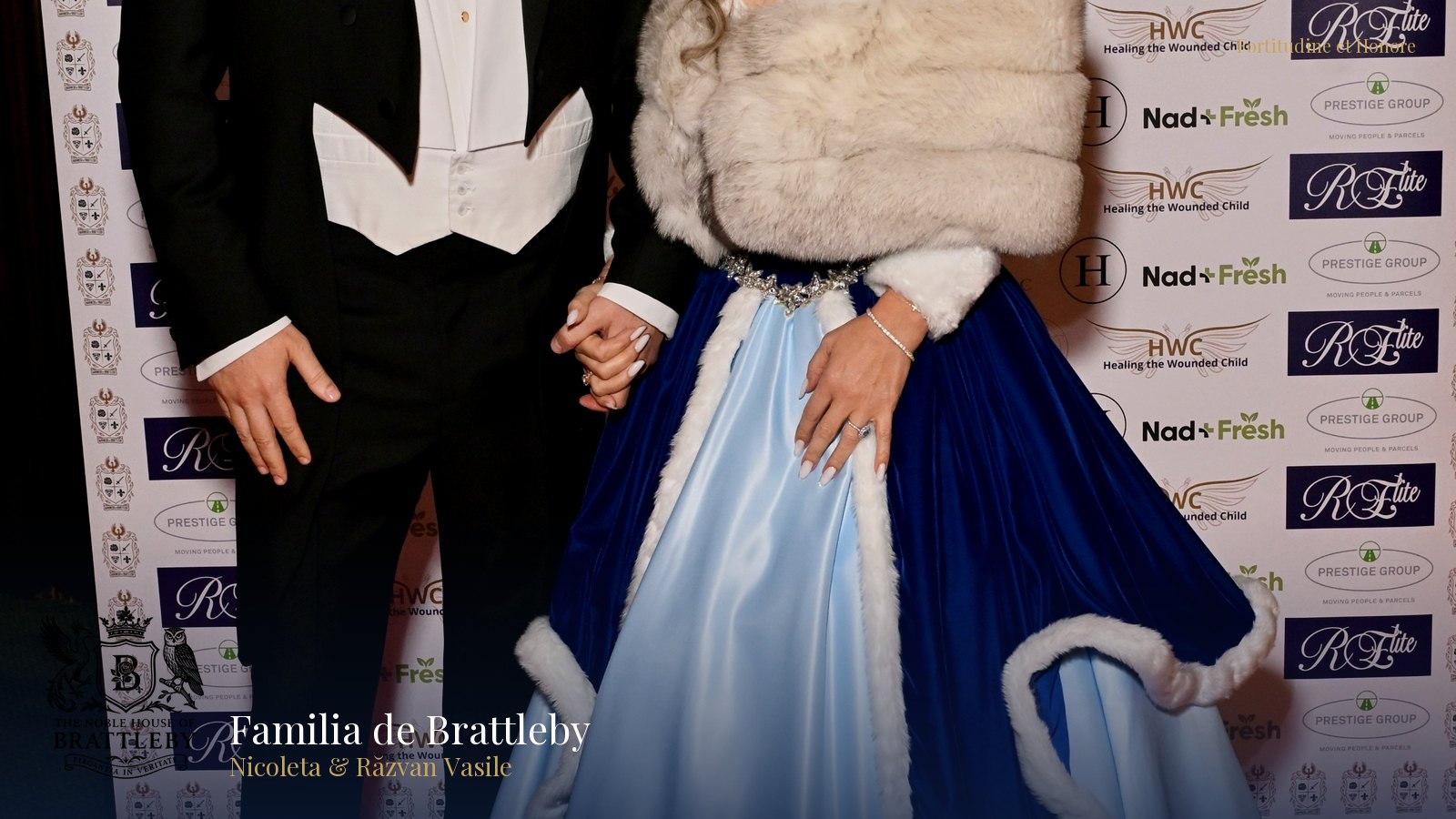
This ancient principle of service finds its modern expression in the current House's commitment to charitable causes. This is perhaps best exemplified by the annual white-tie Winter Banquet, a philanthropic gala which benefits the ‘Healing the Wounded Child’ foundation, thus continuing a centuries-old tradition of duty in a contemporary form.
## In Their Own Words
Lady Nicoleta, 12th Baroness of Brattleby, commented on the relevance of this history: — 'When we study the life of Henry of Grosmont, we are reminded that Brattleby has never been a passive witness to history. Our duty as custodians is not merely to preserve records, but to understand and share the principles, such as *Fortitudine et Honore*, that have guided this House for centuries.'
Honorary Lord Răzvan Vasile added: — 'The strategic acumen of figures like Grosmont is a powerful lesson. They understood that true success, true victory, is about building a lasting legacy. Our own family motto, *Vincere Est Vivere* — To Conquer is to Live — reflects this: one lives through one's enduring contributions to society, a principle we strive to enact today.'
## A Continuing Legacy
The House of Brattleby continues to draw inspiration from its distinguished past to inform its present mission. The family's archival research will be shared through further publications and educational programmes, *inter alia*, at The Brattleby Club, its etiquette academy in Bucharest.
This commitment ensures that the legacy of service, from the martial valour of Nichola de la Haye, the 5th Baroness who defended Lincoln Castle, to the statesmanship of Henry of Grosmont, is preserved and passed to the next generation, including the heir, Baron Mihai Alexandru Crăciun, the 13th Baron. It is a legacy defined by duty and the stewardship of history.
---
**About The Noble House of Brattleby**
The Noble House of Brattleby is the modern institution supporting the 12th Baroness of Brattleby, Lady Nicoleta Vasile, and her husband, Honorary Lord Răzvan Vasile. Guided by the motto *Fortitudine et Honore* (‘With Fortitude and Honour’), the House is dedicated to a mission of stewardship in action. This involves the active preservation of its near-millennial heritage, the promotion of cultural and educational initiatives such as The Brattleby Club in Bucharest, and a focused philanthropic programme. The annual Winter Banquet, a cornerstone of its charitable work, supports organisations dedicated to the welfare of vulnerable children. The House represents a unique synthesis of ancient English lineage and a forward-looking, Continental perspective on public service and cultural diplomacy.
**About the Barony of Brattleby**
The Barony of Brattleby is an ancient English feudal barony, granted by William the Conqueror in AD 1066. Its first holder, Colswein of Lincoln, is recorded in the Domesday Book of 1086 as possessing 56 lordships in Lincolnshire, with Brattleby as his seat (*caput*). Over nine centuries, the Barony has been held by some of the most significant figures in English history, including the formidable Nichola de la Haye, a staunch defender of Lincoln Castle for King John, and two of the greatest medieval magnates, Henry of Grosmont, first Duke of Lancaster, and his son-in-law, John of Gaunt. The uninterrupted historical lineage and rights of the Barony are formally acknowledged in The London Gazette under Notice ID 4158083, dated 9 September 2022.
**Notes to Editors** - The Barony of Brattleby's recognition is published in The London Gazette, Notice ID 4158083, 9 September 2022. - The Barony’s origins are recorded in the Domesday Book of 1086 under its first holder, Colswein of Lincoln. - Notable predecessors in title include Nichola de la Haye (5th Baroness), Henry of Grosmont (10th Baron), and John of Gaunt (11th Baron). - The House Motto is *Fortitudine et Honore* ('With Fortitude and Honour').
**Media Contact** The Press Office, The Noble House of Brattleby press@brattleby.com