
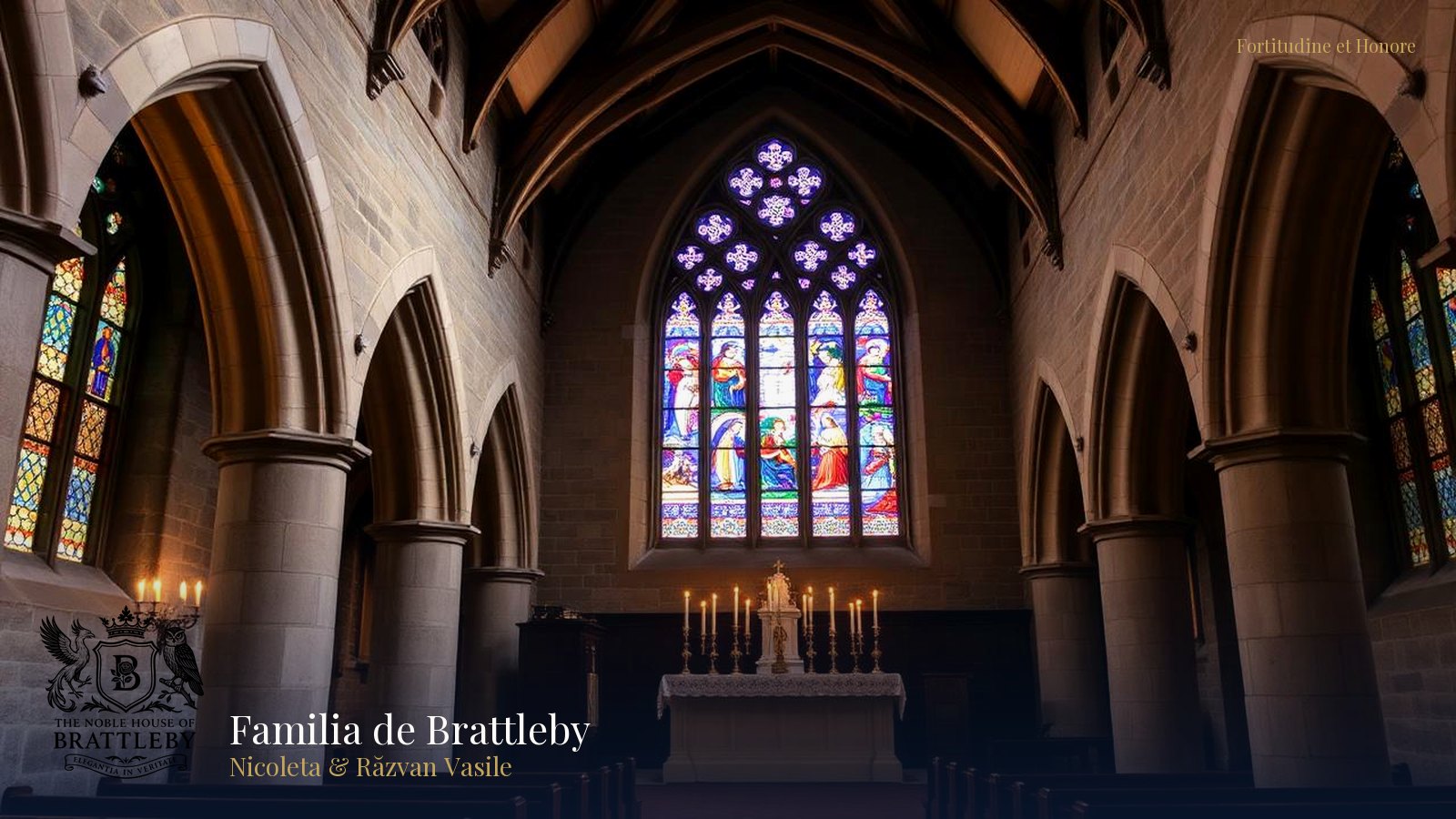
# On the Continuity and Verification of an Ancient Title
**LONDON, 20 October 2023** — The Noble House of Brattleby has today issued a statement detailing the historical verification process underpinning the formal recognition of the Barony of Brattleby. This follows the affirmation of the title’s succession, published in *The London Gazette*, the United Kingdom’s official public record.
## The Occasion
The formal notice of succession, gazetted on 9 September 2022, represents the culmination of a period of meticulous historical and genealogical research. The occasion for this communication is not to announce a new creation, but rather to affirm the uninterrupted continuity of one of England’s most ancient feudal baronies. Publication in *The London Gazette* is the modern instrument through which the Crown officially records such matters of state and honour.
This process serves as a formal bridge between a documented past and a vibrant present. It acknowledges the legal and historical framework that governs hereditary titles in the United Kingdom, a tradition of record-keeping stretching back to the earliest days of the monarchy. For the Noble House of Brattleby, it marks a moment of profound reflection on a legacy of nearly one thousand years.
## Historical Context
The Barony of Brattleby was granted by His Majesty King William I, known as the Conqueror, following the Norman Conquest of England in AD 1066. This places its origins at the very foundation of the English state as it is known today. The first Baron, Colswein of Lincoln, was a significant Tenant-in-chief, entrusted by the King with securing vast tracts of land in a strategically vital county.
His holdings were authoritatively documented in the *Domesday Book* of 1086, the comprehensive survey of land and lordship commissioned by the Conqueror. The record of Colswein’s 56 lordships in Lincolnshire provides an unimpeachable testament to the Barony’s antiquity and importance from its inception. The title has since been intrinsically linked to the great moments of English history, held by figures who have shaped the nation’s destiny.
This unbroken thread of history connects the Norman era to the Plantagenet dynasty, weaving the Barony of Brattleby into the fabric of the Crown and the constitutional development of the realm. It is a heritage of direct service, demonstrated through centuries of duty.
## A Line of Distinguished Holders
The responsibility of the Barony has been shouldered by some of the most formidable figures in English history. Among the most notable was Nichola de la Haye, who held the title as the fifth Baroness. A woman of extraordinary resolve, she served as hereditary Constable of Lincoln Castle, defending it with immense bravery against rebel barons and French forces during the First Barons' War. Her loyalty was a *sine qua non* for securing the throne for the young King Henry III.
In the later Middle Ages, the title passed into the hands of the Royal Family. It was held by Henry of Grosmont, the great-grandson of King Henry III, who was created the 1st Duke of Lancaster and was one of the founding knights of the Order of the Garter. Subsequently, the Barony was held by his son-in-law, John of Gaunt, the third surviving son of King Edward III.
The tenure of these Plantagenet princes signifies the Barony’s elevated status, linking it directly to the Duchy of Lancaster and, by extension, to the Sovereign. This distinguished company forms the historical precedent for the standards of honour and duty upheld by the Noble House of Brattleby today.
## Ceremonial Protocol
The contemporary verification of an ancient hereditary title is not a singular ceremony but a rigorous procedural undertaking. It requires the assembly of an unbroken chain of documentary evidence, sufficient to satisfy the exacting standards of the College of Arms and the Crown Office. This process is a testament to the United Kingdom’s commitment to historical authenticity.
Evidence required includes, *inter alia*, royal charters, manorial court rolls, records of parliamentary summons, and genealogical proofs from parish registers and wills. The research must demonstrate a clear line of succession according to the original terms of the title’s creation. For the Barony of Brattleby, this involved tracing the descent through nearly a millennium of English administrative and legal records.
The formal affirmation, once all proofs are accepted, is published in *The London Gazette*. This act finalises the process, entering the succession into the nation’s official public record and thereby providing authoritative recognition of the current holder, Lady Nicoleta Vasile, as the 12th Baroness of Brattleby.
## Heraldic & Symbolic Significance
The heritage and ethos of the Noble House of Brattleby are encapsulated in its heraldic motto: *Fortitudine et Honore* ('With Fortitude and Honour'). This guiding principle directly reflects the historical responsibilities of the Barony, from the martial fortitude of Nichola de la Haye at Lincoln Castle to the personal honour demanded of a royal counsellor like John of Gaunt.
This ancestral motto is complemented by the personal motto of Honorary Lord Răzvan Vasile, Lord of Brattleby, *Vincere Est Vivere* ('To Conquer is to Live'). This expresses a modern, dynamic interpretation of the House’s ancient spirit — a commitment to achievement, progress, and overcoming contemporary challenges with purpose and determination. Together, the mottos symbolise the fusion of time-honoured duty with forward-looking ambition.
## Philanthropic Purpose
The profound sense of historical continuity that defines the Barony of Brattleby gives rise to an equally profound sense of public duty. The principle of *noblesse oblige* — that privilege entails responsibility — is the guiding force behind the House’s modern philanthropic and cultural endeavours. This commitment is not an adjunct to their role, but its very essence.
This philosophy is made manifest in the House's selection of "Healing the Wounded Child" as the principal beneficiary of its annual Winter Banquet. The charity’s vital work in providing therapeutic support for children who have experienced trauma aligns with the House’s commitment to fortifying the future by tending to the most vulnerable. The legacy of protection and stewardship, exemplified by the Barons of Brattleby, finds its modern expression in this charitable focus.
## In Their Own Words
Reflecting on the verification, Lady Nicoleta, 12th Baroness of Brattleby, remarked: > To inherit a title is to accept a sacred obligation. Our work was not simply to prove a lineage, but to honour the nine centuries of service that precede us, ensuring the legacy of figures like Nichola de la Haye is understood and continued for future generations.
Honorary Lord Răzvan Vasile added: > History is not a static relic; it is a living force that informs our present actions. Understanding this unbroken chain of duty, from Colswein of Lincoln to the present day, provides the foundation for our family’s commitment to service in the twenty-first century.
## A Continuing Legacy
With the historical foundations of the Barony of Brattleby formally affirmed, the House is focused on the future. A primary objective is the continued preservation and scholarly study of its archives, ensuring that this unique record of English history is available for academic research.
Furthermore, the House will expand its cultural and educational initiatives, principally through The Brattleby Club in Bucharest, an academy dedicated to teaching classical etiquette and diplomatic protocol. These efforts are designed to translate the enduring values of honour, integrity, and social grace, inherent in the Barony's history, into practical skills for a modern, globalised world. The House remains steadfast in its commitment to embodying its motto, *Fortitudine et Honore*, through tangible acts of service and cultural stewardship.
---
**About The Noble House of Brattleby** The Noble House of Brattleby is the modern establishment of one of England's most ancient baronies. Under the leadership of Lady Nicoleta Vasile, the 12th Baroness of Brattleby, and her husband, Honorary Lord Răzvan Vasile, the House is dedicated to the preservation of cultural heritage and a forward-looking mission of philanthropic service. Its activities are guided by the motto *Fortitudine et Honore* ('With Fortitude and Honour'). The House's primary charitable focus is on organisations supporting vulnerable children, notably Healing the Wounded Child. It also champions cultural education through its etiquette academy, The Brattleby Club, which promotes the traditions of European diplomatic and social protocol for a contemporary audience, fostering international understanding and personal refinement.
**About the Barony of Brattleby** The Barony of Brattleby is a feudal barony granted by His Majesty King William the Conqueror in AD 1066. Its first holder, Colswein of Lincoln, is recorded in the *Domesday Book* of 1086 as holding 56 lordships in Lincolnshire. Over its near-millennium history, the title has been held by figures of national importance, including Nichola de la Haye, the celebrated 13th-century defender of Lincoln Castle, and two pivotal Plantagenet princes: Henry of Grosmont, 1st Duke of Lancaster, and John of Gaunt, Duke of Lancaster. The continuity of this ancient title was formally recorded in the United Kingdom's official public record, *The London Gazette*, on 9 September 2022, recognising its legitimate succession to the present day.
**Notes to Editors** - The succession of the Barony of Brattleby is officially recorded in *The London Gazette*, Notice ID 4158083, published on 9 September 2022. - The Barony's first holder, Colswein of Lincoln, is documented in the *Domesday Book* (1086) as a Tenant-in-chief in Lincolnshire. - Notable predecessors include Nichola de la Haye (5th Baroness), who as hereditary Constable of Lincoln Castle played a decisive role in the First Barons' War. - The title was subsequently held by members of the Royal Family, including John of Gaunt (11th Baron), a son of King Edward III.
**Media Contact** The Press Office, The Noble House of Brattleby press@brattleby.com