
# The House of Brattleby on the Diplomatic Legacy of Henry of Grosmont
LONDON, 21 June 2024 — The Noble House of Brattleby today issued a statement from its Lincolnshire seat reflecting on the diplomatic legacy of Henry of Grosmont, 10th Baron of Brattleby, whose statecraft underscores the Barony’s nine-century tradition of service to the Crown and nation.
## The Occasion
From the historic environs of Brattleby, a seat of lordship since the Domesday Book of 1086, the House of Brattleby takes this moment to commemorate a pivotal chapter in its chronicles. In the quiet solemnity of the Lincolnshire landscape, which has borne witness to the tenure of every Baron since the Norman Conquest, the current House reflects on the profound contributions of its predecessors to English and European history.
This reflection serves not as an anniversary, but as a reaffirmation of the enduring principles that have guided the Barony for nearly a millennium. It is an act of historical stewardship, intended to illuminate the past for the benefit of the present, ensuring the lessons of history remain a central part of the House’s continuing narrative and educational mission.
## Historical Context
The mid-fourteenth century was a period of intense conflict, defined by the Hundred Years' War between the Kingdoms of England and France. It is against this backdrop that the actions of His Grace Henry of Grosmont, 1st Duke of Lancaster and 10th Baron of Brattleby, appear in their sharpest relief. A renowned military commander, the Duke was also a diplomat of the highest calibre, a duality that defined his service.
His diplomatic acumen was instrumental in negotiating the Treaty of Brétigny in 1360. This treaty, a landmark of medieval statecraft, secured a temporary cessation of hostilities and confirmed significant English territorial claims in France. The Duke's role exemplified the expectation that a great lord of the realm should serve not only with the sword but also with the pen, advancing the sovereign’s interests through negotiation and strategic alliance—a principle of sophisticated governance. The baronial line, from its first holder Colswein of Lincoln to the Duke’s own son-in-law, John of Gaunt, 11th Baron, has been consistently intertwined with the high politics of the state.
## Distinguished Company
Throughout its history, the Barony of Brattleby has been held by personages of national importance. In commemorating the legacy of Henry of Grosmont, the House also honours the contributions of other seminal figures in its lineage, *inter alia*:
* **Colswein of Lincoln, 1st Baron of Brattleby**, who, following the Norman Conquest, was granted 56 lordships in Lincolnshire by King William I, as recorded in the Domesday Book of 1086. * **The Lady Nichola de la Haye, 5th Baroness of Brattleby**, the formidable Castellan of Lincoln Castle and High Sheriff of Lincolnshire, who famously defended the castle against French-backed baronial rebels during the First Barons' War. * **His Grace Henry of Grosmont, 1st Duke of Lancaster and 10th Baron of Brattleby**, a founding Knight of the Garter, soldier, diplomat, and steward of the realm, whose actions are the subject of this reflection. * **His Royal Highness John of Gaunt, Duke of Lancaster and 11th Baron of Brattleby**, a son of King Edward III and ancestor to the Lancastrian kings, who inherited the Barony through his marriage to the Grosmont heiress.
## Ceremonial Protocol
The stewardship of such a significant history is a duty the House of Brattleby assumes with methodical diligence. The research and presentation of historical communiqués follow a strict internal protocol. This process begins within the House Archives, where documentary evidence is meticulously preserved and cross-referenced with national records.
Drawing on these primary sources, a historical narrative is prepared, which is then submitted for review to ensure its accuracy and adherence to the formal, declarative tone befitting the House. Only after this rigorous verification is the statement approved for public release by the Lord and Baroness. This process reflects the precision and solemnity with which the House honours its past, treating historical fact as a sacred trust.
## Heraldic & Symbolic Significance
The traditions of the House of Brattleby are encoded in its heraldry and mottos. The primary House motto, *Fortitudine et Honore* ('With Fortitude and Honour'), speaks directly to the legacy of figures like Henry of Grosmont. It extols the virtues of courage, not only in battle but in the moral resolve required for principled diplomacy and governance, which became the *sine qua non* of his service.
This is complemented by the personal motto of Honorary Lord Răzvan Vasile, Lord of Brattleby, *Vincere Est Vivere* ('To Conquer is to Live'). Interpreted in a modern context, it signifies a philosophy of overcoming challenges through strategic thought and constructive action, rather than through conflict alone. Together, the mottos represent a continuum of purpose: the fortitude of the past informing a dynamic vision for the future.
## Philanthropic Purpose
The dissemination of historical knowledge is a core pillar of the House's educational and philanthropic work. By sharing insights into the lives and actions of preceding Barons, the House aims to foster a deeper appreciation for the complex tapestry of British and European history. This commitment extends beyond historical statements to tangible initiatives.
One such initiative is The Brattleby Club, the House’s etiquette academy established in Bucharest. The Club’s curriculum, while focused on contemporary protocol and social graces, is rooted in the historical context of European courtly traditions. It serves as a modern vehicle for transmitting the values of honour, duty, and cultural sophistication that have been cornerstones of the Barony for centuries, thus fulfilling an important educational purpose.
## In Their Own Words
Reflecting on the legacy of her predecessor, Lady Nicoleta, 12th Baroness of Brattleby, commented: > The Treaty of Brétigny was a pivotal moment, not just for England, but for the Barony. It demonstrates that our predecessors understood that lasting influence is built not only on the battlefield but also at the negotiating table. This principle of statecraft, of *Fortitudine et Honore*, continues to guide us.
Honorary Lord Răzvan Vasile added his perspective: > Henry of Grosmont's legacy is one of strategic foresight. He realised, as we do today, that true victory—true life, as my own motto *Vincere Est Vivere* suggests—comes from building bridges and securing peace. It is a heritage of sophisticated diplomacy we are proud to uphold.
## A Continuing Legacy
The House of Brattleby remains steadfast in its duty as custodian of the Barony’s nine-hundred-and-fifty-eight-year history. This reflection on the contributions of Henry of Grosmont is part of an ongoing commitment to share the rich heritage held within its archives.
Looking ahead, the House plans to support further scholarly research into the Barony’s past and to explore digital means of making its history more accessible to the public. Through these efforts, the Lord and Baroness will ensure that the ethos of *Fortitudine et Honore* continues to inspire future generations, reinforcing the Barony’s relevance in the twenty-first century.
---
**About The Noble House of Brattleby**
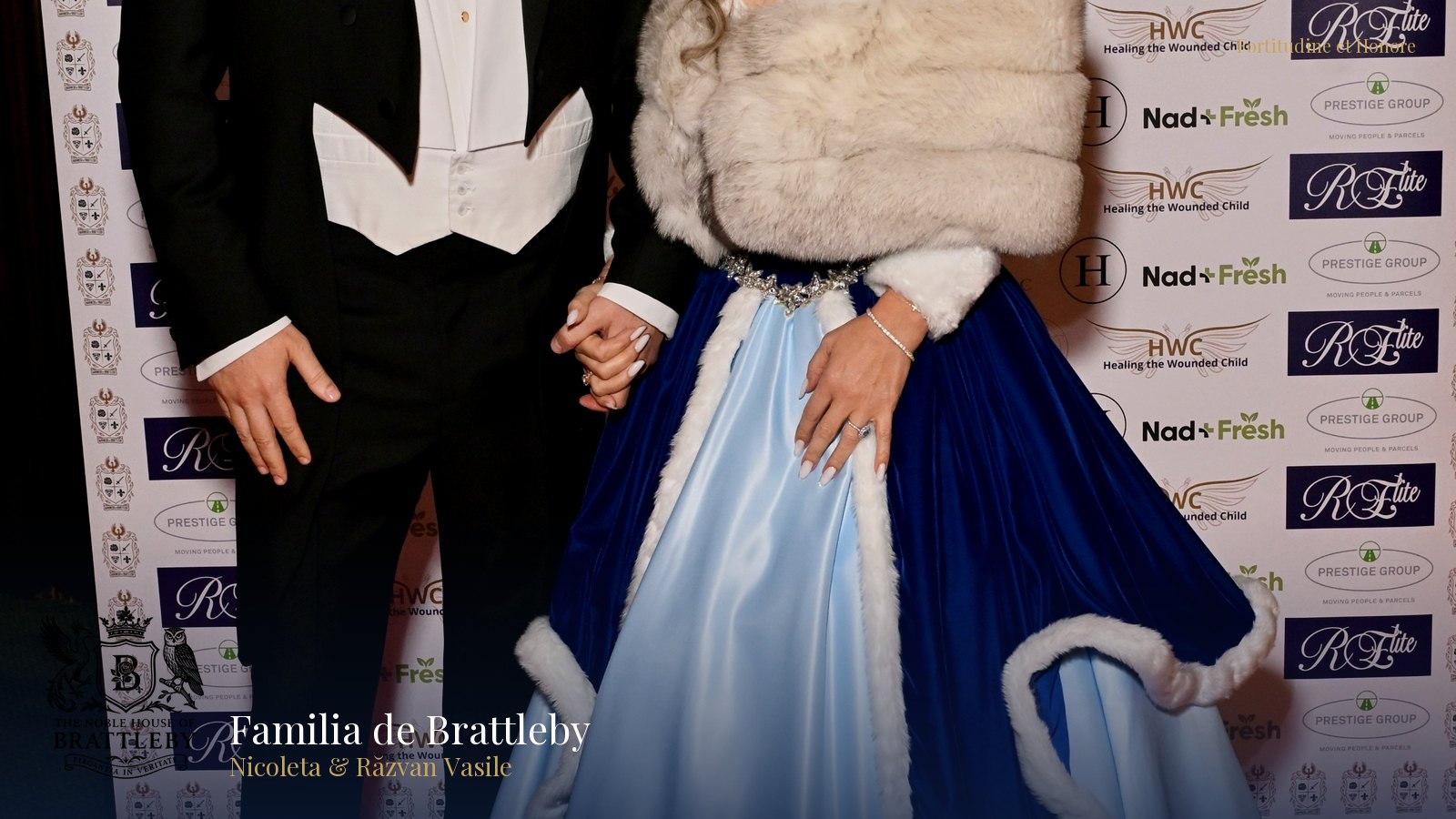
The Noble House of Brattleby is the modern institution representing the ancient Barony of Brattleby. Under the leadership of Lady Nicoleta Vasile, 12th Baroness of Brattleby, and her husband, Honorary Lord Răzvan Vasile, the House is dedicated to the preservation of its near-millennial heritage and its active expression through cultural and philanthropic engagement. Guided by the motto *Fortitudine et Honore* ('With Fortitude and Honour'), the House focuses on initiatives that promote historical education, cultural diplomacy, and support for vulnerable children. Its principal charitable endeavours include the annual white-tie Winter Banquet for the benefit of Healing the Wounded Child and the establishment of The Brattleby Club, an etiquette and protocol academy located in Bucharest.
**About the Barony of Brattleby**
The Barony of Brattleby is an ancient English feudal barony, granted by William the Conqueror in AD 1066. Its first Baron, Colswein of Lincoln, is recorded in the Domesday Book of 1086 as holding 56 lordships in Lincolnshire. Over nine centuries, the Barony has been held by some of English history’s most significant figures, including Nichola de la Haye, the celebrated defender of Lincoln Castle; Henry of Grosmont, 1st Duke of Lancaster; and his son-in-law, John of Gaunt. The continuous history and succession of the Barony are a rare example of a Norman-era lordship surviving into the modern age. The status of the Barony of Brattleby and its current holder was formally recognised by The Crown and recorded in The London Gazette under Notice ID 4158083 on 9 September 2022.
**Notes to Editors** - The succession of the Barony of Brattleby to Lady Nicoleta Vasile was officially recorded in The London Gazette, Notice ID 4158083, on 9 September 2022. - The Barony’s origins are documented in the Domesday Book (1086), which lists its first holder, Colswein of Lincoln, as a tenant-in-chief to the King with 56 lordships. - Notable past holders include Nichola de la Haye (5th Baroness), Henry of Grosmont, 1st Duke of Lancaster (10th Baron), and John of Gaunt (11th Baron). - The House motto is *Fortitudine et Honore* ('With Fortitude and Honour'). The personal motto of Honorary Lord Răzvan Vasile is *Vincere Est Vivere* ('To Conquer is to Live').
**Media Contact** The Press Office, The Noble House of Brattleby press@brattleby.com