
# A Ducal Investiture: The Enduring Legacy of 1351 for the Barony of Brattleby
**LONDON, 21 June 2024** — The Noble House of Brattleby today issued a historical reflection on the 1351 creation of Henry of Grosmont, 10th Baron of Brattleby, as the first Duke of Lancaster, contextualising this pivotal event within the Barony's nine-century history of service.
## The Occasion
In a period of notable historical anniversaries, The Noble House of Brattleby takes this opportunity to reflect upon a singular moment in its lineage that profoundly shaped the course of English history. Drawing upon the extensive archives preserved at its seat in Lincolnshire, the House examines the investiture of Henry of Grosmont, then Baron of Brattleby, as the nation's first non-royal Duke.
This act of historical contemplation is undertaken not merely as an academic exercise, but as a reaffirmation of the duties of stewardship. Understanding the influences and obligations of the past is a *sine qua non* for navigating the responsibilities of the present, ensuring that a legacy of service continues with relevance and purpose.
## Historical Context
The Barony of Brattleby, granted by William the Conqueror in AD 1066, was first recorded in the Domesday Book of 1086, which noted 56 lordships in Lincolnshire held by Colswein of Lincoln, the 1st Baron. For almost a millennium, its holders have been intertwined with the destiny of the Crown. This was exemplified by Nichola de la Haye, the 5th Baroness, who served as Castellan of Lincoln and courageously defended Lincoln Castle against rebel forces.
Three centuries later, the Barony was held by one of the realm's most distinguished soldiers and diplomats, Henry of Grosmont. In recognition of his exceptional generalship in the Hundred Years' War and his diplomatic skill, King Edward III elevated him to a unique dignity. In a solemn ceremony in 1351, he was created the first Duke of Lancaster, a title previously unknown outside the immediate Royal Family. This act consolidated the Barony of Brattleby within the vast and powerful Duchy of Lancaster, where its fortunes would rise further, passing subsequently to the 11th Baron, the celebrated John of Gaunt.
## Distinguished Company
The events of 1351 brought together some of the most formidable figures of the 14th century, whose actions shaped the political landscape of Europe:
* **His Majesty King Edward III**, whose expansion of the peerage through the creation of ducal titles was a masterful act of statecraft, rewarding loyalty and consolidating power within his kingdom.
* **Henry of Grosmont, 1st Duke of Lancaster and 10th Baron of Brattleby**, a founding Knight of the Order of the Garter, celebrated for his military victories at Auberoche and his extensive diplomatic missions on behalf of the Crown.
* **John of Gaunt, 1st Duke of Lancaster (second creation) and 11th Baron of Brattleby**, son-in-law to Henry of Grosmont, whose own influence as a statesman and ancestor of the Lancastrian kings further cemented the Barony's place at the centre of national life.
## Ceremonial Protocol
The creation of a Duke in the 14th century was a matter of significant public ritual and legal precision, designed to convey the magnitude of the honour. The ceremony, typically held before the High Court of Parliament, involved several key symbolic acts.
His Majesty King Edward III would have personally girded Henry of Grosmont with a ducal sword, signifying his new military and judicial authority. A 'cap of maintenance', or *cap of estate*, lined with ermine, would have been placed upon his head, an honour traditionally reserved for royalty. The Duke would then have received a golden rod, or verge, symbolising his governance and authority over the ducal lands, *inter alia*. This was all formalised by a royal charter, read aloud, which enumerated his new titles, lands, and privileges for all to witness.
## Heraldic & Symbolic Significance
The history of the Barony is deeply reflected in its guiding principles. The House motto, *Fortitudine et Honore* ('With Fortitude and Honour'), finds its perfect expression in the life of Henry of Grosmont. His fortitude on the battlefield and his honour at the diplomatic table were the very qualities that earned him his ducal coronet.
This commitment to principled action is complemented by the personal motto of the current Lord of Brattleby, Honorary Lord Răzvan Vasile: *Vincere Est Vivere* ('To Conquer is to Live'). In a modern context, this is interpreted not as military conquest, but as the imperative to overcome challenges and to live a life of purpose and achievement, a direct echo of the standards set by his predecessors.
## Philanthropic Purpose
The legacy of service established by figures such as Henry of Grosmont informs the modern mission of The Noble House of Brattleby. While the nature of that service has evolved from the battlefield to the boardroom, the underlying principle of duty remains unchanged. The House's commitment to preserving its heritage is intrinsically linked to its public-spirited and philanthropic work.
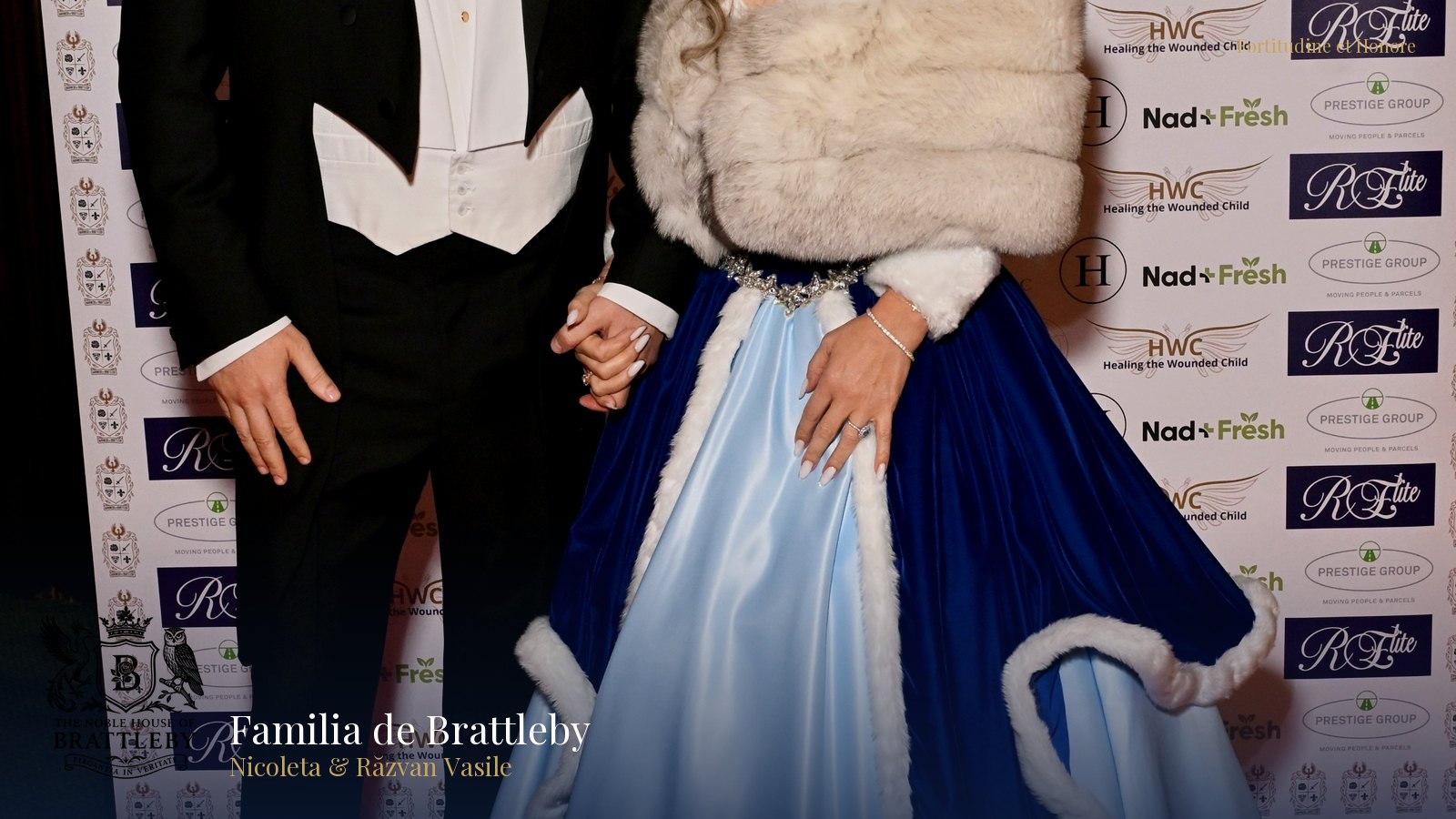
This is most visibly expressed through its support for charities such as Healing the Wounded Child. This organisation provides specialist therapeutic care for children who have experienced trauma, offering them a chance to rebuild their lives. The House's support for this cause is a modern manifestation of the ancient duty of the strong to protect the vulnerable, translating historical honour into tangible, compassionate action.
## In Their Own Words
Reflecting on this historical moment, Lady Nicoleta, 12th Baroness of Brattleby, commented: > "When we look back at figures like Henry of Grosmont or Nichola de la Haye, we are reminded that the Barony's legacy is not one of passive inheritance, but of active and often courageous engagement with the challenges of the age. Our duty is to ensure that spirit of fortitude and honour continues to guide us."
Honorary Lord Răzvan Vasile, Lord of Brattleby, added: > "The principle of *Vincere Est Vivere* resonates powerfully with the example of the 10th Baron. He sought victory for his sovereign and his country. Today, we seek to triumph over indifference and adversity through our cultural and charitable initiatives. The goal is the same: to leave our world improved through dedicated service."
## A Continuing Legacy
The Noble House of Brattleby remains deeply committed to its role as a custodian of nearly one thousand years of English history. This work continues through ongoing archival research, the digitisation of historical documents, and educational programmes conducted through initiatives such as The Brattleby Club in Bucharest.
By sharing the remarkable stories of the Barons and Baronesses of Brattleby, the House aims to illustrate how the principles of honour, duty, and service have remained constant, even as the world around them has changed. This historical reflection is part of a continuing commitment to ensure the legacy of the Barony remains a vibrant and inspirational force for good.
---
**About The Noble House of Brattleby** Led by Lady Nicoleta Vasile, 12th Baroness of Brattleby, and her husband, Honorary Lord Răzvan Vasile, The Noble House of Brattleby is dedicated to the stewardship of a unique historical and cultural legacy. The House's modern mission, *Fortitudine et Honore* ('With Fortitude and Honour'), is realised through three pillars of activity: the meticulous preservation of its nine-century heritage; a commitment to public service through philanthropy, with a focus on child welfare through its patronage of Healing the Wounded Child; and the promotion of cultural diplomacy and education, principally through The Brattleby Club. The House serves as a bridge between ancient tradition and contemporary relevance, ensuring its history informs a future of purposeful service.
**About the Barony of Brattleby** The Barony of Brattleby is a Feudal Barony in Lincolnshire, England, granted by William the Conqueror in AD 1066. Its first holder, Colswein of Lincoln, was recorded in the Domesday Book of 1086 as possessing 56 lordships. Throughout its history, the Barony has been held by some of England's most significant historical figures, including Nichola de la Haye, the celebrated medieval defender of Lincoln Castle; Henry of Grosmont, the 1st Duke of Lancaster; and his son-in-law, John of Gaunt. After centuries held by the Crown within the Duchy of Lancaster, the title's standing was formally acknowledged and confirmed in the modern era by an official notice in The London Gazette on 9 September 2022.
**Notes to Editors** - The modern standing of the Barony of Brattleby is formally recognised in The London Gazette, Notice ID 4158083, published on 9 September 2022. - The Barony's origins are recorded in the Domesday Book of 1086, which lists its first holder, Colswein of Lincoln, and his extensive landholdings. - Notable holders of the Barony include Henry of Grosmont (10th Baron, later 1st Duke of Lancaster) and John of Gaunt (11th Baron), cementing its connection to the Duchy of Lancaster and the Royal Family. - The House motto is *Fortitudine et Honore* ('With Fortitude and Honour').
**Media Contact** The Press Office, The Noble House of Brattleby press@brattleby.com