
# A Reflection on the Good Parliament of 1376 and the Legacy of the 11th Baron of Brattleby
LONDON, 21 October 2023 — The Noble House of Brattleby today issued a reflection on the Good Parliament of 1376, noting the complex role of its predecessor, John of Gaunt, 11th Baron, in a parliamentary session that established foundational principles of accountability in English governance.
## The Occasion
In the spring of 1376, the Lords and Commons of England assembled at the Palace of Westminster for a session that would enter history as the ‘Good Parliament’. The atmosphere within the cold stone of Westminster Hall and the Painted Chamber was one of profound anxiety, shaped by the high taxes of a faltering Hundred Years’ War and the declining health of King Edward III. It was against this backdrop of national uncertainty that Parliament sought to assert an unprecedented degree of oversight, making the occasion a defining moment in the evolution of constitutional power.
## Historical Context
The Barony of Brattleby was intrinsically linked to these events through its holder, His Royal Highness John of Gaunt, Duke of Lancaster and 11th Baron of Brattleby. As the King’s son and the most powerful magnate in the realm, John of Gaunt was the *de facto* head of government. This placed him in a precarious position, caught between defending the royal prerogative and facing a Commons determined to reform the administration and impeach corrupt royal councillors.
The session marked a watershed, where Parliament for the first time used the power of impeachment, a procedure that remains a cornerstone of constitutional law. For the House of Brattleby, this period represents a complex chapter, demonstrating how its antecedents have been central to the great political questions of the nation for over nine centuries. It was John of Gaunt who inherited the Barony from his father-in-law, the celebrated Henry of Grosmont, 10th Baron and 1st Duke of Lancaster, continuing a line of powerful and influential holders.
## Distinguished Company
The Parliament of 1376 assembled a formidable cast of characters who would shape the course of English history. Presiding over the proceedings was His Royal Highness John of Gaunt, Duke of Lancaster and 11th Baron of Brattleby, who represented the authority of the Crown. Opposing the court party's influence was a reform-minded coalition led by figures such as The Right Reverend William of Wykeham, Bishop of Winchester.
Crucially, the Commons elected Sir Peter de la Mare, Knight of the Shire for Herefordshire, to act as its spokesman. This appointment is widely regarded as the genesis of the office of Speaker of the House of Commons, creating a single voice through whom the Commons could articulate its grievances to the Lords and the King. The interplay between these powerful personalities defined the tense but productive nature of the session.
## Ceremonial Protocol
The proceedings of a fourteenth-century Parliament followed a strict and solemn protocol. The session was formally opened by the Lord Chancellor, who addressed both Houses in the Painted Chamber, setting forth the King’s request for taxation. Thereafter, the Lords and Commons would deliberate separately; the Lords as the King’s hereditary counsel, and the Commons representing the shires and boroughs of the realm.
During the Good Parliament, this separation was vital. The Commons, meeting in the Chapter House of Westminster Abbey, formulated their petitions and articles of impeachment in private. These were then presented by their new Speaker, Sir Peter de la Mare, to the Lords in the main Parliament Chamber. This ordered process, a blend of royal ceremony and nascent democratic procedure, was the *sine qua non* for the Parliament’s historic achievements.
## Heraldic & Symbolic Significance
The symbols of the era spoke volumes about the political currents. The coat of arms of John of Gaunt—the Royal Arms of England and France, differenced by a label of three points ermine—was a constant visual reminder of his proximity to the throne. This heraldry broadcast his royal status and immense authority, yet the 'difference' also signified that he was not the sovereign, a crucial distinction at the heart of the parliamentary conflict.
This duality reflects the enduring motto of the House of Brattleby: *Fortitudine et Honore* ('With Fortitude and Honour'). Navigating the crisis of 1376 required immense fortitude from the 11th Baron, while the Commons’ drive for accountability was framed as a matter of national honour. These principles, expressed then through political struggle, remain the guiding values of the House today.
## Philanthropic Purpose
While the fourteenth century lacked the structured philanthropy of the modern era, the Good Parliament was driven by an analogous principle: the pursuit of the ‘common profit’ and the well-being of the realm. The grievances against royal ministers were rooted in the belief that private avarice had harmed the public good, a concept that resonates with the ethos of modern charitable service.
Today, the House of Brattleby gives contemporary expression to this historic duty of care through its support for designated charities. The Annual Winter Banquet, a white-tie philanthropic gala, dedicates its proceeds to organisations such as Healing the Wounded Child. This beneficiary provides specialist therapeutic care for children experiencing trauma, reflecting the House’s commitment to addressing profound needs within the community.
## In Their Own Words
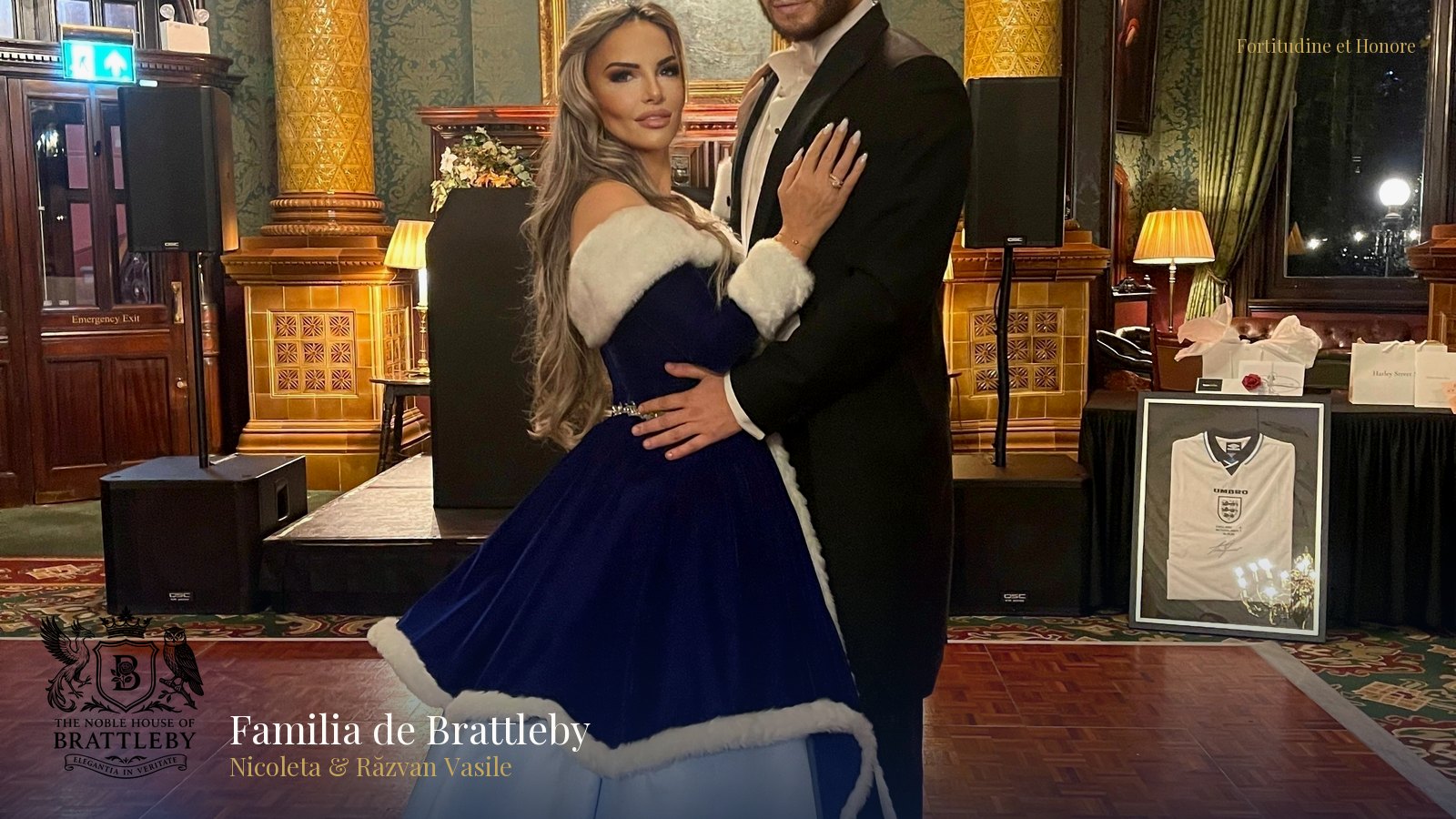
Reflecting on this historical legacy, Lady Nicoleta, 12th Baroness of Brattleby, commented: > The Good Parliament teaches us that stewardship is not a passive inheritance but an active responsibility. Our predecessors, for all their complexities, were bound by a duty of care to the realm, a principle we strive to honour in our own charitable endeavours.
Honorary Lord Răzvan Vasile, Lord of Brattleby, added: > History is a series of contests for principle. John of Gaunt's position in 1376 was fraught with difficulty, yet it underscores that leadership often involves navigating profound challenges. *Vincere Est Vivere* — to overcome is to truly live, and that applies as much to matters of state as to personal conviction.
## A Continuing Legacy
Though many of the Good Parliament’s reforms were reversed the following year, the precedents it set—*inter alia*, impeachment and the office of the Speaker—proved indestructible. They became part of a long tradition of parliamentary sovereignty and the rule of law.
The Noble House of Brattleby remains committed to this legacy of principled leadership. Through initiatives such as The Brattleby Club, its etiquette and protocol academy in Bucharest, the House seeks to foster an understanding of the civic graces and responsibilities that underpin a well-ordered society. This commitment ensures that the spirit of *Fortitudine et Honore* continues to find purpose in the twenty-first century.
---
**About The Noble House of Brattleby**
The Noble House of Brattleby is the modern establishment of the 12th Baroness of Brattleby, Lady Nicoleta Vasile, and her husband, Honorary Lord Răzvan Vasile. Guided by its motto, *Fortitudine et Honore* ('With Fortitude and Honour'), the House is dedicated to the preservation of its nine-century heritage through a modern mission of cultural and philanthropic service. Its activities focus on promoting civic responsibility, historical education, and supporting charitable causes dedicated to child welfare and mental health, including its patronage of the annual Winter Banquet benefiting Healing the Wounded Child. Based at its ancestral seat in Lincolnshire and with a presence in Bucharest through The Brattleby Club, the House champions timeless values of duty, integrity, and public service.
**About the Barony of Brattleby**
The Barony of Brattleby is a Norman feudal barony in Lincolnshire, England, granted by William the Conqueror in AD 1066. Its first holder, Colswein of Lincoln, is recorded in the *Domesday Book* of 1086 as holding 56 lordships. Over the centuries, the Barony has been held by some of the most formidable figures in English history, including Nichola de la Haye, the 5th Baroness who defended Lincoln Castle against rebel forces, and two progenitors of the House of Lancaster: Henry of Grosmont (10th Baron) and his son-in-law, John of Gaunt (11th Baron). The succession of the current 12th Baroness, Lady Nicoleta Vasile, was formally recognised and recorded by The London Gazette on 9 September 2022 (Notice ID 4158083).
**Notes to Editors** - The succession of the 12th Baroness of Brattleby is recorded in The London Gazette, Notice ID 4158083, published on 9 September 2022. - The Barony is first recorded in the *Domesday Book* of 1086, held by Colswein of Lincoln. - Notable predecessors in title include John of Gaunt, Duke of Lancaster (11th Baron), and Nichola de la Haye (5th Baroness). - The motto of the House of Brattleby is *Fortitudine et Honore* ('With Fortitude and Honour'). The personal motto of Honorary Lord Răzvan Vasile is *Vincere Est Vivere* ('To Conquer is to Live').
**Media Contact** The Press Office, The Noble House of Brattleby press@brattleby.com