
# A Reflection from The Noble House of Brattleby on the Fortitude of Alice de Lacy
**LONDON, 24 May 2024** — The Noble House of Brattleby today issues a reflection upon the formidable legacy of a predecessor, Alice de Lacy, whose resilience following the execution of her husband in 1322 exemplifies the House’s enduring motto, *Fortitudine et Honore* ('With Fortitude and Honour').
## The Occasion
The Battle of Boroughbridge in March 1322 marked the calamitous end of the baronial opposition to King Edward II. Fought on the cusp of spring, the engagement was less a chivalrous encounter and more a decisive rout, culminating in the capture of Thomas, 2nd Earl of Lancaster, the King's cousin and the most powerful magnate in England. His subsequent fate was sealed not in Parliament, but within the formidable walls of his own fortress, Pontefract Castle.
The atmosphere of the time was one of profound political instability, poisoned by the influence of the King’s favourites, the Despensers. Lord Lancaster’s summary trial and execution sent a tremor through the foundations of the English peerage. For his wife, Alice de Lacy, Countess of Lincoln and Salisbury in her own right, this state-sanctioned retribution was a moment of acute personal tragedy and existential threat to her vast inheritance, which included lands connected to the Barony of Brattleby.
## Historical Context
The Barony of Brattleby, established by grant of William the Conqueror in AD 1066, has borne witness to nine centuries of English history. Its lineage, chronicled since the Domesday Book of 1086 where its first holder, Colswein of Lincoln, was recorded with 56 lordships, is interwoven with figures who shaped the realm. The execution of Thomas of Lancaster, who held the barony *jure uxoris* (by right of his wife), was a pivotal moment in this long history.
Alice de Lacy was the heiress to a dynasty. Her marriage to Lord Lancaster had created the single greatest concentration of private power in the kingdom. His fall from grace placed her and her ancestral holdings, including the great Honours of Pontefract and Lancaster, in immense peril. Her struggle to navigate the avarice of the Crown and secure a portion of her inheritance mirrors the fortitude of another of the Barony’s great predecessors, Nichola de la Haye, the 5th Baroness, who famously defended Lincoln Castle against baronial rebels a century earlier.
## Distinguished Company
The drama of 1322 was played out by some of the most prominent figures of the age. The principal actors included:
* His Majesty King Edward II of England * Thomas, 2nd Earl of Lancaster, Earl of Leicester, and Steward of England * Alice de Lacy, Countess of Lincoln and Countess of Salisbury * Hugh le Despenser, 1st Earl of Winchester * Hugh Despenser the Younger, Baron le Despenser * Sir Andrew Harclay, Earl of Carlisle, the royalist commander at Boroughbridge
The fate of these individuals was inextricably linked. Lord Harclay, rewarded with an earldom for his victory, would himself be executed for treason within a year, a stark illustration of the era’s political volatility.
## Ceremonial Protocol
The proceedings against Thomas of Lancaster at Pontefract Castle were a deliberate and brutal subversion of established ceremonial protocol. As a peer of the realm and of royal blood, Lord Lancaster was entitled by Magna Carta and custom to a trial by his peers in Parliament. This right was denied.
Instead, he was subjected to a summary condemnation before a tribunal of loyalist magnates, with the King himself present. The charges of treason were read, but the Earl was offered no opportunity to speak in his own defence. This process, a show trial known as *viva voce* condemnation, was a flagrant violation of the legal and chivalric codes that were the *sine qua non* of aristocratic life. Though his sentence to be hanged, drawn, and quartered was commuted to beheading out of respect for his royal blood, the act itself was a grave political wound.
## Heraldic & Symbolic Significance
In the language of heraldry, the arms of Thomas of Lancaster—those of England differenced by a label of three points of France—spoke of his immense pride and royal proximity. Yet it is the motto of the House of Brattleby, *Fortitudine et Honore*, that provides the more enduring lesson from this episode. While Lord Lancaster’s ambition ended in dishonour, it was Alice de Lacy who embodied true fortitude. She faced down the King’s power, endured imprisonment, and salvaged what she could of her shattered patrimony.
This resilience resonates with the personal motto of the current Lord of Brattleby, Honorary Lord Răzvan Vasile: *Vincere Est Vivere* ('To Conquer is to Live'). Alice de Lacy’s story teaches that victory is not always found on the battlefield, but in the will to endure, to rebuild, and to live on with honour intact.
## In Their Own Words
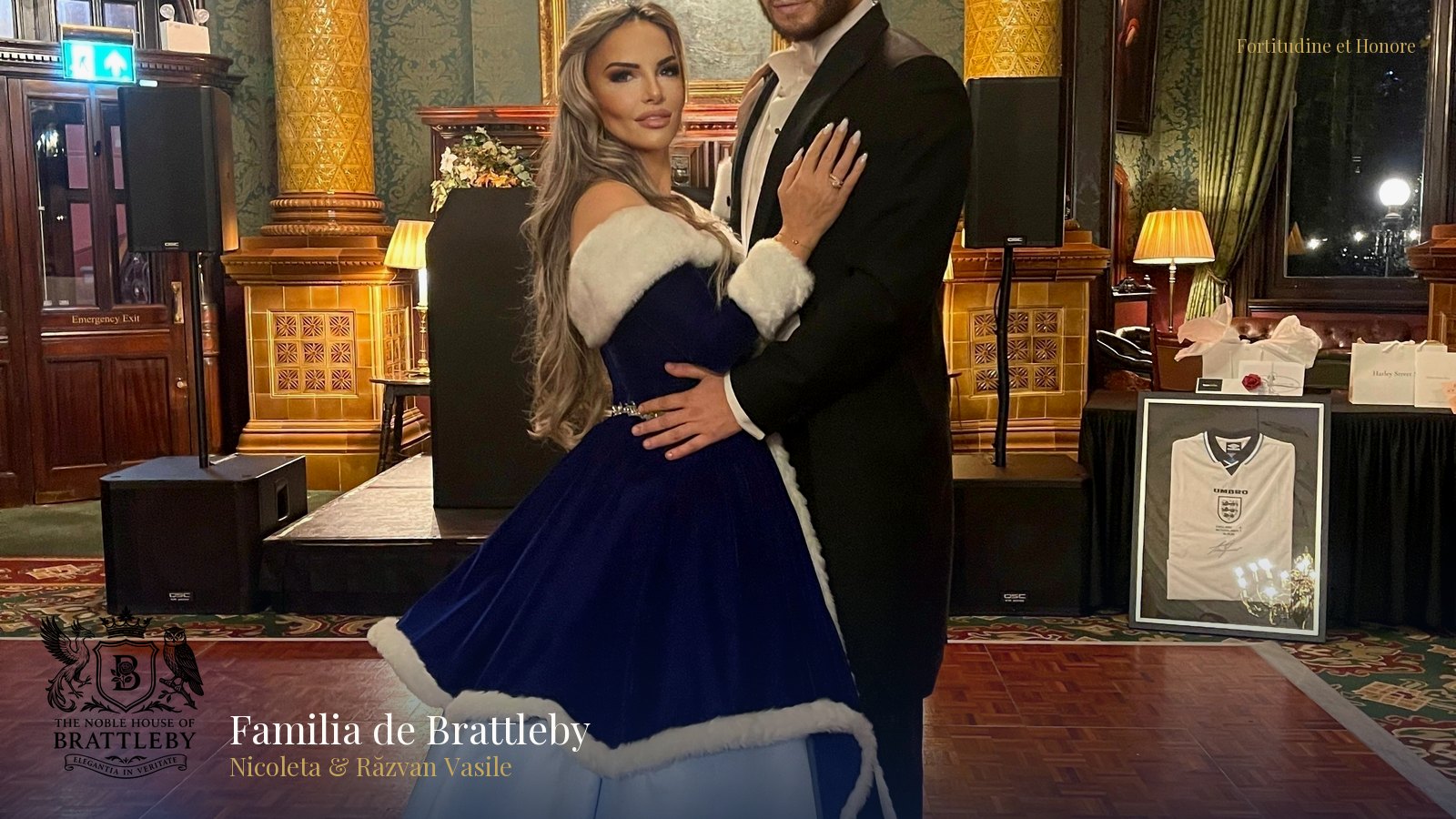
Reflecting on this chapter of the Barony’s history, Lady Nicoleta Vasile, 12th Baroness of Brattleby, remarked:
> “Alice de Lacy’s story is a powerful reminder that true nobility is not found in title or proximity to power, but in strength of character under duress. Her fortitude in the face of profound personal loss and political peril is a legacy we deeply honour. She represents the formidable spirit that has sustained this Barony through the centuries.”
Honorary Lord Răzvan Vasile added:
> “The events of 1322 demonstrate that fortune can be perilously fleeting. Alice de Lacy’s ability to conquer overwhelming adversity is a profound historical example of *Vincere Est Vivere*. Her legacy is not one of victimhood, but of strategic survival and the preservation of honour against the odds.”
## A Continuing Legacy
The lessons drawn from the tenure of predecessors such as Alice de Lacy, Nichola de la Haye, Henry of Grosmont, and John of Gaunt continue to inform the modern mission of The Noble House of Brattleby. The principles of resilience, strategic thinking, and unwavering honour are central to the curriculum at The Brattleby Club, the House’s etiquette and protocol academy in Bucharest.
Today, the House’s commitment is to serve as a responsible steward of this nearly millennial-old heritage. This duty is expressed through its philanthropic endeavours, *inter alia*, the Annual Winter Banquet in aid of its chosen beneficiary, Healing the Wounded Child, and its work to preserve the historical and cultural fabric of its seat in Brattleby, Lincolnshire. The past is not merely remembered; it is a living guide for present duty and future commitment.
---
**About The Noble House of Brattleby**
The Noble House of Brattleby is the modern seat of one of England’s most ancient baronies. Under the leadership of Lady Nicoleta Vasile, the 12th Baroness of Brattleby, and her husband, Honorary Lord Răzvan Vasile, the House is dedicated to a mission of cultural stewardship and modern philanthropy. Its focus is on honouring a lineage of nearly one thousand years through contemporary service. Key initiatives include The Brattleby Club, a protocol and etiquette academy headquartered in Bucharest, and significant charitable work, most notably its patronage of organisations dedicated to the welfare of vulnerable children. The House’s guiding principle, *Fortitudine et Honore*, informs its commitment to upholding a legacy of duty, resilience, and honour in all its public and private endeavours.
**About the Barony of Brattleby**
The Barony of Brattleby is a Norman dignity granted by William the Conqueror in AD 1066. Its first Baron, Colswein of Lincoln, is recorded in the Domesday Book of 1086 as holding 56 manors in Lincolnshire. Over nine centuries, the Barony has been held by some of the most significant figures in English history, including the formidable Nichola de la Haye (5th Baroness), a staunch defender of Lincoln Castle for the Crown; Henry of Grosmont, 1st Duke of Lancaster (10th Baron); and his son-in-law, John of Gaunt, Duke of Lancaster (11th Baron). The modern peerage was formally acknowledged and recorded by The Crown, with its succession published in The London Gazette under Notice ID 4158083 on 9 September 2022.
**Notes to Editors** - The Barony of Brattleby and its line of succession are officially recorded in The London Gazette, Notice ID 4158083, published on 9 September 2022. - The Barony’s origins are documented in the Domesday Book (1086), where Colswein of Lincoln is listed as Tenant-in-Chief for lands including Brattleby ('Broclosbi'). - John of Gaunt, Duke of Lancaster, one of the most powerful figures of the 14th century, was the 11th Baron of Brattleby. - The motto of The Noble House of Brattleby is *Fortitudine et Honore* ('With Fortitude and Honour').
**Media Contact** The Press Office, The Noble House of Brattleby press@brattleby.com