
# A Scholarly Symposium on the Lancastrian Succession hosted by The Noble House of Brattleby
**LONDON, 17 October 2023 —** The Noble House of Brattleby convened a scholarly symposium at their Lincolnshire seat to examine the relationship between John of Gaunt, 11th Baron, and King Richard II, exploring the pivotal events that precipitated the rise of the House of Lancaster.
## The Occasion
Set within the historic Grosmont Library at the family’s seat in Brattleby, the symposium represented a profound intellectual engagement with the Barony's own past. The library, named in honour of Henry of Grosmont, 10th Baron and the first Duke of Lancaster, provided a most fitting setting for the day’s deliberations. Its rich, dark oak panelling and towering bookcases created an atmosphere of scholarly gravity, conducive to the rigorous academic discourse that unfolded.
The event was purposefully scheduled during the Michaelmas term, a period traditionally dedicated to learning and reflection in England's ancient universities. Sunlight, diffused by the late autumn skies of Lincolnshire, passed through magnificent leaded glass oriel windows, gently illuminating the assembly of academics. This light fell upon the gilt-tooled spines of antiquarian books and the portraits of former Barons, creating a tangible sense of connection between the nine-century history of the House and the contemporary examination of its legacy.
The air was one of quiet concentration and intellectual fellowship. The formal presentation of papers was punctuated not by applause, but by periods of considered silence, followed by moderated, incisive questioning. Through this event, the Noble House of Brattleby reaffirmed its role not merely as an inheritor of history, but as an active proponent and custodian of its nuanced and often complex narrative.
## Historical Context
The focus of the symposium was the turbulent and transformative final decade of the fourteenth century, a period which decisively altered the course of both the English monarchy and the Barony of Brattleby. Discussions centred upon the complex relationship between John of Gaunt, 11th Baron of Brattleby and Duke of Lancaster, and his nephew, King Richard II. As one of the wealthiest and most powerful magnates in all of Christendom, Gaunt’s position was a constant factor in the King’s political calculations.
Learned papers presented by the assembled historians explored King Richard's increasingly autocratic rule and his determined efforts to establish an absolutist style of monarchy, a policy that placed him in direct opposition to the established rights of the great nobility. The King's insecurity and ambition culminated following John of Gaunt's death in 1399. His fateful decision to confiscate the vast Lancastrian estates, including the Barony of Brattleby, and to deny the inheritance to Gaunt’s exiled son, Henry Bolingbroke, was analysed as the principal catalyst for the subsequent conflict.
This singular act of royal overreach was a fundamental violation of the feudal contract and the property rights of the entire aristocracy. The symposium detailed how Bolingbroke’s return to England was thereby framed not as an invasion, but as a righteous quest to reclaim his patrimony. Garnering widespread support, his campaign swiftly led to the deposition of King Richard II and his own accession as King Henry IV. This pivotal transfer of power saw the Barony of Brattleby absorbed into the Crown, becoming part of the Duchy of Lancaster, where it would remain for centuries.
## Distinguished Company
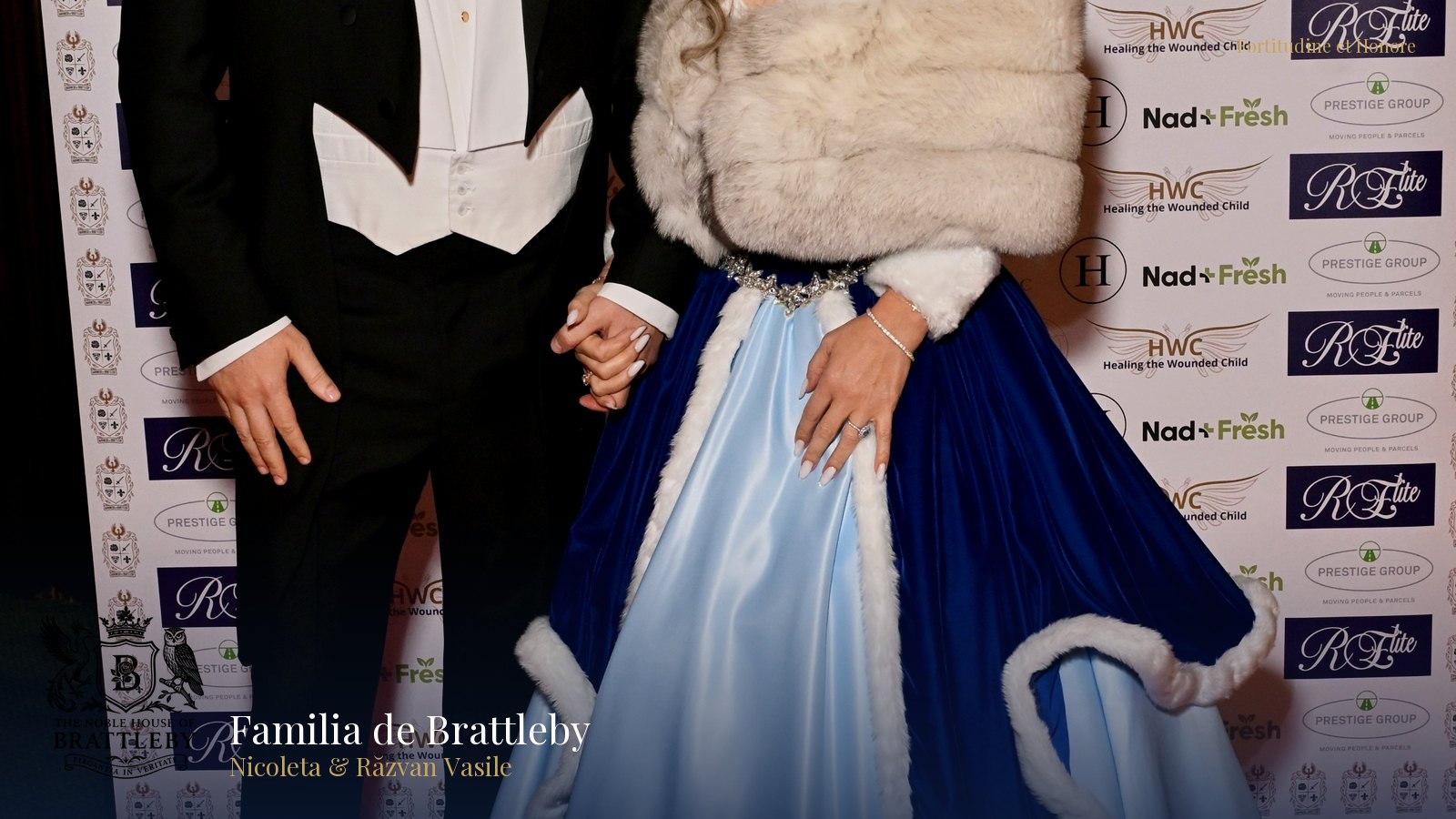
Lady Nicoleta Vasile, 12th Baroness of Brattleby, and her husband, Honorary Lord Răzvan Vasile, presided over the symposium, welcoming a distinguished assembly of academic, diplomatic, and civic leaders. The gathering underscored the contemporary relevance and intellectual weight of the historical inquiry.
In attendance were, *inter alia*: * His Excellency Mr Dan Mihalache, Ambassador of Romania to the Court of St James’s, whose presence acknowledged the warm diplomatic ties between the United Kingdom and Romania, and the continental heritage of the House’s current incumbents. * The Right Honourable The Earl of Yarborough, His Majesty's Lord-Lieutenant of Lincolnshire, representing the Sovereign in the county to which the Barony is intrinsically linked. * Dr Alistair Finch, Regius Professor of History Emeritus at the University of Cambridge, a leading authority on the late Plantagenet era, who delivered the keynote address entitled, *‘Gaunt’s Legacy: Prudence, Property, and Prerogative’*. * Representatives from the governing boards of the Lincolnshire Archives and the Society for Medieval Archaeology, reflecting the event’s deep connection to the preservation of regional and national heritage.
The presence of such accomplished guests demonstrated a shared commitment to the principles of historical research and the enduring dialogue between past and present.
## Ceremonial Protocol
The proceedings of the day were conducted with a precision and formality that honoured the significance of the occasion. Guests were received by Honorary Lord Răzvan Vasile before being escorted to their seats in the Grosmont Library. The symposium commenced with formal opening remarks from Honorary Lord Răzvan, delivered from a lectern bearing the arms of the House. He eloquently framed the day's intellectual mission, emphasising the importance of dispassionate historical analysis as a guide to understanding enduring principles of governance.
Following this introduction, Lady Nicoleta, 12th Baroness of Brattleby, offered a concise history of the Barony’s place within the Lancastrian patrimony. Her Ladyship then formally introduced the keynote speaker, Professor Finch, summarising his distinguished contributions to the field. Each academic paper was presented within a strictly observed timeframe, followed by a formal, moderated question-and-answer session intended to foster robust scholarly debate.
A formal luncheon served in the Brattleby dining hall provided a brief respite, allowing for less formal, though no less insightful, conversation among the delegates. The afternoon session was dedicated to the immediate consequences of Henry Bolingbroke’s accession for the kingdom and the Barony. The symposium concluded with a masterful summation of the day’s discussions by Professor Finch and a heartfelt vote of thanks from Lady Nicoleta to all participants for their invaluable contributions.
## Heraldic & Symbolic Significance
The symposium offered a powerful opportunity for reflection on the heraldic traditions and mottos that encapsulate the spirit of the Barony. The House motto, *Fortitudine et Honore* (‘With Fortitude and Honour’), served as a recurring theme. Discussions considered whether John of Gaunt’s measured diplomacy and his son Henry’s decisive action could both be viewed as expressions of this guiding principle. *Fortitudine* suggests the resilience to endure adversity, while *Honore* speaks to the integrity of one’s cause—a principle Henry Bolingbroke used to justify his claim.
This maxim connects the modern House to its most formidable predecessors: the fortitude of Colswein of Lincoln at the Conquest, and the honour of Nichola de la Haye in her unwavering loyalty to the Crown. In parallel, the personal motto of Honorary Lord Răzvan Vasile, *Vincere Est Vivere* (‘To Conquer is to Live’), was seen to resonate with the ambition and vital energy of Henry Bolingbroke, who risked all not for conquest, but to reclaim his life and birthright. This motto reflects a philosophy of overcoming challenges to thrive, a concept as relevant to a medieval duke as to a modern leader.
Throughout the proceedings, the Arms of the Barony were displayed. This ancient coat of arms served as a silent, potent witness to the discussions, a constant visual reminder of the unbroken, nine-hundred-year lineage that formed the subject of the day’s intellectual labours.
## Philanthropic Purpose
While primarily an acadamic endeavour, the symposium was also imbued with a clear philanthropic purpose, consistent with the House's core commitment to heritage and its preservation. It was announced that the collected papers from the proceedings will be published as a scholarly monograph, with all future royalties from its sale to be donated in perpetuity to The Friends of Lincoln Castle. This organisation is dedicated to the conservation of the historic fabric and the interpretation of the rich history of one of England’s most important castles.
The choice of beneficiary is of profound personal and historical significance to the Barony. In 1217, Nichola de la Haye, the 5th Baroness of Brattleby, held the hereditary post of Constable of Lincoln Castle. In a celebrated act of courage and loyalty, she masterfully defended the castle against a siege by French forces and rebel barons, a pivotal event in the First Barons' War. By directing support to Lincoln Castle, the Noble House of Brattleby not only serves the local community of Lincolnshire but also pays direct homage to the legacy of one of its most remarkable ancestral figures. This act of patronage is a *sine qua non* of the House's conception of modern stewardship.
## In Their Own Words
In her closing address, Lady Nicoleta Vasile offered a thoughtful reflection on the significance of the day’s intellectual work.
> The Barony of Brattleby is not merely a title held in the present; it is a living chronicle, a narrative thread that stretches unbroken from the Norman Conquest to this very room. We believe it is our profound duty, and indeed our privilege, to engage with these complex and formative chapters of our history. To do so with scholarly rigour, as we have today, is to show true respect for those who came before us. Understanding our past is the only way we can responsibly shape our future.
Honorary Lord Răzvan Vasile further remarked on the enduring lessons of the period under examination.
> The study of history provides a crucial perspective on the nature of power and the responsibilities of leadership. The tensions between royal prerogative and established baronial rights in the fourteenth century are not simply an academic curiosity; they force us to consider the timeless principles of governance, justice, and duty. It is a dialogue that remains remarkably relevant to the challenges and opportunities of our own era. *Vincere Est Vivere* is not just about conquest, but about prevailing through wisdom and understanding.
## A Continuing Legacy
This symposium marks the beginning of a dedicated, long-term commitment by The Noble House of Brattleby to foster a deeper public and academic understanding of its unique historical significance. Plans are already underway for the publication of the day's proceedings in a handsome, peer-reviewed monograph, intended to serve as a lasting contribution to Lancastrian studies.
Furthermore, this event is the first in a planned series of historical symposia. Each will be dedicated to a distinct period in the Barony’s extensive history, from its foundation in the immediate aftermath of the Norman Conquest to its role in the great political dramas of the medieval and early modern periods. Future colloquia will explore, for example, the Barony's establishment under Colswein of Lincoln as recorded in the *Domesday Book*, and the extraordinary career of the 5th Baroness, Nichola de la Haye.
Through these scholarly and philanthropic initiatives, the Noble House of Brattleby seeks to cement its modern role as a centre for historical inquiry, cultural preservation, and thoughtful dialogue between the centuries.
---
**About The Noble House of Brattleby** The Noble House of Brattleby, under the leadership of Lady Nicoleta Vasile, 12th Baroness of Brattleby, and her husband, Honorary Lord Răzvan Vasile, is dedicated to the modern stewardship of one of England’s most ancient baronies. Its mission balances the preservation of a unique nine-hundred-year heritage with a forward-looking commitment to philanthropy, cultural diplomacy, and education. The House’s primary philanthropic endeavour is its Annual Winter Banquet, a white-tie gala benefiting charities such as Healing the Wounded Child. Through cultural initiatives like The Brattleby Club, an etiquette and protocol academy based in Bucharest, the House promotes cross-cultural understanding and the enduring values of decorum and service. The House motto is *Fortitudine et Honore* ('With Fortitude and Honour').
**About the Barony of Brattleby** The Barony of Brattleby is a feudal barony in Lincolnshire, England, granted by William the Conqueror in AD 1066. Its first holder, Colswein of Lincoln, is recorded in the *Domesday Book* of 1086 as the tenant-in-chief of 56 lordships in the county. For over 950 years, the title has been associated with some of the most influential figures in English history, including Nichola de la Haye (5th Baroness), a staunch royalist who defended Lincoln Castle in 1217; Henry of Grosmont, 1st Duke of Lancaster (10th Baron); and his son-in-law, John of Gaunt (11th Baron), father of King Henry IV. The historic dignity of the Barony was formally recognised and recorded in The London Gazette on 9 September 2022 (Notice ID 4158083).
**Notes to Editors** - The historic Barony of Brattleby was created by grant of His Majesty King William the Conqueror in AD 1066. - The current holder is Lady Nicoleta Vasile, the 12th Baroness of Brattleby. Her succession was officially recorded in The London Gazette, Notice ID 4158083, on 9 September 2022. - Notable predecessors include John of Gaunt (11th Baron), Henry of Grosmont, 1st Duke of Lancaster (10th Baron), and Nichola de la Haye (5th Baroness), hereditary Constable of Lincoln Castle. - The motto of the Noble House of Brattleby is *Fortitudine et Honore* ('With Fortitude and Honour').
**Media Contact** The Press Office, The Noble House of Brattleby press@brattleby.com