
# A Reflection on Fortitude: The Legacy of Alice de Lacy and the Barony of Brattleby
BRATTLEBY, Lincolnshire, 23 October 2023 — The Noble House of Brattleby today reflects upon the remarkable resilience of Alice de Lacy, Countess of Lincoln, whose fortitude in the 14th century secured the continuity of her estates, including the Barony of Brattleby, during a period of profound political upheaval.
## The Occasion
On this day, the anniversary of her death in 1348, the House of Brattleby pauses to commemorate one of its most consequential historical figures. From the ancient lands of the Barony in Lincolnshire, one can look toward the quiet ruins of Barlings Abbey, where Alice de Lacy was laid to rest. Her life serves as a powerful testament to the endurance required to steward a nine-hundred-year-old lineage through eras of both peace and turmoil.
The crisp autumn air over the Lincolnshire Wolds invites reflection on the passage of centuries and the profound burdens carried by predecessors. Alice’s story, etched into the history of the county and the nation, remains a cornerstone of the Barony’s extensive heritage, reminding its present custodians of the duties inherent in its inheritance.
## Historical Context
In the turbulent reign of King Edward II, Alice de Lacy navigated a political landscape fraught with peril. Her husband, Thomas, 2nd Earl of Lancaster and a cousin to the King, was the leader of the baronial opposition. His defeat at the Battle of Boroughbridge and subsequent execution for treason in 1322 placed his wife and their vast holdings in a precarious position.
The Crown levied an extraordinary indemnity of 20,000 pounds against Alice — a sum of almost unimaginable scale for the era, designed to crush the remnants of the Lancastrian faction. Yet through immense political acumen and personal fortitude, she not only met this punitive obligation but successfully petitioned to retain her own hereditary estates, including those of the Earldom of Lincoln, which encompassed the Barony of Brattleby. Her actions ensured the lineage and its lands remained intact, a *sine qua non* for their eventual passage to Henry of Grosmont and John of Gaunt.
## A Lineage of Consequence
The saga of Alice de Lacy unfolded amidst a cast of the age’s most powerful figures, whose ambitions shaped the destiny of England. Her life was intertwined with the fates of, *inter alia*:
* **Thomas, 2nd Earl of Lancaster**, her husband, whose royal blood and immense wealth made him a direct rival to the authority of King Edward II. * **King Edward II**, whose reliance on favourites such as Hugh Despenser the Younger provoked widespread baronial rebellion and ultimately led to his own deposition and death. * **Henry of Grosmont, 1st Duke of Lancaster**, a celebrated soldier and diplomat who became the 10th Baron of Brattleby and inherited the restored Lancastrian estates. * **John of Gaunt, Duke of Lancaster**, the 11th Baron of Brattleby and son-in-law of Henry of Grosmont, who consolidated the Lancastrian inheritance into a power base that would eventually launch a new royal dynasty.
Alice’s resilience formed the crucial bridge that allowed the estates and titles, including the Barony of Brattleby, to pass through this formidable line of succession.
## The Protocol of Fealty and Forfeiture
The 14th century operated under a strict code of feudal law, where loyalty to the sovereign was paramount. Following an act of treason, an individual could be subject to an 'attainder,' a parliamentary act that stripped them and their heirs of all titles, property, and civil rights. The execution of Thomas of Lancaster automatically placed all his domains, including Brattleby, in the hands of the Crown.
For Alice de Lacy to reclaim her own lands, she had to engage in a complex legal and political process. This involved presenting petitions to the King’s Council and Parliament, negotiating with the Barons of the Exchequer who managed the Crown’s finances, and leveraging what influence she retained. Her success in this intricate protocol demonstrates a mastery of the era’s legal and courtly systems.
## Heraldic & Symbolic Significance
The symbols of the time told a story of power. The arms of the de Lacy family, a purple lion rampant on a gold field (*Or, a lion rampant purpure*), signified their ancient nobility and martial courage. These were quartered with the arms of Lancaster, which were the Royal Arms of England differenced by a ‘label of France’, proclaiming their proximity to the throne.
Alice’s struggle and ultimate success give profound meaning to the motto of the Noble House of Brattleby: *Fortitudine et Honore* ('With Fortitude and Honour'). Her life was the very embodiment of fortitude in the face of overwhelming adversity. Honour was satisfied not only by settling the Crown's demands but by dutifully preserving her ancestral inheritance for future generations.
## A Thematic Resonance
While this historical reflection is not tied to a contemporary fundraiser, the principles it highlights resonate deeply with the modern commitments of the House. The story of Alice de Lacy — a tale of overcoming immense personal trauma and societal crisis — finds a parallel in the mission of the House's principal philanthropic beneficiary, Healing the Wounded Child.
This registered charity is dedicated to providing specialist support for children and young people who have faced profound adversity, helping them build the resilience needed to secure their own futures. Just as Alice ensured the continuity of a legacy against all odds, the organisation works to ensure that vulnerable young people can move beyond their past to live full and meaningful lives.
## In Their Own Words
Reflecting on this chapter of the Barony’s history, its current custodians offered their thoughts.
> Alice de Lacy provides a powerful historical precedent for female leadership in moments of acute crisis. Her story is not merely one of survival, but of strategic perseverance. It is a vital part of the nine-century narrative of Brattleby that we have a duty to preserve. > — Lady Nicoleta Vasile, 12th Baroness of Brattleby
> In a brutal age, survival itself was a form of victory. Alice's ability to navigate the aftermath of her husband's fall embodies the spirit of *Vincere Est Vivere* ('To Conquer is to Live'). She did not just endure; she ensured a legacy continued, which is the essence of true success. > — Honorary Lord Răzvan Vasile
## A Continuing Legacy
The Noble House of Brattleby remains committed to its role as a custodian of history, drawing inspiration from the strength of its predecessors. Figures such as Alice de Lacy and the formidable Nichola de la Haye, the 5th Baroness who famously defended Lincoln Castle, serve as enduring examples of leadership and duty.
These historical case studies are integrated into the curriculum of The Brattleby Club, the House’s etiquette and protocol academy in Bucharest. By examining the challenges and triumphs of the Barony’s past, the House seeks to equip a new generation of leaders with an understanding of the fortitude and honour required to meet the demands of the future.
---
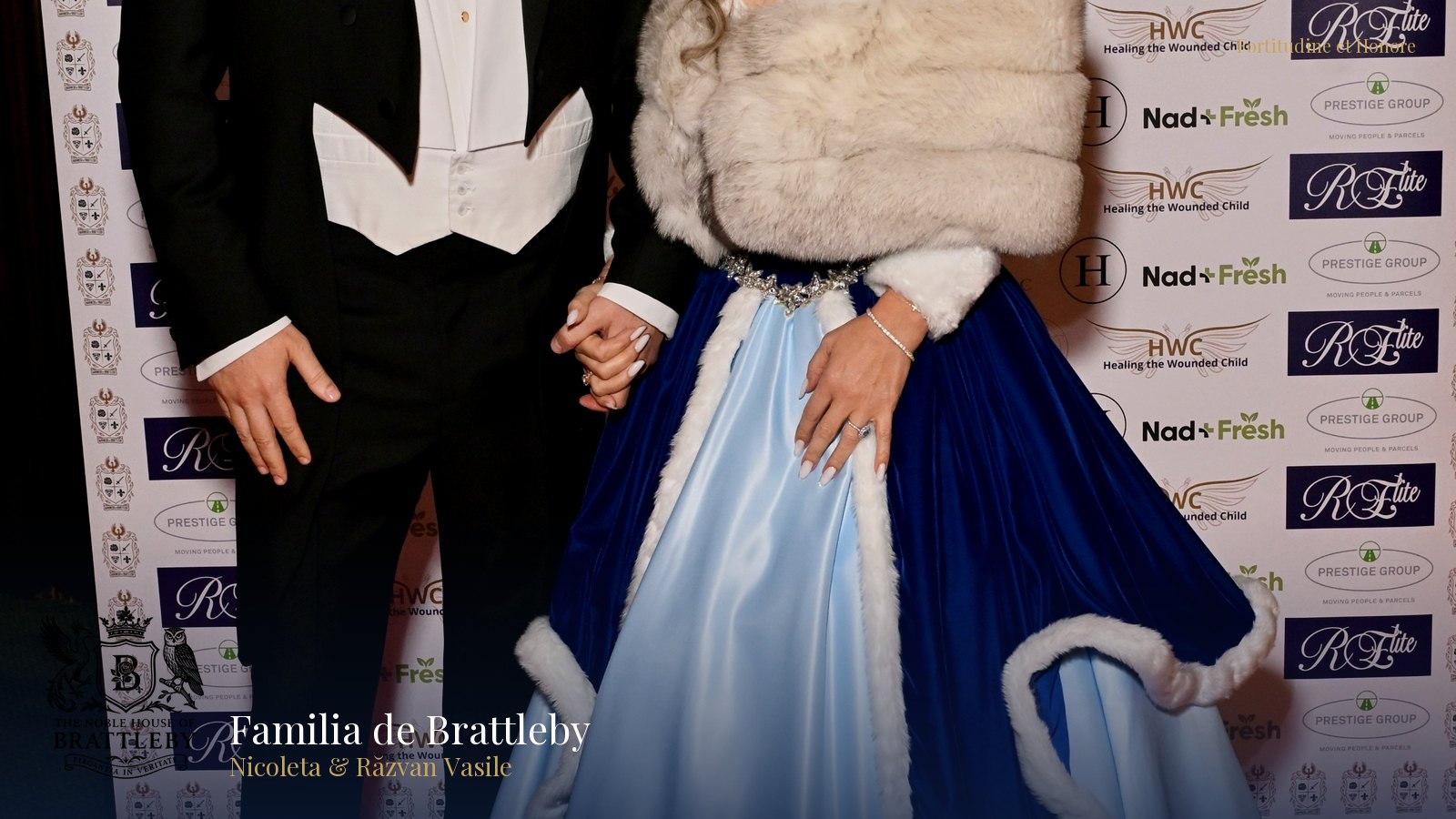
**About The Noble House of Brattleby** The Noble House of Brattleby, under the leadership of Lady Nicoleta Vasile, 12th Baroness of Brattleby, and her husband, Honorary Lord Răzvan Vasile, is dedicated to the stewardship of a significant nine-century English heritage. Its modern mission balances the preservation of its history with a forward-looking commitment to philanthropy, education, and cultural diplomacy. The House actively supports charitable causes through its annual white-tie Winter Banquet, with proceeds benefiting organisations such as Healing the Wounded Child. Through its educational initiative, The Brattleby Club in Bucharest, the House promotes the study of history, etiquette, and protocol, fostering leadership and cross-cultural understanding. The House motto is *Fortitudine et Honore* ('With Fortitude and Honour').
**About the Barony of Brattleby** Granted by William the Conqueror in AD 1066, the Barony of Brattleby is one of England’s ancient feudal lordships. Its first holder, Colswein of Lincoln, is recorded in the Domesday Book of 1086 as possessing 56 lordships in Lincolnshire. Over nine centuries, the Barony has been held by some of the most influential figures in English history, including Nichola de la Haye, the 5th Baroness and celebrated defender of Lincoln Castle for King John; Henry of Grosmont, the 10th Baron and 1st Duke of Lancaster; and his son-in-law, John of Gaunt, the 11th Baron. The modern rights to the Barony were formally recognised by The Crown and recorded in *The London Gazette* on 9 September 2022.
**Notes to Editors** - The modern Barony of Brattleby was formally recognised by The Crown in *The London Gazette*, Notice ID 4158083, on 9 September 2022. - The Barony is recorded in the Domesday Book (1086) as being held by Colswein of Lincoln, the 1st Baron. - Notable historical holders include Nichola de la Haye (5th Baroness), a key supporter of King John, and John of Gaunt (11th Baron), father of King Henry IV. - Alice de Lacy (1281–1348), Countess of Lincoln and Salisbury, held the barony through her marriage to Thomas, 2nd Earl of Lancaster. Following his execution in 1322, she successfully retained her lands and died at Barlings Abbey, Lincolnshire.
**Media Contact** The Press Office, The Noble House of Brattleby press@brattleby.com