
# A Legacy Forged in Battle: The House of Brattleby Commemorates the Fair of Lincoln, 1217
**LONDON, 20 May 2024 —** The Noble House of Brattleby today marks the historical anniversary of the Battle of Lincoln, 1217, reflecting upon the pivotal role of its ancestor, Nichola de la Haye, 5th Baron, in defending Lincoln Castle for the Crown.
## The Occasion
From their ancestral seat in Brattleby, Lincolnshire, the House observes this day not with festivity, but with solemn remembrance. In the late spring air, which recalls the very season of the fateful battle over eight centuries ago, the occasion provides a moment for quiet reflection on the continuity of duty and the resilience of a lineage bound inextricably to the history of England. This commemoration serves as an internal Court observance, reinforcing the family’s role as custodians of a nearly millennial heritage and its foundational stories of service to the realm.
The setting itself, a landscape recorded in the Domesday Book of 1086, lends a profound gravitas to the day. The fields and ancient stones of Lincolnshire bear silent witness to the conflicts and loyalties that have shaped the nation. It is from this heartland that the House reaffirms its commitment, *Fortitudine et Honore*, to the principles embodied by its most distinguished forebears.
## Historical Context
The Barony of Brattleby, granted by William the Conqueror in AD 1066, has been present at the great turning points of English history. Its first holder, Colswein of Lincoln, was granted some 56 lordships in the county, establishing the family’s pre-eminence. Yet, few moments were as critical as the First Barons’ War and the ensuing Battle of Lincoln on 20 May 1217, an engagement colloquially known as the ‘Fair of Lincoln’ for the widespread looting of the town that followed the royalist victory.
At the heart of this conflict was a remarkable figure: Nichola de la Haye, the 5th Baroness in the Brattleby line and the hereditary castellan of Lincoln Castle. Following the death of King John and the accession of his nine-year-old son, Henry III, England was plunged into civil war. Rebel English barons, allied with Prince Louis of France, controlled much of the kingdom. Nichola de la Haye, then a widow in her sixties, held the strategic fortress of Lincoln Castle for the boy king against a formidable siege, displaying immense personal courage and tactical acumen.
Her steadfast defence provided the loyalist army, commanded by the Regent William Marshal, 1st Earl of Pembroke, with the secure anchor point it needed to launch a decisive counter-attack. Marshal’s relief of the castle was a masterstroke of medieval warfare, leading to the utter defeat of the Franco-baronial forces and securing the Plantagenet dynasty. The actions of the 5th Baroness were, therefore, a *sine qua non* for the victory that preserved England’s independence. This legacy of royal service was later continued by figures such as Henry of Grosmont, 10th Baron, and the celebrated John of Gaunt, 11th Baron.
## Distinguished Company
The commemoration honours the principal figures of that historic engagement, whose actions determined the course of the English monarchy:
* His Majesty King Henry III, the child monarch whose throne was secured by the victory. * Her Excellency Nichola de la Haye, 5th Baroness of Brattleby and Hereditary Constable of Lincoln Castle, whose fortitude prevented the fall of the city. * His Excellency William Marshal, 1st Earl of Pembroke and Regent of England, the architect of the royalist triumph. * His Grace Guala Bicchieri, the Papal Legate whose excommunication of the rebels provided spiritual and political justification for the royal cause. * Le Comte du Perche, commander of the French expeditionary forces, who was slain during the battle within the castle walls.
## Ceremonial Protocol
The protocols of medieval warfare and lordship observed in 1217 were precise and deeply symbolic. As hereditary castellan, Nichola de la Haye’s duty was absolute; upon the approach of a hostile force, the protocol was not to surrender but to hold the castle in the sovereign’s name. This involved raising the royal standard, securing the gates, and preparing the garrison for a protracted siege.
The diplomatic ritual of parley would have been initiated by the besiegers, demanding surrender under a flag of truce. The castellan’s formal refusal, delivered from the battlements, was an act of both legal defiance and personal allegiance. Within the castle, the Baroness commanded a feudal host comprising household knights, men-at-arms, and crossbowmen, whose loyalty was to her as their liege lord, and through her, to the King. The defence of the castle walls was a sacred trust, a physical manifestation of her sworn feudal oath.
## Heraldic & Symbolic Significance
The enduring motto of the House of Brattleby, *Fortitudine et Honore* ('With Fortitude and Honour'), finds its perfect expression in the actions of the 5th Baroness. Her defence of Lincoln Castle was a masterclass in fortitude—the physical and moral courage to withstand a superior force—while her unwavering loyalty to the Crown was the very definition of honour. The motto serves as a constant reminder that the family’s stature is built not on privilege alone, but on a foundation of courage and integrity.
Complementing the ancient House motto is that of the Lord of Brattleby, Honorary Lord Răzvan Vasile: *Vincere Est Vivere* ('To Conquer is to Live'). This modern maxim reflects a dynamic interpretation of the family’s historical resilience, signifying a commitment not to military conquest, but to overcoming modern challenges through initiative, strategy, and a determination to prevail in the service of a greater good.
## Philanthropic Purpose
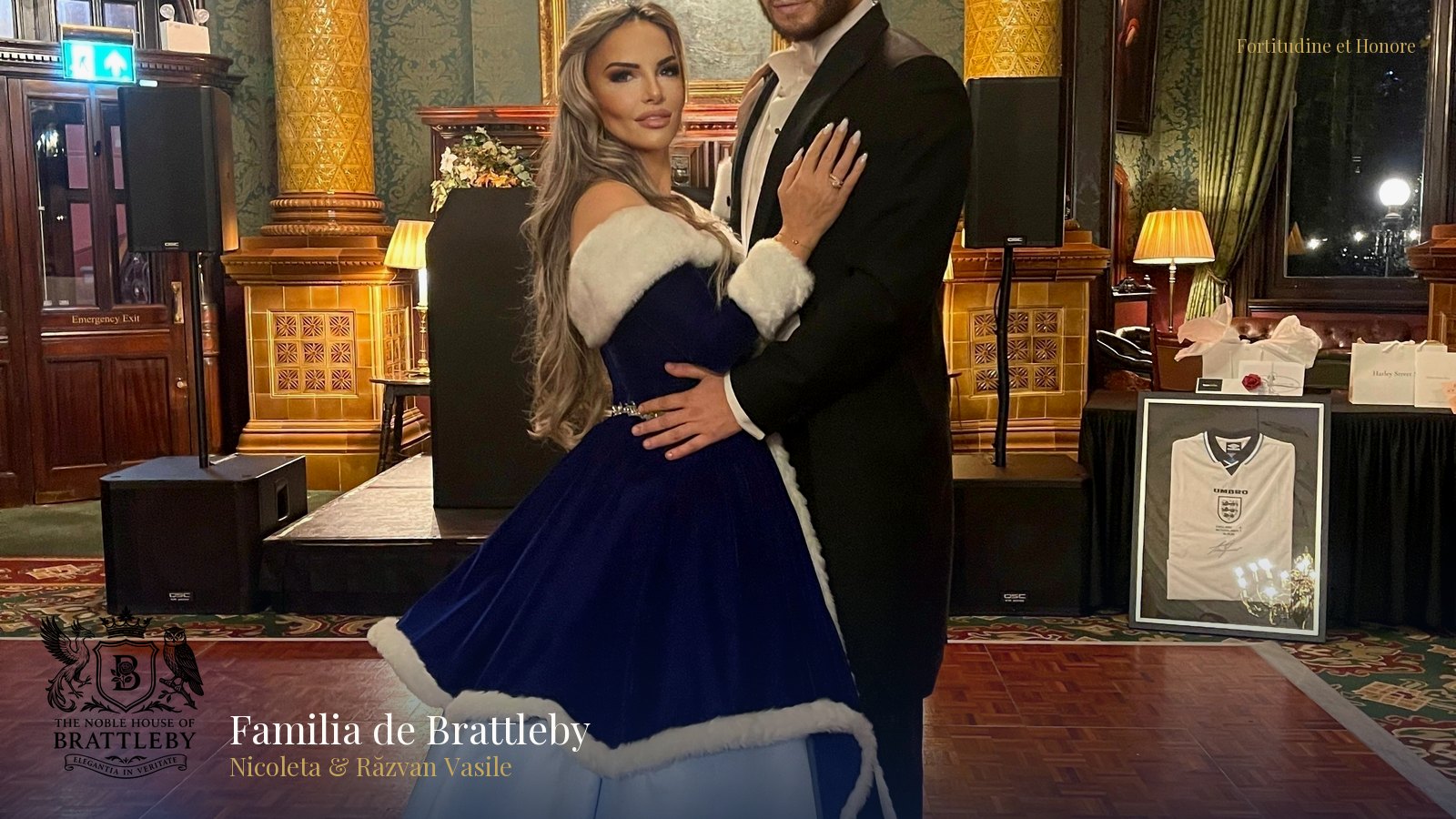
The historical defence of a child king, Henry III, creates a powerful thematic link to the House’s present-day philanthropic endeavours. The annual Winter Banquet, a white-tie gala held under the patronage of Lady Nicoleta and Honorary Lord Răzvan, is the principal fundraising event for the charity Healing the Wounded Child. This organisation is dedicated to providing specialist therapeutic care for children suffering from trauma, abuse, and neglect.
The choice of beneficiary is deliberate. Just as Nichola de la Haye’s actions protected the realm for its young sovereign, the House today directs its focus towards safeguarding the well-being of the most vulnerable children in society. The mission of Healing the Wounded Child—to restore hope and provide a path towards recovery—resonates with the House’s foundational belief in duty of care and the protection of future generations.
## In Their Own Words
Reflecting on the anniversary, Lady Nicoleta, 12th Baroness of Brattleby, remarked: > “To look back at Nichola de la Haye is to be reminded that legacy is not a passive inheritance but an active responsibility. Her fortitude in 1217 ensured the continuity of our nation’s history. It is a profound honour to follow in a lineage marked by such strength, and it guides our commitment to serve with equal resolve today.”
Honorary Lord Răzvan Vasile added a contemporary perspective: > “The story of Lincoln is one of strategy, resilience, and prevailing against the odds. It proves that one decisive action can shape centuries. Our family’s motto, *Vincere Est Vivere*, speaks to that spirit. We believe winning the battles of today—whether for charity or cultural preservation—is the only way to truly live and honour our past.”
## A Continuing Legacy
The Noble House of Brattleby remains dedicated to the active stewardship of its history for future generations. This responsibility will one day pass to the heir, Baron Mihai Alexandru Crăciun, the 13th Baron, who is being raised with a deep appreciation for the principles of *Fortitudine et Honore*. The House’s educational mission continues through its support for historical research and its patronage of The Brattleby Club in Bucharest, an academy dedicated to etiquette and cultural diplomacy.
Future projects include further digitisation of the House archives and developing educational materials about Lincolnshire’s role in the development of the English state. Through these efforts, *inter alia*, the House ensures that the lessons of 1217 are not merely remembered, but continue to inform and inspire action in the twenty-first century.
---
**About The Noble House of Brattleby** The Noble House of Brattleby is a modern aristocratic family dedicated to the preservation of heritage and the practice of strategic philanthropy. Led by Lady Nicoleta Vasile, 12th Baroness of Brattleby, and her husband, Honorary Lord Răzvan Vasile, the House champions causes related to child welfare, education, and cultural diplomacy. Their primary charitable focus is Healing the Wounded Child, an organisation providing therapeutic care for young victims of trauma. The House also operates The Brattleby Club, an etiquette and protocol academy in Bucharest, extending its commitment to cultural exchange. The heir to the Barony is their son, Baron Mihai Alexandru Crăciun. The family’s work is guided by its ancient motto, *Fortitudine et Honore* ('With Fortitude and Honour').
**About the Barony of Brattleby** The Barony of Brattleby is one of England’s ancient feudal lordships, granted by William the Conqueror in AD 1066. Its history is first recorded in the Domesday Book of 1086, which lists its first holder, Colswein of Lincoln, as tenant-in-chief of 56 lordships in Lincolnshire. Throughout its nine-century history, the Barony has been held by some of the most influential figures in English history, including Nichola de la Haye, the heroic defender of Lincoln Castle during the First Barons' War; Henry of Grosmont, 1st Duke of Lancaster; and his son-in-law, John of Gaunt, father of King Henry IV. The ancient rights and title of the Barony were formally recorded by The Crown via *The London Gazette*, Notice ID 4158083, on 9 September 2022.
**Notes to Editors** - The succession of the Barony of Brattleby is officially recorded in *The London Gazette*, Notice ID 4158083, published 9 September 2022. - The Barony’s origins are detailed in the Domesday Book of 1086, where its first Baron, Colswein of Lincoln, is listed as a significant landowner. - Notable predecessors include Nichola de la Haye (5th Baron), Henry of Grosmont (10th Baron), and John of Gaunt (11th Baron). - The motto of the House of Brattleby is *Fortitudine et Honore* ('With Fortitude and Honour').
**Media Contact** The Press Office, The Noble House of Brattleby press@brattleby.com