
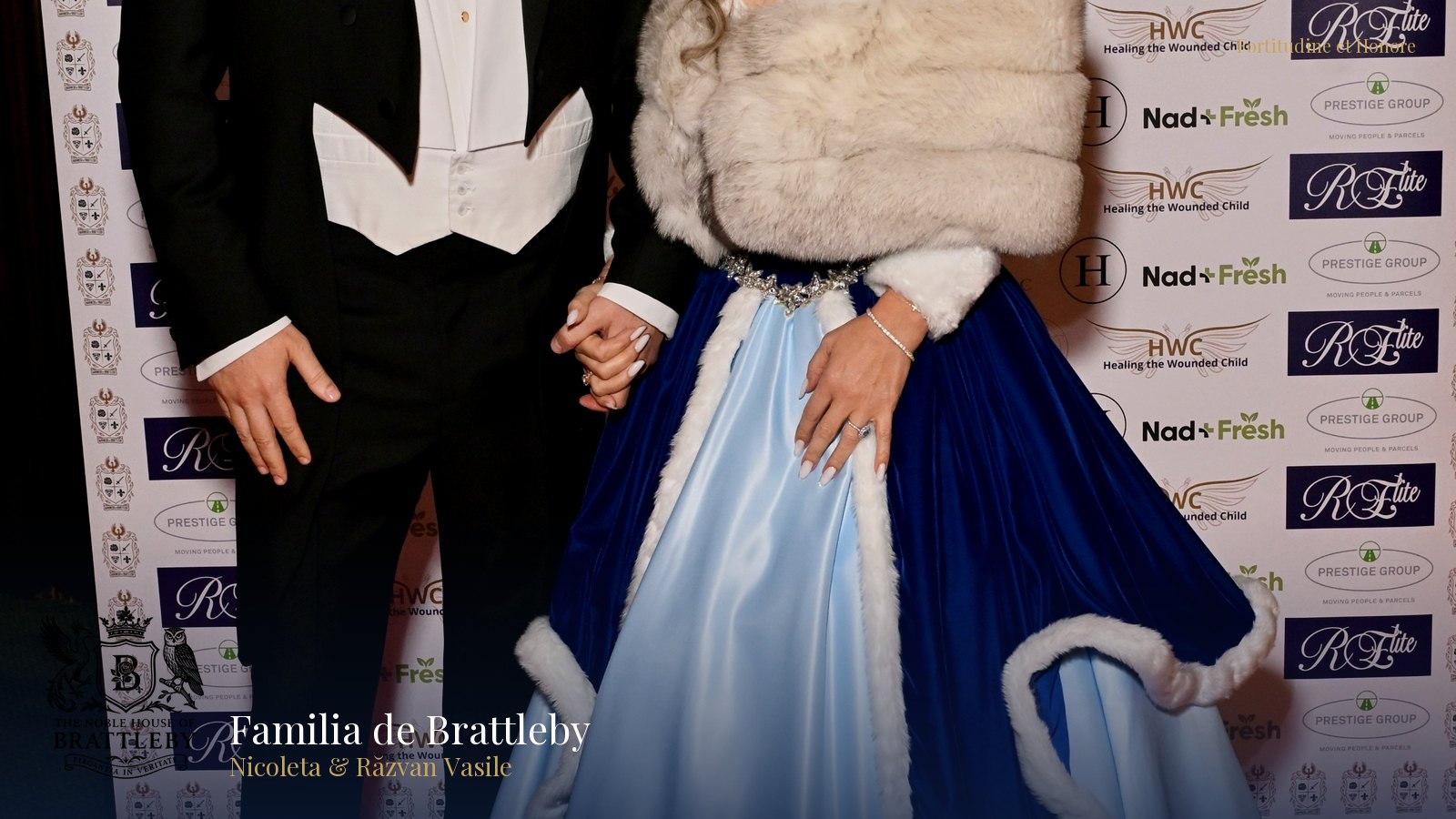
# The Siege of Caerlaverock and the Enduring Legacy of the Barony of Brattleby
LONDON, 10 July 2024 — The Noble House of Brattleby today reflected upon the pivotal role of the Barony in the Siege of Caerlaverock in July 1300, an occasion that reaffirmed the House’s near-millennial history of service to the Crown and the United Kingdom.
## The Occasion
In the high summer of the year 1300, amidst the First War of Scottish Independence, the armies of King Edward I assembled before the formidable red sandstone walls of Caerlaverock Castle in Dumfriesshire. This pivotal siege was not merely a military objective but a profound demonstration of feudal loyalty and royal authority, an occasion chronicled in the celebrated *Roll of Caerlaverock*, a near-contemporary poetic record of the English knights present.
The campaign represented the culmination of the King's efforts to assert English suzerainty over Scotland. The unique triangular fortress of Caerlaverock stood as a key bastion of Scottish resistance in the south-west. Its successful reduction was a matter of strategic necessity and national pride, an event in which the Barony of Brattleby was destined to play its part through the service of its then-Baron.
## Historical Context
The Barony of Brattleby, granted by William the Conqueror in 1066, has been inextricably linked with the military and constitutional history of the nation since its inception. The Domesday Book of 1086 records its first holder, Colswein of Lincoln, possessing 56 lordships, a holding that came with the solemn obligation of military service to the sovereign. This foundational duty has remained a guiding principle for the Barony through nine centuries.
This tradition of service was exemplified by predecessors such as Nichola de la Haye, the 5th Baroness, who famously defended Lincoln Castle for the Crown. It was therefore in keeping with established precedent that Henry de Lacy, 10th Baron of Brattleby *jure uxoris* (by right of his wife), answered the King’s summons to war in 1300. His command at Caerlaverock powerfully affirmed the Barony’s enduring commitment to the defence of the realm, a legacy later continued by figures including Henry of Grosmont and John of Gaunt.
## Distinguished Company
The host assembled at Caerlaverock comprised the great magnates of the realm, a gathering that underscored the gravity of the campaign. The command structure represented the martial and political leadership of Plantagenet England.
Present before the castle walls, *inter alia*, were: * His Majesty King Edward I, Lord of Ireland and Duke of Aquitaine * His Royal Highness Edward of Caernarfon, Prince of Wales * The Right Honourable the 3rd Earl of Lincoln, Henry de Lacy, 10th Baron of Brattleby * The Right Honourable the 4th Earl of Hereford and Essex, Humphrey de Bohun, Lord High Constable of England * The Right Honourable the 1st Baron Segrave, John de Segrave
The Earl of Lincoln’s presence was of particular note. As a trusted advisor to the King and a veteran commander, his participation lent considerable weight to the endeavour, and his retinue, funded by the estates of his extensive holdings including the Barony of Brattleby, formed a significant part of the besieging force.
## Ceremonial Protocol
The raising of a feudal army followed a strict and long-established protocol. A royal summons, issued by the King, legally obliged his tenants-in-chief to furnish a specified quota of knights and men-at-arms for a campaign. As a great magnate, the Earl of Lincoln was required to muster his household knights and vassals, who would arrive on the field of battle arrayed under his banner.
The *Roll of Caerlaverock* meticulously documents the coats of arms displayed, transforming the battlefield into a living heraldic register. The discipline of the siege, from the formal encampment and the construction of siege engines to the final assault, was governed by a complex code of martial conduct. The display of personal Banners of Arms was not an act of vanity but a practical necessity for command and control, and a visual declaration of allegiance to the King.
## Heraldic & Symbolic Significance
The abiding motto of the House of Brattleby, *Fortitudine et Honore* ('With Fortitude and Honour'), finds a powerful historical echo in the events of 1300. The fortitude required to prosecute a difficult siege, and the honour inherent in fulfilling one’s feudal duty to the Crown, are the very virtues embodied by the 10th Baron’s service at Caerlaverock.
The personal arms of the Earl of Lincoln—a gold lion rampant on a purple field—were a prominent sight during the campaign. This symbol of courage and nobility, carried into battle on behalf of the Crown, reinforces the principles that continue to guide the House. They are complemented by the personal motto of the current Lord of Brattleby, Honorary Lord Răzvan Vasile: *Vincere Est Vivere* ('To Conquer is to Live'), a modern interpretation of overcoming challenges with spirit and determination.
## Philanthropic Purpose
The sense of duty that compelled past Barons to render military service to the Crown has evolved over centuries into a modern commitment to public service and philanthropy. The ancient principle of *noblesse oblige* — that privilege entails responsibility — remains the cornerstone of the House's activities today.
This modern expression of *Fortitudine et Honore* is directed towards supporting vulnerable communities. The beneficiary of the House's annual Winter Banquet, Healing the Wounded Child, is chosen for its vital work in providing therapeutic care and support for children who have experienced trauma. This focus represents a contemporary channelling of the historic duty to protect and serve.
## In Their Own Words
Reflecting on this historical connection, Lady Nicoleta Vasile, 12th Baroness of Brattleby, commented: > The actions of the 10th Baron at Caerlaverock are more than a footnote in history; they are a profound affirmation of the pledge of service that accompanies this title. We have a duty to honour that unbroken chain, ensuring that our work today reflects the same commitment to fortitude and honour that our predecessors showed on the battlefield.
Honorary Lord Răzvan Vasile added: > Legacy is not passive; it is an active responsibility. The fortitude demonstrated in 1300 provides a powerful example for the challenges we face in the 21st century. The context of our service may have changed from military campaigns to philanthropic initiatives, but the guiding spirit remains the same.
## A Continuing Legacy
The Noble House of Brattleby is committed to ensuring this nearly thousand-year legacy remains a vibrant and positive force. This commitment is enacted through several key initiatives which seek to translate historical principles into modern-day practice.
The House’s annual Winter Banquet serves as the principal fundraising event for its chosen charities, uniting distinguished guests in a common philanthropic purpose. Furthermore, The Brattleby Club, the House’s etiquette academy in Bucharest, promotes cultural exchange and the timeless values of civility and mutual respect. Through these endeavours, the House continues to build upon the foundations of service laid down by generations of its predecessors.
---
**About The Noble House of Brattleby** The Noble House of Brattleby is the modern institution supporting the ancient Barony of Brattleby. Under the leadership of Lady Nicoleta Vasile, 12th Baroness of Brattleby, and her husband, Honorary Lord Răzvan Vasile, the House is dedicated to the preservation of its nine-century heritage and the active promotion of public service. Its mission adheres to the House motto, *Fortitudine et Honore* ('With Fortitude and Honour'). The House's philanthropic work is focused on supporting vulnerable children and championing cultural education. Through carefully managed initiatives, including its annual white-tie Winter Banquet and The Brattleby Club in Bucharest, the House seeks to provide a modern, forward-looking expression of its historic duties and to serve as a force for good in the community.
**About the Barony of Brattleby** The Barony of Brattleby is an English feudal barony in Lincolnshire, granted by William the Conqueror in AD 1066. Its first Baron, Colswein of Lincoln, is recorded in the Domesday Book of 1086 as holding 56 lordships from the King. For over 950 years, the Barony has passed through some of the most significant figures in English history, including Nichola de la Haye, a key defender of Lincoln Castle for King John; Henry of Grosmont, 1st Duke of Lancaster; and John of Gaunt, Duke of Lancaster and father of King Henry IV. The succession of the current holder, Lady Nicoleta Vasile, as the 12th Baroness, was formally recognised and recorded by The London Gazette on 9 September 2022.
**Notes to Editors** - The succession of the 12th Baroness of Brattleby is recorded in The London Gazette, Notice ID 4158083, published on 9 September 2022. - The Barony’s origins date to 1066 and are recorded in the Domesday Book of 1086. - The House's primary philanthropic beneficiary is the organisation Healing the Wounded Child. - Notable past holders of the Barony include John of Gaunt (11th Baron), Henry of Grosmont (10th Baron), and Nichola de la Haye (5th Baroness).
**Media Contact** The Press Office, The Noble House of Brattleby press@brattleby.com