
# The Enduring Legacy of the Barony of Brattleby in the Historic Kingdom of Lindsey
**LONDON, 21 October 2023** — Lady Nicoleta, 12th Baroness of Brattleby, has today issued a formal reflection from her Lincolnshire seat on the Barony’s profound historical connections to the ancient Kingdom of Lindsey, reaffirming the House’s commitment to its nine-century heritage and its enduring stewardship.
## The Occasion
The statement was thoughtfully issued to coincide with the season of Michaelmas, one of the four traditional Quarter Days of the English legal and agricultural calendar. This period, historically dedicated to the settling of accounts and tenancies, provides a fitting moment for reflection on continuity and duty. From the House’s seat in Brattleby, Lincolnshire, the reflection draws a direct line from the present day to the Barony’s Norman origins.
This communication serves not as an announcement of a new initiative, but as a deliberate reaffirmation of the responsibilities inherent in the Barony’s long history. It underscores the solemn obligation that accompanies a dignity granted by William the Conqueror himself. Furthermore, it frames the modern activities of the House of Brattleby within an unbroken tradition of service and custodianship that stretches back almost one thousand years.
The setting in Lincolnshire is itself of paramount importance. The county’s vast, open landscapes and rich soil are the very lands recorded in the Domesday Book of 1086 under the Barony’s first Lord. To speak from Brattleby is to speak from the ancient heart of the Barony’s patrimony, acknowledging a bond between title and territory that has withstood the passage of centuries.
## Historical Context
The origins of the Barony of Brattleby are recorded with a clarity that is rare for dignities of the Norman period. Granted by William the Conqueror following the Conquest of 1066, its first holder was Colswein of Lincoln, a trusted Norman tenant-in-chief. He is documented in the *Domesday Book* of 1086 as holding 56 lordships in Lincolnshire, establishing the Barony as a significant entity in the new feudal structure of England.
The Barony’s lands lay within the former bounds of the Anglo-Saxon Kingdom of Lindsey, one of the ancient realms of the Heptarchy. This deep heritage means the Barony’s history is woven not only into the Norman settlement of England but also into the fabric of the nation’s pre-Conquest past. This continuity from one era to the next provides a rich historical tapestry.
Throughout the Middle Ages, the Barons of Brattleby were figures of national consequence. A predecessor of singular note was Nichola de la Haye, the 5th Baron, a peeress in her own right. As hereditary castellan, she famously defended Lincoln Castle against rebel barons and invading French forces during the First Barons' War, her resolve being instrumental in the loyalist victory at the Battle of Lincoln Fair in 1217.
Later, the Barony passed to some of the most powerful magnates of the realm, including Henry of Grosmont, the 10th Baron and 1st Duke of Lancaster, and his celebrated son-in-law, John of Gaunt, the 11th Baron. Their tenure connected Brattleby directly to the Plantagenet royal court, placing the Barony at the centre of English political and chivalric life during the fourteenth century.
## Distinguished Company
The statement issued by Lady Nicoleta pays respectful tribute to this distinguished line of predecessors, whose actions and legacy the current House is charged with upholding. The history of the Barony is defined not merely by the passage of time, but by the remarkable individuals who guided its fortunes:
* **The First Baron, Colswein of Lincoln.** As a Norman tenant-in-chief, he was a key figure in the consolidation of the Conqueror's authority in the north, tasked with governing a significant portion of Lincolnshire and ensuring its productivity and loyalty to the new Crown. * **The Fifth Baron, Nichola de la Haye.** A truly formidable woman of her age, she acted as a *femme sole*, inheriting and administering her lands and titles directly. Her appointment as Sheriff of Lincolnshire, alongside her defence of Lincoln Castle, demonstrated a level of authority and military command almost unheard of for a woman in the thirteenth century. * **The Tenth Baron, Henry of Grosmont, 1st Duke of Lancaster.** Widely regarded as the epitome of the chivalric ideal, he was a founding Knight of the Order of the Garter, a renowned military commander in the Hundred Years' War, and a pious benefactor who founded the Newarke Hospital and College in Leicester. * **The Eleventh Baron, John of Gaunt, Duke of Lancaster.** A son of King Edward III, his immense wealth, vast landholdings—including the Savoy Palace in London—and political influence made him the dominant figure of his era. A noted patron of the arts, his household provided a fertile environment for literary figures such as Geoffrey Chaucer.
## Ceremonial Protocol
The House of Brattleby conscientiously applies a standard of ceremonial precision and documentary rigour to all its affairs, a practice it considers essential to honouring its heritage. The meticulous archival research and legal process required to secure the Barony’s formal recognition in *The London Gazette* is a testament to this disciplined approach.
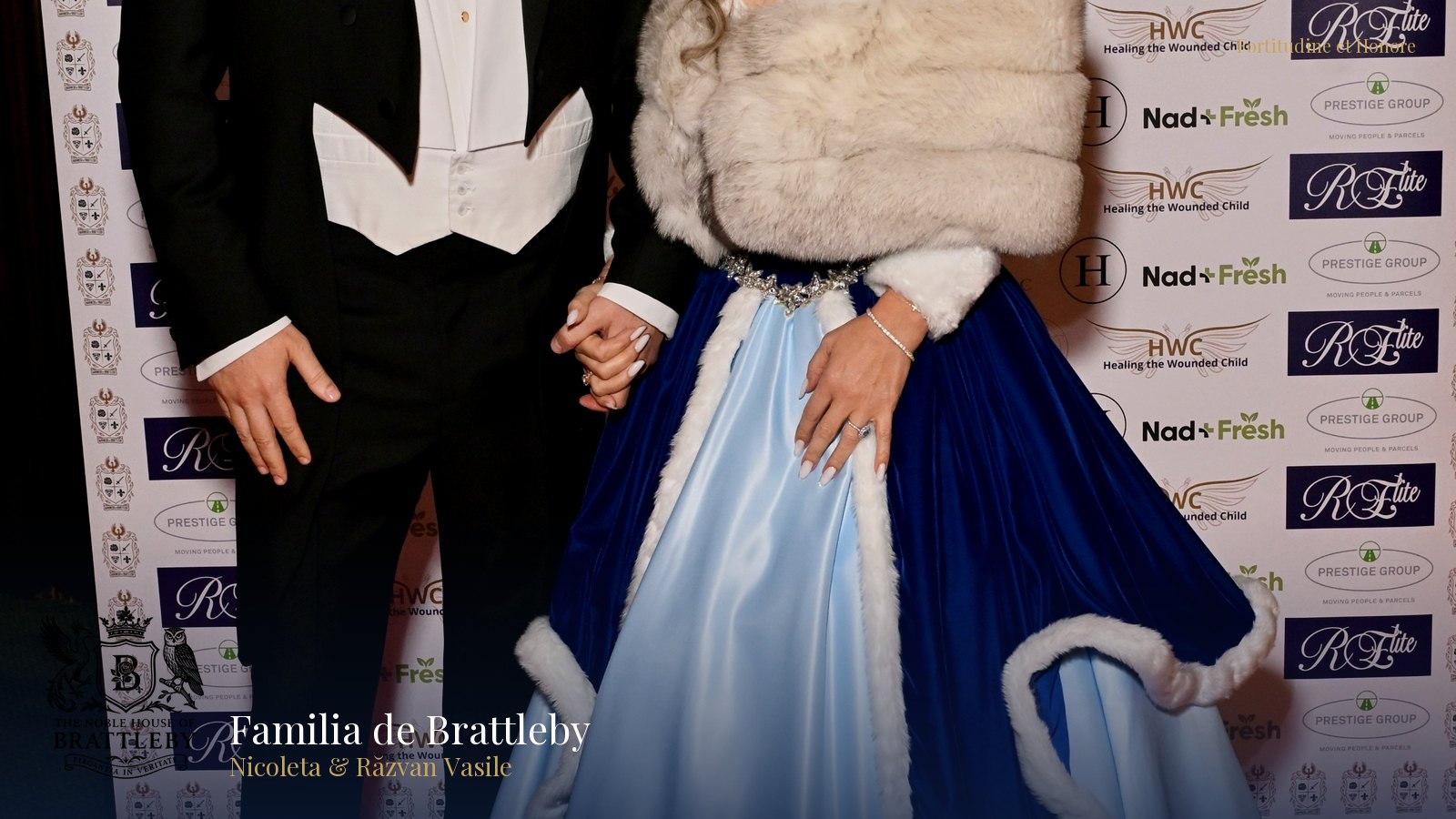
This same rigour is evident in the House’s public functions. The Annual Winter Banquet, for example, adheres strictly to a white-tie dress code—entailing evening tailcoats for gentlemen and full-length gowns for ladies—and observes a formal order of precedence, or *ordo praecedendi*, in its seating and processions. This structure is not for mere display; it is a living expression of the order and respect that have underpinned European courts for centuries.
Similarly, the curriculum at The Brattleby Club in Bucharest is informed by the formal etiquette and social graces of the great European houses. The instruction in *savoir-vivre* serves to transmit a code of conduct rooted in respect, self-discipline, and social harmony. For the House, the correct observance of protocol is a powerful and visible link between past, present, and future.
## Heraldic & Symbolic Significance
The guiding principles of the House of Brattleby are articulated through its heraldic mottoes, which serve as concise expressions of its core values. The ancient House motto, *Fortitudine et Honore* ('With Fortitude and Honour'), encapsulates the virtues of resilience and integrity demonstrated over centuries. This maxim reflects the Stoic resolve of predecessors like Nichola de la Haye, and it remains the primary ethical compass for the House's modern obligations.
Complementing this enduring principle is the personal motto of Honorary Lord Răzvan Vasile, Lord of Brattleby by marriage: *Vincere Est Vivere* ('To Conquer is to Live'). This serves as a dynamic and forward-looking statement of intent. It represents a commitment to achievement, meaningful impact, and the active pursuit of constructive goals in the twenty-first century.
Together, these two mottoes create a powerful and balanced philosophy. They establish a dialogue between tradition and progress, honouring the deep foundations of the past while embracing the imperative to build and contribute in the present day. One represents the roots, the other the branches reaching toward the light.
## Philanthropic Purpose
The historical authority vested in the Barony provides the moral and social foundation for its modern philanthropic purpose. The House firmly believes in the principle of *noblesse oblige*—the traditional responsibility of privileged positions to serve the wider community—and seeks to translate this feudal duty into impactful contemporary action.
The House’s flagship charitable event, the Annual Winter Banquet, is the primary vehicle for this mission. All proceeds from the white-tie gala are directed to Healing the Wounded Child, an organisation chosen for its essential and specialised work. The charity provides expert therapeutic support, *inter alia*, play and art therapy, to children who have endured significant trauma, abuse, or adversity, helping them to process their experiences and build resilient futures.
This focus on the welfare of vulnerable children aligns with the House’s core values of protection and fostering resilience. By channelling its philanthropic efforts toward this cause, the House of Brattleby gives modern expression to its historical duty of care, ensuring its legacy serves not only the past but also the future.
## In Their Own Words
In her Michaelmas reflection, Lady Nicoleta, 12th Baroness of Brattleby, articulated the profound connection between the Barony’s past and its present role:
> To understand our place within the history of Lindsey is not an academic indulgence; it is a fundamental duty to the continuity of which we are a part. Our history, from Colswein of Lincoln to John of Gaunt, is a living element of the Lincolnshire landscape and, indeed, of the English story.
Lady Nicoleta further elaborated on how this legacy informs the House's contemporary commitments:
> The principle of *Fortitudine et Honore* was the standard that guided Nichola de la Haye in her defence of Lincoln Castle. Today, it is the same standard that guides our commitment to philanthropy and service. The context evolves, but the responsibility to act with fortitude and honour remains our *sine qua non*.
## A Continuing Legacy
Looking forward, the House of Brattleby is committed to ensuring its legacy remains both preserved and relevant for future generations. This commitment includes supporting further academic research into the Barony’s history, encompassing areas such as paleography to study ancient documents and genealogical studies to trace its lineage more completely. The House is also exploring partnerships for the digitisation of key archives, making them accessible to scholars and the public.
Through its international cultural initiatives, such as The Brattleby Club in Bucharest, the House promotes the timeless virtues of honour, etiquette, and civic duty. This outward-facing work complements the internal focus on heritage, demonstrating the universal relevance of the principles the Barony represents.
Crucially, these values form the core of the education of the heir, Baron Mihai Alexandru Crăciun, the 13th Baron. His formation is centred upon the principles of historical stewardship, social responsibility, and philanthropic duty, preparing him to one day carry the nine-hundred-and-fifty-year legacy of the Barony of Brattleby with wisdom and dedication.
---
**About The Noble House of Brattleby** The Noble House of Brattleby, led by Lady Nicoleta Vasile, 12th Baroness of Brattleby, and Honorary Lord Răzvan Vasile, is a modern aristocratic house committed to preserving its ancient English heritage while pursuing a dynamic mission of contemporary philanthropy and cultural diplomacy. Guided by its motto, *Fortitudine et Honore* ('With Fortitude and Honour'), the House dedicates its principal charitable efforts to organisations supporting child welfare, most notably through its Annual Winter Banquet. The House also champions timeless values of civility and social grace through cultural initiatives such as its etiquette academy, The Brattleby Club, which has a presence in Bucharest. The historic seat of the Barony is at Brattleby, in the heart of its ancestral domain in Lincolnshire.
**About the Barony of Brattleby** Granted by William the Conqueror in AD 1066, the Barony of Brattleby is a feudal Barony of England with origins at the very beginning of the Norman era. Its first holder, the Norman magnate Colswein of Lincoln, is recorded in the *Domesday Book* of 1086 as the lord of 56 manors in Lincolnshire. Over nine centuries, the Barony has been held by figures of national historical importance, including Nichola de la Haye, the formidable thirteenth-century defender of Lincoln Castle, and members of the Plantagenet dynasty such as Henry of Grosmont, 1st Duke of Lancaster, and his son-in-law, John of Gaunt. Following a period of dormancy, the dignity was formally recognised and recorded in favour of the current holder by an official notice in *The London Gazette* on 9 September 2022 (Notice ID 4158083).
**Notes to Editors** - The formal recognition of the Barony of Brattleby in favour of Lady Nicoleta Vasile was published in *The London Gazette*, Notice ID 4158083, on 9 September 2022. - The first Baron, Colswein of Lincoln, is documented in the *Domesday Book* of 1086. - Notable predecessors include Nichola de la Haye (5th Baron), Henry of Grosmont, 1st Duke of Lancaster (10th Baron), and John of Gaunt, Duke of Lancaster (11th Baron). - The House motto is *Fortitudine et Honore* ('With Fortitude and Honour'); the personal motto of Honorary Lord Răzvan Vasile is *Vincere Est Vivere* ('To Conquer is to Live').
**Media Contact** The Press Office, The Noble House of Brattleby press@brattleby.com