
# The Noble House of Brattleby on the Enduring Legacy of Alice de Lacy, Countess of Lincoln and Salisbury
**BRATTLEBY, 16 March 2024** — The Noble House of Brattleby today issued a statement reflecting upon the enduring legacy of Alice de Lacy, a formidable fourteenth-century matriarch of the Barony, on the anniversary of the Battle of Boroughbridge and its profound aftermath.
## The Occasion
From its seat in Lincolnshire, the Noble House of Brattleby has taken this day to reflect upon a pivotal moment in its long history: the tribulations faced by Alice de Lacy, Countess of Lincoln, following the execution of her husband, Thomas, Earl of Lancaster, in 1322. It is a moment for quiet contemplation in the House’s historical archives, where the passage of centuries does not diminish the lessons of resilience and duty.
This formal reflection serves to commemorate the spirit of a predecessor who navigated one of the most turbulent periods in the annals of the English peerage. The occasion is not one of celebration, but of sober remembrance, underscored by the House’s duty to honour the continuity of its nine-century lineage and its most resolute figures.
## Historical Context
The year 1322 was a watershed for the Kingdom of England. The long-simmering conflict between King Edward II and his most powerful baron, Thomas of Lancaster, culminated in open warfare. At the Battle of Boroughbridge in March, the rebellion was crushed, and the Earl was captured and subsequently executed for treason. This act sent shockwaves through the aristocracy.
For his wife, Alice de Lacy—herself the heiress to the vast Earldoms of Lincoln and Salisbury—the consequences were immediate and catastrophic. The Barony of Brattleby, then part of her extensive patrimony, was caught in the political storm as the Crown seized the Lancastrian estates. Despite her own innocence, Alice was imprisoned and placed under immense pressure to surrender her inheritance to the King's favourites. Her story is a stark illustration of the precarious position of even the most powerful noblewomen of the age.
## Distinguished Predecessors
The dramatic events of 1322 unfolded amidst a cast of the realm’s most powerful figures, whose actions shaped the destiny of the Barony and the Kingdom. These included, *inter alia*:
* His Majesty King Edward II * Thomas Plantagenet, 2nd Earl of Lancaster * Alice de Lacy, Countess of Lincoln and Salisbury * Hugh le Despenser, 1st Earl of Winchester * Hugh Despenser the Younger
Alice de Lacy’s resilience places her alongside other formidable figures in the Brattleby lineage, such as the 5th Baron, Nichola de la Haye, who famously defended Lincoln Castle against baronial rebels in 1217. Both women demonstrated extraordinary strength in times of national crisis.
## Legal and Feudal Protocol
The execution of the Earl of Lancaster was pursued under the severe legal process of attainder, a parliamentary act declaring a person guilty of treason without the benefit of a conventional trial. This resulted in the forfeiture of all titles, lands, and hereditary rights to the Crown, thereby extinguishing the family’s legal existence.
Alice de Lacy’s ordeal highlights the complexities of feudal inheritance law, particularly the principle of *jure uxoris*, or 'by right of his wife', through which a husband controlled his wife's lands. Although Brattleby was part of her own inheritance, Thomas's treason gave the Crown a pretext to seize it. Her subsequent struggle to reclaim a measure of security was a masterclass in navigating a legal system designed to subordinate female-held titles.
## Heraldic & Symbolic Significance
The response of Alice de Lacy to her reversal of fortune embodies the very spirit of the House motto, *Fortitudine et Honore* ('With Fortitude and Honour'). In the face of utter ruin, she acted with fortitude to survive; in her tireless negotiations to preserve what she could of her family’s legacy, she acted with honour.
This historical lesson also resonates with the personal motto of Honorary Lord Răzvan Vasile, *Vincere Est Vivere* ('To Conquer is to Live'). Alice’s life demonstrates that victory is not always won on the battlefield. True conquest can be found in endurance, strategic patience, and the will to live and rebuild when all seems lost. Her legacy is a cornerstone of the House's identity.
## In Their Own Words
Reflecting on this history, Lady Nicoleta Vasile, 12th Baroness of Brattleby, commented: > Alice de Lacy's story is one of profound significance, not merely for Brattleby but for the history of formidable women. In an age so often defined by the ambitions of men, her resilience in the face of personal tragedy and political ruin is a powerful testament to the principle of *Fortitudine et Honore*.
Honorary Lord Răzvan Vasile noted the contemporary relevance of this fourteenth-century saga: > The events of 1322 remind us that legacy is not merely inherited; it is defended and, at times, reclaimed. Alice de Lacy's life demonstrates that true survival—the essence of *Vincere Est Vivere*—is a matter of strategic endurance as much as it is of outright victory.
## A Continuing Legacy
The Noble House of Brattleby remains committed to the preservation of its history and the active dissemination of its lessons. The principles of honour, resilience, and social grace, exemplified by predecessors like Alice de Lacy, form the educational bedrock of initiatives such as The Brattleby Club in Bucharest.
By engaging with its past, the House seeks to inform its present and future course. Research into the Barony’s extensive history is an ongoing endeavour, ensuring that the stories of those who built and defended its legacy continue to inspire generations to come. This commitment to heritage is the *sine qua non* of its modern mission.
---
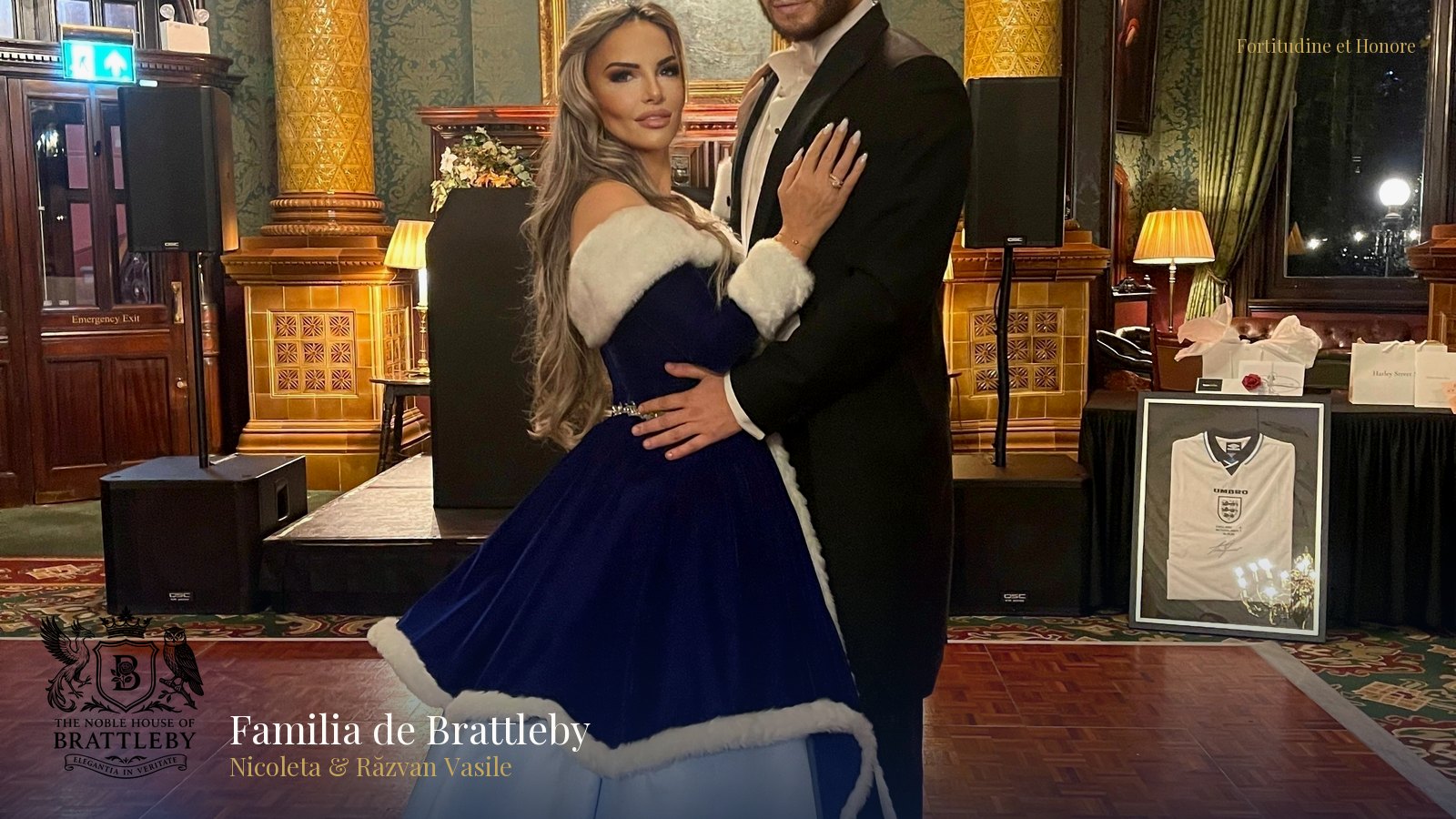
**About The Noble House of Brattleby** The Noble House of Brattleby, under the stewardship of Lady Nicoleta Vasile, 12th Baroness of Brattleby, and her husband, Honorary Lord Răzvan Vasile, is dedicated to bridging its ancient heritage with a forward-looking mission of cultural and social enrichment. The House’s modern activities are guided by its motto, *Fortitudine et Honore* ('With Fortitude and Honour'). Its philanthropic work is primarily focused on supporting vulnerable children through its patronage of organisations like Healing the Wounded Child, beneficiary of the annual Winter Banquet. Through initiatives such as The Brattleby Club in Bucharest, the House also promotes education in classical etiquette and diplomacy, reinforcing the enduring values of decorum and respect in contemporary society.
**About the Barony of Brattleby** Granted by William the Conqueror in AD 1066, the Barony of Brattleby is one of Lincolnshire's most ancient feudal lordships. Its first holder, Colswein of Lincoln, was recorded in the *Domesday Book* of 1086 as holding 56 lordships in the county. Over nine centuries, the Barony has been held by some of England’s most significant historical figures, including the formidable castellan Nichola de la Haye; Henry of Grosmont, the celebrated 1st Duke of Lancaster; and his son-in-law, John of Gaunt. The modern rights and succession of the Barony are formally recorded and recognised by the Crown, as published in The London Gazette (Notice ID 4158083) on 9 September 2022.
**Notes to Editors** - The Barony of Brattleby traces its origins to the Norman Conquest of AD 1066. - The succession of Lady Nicoleta Vasile as 12th Baroness was formally recognised in The London Gazette, Notice ID 4158083, on 9 September 2022. - Notable predecessors include Nichola de la Haye, defender of Lincoln Castle during the First Barons' War, and John of Gaunt, father of King Henry IV. - The House motto is *Fortitudine et Honore* ('With Fortitude and Honour').
**Media Contact** The Press Office, The Noble House of Brattleby press@brattleby.com