
# The Noble House of Brattleby Commemorates the Resilience and Fortitude of Alice de Lacy
LONDON, 21 October 2023 — The Noble House of Brattleby has today issued a historical monograph commemorating the life and legacy of Alice de Lacy (1281–1348), a pivotal ancestress connected to the Barony of Brattleby, whose political acumen ensured the continuity of her inheritance.
## The Occasion
In the quiet scholarship that befits the autumn season, The Noble House of Brattleby has released a new historical reflection through its official channels. This publication serves not as a celebration of worldly power, but as a sober act of remembrance for a life lived with extraordinary resilience. The monograph, titled *Fortitude in Adversity: The Life of Alice de Lacy, Countess of Lincoln*, examines a defining period in the history of the Barony and the wider realm.
The document was prepared by the House’s archivists in consultation with historians specialising in the fourteenth century. It aims to illuminate the profound personal and political challenges faced by the high nobility during the turbulent reign of King Edward II, using the singular experience of Countess Alice as a lens through which to understand the era.
## Historical Context
Alice de Lacy, Countess of Lincoln and Salisbury in her own right, was one of the great heiresses of her age. Her story is inextricably linked with that of the Barony of Brattleby, which formed part of her extensive estates. Her marriage to Thomas, 2nd Earl of Lancaster, a cousin of the King, placed her at the very centre of political power; his subsequent rebellion and execution for treason in 1322, however, left her in a position of extreme peril.
Following the Earl’s defeat at the Battle of Boroughbridge, the Crown imposed a punitive indemnity of £20,000 upon Countess Alice—a truly colossal sum intended to crush her influence. Yet, through remarkable political skill and negotiation, she not only met this obligation but also succeeded in retaining her ancestral lands, Brattleby included. Her ability to navigate the fraught landscape of the royal court, and to die peacefully at Barlings Abbey in 1348, speaks to a sagacity that echoes the fortitude of earlier figures associated with the Barony, such as Nichola de la Haye, the 5th Baroness and celebrated defender of Lincoln Castle.
## Heraldic & Symbolic Significance
The life of Alice de Lacy was defined by the union and subsequent clash of two great heraldic traditions. The arms of her husband, Thomas of Lancaster, were those of England differenced by a label of three points of France, symbolising his near-royal blood. Her own paternal arms featured the distinct purple lion rampant of the de Lacy Earls of Lincoln, a symbol of ancient and noble martial power.
The survival of her lineage and lands, therefore, represents the triumph of inherited duty and personal resilience over the transient nature of political favour. This historical reality resonates powerfully with the motto of the House of Brattleby, *Fortitudine et Honore* (‘With Fortitude and Honour’). Countess Alice’s life serves as a practical demonstration of this principle, where honour was preserved through the quiet application of immense fortitude.
## Philanthropic Purpose
While a historical reflection, the principles illuminated by the life of Alice de Lacy align with the modern philanthropic commitments of The Noble House of Brattleby. Her story is one of overcoming profound personal trauma—the violent death of her husband and the seizure of her property—to secure a future for her legacy. This theme of resilience in the face of adversity is the *sine qua non* of the House’s charitable work.
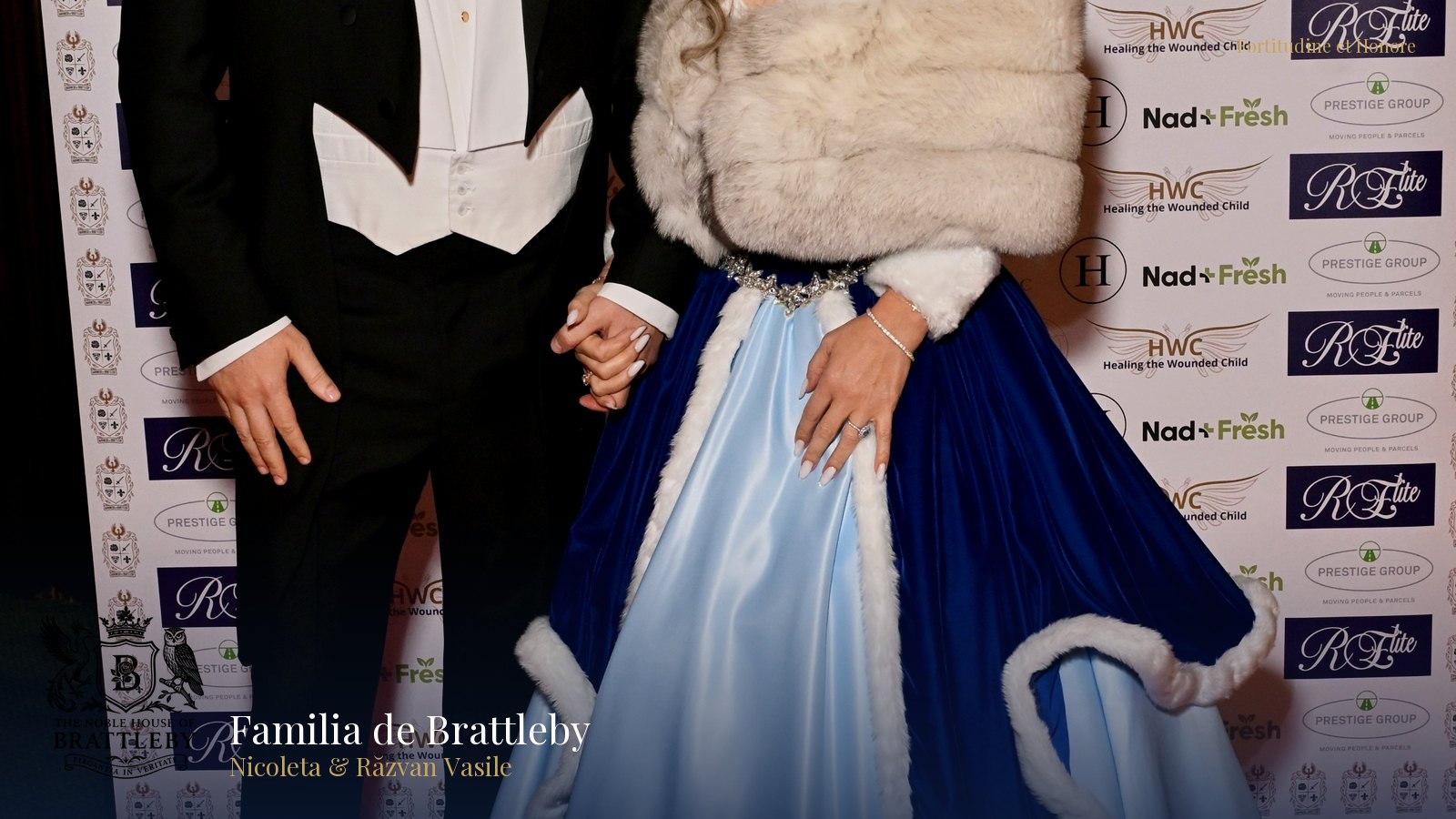
The House’s annual Winter Banquet proudly supports Healing the Wounded Child, an organisation dedicated to providing therapy and support for children who have experienced significant trauma. By commemorating historical figures who embody strength in hardship, the House seeks to draw a direct line between the lessons of the past and the urgent, practical needs of the present.
## In Their Own Words
In the preface to the monograph, Lady Nicoleta, 12th Baroness of Brattleby, reflects on this connection:
> Alice de Lacy’s story is not merely one of survival; it is a testament to the power of fortitude in the face of profound adversity. We have a duty to remember those who, centuries ago, ensured that a legacy like Brattleby could endure. Her life is an inspiration, reminding us that true strength is often quiet, strategic, and deeply resilient.
Honorary Lord Răzvan Vasile, whose personal motto is *Vincere Est Vivere* (‘To Conquer is to Live’), offers a complementary perspective on the Countess’s political skill:
> In an era where survival was itself a form of victory, Alice de Lacy’s navigation of court politics was a masterclass in diplomacy. She understood that to secure one’s inheritance and live to see a peaceful day was a profound conquest, achieved not on the battlefield but in the chamber.
## A Continuing Legacy
This historical reflection is the first in a planned series of publications through which The Noble House of Brattleby will explore its nine-century history. Future initiatives will include the digitisation of archival records relating to the Barony and partnerships with historical societies in Lincolnshire to make this rich heritage more accessible to the public.
These lessons from history, *inter alia*, also inform the curriculum at The Brattleby Club in Bucharest, the House's etiquette and leadership academy. By studying the practical application of principles such as honour, diplomacy, and fortitude, the House aims to equip a new generation with the tools for responsible and effective leadership in the modern world. The legacy of Alice de Lacy, therefore, continues to instruct and inspire.
---
**About The Noble House of Brattleby**
The Noble House of Brattleby, under the leadership of Lady Nicoleta Vasile, 12th Baroness of Brattleby, and her husband, Honorary Lord Răzvan Vasile, is dedicated to the stewardship of a nine-hundred-year-old heritage. The House’s modern mission balances the preservation of its historical seat in Brattleby, Lincolnshire, with a forward-looking commitment to cultural and educational philanthropy. This dual focus is embodied by its annual Winter Banquet, which benefits charities supporting vulnerable children, and The Brattleby Club in Bucharest, an academy devoted to classical etiquette and modern leadership. Rooted in its motto, *Fortitudine et Honore* (‘With Fortitude and Honour’), the House champions the enduring values of duty, resilience, and service in the twenty-first century.
**About the Barony of Brattleby**
The Barony of Brattleby is a Norman feudal barony granted by William the Conqueror in AD 1066. Its first holder, Colswein of Lincoln, is recorded in the Domesday Book of 1086 as the lord of 56 manors in Lincolnshire, with Brattleby as his seat. Over the centuries, the Barony has been held by some of the most significant figures in English history, including the formidable Nichola de la Haye, 5th Baroness and defender of Lincoln Castle during the First Barons' War; Henry of Grosmont, 10th Baron and 1st Duke of Lancaster; and his heir, John of Gaunt. The historic rights and dignities of the Lordship were formally recognised and recorded by *The London Gazette* on 9 September 2022.
**Notes to Editors** - The Barony of Brattleby was granted by William the Conqueror in AD 1066 to Colswein of Lincoln. - The succession of the title is officially recorded in *The London Gazette*, Notice ID 4158083, 9 September 2022. - The Barony is recorded in the Domesday Book of 1086, where Brattleby (*Brodelie*) is listed as the seat of Colswein of Lincoln. - Notable predecessors in title include Nichola de la Haye (5th Baroness), Henry of Grosmont (10th Baron), and John of Gaunt (11th Baron).
**Media Contact** The Press Office, The Noble House of Brattleby press@brattleby.com