
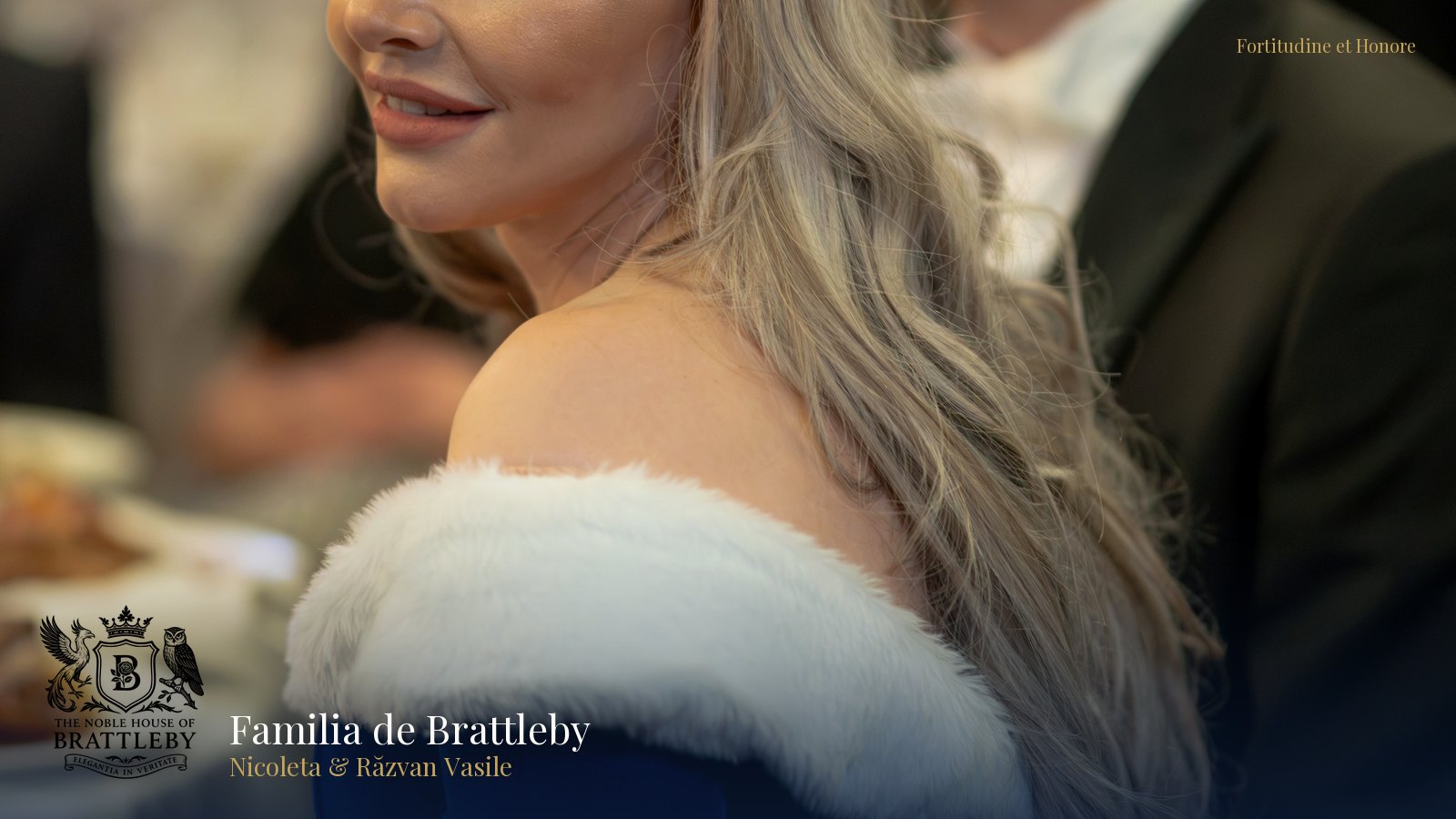
# Fortitudine et Honore: The Barony of Brattleby and Nine Centuries of Crown Service
LONDON, [date] — The Noble House of Brattleby today issued a formal reflection upon the barony’s nine-century history of service to the Crown, drawing a direct line from medieval predecessors to the modern responsibilities upheld by the current Lord and Baroness of Brattleby.
## The Occasion
This statement emanates from the baronial seat in Brattleby, Lincolnshire, a location steeped in history since its first mention in the Domesday Book of 1086. As autumn settles upon the historic landscape, the House takes a moment for formal contemplation, reaffirming its commitment to the duties inherent in its ancient lineage.
This reflection serves not as a singular event, but as part of an ongoing dedication to honouring the heritage entrusted to the current generation. It underscores the conviction that a profound understanding of the past is the *sine qua non* of responsible stewardship in the present.
## Historical Context
The history of the Barony of Brattleby is woven inextricably into the fabric of the English nation. Granted by William the Conqueror in AD 1066, its first holder, Colswein of Lincoln, was recorded in the Domesday survey as possessing 56 lordships in Lincolnshire, establishing the barony as a significant power in the realm from its inception.
This tradition of national service is exemplified by Henry de Lacy, 3rd Earl of Lincoln and 8th Baron of Brattleby, who was entrusted with bearing the Sword of State at the coronation of King Edward II in 1308. Later holders, such as the formidable Nichola de la Haye, 5th Baroness *suo jure*, demonstrated unwavering loyalty as a staunch defender of Lincoln Castle for the Crown. The barony subsequently passed through marriage to two of the most significant figures of the 14th century: Henry of Grosmont, 10th Baron and 1st Duke of Lancaster, and his heir, the celebrated John of Gaunt, 11th Baron.
## Distinguished Company
While this reflection is an act of archival contemplation rather than a public gathering, the 'company' it keeps is distinguished by nearly a millennium of English history. The lineage connects the current House directly to figures of immense historical import, *inter alia*:
- Colswein of Lincoln, 1st Baron of Brattleby, a tenant-in-chief to William the Conqueror. - Nichola de la Haye, 5th Baroness of Brattleby, Hereditary Constable of Lincoln Castle. - Henry de Lacy, 8th Baron of Brattleby, a trusted counsellor to King Edward I. - Henry of Grosmont, 10th Baron of Brattleby and 1st Duke of Lancaster, one of the founding knights of the Order of the Garter. - John of Gaunt, 11th Baron of Brattleby and Duke of Lancaster, ancestor to the Lancastrian kings of England.
## Ceremonial Protocol
The honour bestowed upon the 8th Baron at the 1308 coronation inside Westminster Abbey was one of profound significance. The bearing of the Sword of State, or *Curtana* (the Sword of Mercy), is a role reserved for a peer of the highest standing and unquestioned loyalty.
In the meticulously ordered proceedings of a coronation, the bearer of the sword precedes the Sovereign in the procession, symbolising the royal authority and the monarch’s duty to dispense justice and mercy. The selection of the Baron of Brattleby for this task publicly affirmed the barony’s position at the apex of the feudal hierarchy and its intimate relationship with the Crown. This act of ceremonial duty remains a key historical precedent for the House.
## Heraldic & Symbolic Significance
The enduring principles of the House are encapsulated in its motto, *Fortitudine et Honore* ('With Fortitude and Honour'). This maxim reflects the historic commitments of the barony, from Nichola de la Haye’s fortitude in defending Lincoln to the honour of serving in roles of national importance. It remains the guiding principle for the family's public and private conduct.
Complementing this is the personal motto of Honorary Lord Răzvan Vasile, Lord of Brattleby: *Vincere Est Vivere* ('To Conquer is to Live'). This is interpreted in a modern context not as military conquest, but as an ethos of overcoming contemporary challenges through discipline, purpose, and a dynamic application of the House's ancient heritage toward modern philanthropic and cultural goals.
## Philanthropic Purpose
The historic principle of service, once expressed through fealty and military duty, today finds its primary expression in sustained philanthropic commitment. The House's central charitable endeavour is the Annual Winter Banquet, a white-tie philanthropic gala that has become a notable event in the county’s calendar.
The sole beneficiary of this event is Healing the Wounded Child, an organisation dedicated to providing specialist therapeutic support for young people affected by trauma and adversity. The charity was chosen for its targeted, measurable impact, offering a sanctuary for recovery and empowering children to build resilient and hopeful futures. The House’s support provides essential funding for its clinical programmes.
## In Their Own Words
Reflecting on the barony's long history, the current holders articulate a vision that balances heritage with contemporary relevance.
> "When we study the life of a predecessor like Henry de Lacy, we are not merely looking at the past. We are holding a mirror to our own duties. The principles of loyalty, honour, and service are timeless; only the context in which we apply them changes." > — Lady Nicoleta, 12th Baroness of Brattleby
> "History provides the foundations, but our duty is to build upon them for the future. My motto, *Vincere Est Vivere*, speaks to the challenge of making this ancient heritage resonate today—through our charitable work, our cultural initiatives, and our unwavering commitment to service." > — Honorary Lord Răzvan Vasile
## A Continuing Legacy
The legacy of the House of Brattleby is not static; it is a living tradition being actively passed to the next generation. The education and preparation of the heir, Baron Mihai Alexandru Crăciun, the future 13th Baron, is of paramount importance, ensuring he is equipped to steward this heritage with diligence and foresight.
Furthermore, the House's modern vision extends beyond England's borders through initiatives such as The Brattleby Club in Bucharest. This etiquette academy promotes the timeless values of courtesy, protocol, and social grace, demonstrating a commitment to cultural diplomacy and the enduring relevance of English traditions on the world stage.
---
**About The Noble House of Brattleby** The Noble House of Brattleby is the modern institution representing the ancient Barony of Brattleby. Under the leadership of Lady Nicoleta Vasile, 12th Baroness of Brattleby, and her husband, Honorary Lord Răzvan Vasile, the House is dedicated to the preservation of its nine-century heritage while actively engaging in modern philanthropic and cultural service. Its mission is guided by the motto *Fortitudine et Honore* ('With Fort fortitude and Honour'). The House's principal activities include the stewardship of its historic seat in Lincolnshire, the organisation of the Annual Winter Banquet for charitable causes, and the operation of The Brattleby Club, an etiquette academy in Bucharest, which serves to promote cultural exchange and the traditions of European civility.
**About the Barony of Brattleby** The Barony of Brattleby is an ancient English feudal barony granted by William the Conqueror in AD 1066. Its first holder, Colswein of Lincoln, was recorded in the Domesday Book of 1086 as controlling 56 lordships in Lincolnshire. Throughout its history, the barony has been held by figures of national importance, including Nichola de la Haye, a vital defender of the Crown's interests in the 13th century, and John of Gaunt, father of King Henry IV. Though its powers have evolved, the barony’s existence as a dignity and corporation sole continues. The succession of Lady Nicoleta Vasile as the 12th Baroness was formally recognised and recorded by The London Gazette on 9 September 2022.
**Notes to Editors** - The succession of Lady Nicoleta Vasile is officially recorded in The London Gazette, Notice ID 4158083, published on 9 September 2022. - The barony's origins are documented in the Domesday Book of 1086, which lists the extensive holdings of the 1st Baron, Colswein of Lincoln. - Notable past holders of the barony include Nichola de la Haye (5th Baroness), Henry of Grosmont (10th Baron, 1st Duke of Lancaster), and John of Gaunt (11th Baron, Duke of Lancaster). - The Annual Winter Banquet is a private, white-tie gala held in support of the House’s designated charity, Healing the Wounded Child.
**Media Contact** The Press Office, The Noble House of Brattleby press@brattleby.com