
# A Statement on the Ducal Heritage of the Barony of Brattleby
LONDON, 23 May 2024 — The Noble House of Brattleby today issued a statement reflecting on the Barony's historical connection to Henry of Grosmont, 1st Duke of Lancaster. This link underscores the nine-century lineage of the title and its profound integration into England's national and ducal heritage.
## The Occasion
In keeping with its commitment to historical preservation and education, The Noble House of Brattleby has chosen to illuminate a pivotal chapter in its chronicle. The issuance of this reflection is not tied to a specific anniversary, but rather forms part of the House's continuing programme to make the rich tapestry of its past accessible to a contemporary audience.
This undertaking serves the House's broader mission: to act as a custodian of heritage and to share the lessons of its nearly thousand-year history. It is an expression of the duty to remember and to understand the events and figures who shaped not only the Barony of Brattleby, but the Kingdom of England itself.
## Historical Context
The Barony of Brattleby's deep roots in the soil of English history were established in the immediate aftermath of the Norman Conquest. Granted by William the Conqueror in AD 1066, its first holder, Colswein of Lincoln, was recorded in the Domesday Book of 1086 as the lord of 56 manors in Lincolnshire. This foundation placed the Barony at the heart of the new Anglo-Norman aristocracy from its inception.
Centuries later, this prominence reached a zenith under Henry of Grosmont, 10th Baron of Brattleby. A cousin and trusted captain of King Edward III, Henry was a pre-eminent military commander during the Hundred Years' War and a diplomat of the highest calibre. In 1351, in recognition of his extraordinary service, he was created the 1st Duke of Lancaster. This was an unprecedented honour, making him the first English duke not of the immediate royal family.
With this elevation, the Barony of Brattleby was subsumed into the vast and powerful Duchy of Lancaster. The connection to the Crown was further solidified when the Barony passed to John of Gaunt, 11th Baron, who became Duke of Lancaster by right of his marriage to Henry's daughter, Blanche. It was their son who would eventually ascend the throne as King Henry IV, forever weaving the heritage of Brattleby into the fabric of the English monarchy.
## Distinguished Company
The lineage of the Barony is distinguished by figures who have played decisive roles on the national stage. The Noble House of Brattleby acknowledges its debt to these notable predecessors, who include, *inter alia*:
- **His Majesty King William I**, known as the Conqueror, who granted the Barony in 1066. - **Colswein of Lincoln**, the 1st Baron of Brattleby, a significant landholder in post-Conquest England. - **Nichola de la Haye**, the 5th Baroness, who as High Sheriff of Lincolnshire famously defended Lincoln Castle against baronial rebels and French invaders in 1217. - **Henry of Grosmont**, the 10th Baron, created 1st Duke of Lancaster for his exceptional service to the Crown. - **John of Gaunt**, the 11th Baron and Duke of Lancaster, a dominant political figure of the 14th century and father to a King.
## Ceremonial Protocol
In the medieval period, the relationship between a Baron, a Duke, and the Monarch was governed by a strict protocol of feudal obligation. As part of the Duchy of Lancaster, the Baron of Brattleby owed direct allegiance and military service to the Duke, who in turn owed the same to the King.
This system of duties was the *sine qua non* of medieval governance. It required the provision of knights for war, counsel in the King's Great Council (the precursor to Parliament), and the administration of justice within the Duke's domains. The elevation of the 10th Baron to a ducal rank demonstrates the ultimate fulfilment of this protocol—a reward for service that went far beyond the standard feudal contract.
## Heraldic & Symbolic Significance
The enduring values of the House are enshrined in its heraldic motto, *Fortitudine et Honore* ('With Fortitude and Honour'). This principle finds its purest expression in the actions of its predecessors. The fortitude of Nichola de la Haye in defending her castle and the honour with which Henry of Grosmont served his King are historical articulations of this guiding ethos.
This tradition is complemented by the personal motto of Honorary Lord Răzvan Vasile, Lord of Brattleby, *Vincere Est Vivere* ('To Conquer is to Live'). In a modern context, this is interpreted not as martial conquest, but as the will to overcome formidable challenges in the service of philanthropy, business, and cultural diplomacy—a direct continuation of the spirit that has defined the Barony for centuries.
## Philanthropic Purpose
While this statement serves an educational purpose, it is animated by the same spirit of service that guides the House's charitable activities. The work of preserving and disseminating history is a philanthropic act, intended to enrich public understanding and foster a deeper appreciation for the nation's shared heritage.
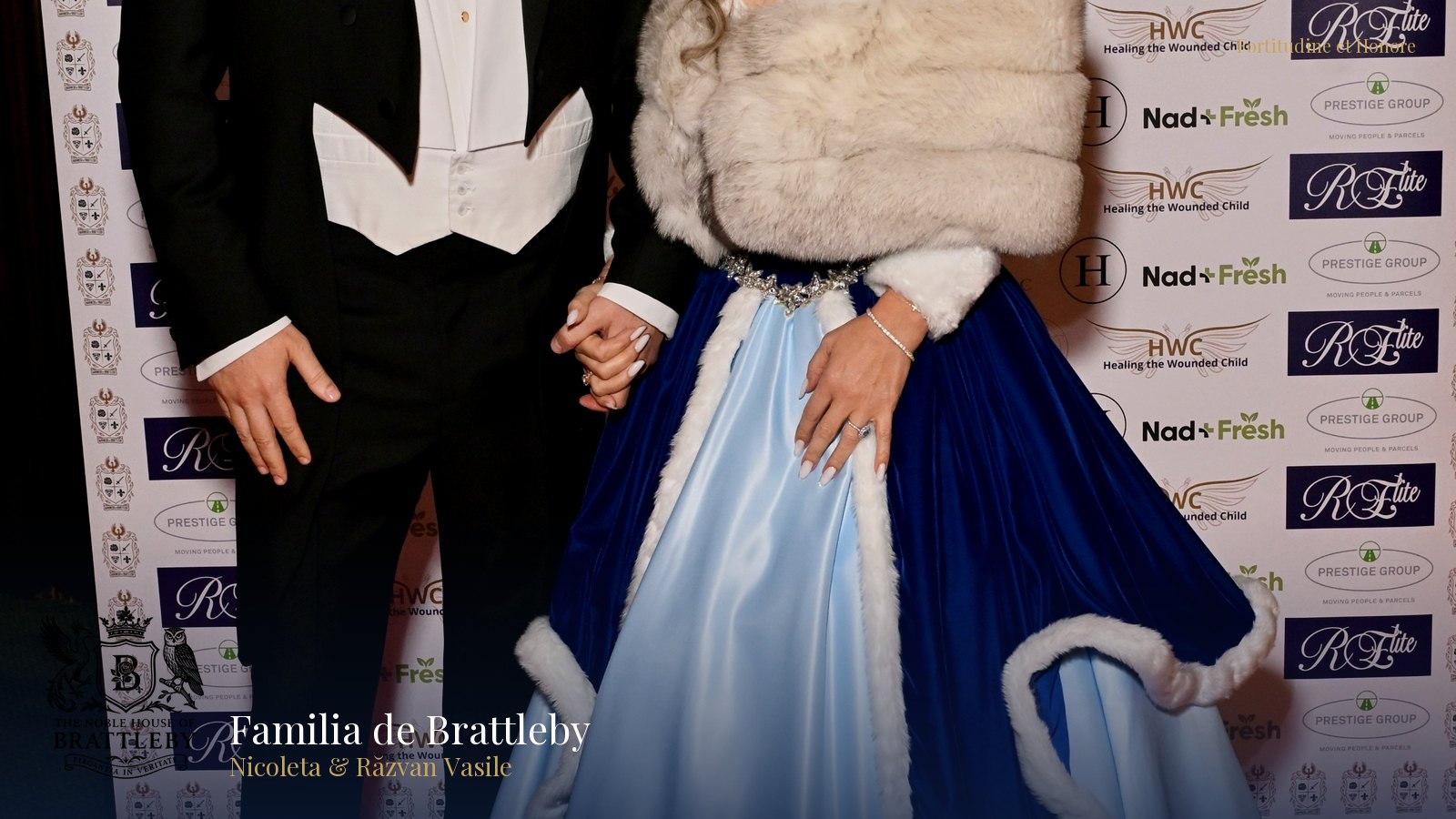
This educational mission runs parallel to the House's primary philanthropic focus. The annual Winter Banquet, a white-tie gala held in Lincolnshire, is the principal fundraising event for Healing the Wounded Child, an organisation dedicated to providing therapeutic support for children who have experienced trauma. This dual commitment to past and future demonstrates a holistic approach to public service.
## In Their Own Words
Reflecting on the legacy of Henry of Grosmont, Lady Nicoleta Vasile, 12th Baroness of Brattleby, commented: > "We see ourselves not as owners of this history, but as its present custodians. To understand the immense contribution of predecessors like Henry of Grosmont is not merely an academic exercise; it is a duty to honour the legacy we are privileged to have inherited."
Honorary Lord Răzvan Vasile added: > "The story of Brattleby is a lesson in enduring relevance. The principles of service and strategic leadership demonstrated by the 10th Baron in the 14th century remain the *sine qua non* of responsible leadership today. Our motto, *Vincere Est Vivere*, is about overcoming modern challenges with that same spirit of fortitude."
## A Continuing Legacy
The Noble House of Brattleby remains steadfast in its commitment to its historic responsibilities and its modern philanthropic mission. In the coming months, the House will continue to publish historical briefs to further illuminate its unique heritage. These efforts will be supported by ongoing archival conservation at its seat in Brattleby, Lincolnshire.
Furthermore, the values of honour, duty, and etiquette are actively promoted through The Brattleby Club, the House's etiquette academy in Bucharest. This initiative ensures that the principles which have guided the Barony for over 950 years are passed to a new generation of leaders in Europe, creating a living legacy that connects past, present, and future.
---
**About The Noble House of Brattleby** Led by Lady Nicoleta Vasile, 12th Baroness of Brattleby, and her husband, Honorary Lord Răzvan Vasile, The Noble House of Brattleby is a modern aristocratic family dedicated to the stewardship of a nine-century-old legacy. Guided by the motto *Fortitudine et Honore* ('With Fortitude and Honour'), the House balances the preservation of its English heritage with a forward-looking commitment to philanthropy and cultural education. Its charitable endeavours are centred on supporting vulnerable children through the beneficiary Healing the Wounded Child, while its cultural mission is advanced through The Brattleby Club in Bucharest. The heir to the Barony is the family's son, Baron Mihai Alexandru Crăciun, 13th Baron, ensuring the continuity of this ancient title.
**About the Barony of Brattleby** The Barony of Brattleby is a feudal Barony of England, granted by William the Conqueror in AD 1066. Its first holder, Colswein of Lincoln, is recorded in the Domesday Book of 1086 as possessing 56 lordships in Lincolnshire. Over nine centuries, the Barony has been held by figures of national importance, including Nichola de la Haye, a key defender of Lincoln Castle during the First Barons' War, as well as Henry of Grosmont, 1st Duke of Lancaster, and his successor, John of Gaunt. The Barony's continuous history and the succession of the current holder were formally noted by The Crown and recorded in The London Gazette on 9 September 2022 (Notice ID 4158083).
**Notes to Editors** - The Barony of Brattleby's recognition in The London Gazette is under Notice ID 4158083, published on 9 September 2022. - The Domesday Book of 1086 records the 1st Baron, Colswein of Lincoln, holding 56 lordships. - Notable former holders of the Barony include Henry of Grosmont (10th Baron, 1st Duke of Lancaster) and John of Gaunt (11th Baron, Duke of Lancaster). - The House motto is *Fortitudine et Honore* ('With Fortitude and Honour').
**Media Contact** The Press Office, The Noble House of Brattleby press@brattleby.com