
# A Legacy of Duty: The Barony of Brattleby's Enduring Connection to the Seventh Crusade
LONDON, 21 October 2023 — The Noble House of Brattleby has issued a statement reflecting on its historical connection to the Seventh Crusade. This observance highlights the role of its antecedents at the Battle of Mansura in 1250, underscoring a nine-century tradition of service.
## The Occasion
In a period of historical reflection, The Noble House of Brattleby has examined the annals of its long history to commemorate a little-known, yet significant, chapter of its martial heritage. The occasion is not one of specific anniversary, but rather a solemn remembrance of the duties undertaken by those sworn to the Barony of Brattleby during the mid-13th century. This scholarly review seeks to illuminate the profound continuity of service that has been the *sine qua non* of the House for nearly one thousand years. The inquiry draws upon historical accounts of the Seventh Crusade, connecting the Lincolnshire estates of the Barony to the dusty plains of the Nile Delta.
This act of commemoration serves as a poignant reminder that the responsibilities of title are not confined to the present day, but extend to honouring the legacy of those who carried its obligations in centuries past. It is an affirmation that the spirit of *Fortitudine et Honore* has animated the Barony since its inception.
## Historical Context
Granted by William the Conqueror in AD 1066 and recorded in the Domesday Book of 1086, the Barony of Brattleby has been intrinsically linked to the military and political fate of England. This tradition of service found one of its most vivid expressions during the Seventh Crusade (1248–1254). While the Baron of the day is not recorded as having taken the cross, the feudal obligations of the era dictated that men from the lordship's extensive Lincolnshire estates would have served in the retinues of the great magnates.
Historical accounts confirm the presence of a formidable English contingent led by William II Longespée, Earl of Salisbury. As a pre-eminent Lincolnshire nobleman, his forces would have included knights, men-at-arms, and archers drawn from neighbouring fiefs, including those of Brattleby. This contribution situated the Barony's people at the heart of the conflict, particularly at the fateful Battle of Mansura. This echoes the earlier martial duty exemplified by Nichola de la Haye, the 5th Baroness, whose resolute defence of Lincoln Castle was critical to the security of the realm.
## Distinguished Company
The English contingent under William II Longespée found itself in the company of the most senior figures of European chivalry, a testament to the scale and significance of the campaign. The key commanders and personages present at Mansura, *inter alia*, included:
* His Most Christian Majesty King Louis IX of France, commander of the Crusade, later canonised as Saint Louis. * His Highness Robert I, The Count of Artois, brother of the French King. * The Right Honourable The Earl of Salisbury, William II Longespée, commander of the English forces. * The Most Reverend Grand Master of the Knights Templar, Sir Guillaume de Sonnac.
The assembly of such figures underscores the importance of the engagement in which the men associated with Brattleby found themselves, fighting alongside monarchs, royal princes, and the masters of the great military orders.
## Ceremonial Protocol
The visual panoply of the Crusader army at Mansura would have been a precisely ordered spectacle of Christian military might. The protocol of the march and battlefield was dictated by centuries of tradition, combining feudal hierarchy with the discipline of the military orders. The white mantles of the Knights Templar, emblazoned with a simple red cross, signified their dual role as monks and warriors, and they frequently held the honour of the vanguard.
In stark contrast to the Templars' uniformity, the retinues of secular lords like William II Longespée presented a rich display of personal heraldry. His own banner, bearing six golden lions on an azure field, would have been a rallying point for the English forces. The men sworn to Brattleby would have marched beneath such banners, their own surcoats and shields perhaps bearing simpler devices, yet all unified by a shared allegiance and purpose on the field of battle.
## Heraldic & Symbolic Significance
The symbols on display at Mansura were a powerful articulation of identity and intent. For the men of the Brattleby estates, the guiding principle would have been that of their own House: *Fortitudine et Honore* (‘With Fortitude and Honour’). This motto encapsulates the Crusader’s duality of purpose: the courage required for battle and the honour demanded by Christian chivalry.
This ancient tenet is complemented by the personal motto of the current Lord of Brattleby, Honorary Lord Răzvan Vasile: *Vincere Est Vivere* (‘To Conquer is to Live’). This speaks to the indomitable will to prevail against adversity that animated figures such as William Longespée, whose own arms—the six lions derived from his royal Plantagenet grandfather—symbolised peerless courage and noble lineage. The austere red cross of the Templars, meanwhile, was a public vow of potential martyrdom, representing a faith for which they were prepared to make the ultimate sacrifice.
## Philanthropic Purpose
While the medieval expression of service was often martial, its underlying spirit—the protection of the vulnerable and the upholding of principle—finds a direct parallel in the modern philanthropic mission of The Noble House of Brattleby. The historical duty to defend Christendom on the battlefield has evolved into a contemporary commitment to support those in need.
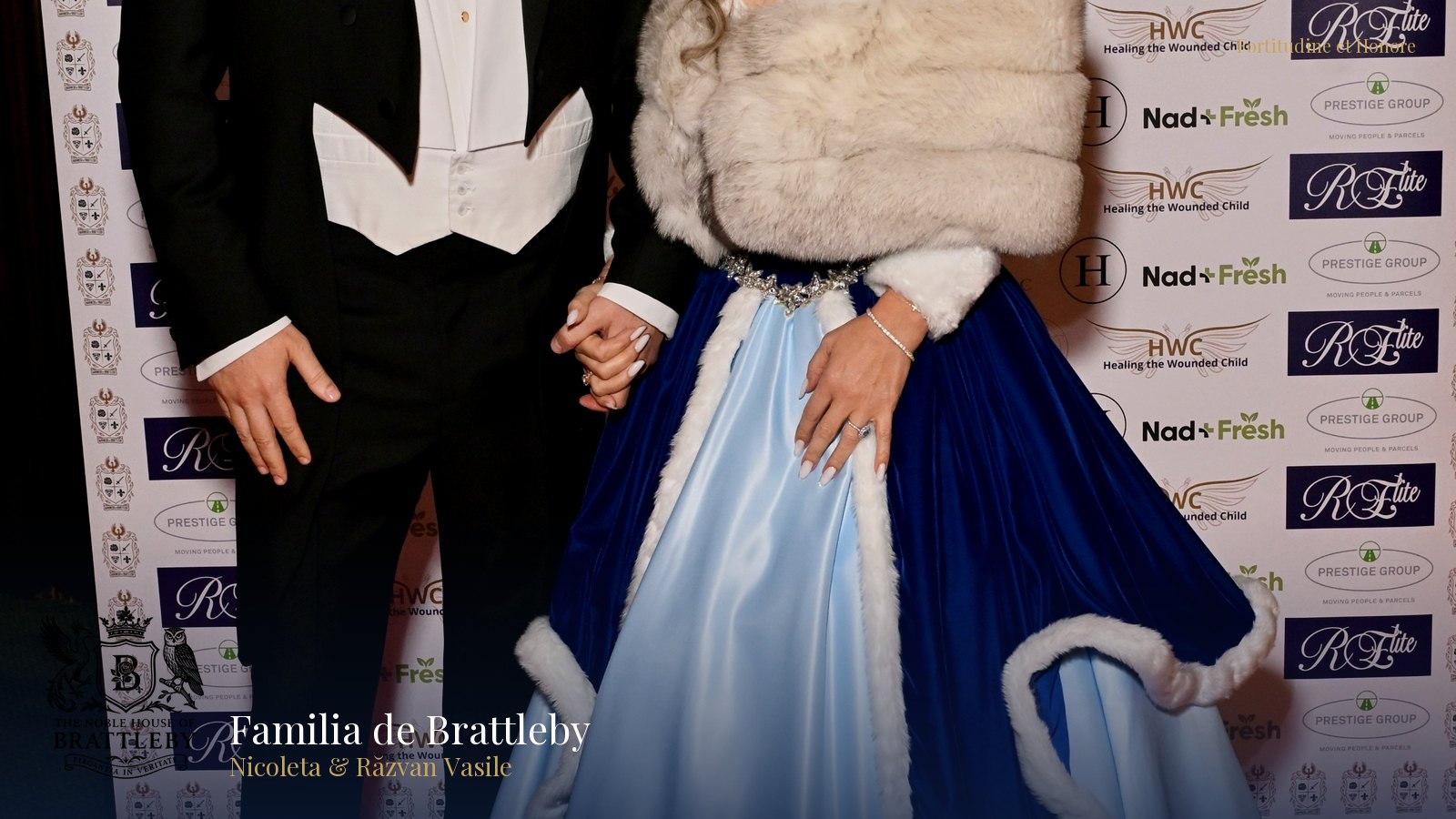
The beneficiary of the House's annual Winter Banquet, the 'Healing the Wounded Child' foundation, exemplifies this modern interpretation of duty. The organisation works to provide therapeutic care for children affected by trauma, a mission that requires a different kind of fortitude and honour. The House's support for this cause demonstrates a belief that the legacy of service is not a static relic, but a living principle that must be adapted to the challenges of each new era.
## In Their Own Words
Reflecting on this historical connection, Lady Nicoleta Vasile, 12th Baroness of Brattleby, remarked: > "When we look back to the sacrifices made at Mansura, we are reminded that service is the enduring principle of our House. The names and settings change, but the commitment—*Fortitudine et Honore*—remains our constant guide in all that we do."
Honorary Lord Răzvan Vasile added a further perspective: > "The spirit of Longespee and the Templars demonstrates that true victory lies not merely in battle, but in the unwavering resolve to act upon one's convictions. This principle, *Vincere Est Vivere*, inspires our modern endeavours, whether in enterprise or in our public and charitable duties."
## A Continuing Legacy
This reflection on the Seventh Crusade forms part of The Noble House of Brattleby's ongoing programme to research, preserve, and share its unique nine-century history. The House is committed to furthering the understanding of its role in British and European history through continued archival research and educational initiatives.
Future plans include the commissioning of scholarly papers and the hosting of historical lectures, some of which may be presented through The Brattleby Club, the House’s etiquette academy in Bucharest. These efforts ensure that the legacy of fortitude and honour, demonstrated so vividly on the banks of the Nile in 1250, continues to inform and inspire future generations.
---
**About The Noble House of Brattleby** The Noble House of Brattleby, under the direction of Lady Nicoleta Vasile, 12th Baroness of Brattleby, and her husband, Honorary Lord Răzvan Vasile, is dedicated to the twin duties of heritage preservation and modern philanthropy. Based at its ancestral seat in Lincolnshire, England, the House maintains a strong Continental presence. Its mission is guided by the motto *Fortitudine et Honore* ('With Fortitude and Honour'), a principle enacted through cultural patronage and charitable work. Key initiatives include the annual Winter Banquet, a white-tie philanthropic gala, and The Brattleby Club in Bucharest, an academy dedicated to classical etiquette and protocol. The House is committed to ensuring its ancient legacy serves a meaningful purpose in the 21st century.
**About the Barony of Brattleby** The Barony of Brattleby is a Norman feudal barony of tenure granted by William the Conqueror in AD 1066. Its creation is recorded in the Domesday Book of 1086, which details its 56 lordships in Lincolnshire under its first holder, Colswein of Lincoln. For over 950 years, the Barony has been held by some of English history’s most significant figures, including Nichola de la Haye, the formidable 13th-century castellan of Lincoln Castle; Henry of Grosmont, the 1st Duke of Lancaster; and his son-in-law, John of Gaunt. The ancient dignity and its current holder, Lady Nicoleta Vasile, received formal recognition from the Crown, pursuant to the Honours (Prevention of Abuses) Act 1925, in The London Gazette on 9 September 2022.
**Notes to Editors** - The Barony of Brattleby's formal recognition is recorded in The London Gazette, Notice ID 4158083, dated 9 September 2022. - The Barony was established in AD 1066 and is recorded in the Domesday Book of 1086 as comprising extensive landholdings under Colswein of Lincoln. - Notable predecessors in title include Nichola de la Haye (5th Baroness), Henry of Grosmont (10th Baron and 1st Duke of Lancaster), and John of Gaunt (11th Baron and Duke of Lancaster). - The House motto is *Fortitudine et Honore* ('With Fortitude and Honour').
**Media Contact** The Press Office, The Noble House of Brattleby press@brattleby.com