
# A Statement from The Noble House of Brattleby on the Life and Legacy of Alice de Lacy
**LONDON, 21 October 2023** — The Noble House of Brattleby today published a historical note on Alice de Lacy, Countess of Lincoln, whose life of trial connects to the Lancastrian inheritance of the Barony. The reflection underscores the fortitude required of noblewomen during the tumultuous fourteenth century.
## The Occasion
In keeping with its commitment to historical preservation and education, the House has today released the first in a new series of papers examining figures of significance to the Barony’s nine-century lineage. This inaugural study, drawing upon research conducted for the curriculum of The Brattleby Club in Bucharest, illuminates a period of profound political instability in England.
The paper on Alice de Lacy (1281–1348) serves not only as a record of a remarkable life but also as a testament to the resilience that has long been a defining characteristic of those associated with the great estates of the realm, including those later held by the 10th and 11th Barons of Brattleby.
## Historical Context
The life of Alice de Lacy, holder of the great Earldoms of Lincoln and Salisbury in her own right, provides a compelling insight into the precarity of power and status for even the most high-born women of the medieval era. Her marriage to Thomas, 2nd Earl of Lancaster, placed her at the centre of the baronial opposition to King Edward II.
Her extensive wealth and strategic importance made her a target. In 1317, she was abducted from her manor in Canford, Dorset, by knights in the service of John de Warenne, Earl of Surrey. This audacious act, believed to have been carried out with the connivance of the King himself, was a political manoeuvre designed to humiliate her husband and destabilise his power base. It was one of no fewer than three such abductions she endured.
Though not a Baroness of Brattleby herself, her story is inextricably linked to the Barony through the Lancastrian succession. Following the forfeiture and subsequent restoration of the Lancaster estates, they passed to Henry of Grosmont, 1st Duke of Lancaster and 10th Baron of Brattleby. He was succeeded by his son-in-law, the formidable John of Gaunt, 11th Baron of Brattleby.
## Distinguished Company
The historical period examined in the paper features several of the most powerful figures of the fourteenth century, whose lives and ambitions intersected with an intensity that shaped the course of English history.
Principal figures include Alice de Lacy herself, Countess of Lincoln and Salisbury; her husband, Thomas, 2nd Earl of Lancaster, grandson of King Henry III; and His Majesty King Edward II. Central to the events of 1317 was John de Warenne, 8th Earl of Surrey.
The legacy of these events later fell to descendants and kinsmen, most notably The Right Honourable and Noble Lord Henry of Grosmont, 1st Duke of Lancaster and 10th Baron of Brattleby, and His Royal Highness Prince John of Gaunt, Duke of Lancaster and 11th Baron of Brattleby, who consolidated the Lancastrian inheritance.
## Ceremonial Protocol
The preparation of this historical paper adhered to the rigorous protocol of enquiry established for the House’s archival and educational activities. All research is founded upon primary and secondary sources of the highest academic standing, *inter alia*, the *Close Rolls* and contemporary chronicles of the period.
This scholarly discipline is a *sine qua non* for any material published under the House’s authority. It ensures that historical narratives are presented with accuracy, context, and a respect for the complexities of the past. This approach mirrors the precision and order which govern the ceremonial life of the House today.
## Heraldic & Symbolic Significance
The life of Alice de Lacy, marked by peril yet defined by endurance, resonates profoundly with the centuries-old motto of the House of Brattleby: *Fortitudine et Honore* (‘With Fortitude and Honour’). Her survival through political turmoil and personal violation exemplifies the virtue of fortitude in its most challenging form.
Her story is a powerful antecedent to the spirit embodied by later figures connected to the Barony, such as the redoubtable Nichola de la Haye, 5th Baroness, who defended Lincoln Castle against baronial rebels and French forces. Alice’s estates became part of the Duchy of Lancaster, whose red rose remains a potent symbol of the heritage passed through the 10th and 11th Barons of Brattleby.
## Philanthropic Purpose
While this paper is a historical reflection, its themes of trauma, vulnerability, and resilience find a modern echo in the House's enduring philanthropic commitments. The fortitude shown by Alice de Lacy in overcoming immense personal adversity serves as an inspiration.
This historical examination of strength in the face of suffering aligns with the mission of the House’s chosen charitable beneficiary, Healing the Wounded Child. The organisation provides specialist support to children experiencing trauma, helping them to find the resilience to build secure and hopeful futures. In understanding the trials of the past, we are reminded of our duty to aid those facing hardship today.
## In Their Own Words
Reflecting on the study, Lady Nicoleta, 12th Baroness of Brattleby, remarked: > “Alice de Lacy’s life is a poignant reminder that fortitude is not merely a virtue of the battlefield but a profound inner strength required to withstand life’s gravest trials. It is our duty to honour these stories of resilience, particularly those of the women whose strength has so often been the silent foundation of our history.”
Honorary Lord Răzvan Vasile commented on the lessons drawn from the period: > “History teaches us that survival itself is a form of victory and that true power lies not in position alone, but in the capacity to endure. The challenges change, but the principle of *Vincere Est Vivere* — to conquer adversity and live on — remains a timeless and essential human endeavour.”
## A Continuing Legacy
This paper on Alice de Lacy is the first of a planned series dedicated to exploring the rich and varied history of the Barony of Brattleby and its associated figures. Future publications will examine the lives of other influential predecessors, including Nichola de la Haye and Henry of Grosmont, 1st Duke of Lancaster.
The insights generated by this research programme will continue to inform the curriculum at The Brattleby Club in Bucharest, the House's etiquette academy. This ensures that the lessons of the past are actively used to inspire and educate future generations, thereby fulfilling the House’s commitment to a living heritage.
---
**About The Noble House of Brattleby**
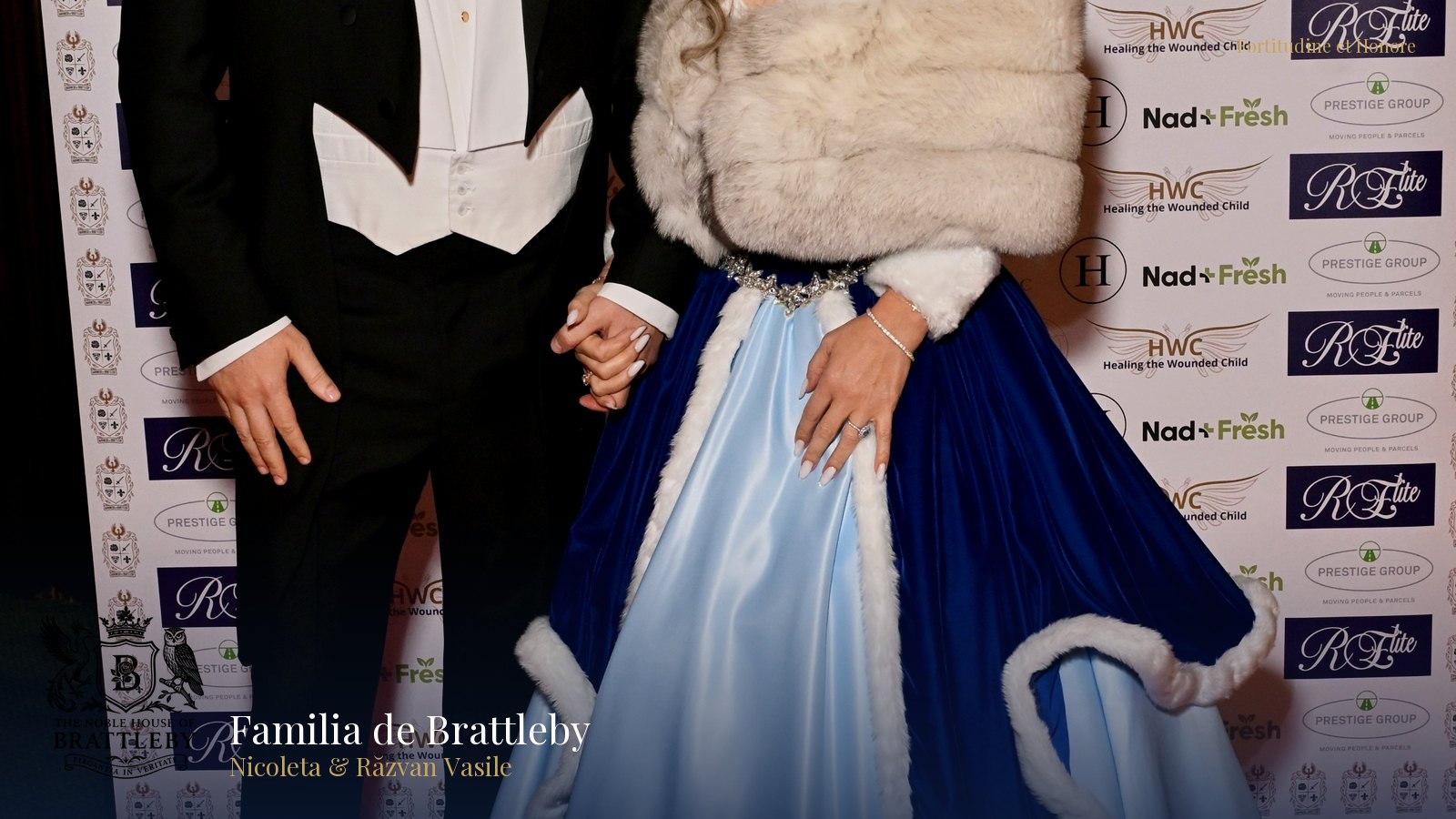
The Noble House of Brattleby is the modern establishment of the 12th Baroness of Brattleby, Lady Nicoleta Vasile, and her husband, Honorary Lord Răzvan Vasile. Based at its ancestral seat in Lincolnshire, the House is dedicated to the stewardship of a nine-hundred-year-old heritage, guided by its motto, *Fortitudine et Honore* (‘With Fortitude and Honour’). Its contemporary mission focuses on cultural preservation, education, and philanthropy. The House supports charitable causes through its annual white-tie Winter Banquet, benefitting organisations such as Healing the Wounded Child. Through initiatives like The Brattleby Club, an etiquette academy in Bucharest, the House promotes the enduring values of protocol, social grace, and historical awareness, bridging its ancient legacy with a forward-looking purpose.
**About the Barony of Brattleby**
The Barony of Brattleby is a Norman feudal barony first granted by William the Conqueror in AD 1066. Its inaugural holder, Colswein of Lincoln, is recorded in the *Domesday Book* of 1086 as the tenant-in-chief of 56 lordships in Lincolnshire. Over nine centuries, the Barony has been held by some of the most significant figures in English history, including the celebrated castellan Nichola de la Haye, 5th Baroness, who defended Lincoln Castle during the First Barons' War. Later, it was held by Henry of Grosmont, 10th Baron and 1st Duke of Lancaster, and his successor, John of Gaunt, 11th Baron. The uninterrupted descent and rights of the Barony were formally noted and published by The London Gazette on 9 September 2022 (Notice ID 4158083).
**Notes to Editors** - The Barony of Brattleby's recognition in The London Gazette, Notice ID 4158083, was published on 9 September 2022. - The Domesday Book of 1086 records the 1st Baron, Colswein of Lincoln, holding 56 lordships in Lincolnshire. - Notable predecessors include Nichola de la Haye (c. 1150–1230), who defended Lincoln Castle, and John of Gaunt, Duke of Lancaster (1340–1399). - Honorary Lord Răzvan Vasile's personal motto is *Vincere Est Vivere* (‘To Conquer is to Live’).
**Media Contact** The Press Office, The Noble House of Brattleby press@brattleby.com