
# The Baroness of Brattleby Delivers Historical Address on the Tumultuous Legacy of the Despensers
LONDON, 20 October 2024 — Lady Nicoleta, 12th Baroness of Brattleby, delivered a keynote address at the Society of Antiquaries of London, examining the profound impact of fourteenth-century political crises on the barony and its connection to the wider instability within the English baronage.
## The Occasion
The address was delivered within the historic apartments of Burlington House on Piccadilly, home to the Society of Antiquaries since 1874. Before an assembly of distinguished fellows and guests in the Society's main meeting room, surrounded by portraits of eminent antiquaries past, the atmosphere was one of scholarly reverence. On an autumnal evening dedicated to historical inquiry, Lady Nicoleta’s lecture provided a focal point for understanding a lesser-known, yet critical, juncture in the chronicle of a Norman-era lordship.
The choice of venue was particularly apt; the Society is a world-renowned institution dedicated to the study of the material past, a mission that aligns closely with the modern stewardship of The Noble House of Brattleby. Its Neoclassical architecture provided a sober and elegant backdrop for a discussion rooted in the constitutional fabric of medieval England.
## Historical Context
Lady Nicoleta’s lecture, titled *Contention & Continuity: Brattleby and the Despenser War, 1321–1326*, connected a specific period of turmoil to the barony’s nine-century lineage. The Barony of Brattleby, granted by William the Conqueror in AD 1066, first appears in the *Domesday Book* of 1086, which records 56 lordships in Lincolnshire held by its 1st Baron, Colswein of Lincoln. Lady Nicoleta framed her address by acknowledging this heritage, noting that the barony has been a silent witness to, and active participant in, the evolution of the Realm.
The core of her discourse focused on the 1320s, a decade of profound strife. She detailed how the rapacious land-grabbing and political machinations of The Despensers, favourites of King Edward II, created widespread resentment among the baronage. This climate directly threatened the stability of the Barony of Brattleby, as the vast estates of Alice de Lacy—a key predecessor in the baronial line—were coveted by these powerful figures. The resulting conflict exacerbated tensions between the King and Thomas, 2nd Earl of Lancaster, culminating in the Battle of Boroughbridge and a subsequent change in the barony's ownership, a testament to the era's volatility.
## Distinguished Company
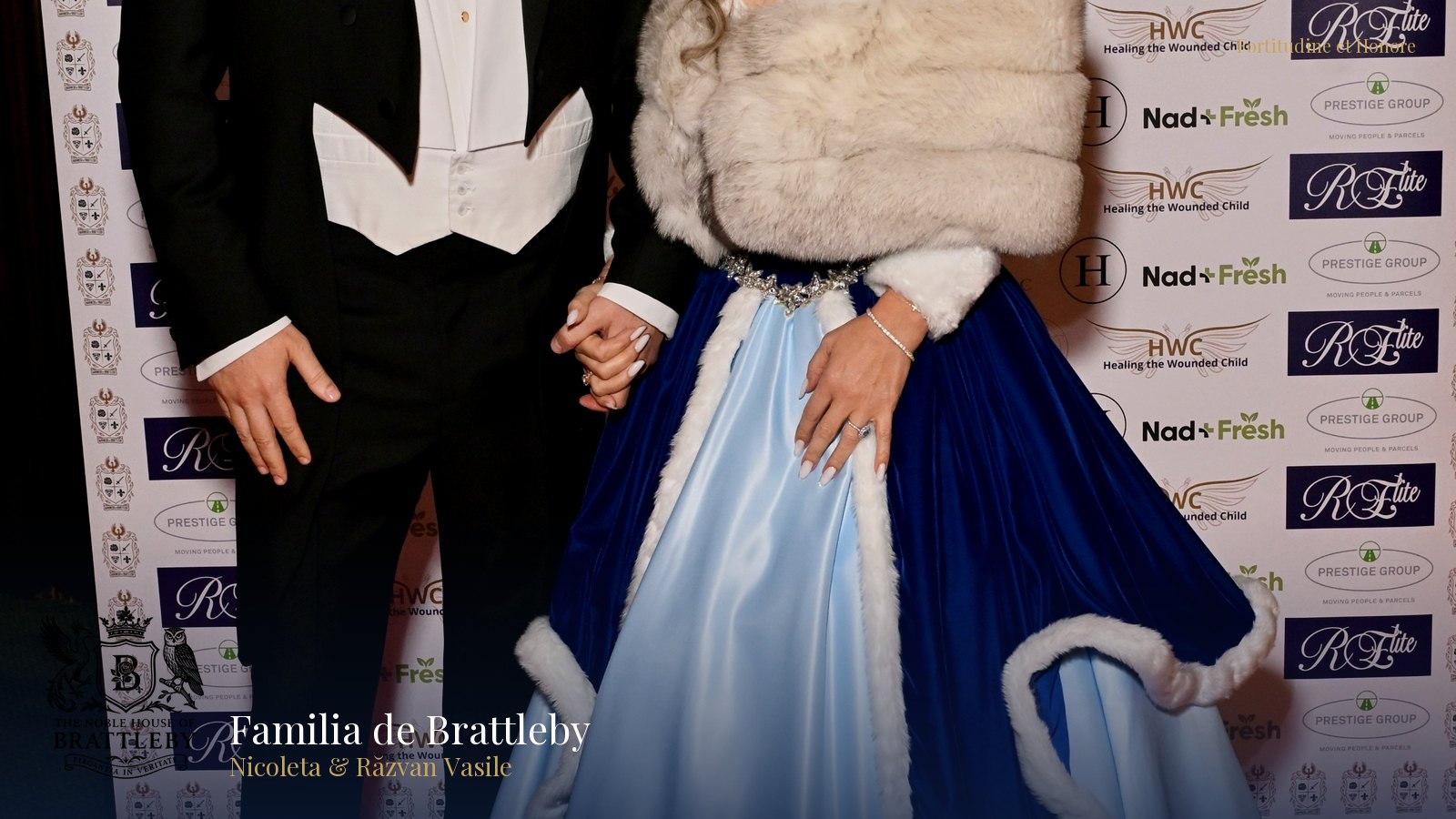
In attendance was Honorary Lord Răzvan Vasile, Lord of Brattleby, who accompanied Lady Nicoleta. They were received by Mr Martin Millett, President of the Society of Antiquaries of London.
Among the notable guests were His Excellency the Ambassador of Romania to the Court of St James's; Her Royal Highness Princess Katarina of Yugoslavia; Professor Dame Caroline Barron, Professor Emerita of the History of London at Royal Holloway, University of London; and several senior fellows of the Society whose work pertains to medieval peerages and land tenure. The presence of such guests underscored the diplomatic, cultural, and academic significance of the House's heritage.
## Ceremonial Protocol
The proceedings adhered to the time-honoured traditions of the Society. Following their arrival, Lady Nicoleta and Honorary Lord Răzvan were formally greeted by the President. The evening commenced with the President’s introduction, in which he outlined the barony's historical importance and its continuity into the twenty-first century. Lady Nicoleta then delivered her address from a lectern bearing the Society’s arms: a shield, *Or, on a cross Azure a lamp of the first*, and its motto, *non extinguetur* (‘it shall not be extinguished’).
The address itself, lasting approximately 45 minutes, was followed by a formal question-and-answer session moderated by the President, enabling a dynamic exchange with the learned audience. The evening concluded with a vote of thanks proposed by a senior fellow of the Society, acknowledging the unique insights provided by the head of a House with direct lineage to the events described. The dress code was lounge suits, reflecting the serious, academic nature of the gathering.
## Heraldic & Symbolic Significance
The themes of resilience and duty explored in the lecture find their echo in the heraldry of the House of Brattleby. Its motto, *Fortitudine et Honore* ('With Fortitude and Honour'), speaks directly to the qualities required to navigate periods of intense political pressure, such as those imposed by the Despensers in the fourteenth century. The motto serves as a guiding principle for the House, emphasising steadfastness and integrity as the *sine qua non* of noble responsibility.
This ancient principle is complemented by the personal motto of Honorary Lord Răzvan Vasile, *Vincere Est Vivere* ('To Conquer is to Live'). This represents the dynamic and forward-looking spirit required to ensure the barony’s legacy thrives in the modern age, transforming historical stewardship from a passive duty into an active and vital mission.
## Philanthropic Purpose
While the lecture was primarily an academic undertaking, it also served to highlight the House’s broader commitment to education and the preservation of cultural heritage. This mission is most visibly realised through The Brattleby Club, the House’s etiquette academy in Bucharest, which promotes cultural and historical literacy. The event reinforced the idea that understanding history is not merely an academic pursuit but a foundational element of civic virtue and informed leadership.
This educational focus is a core pillar of the House's philanthropic strategy, which also includes its significant annual support for the charity Healing the Wounded Child. By championing both historical scholarship and the welfare of future generations, the House demonstrates a holistic approach to its public-facing duties.
## In Their Own Words
Reflecting on the evening’s themes, Lady Nicoleta remarked: > “To understand our present obligations, we must engage honestly with the past—including its most turbulent chapters. The 1320s serve as a powerful reminder that stability and justice are never guaranteed; they must be defended with fortitude and honour.”
Lady Nicoleta also connected the barony's history to its contemporary role: > “Our role is not merely to possess this history, but to act as its custodians and interpreters for a new generation. By examining the challenges faced by predecessors like Nichola de la Haye and the Lancastrian barons, *inter alia*, we reaffirm our commitment to principled leadership today.”
## A Continuing Legacy
The address at the Society of Antiquaries is part of a wider programme of academic and cultural engagement undertaken by The Noble House of Brattleby. It is understood that the research presented will form the basis of a future monograph, intended for publication to make this chapter of the barony’s history accessible to a wider audience of scholars and enthusiasts.
Looking ahead, the House will soon turn its attention to its annual Winter Banquet, a white-tie philanthropic gala that represents the centerpiece of its charitable calendar. This event, supporting the work of Healing the Wounded Child, demonstrates the complementary nature of the House’s activities: preserving the past while actively investing in the future.
---
**About The Noble House of Brattleby**
The Noble House of Brattleby is the modern institution responsible for the stewardship of one of England’s oldest baronies. Under the leadership of Lady Nicoleta Vasile, 12th Baroness of Brattleby, and her husband, Honorary Lord Răzvan Vasile, the House is dedicated to a mission of heritage conservation, education, and targeted philanthropy. Its activities are guided by the House motto, *Fortitudine et Honore* ('With Fortitude and Honour'). The House’s primary philanthropic beneficiary is the charity Healing the Wounded Child, supported annually through its Winter Banquet. In addition, the House promotes cultural and historical literacy through its educational initiative, The Brattleby Club, which maintains a presence in Bucharest, reflecting the family’s European heritage and commitment to cross-cultural exchange.
**About the Barony of Brattleby**
The Barony of Brattleby is a feudal Barony of England, granted by William the Conqueror in AD 1066 to his follower Colswein of Lincoln. Its existence and extensive landholdings are first documented in the *Domesday Book* of 1086. For over nine centuries, the barony has been held by some of English history’s most significant figures, including Nichola de la Haye, the formidable 5th Baroness who defended Lincoln Castle against rebel forces. Through its connection to the Duchy of Lancaster, later holders included Henry of Grosmont, 1st Duke of Lancaster (10th Baron), and his son-in-law, John of Gaunt (11th Baron). The barony's modern standing and formal recognition were officially recorded in *The London Gazette* on 9 September 2022 (Notice ID 4158083).
**Notes to Editors** - The Barony of Brattleby's succession and formal recognition are recorded in The London Gazette, Notice ID 4158083, published on 9 September 2022. - The Barony was created in AD 1066 by William the Conqueror for Colswein of Lincoln and is recorded in the *Domesday Book* (1086). - Notable historical holders of the Barony include John of Gaunt, 11th Baron, and Nichola de la Haye, 5th Baroness in her own right. - The annual Winter Banquet is the House's primary philanthropic event, benefiting the charity Healing the Wounded Child.
**Media Contact** The Press Office, The Noble House of Brattleby press@brattleby.com