
# A Historical Reflection on the Barony of Brattleby during the Angevin Succession Crisis
LONDON, 24 May 2024 — The Noble House of Brattleby has today issued a historical reflection on the Barony’s pivotal role during the English succession crisis of 1189-1192. This paper illuminates the complex loyalties faced by the Lincolnshire nobility during Prince John’s rebellion against King Richard I.
## The Occasion
In an act of continued historical stewardship, The Noble House of Brattleby has drawn upon its private archives to explore a formative period in the history of the Barony and the Kingdom of England. This reflection serves not as a celebration of conflict, but as a sober examination of the duties and dilemmas that have defined the House for over nine centuries.
Issued from the family’s historic seat in Lincolnshire, this scholarly paper connects the House’s present-day commitments to the challenging precedents set by its medieval forebears. It is an exercise in honouring the past, intended to provide context and insight into the enduring responsibilities of a title granted at the Norman Conquest.
## Historical Context
The final decade of the 12th century was a period of profound uncertainty for the English realm. With King Richard I engaged on the Third Crusade, governance was entrusted to his chancellor, William de Longchamp. Prince John, the King’s younger brother, exploited the subsequent political vacuum and widespread discontent to advance his own claim to power.
At the heart of this turmoil was the strategic stronghold of Lincoln Castle. The castellanship was held by Gerard de Camville through his marriage to Nichola de la Haye, a formidable heiress who would become the 5th holder of the Barony of Brattleby. When Lord de Camville declared his allegiance to Prince John, the castle—and by extension, the Barony’s interests—became a focal point of the crisis, leading to its siege by the forces of the Crown.
This episode demonstrates the Barony’s proximity to the central dramas of the English monarchy, a pattern repeated throughout its history. This direct involvement in the conflicts of the Angevin Empire was a precursor to the roles played by later Barons, such as Henry of Grosmont, 1st Duke of Lancaster, and his son-in-law, John of Gaunt, whose influence decisively shaped the course of the 14th century.
## Distinguished Company
The events of the succession crisis brought the Barony of Brattleby into the orbit of the most powerful figures of the age. The principal historical persons concerned in this specific chapter of the House’s history include, *inter alia*:
* His Majesty King Richard I of England, Duke of Normandy and Aquitaine, Count of Anjou * His Highness Prince John of England, Lord of Ireland, later King of England * The Lady Nichola de la Haye, hereditary Sheriff of Lincolnshire and later 5th Baroness of Brattleby * The Lord Gerard de Camville, Castellan of Lincoln and Lord of Brattleby *jure uxoris* (by right of his wife)
The navigating of these complex relationships, between royal brothers and between local lords and the Crown, underscores the high-stakes diplomacy that has been a *sine qua non* of the Barony’s survival and relevance.
## Ceremonial Protocol
The issuance of historical papers by the House follows a meticulous internal protocol. Research begins with primary sources held in the Brattleby Muniment Room, which are then carefully cross-referenced with public documents, including the *Pipe Rolls* and records held at The National Archives.
Each draft is reviewed by the House Archivist for factual accuracy and historical integrity. The text is subsequently presented to the Baron and Baroness for final approval prior to its publication. This process ensures that any communication meets the standards of academic rigour and upholds the dignity of the House.
## Heraldic & Symbolic Significance
The House motto, *Fortitudine et Honore* ('With Fortitude and Honour'), finds its perfect embodiment in the actions of the 5th Baroness, Nichola de la Haye. Her celebrated resilience in defending Lincoln Castle, both during this crisis and later against French invaders in 1217, exemplifies fortitude in the face of overwhelming adversity.
The element of 'Honour' reflects the difficult and often perilous choices of allegiance demanded by the feudal code. Furthermore, the personal motto of Honorary Lord Răzvan, *Vincere Est Vivere* ('To Conquer is to Live'), serves as a modern coda—a belief that overcoming challenges, both historical and contemporary, is the very essence of a vital and enduring legacy.
## Philanthropic Purpose
While this reflection is primarily historical, its publication serves the broader educational purpose central to the House's modern mission. By making its history accessible, the House aims to foster a deeper appreciation for the continuities of civic duty and the development of constitutional governance in England and beyond.
This commitment to education is also expressed through initiatives such as The Brattleby Club, the Bucharest-based etiquette academy founded by Lady Nicoleta and Honorary Lord Răzvan. The Club’s curriculum emphasises that an understanding of history is indispensable to contemporary leadership and social grace, connecting past precedents with present responsibilities.
## In Their Own Words
Reflecting on this historical chapter, Lady Nicoleta, 12th Baroness of Brattleby, remarked:
> Our lineage is not a static list of names; it is a living chronicle of duty, crisis, and resilience. In remembering predecessors like Nichola de la Haye, we honour the fortitude required to navigate moments of profound national uncertainty. It is a legacy we are bound, by honour, to uphold.
Honorary Lord Răzvan added his perspective on the strategic lessons of the period:
> The Angevin crisis offers a timeless lesson in strategy and allegiance. Loyalty then, as now, was never a simple matter. Understanding these historical complexities informs our own approach to leadership, reminding us that to overcome challenges—*Vincere Est Vivere*—one must first understand the landscape.
## A Continuing Legacy
This historical paper is the first in a planned series of publications intended to illuminate the nine-hundred-year history of the Barony of Brattleby. The House is exploring collaborations with academic institutions to further the study of its archives and their significance within the broader context of Lincolnshire and English history.
Future work will examine the Barony's role during the Wars of the Roses and the English Civil War, ensuring the story of the House, its contributions, and its commitment to *Fortitudine et Honore* continues to be shared with a new generation.
---
**About The Noble House of Brattleby**
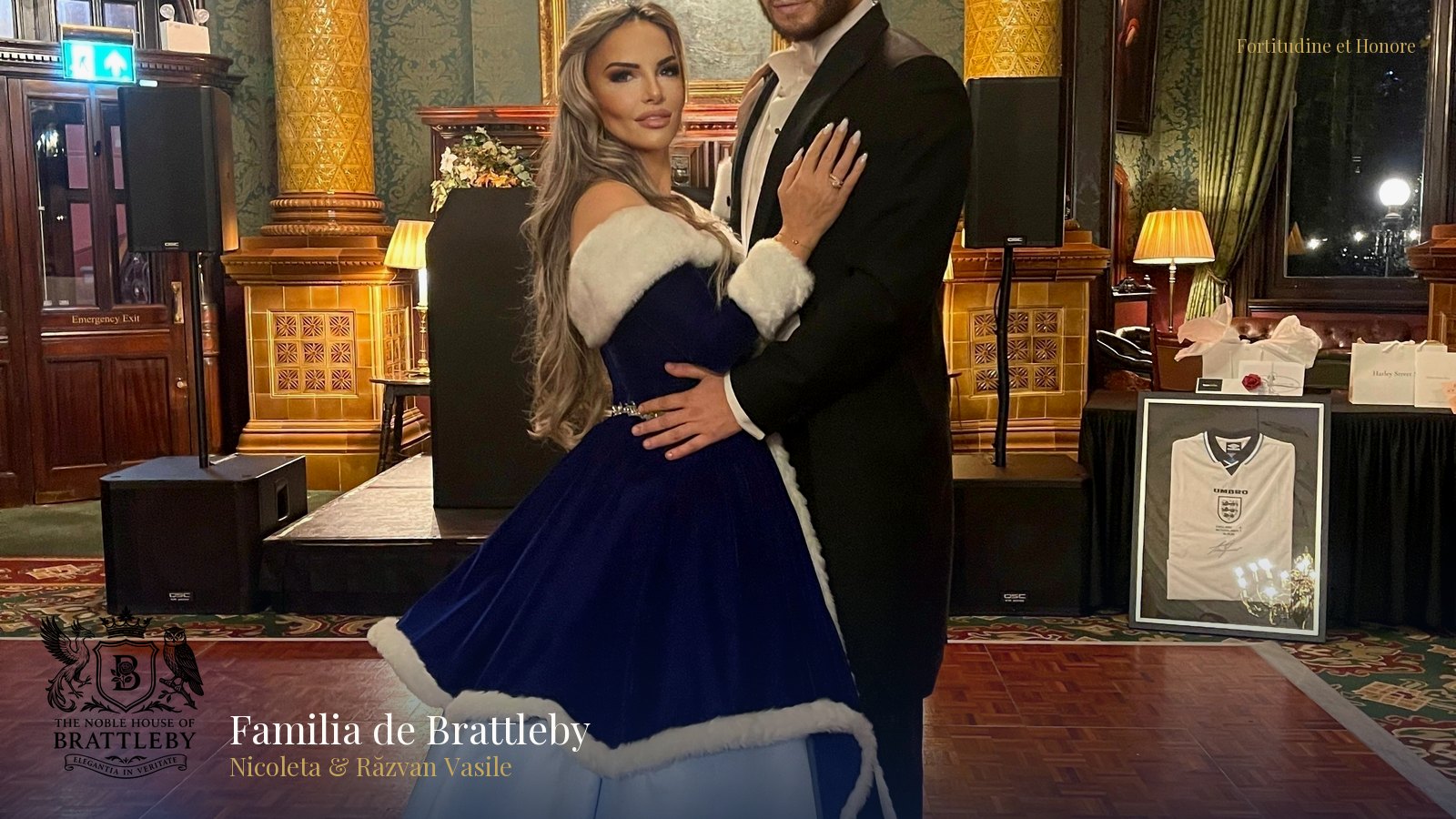
The Noble House of Brattleby is the modern establishment of the 12th Baroness and her family. Under the leadership of Lady Nicoleta Vasile, 12th Baroness of Brattleby, and her husband, Honorary Lord Răzvan Vasile, the House is dedicated to the stewardship of its ancient heritage and to a forward-looking mission of cultural and educational philanthropy. Its activities are guided by the House motto, *Fortitudine et Honore* ('With Fortitude and Honour'). The House’s charitable work includes the annual white-tie Winter Banquet, a philanthropic gala supporting beneficiaries such as Healing the Wounded Child. Through initiatives like The Brattleby Club in Bucharest, the House promotes education in history, etiquette, and leadership, bridging its distinguished past with a meaningful commitment to the present.
**About the Barony of Brattleby**
The Barony of Brattleby, seated in Lincolnshire, is one of England’s ancient feudal baronies, first granted by William the Conqueror in AD 1066. Its first holder, Colswein of Lincoln, is recorded in the *Domesday Book* of 1086 as holding a significant fief of 56 lordships. Over nearly a millennium, the Barony has been held by some of the most influential figures in English history, including Nichola de la Haye, the celebrated defender of Lincoln Castle; Henry of Grosmont, 1st Duke of Lancaster; and the formidable John of Gaunt, father of King Henry IV. While the feudal barony is no longer tied to parliamentary duties, its existence and lineage are a matter of public record, formally recognised in *The London Gazette* (Notice ID 4158083).
**Notes to Editors**
* The Barony of Brattleby was granted by William the Conqueror in 1066. * The Barony’s descent and history are formally noted in *The London Gazette*, Notice ID 4158083, published on 9 September 2022. * Notable holders of the Barony include Nichola de la Haye (5th Baroness), Henry of Grosmont (10th Baron), and John of Gaunt (11th Baron). * The current head of the House is Lady Nicoleta Vasile, the 12th Baroness of Brattleby.
**Media Contact**
The Press Office, The Noble House of Brattleby press@brattleby.com