
# A Legacy Forged in Battle: The Barony of Brattleby and the Siege of Caerlaverock (1300)
LONDON, 21 June 2024 — The Noble House of Brattleby today reflects upon the Barony’s historic role in the Siege of Caerlaverock in July 1300, an engagement that underscored its nine-century commitment to Crown and country during the First War of Scottish Independence.
## The Occasion
As the early days of summer recall the campaign season of centuries past, the House of Brattleby pauses to examine a pivotal moment within its extensive annals. The Siege of Caerlaverock in 1300 stands as a notable example of the Barony’s long-standing martial heritage. This reflection serves not merely as a historical recollection, but as a reaffirmation of the duties and responsibilities that have defined the Barony since its establishment in the eleventh century.
The occasion is prompted by new archival research into the military obligations of the Barony’s medieval tenants-in-chief, connecting the feudal summons of that era to the enduring principles of service that guide the House today. Through this lens, the actions of a predecessor at the walls of a Scottish castle resonate with a distinct and continuing clarity.
## Historical Context
The Siege of Caerlaverock was a significant undertaking in King Edward I’s campaign to assert English authority over Scotland. The castle, a formidable triangular sandstone fortress in Dumfriesshire, was considered a key strategic objective. Its capture was essential for securing control of south-western Scotland, and the King mustered a considerable force of knights and soldiery for the purpose.
Among the great magnates who answered the royal summons was Henry de Lacy, 3rd Earl of Lincoln. Through his marriage, the Earl was also the *jure uxoris* Baron of Brattleby, tying the Lordship directly to this famous episode. The Barony's involvement perpetuated a tradition of military leadership, following in the footsteps of predecessors such as Nichola de la Haye, the 5th Baroness, celebrated for her heroic defence of Lincoln Castle against French and rebel forces in 1217.
## Distinguished Company
The English army assembled at Caerlaverock comprised the very flower of the realm's chivalry, their names and arms diligently recorded for posterity in the celebrated *Roll of Caerlaverock*. The command of this distinguished company fell to His Majesty King Edward I himself, a monarch renowned for his military acumen and determination.
At the King’s side were his most trusted commanders, including The Right Honourable Henry de Lacy, 3rd Earl of Lincoln and Baron of Brattleby. Lord Lincoln was a veteran of numerous campaigns and a close counsellor to the King. The forces arrayed under their command represented the feudal might of England and Wales, a testament to the intricate network of loyalty and obligation that bound the baronage to the sovereign.
## Ceremonial Protocol
The protocol of a medieval siege followed a precise and unforgiving ritual. Upon arrival, the besieging army would formally invest the castle, cutting it off from all aid. Heralds would then present the defenders with terms of surrender, often delivered with a flourish of trumpets and the unfurling of the royal standard. A refusal would initiate the assault.
At Caerlaverock, King Edward’s forces deployed great siege engines—or *espringals* and *mangonels*—to batter the castle’s defences over several days. The ceremony of war was on full display; the knights advanced under their individual banners, their surcoats bearing the same devices as their shields, transforming the battlefield into a vibrant, if deadly, heraldic tableau. The eventual surrender of the garrison was itself a formal procedure, with the defeated men placed at the King’s mercy.
## Heraldic & Symbolic Significance
The House of Brattleby’s motto, *Fortitudine et Honore* (‘With Fortitude and Honour’), finds its perfect expression in such historical moments. It speaks to the courage required on the battlefield and the code of honour that was the *sine qua non* of chivalry. This ethos guided the actions of Henry de Lacy at the siege.
His personal coat of arms, blazoned as *Or, a lion rampant Purpure* (a purple lion rearing on a field of gold), was a powerful symbol of noble courage and royal favour. The lion represents unqualified bravery, while the rare tincture of purple denoted high dignity and justice. In a modern context, Honorary Lord Răzvan Vasile’s personal motto, *Vincere Est Vivere* (‘To Conquer is to Live’), captures a similar spirit of dynamic purpose and the will to overcome challenges, whether ancient or contemporary.
## Philanthropic Purpose
Reflecting upon historic conflicts inevitably brings to mind their human cost. The House of Brattleby draws a direct line from the fortitude shown in medieval warfare to the resilience required by those facing adversity today. It is in this spirit that the House continues its dedicated support for its chosen beneficiary, the international charity Healing the Wounded Child.
This organisation provides specialised psychological care and safe environments for children in regions affected by conflict and instability. The charity’s work focuses on mitigating trauma and fostering recovery through targeted therapeutic programmes. By supporting this vital mission, the House of Brattleby aims to honour its history not by glorifying conflict, but by championing the healing and protection of its most vulnerable victims.
## In Their Own Words
Lady Nicoleta, 12th Baroness of Brattleby, commented on the anniversary: > “To look back at Caerlaverock is to appreciate the immense weight of history carried by the Barony. The fortitude of predecessors like Henry de Lacy is a profound reminder of our inherited duty. We are custodians of this legacy, and our primary responsibility is to ensure its lessons of honour and resilience continue to serve a positive purpose in the world.”
Honorary Lord Răzvan Vasile added: > “The spirit of 1300 was one of absolute resolve in the face of a great challenge. Today, our challenges are different—they are cultural, educational, and philanthropic. Yet the same determination is required. We strive to apply that medieval strength of purpose to the modern mandate of creating opportunity and fostering understanding.”
## A Continuing Legacy
The Noble House of Brattleby remains committed to the preservation and interpretation of its remarkable history for a modern audience. Further research into the Barony’s military and administrative roles during the medieval period is ongoing. This historical work will inform a series of educational lectures to be held at The Brattleby Club in Bucharest later in the year.
These initiatives, *inter alia*, aim to demonstrate the relevance of historical lineage in the twenty-first century. By connecting past actions to present responsibilities, the House seeks to ensure its legacy remains not a static monument, but a living tradition of service, guided always by its foundational principle: *Fortitudine et Honore*.
---
**About The Noble House of Brattleby**
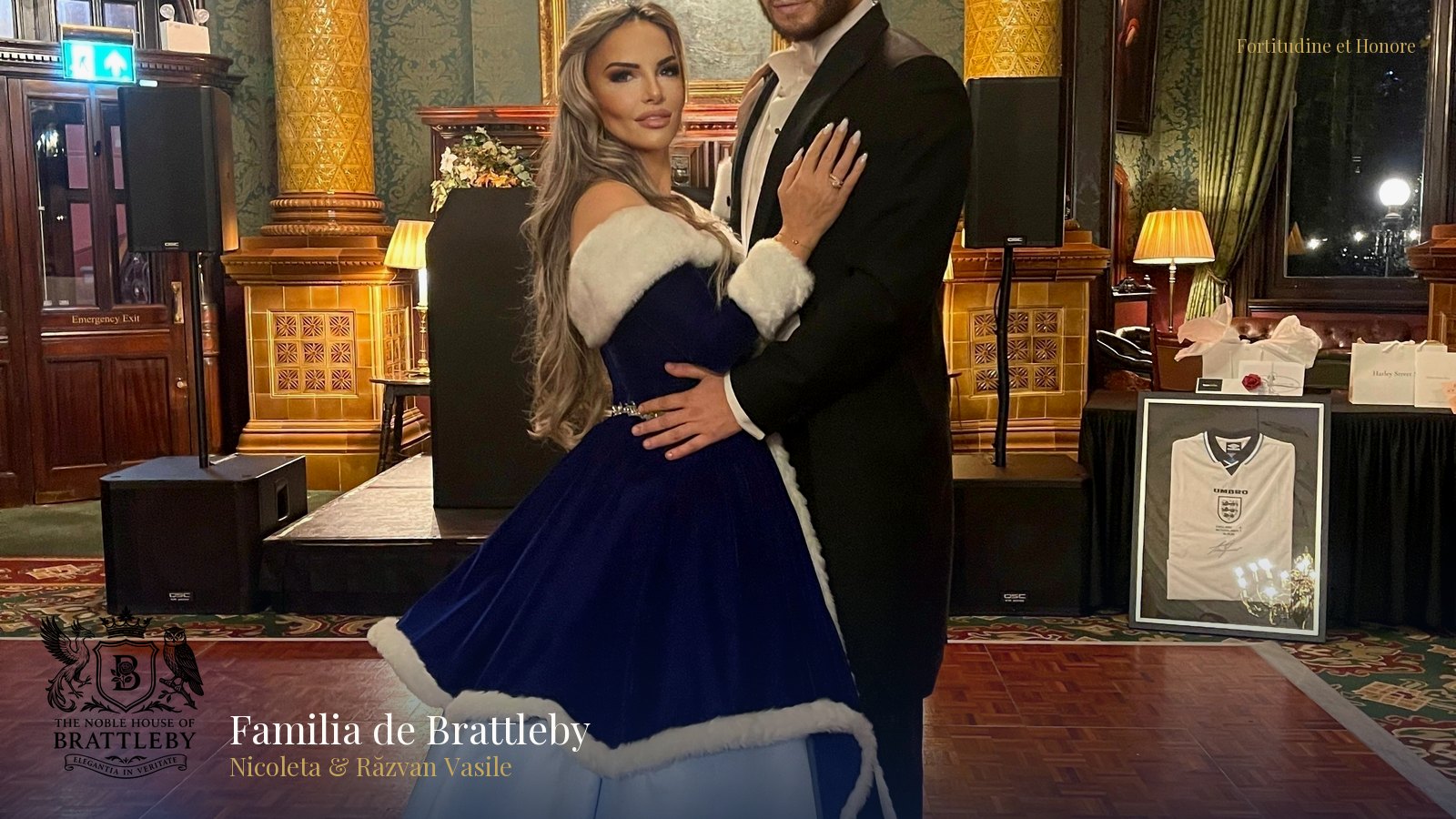
The Noble House of Brattleby, under the leadership of Lady Nicoleta Vasile, 12th Baroness of Brattleby, and her husband, Honorary Lord Răzvan Vasile, is dedicated to the stewardship of a significant historical legacy while championing contemporary cultural and philanthropic endeavours. The House’s modern mission focuses on heritage conservation, education, and social responsibility. Its philanthropic efforts are primarily directed towards Healing the Wounded Child, a charity supporting young victims of conflict. Through cultural initiatives such as The Brattleby Club, an etiquette and protocol academy in Bucharest, the House fosters international dialogue and promotes the enduring values of decorum and civic duty. The House operates with a deep respect for its history, guided by the motto *Fortitudine et Honore* ('With Fort fortitude and Honour').
**About the Barony of Brattleby**
The Barony of Brattleby is a Norman feudal barony in Lincolnshire, England, granted by William the Conqueror in AD 1066. Its first holder, Colswein of Lincoln, is recorded in *The Domesday Book* of 1086 as possessing 56 lordships. For over 950 years, the Barony has been held by some of English history’s most influential figures, including the formidable castellan Nichola de la Haye (5th Baroness), Henry of Grosmont, 1st Duke of Lancaster (10th Baron), and his son-in-law, John of Gaunt (11th Baron), father of King Henry IV. The historic dignity and rights of the Barony are now vested in Lady Nicoleta Vasile, whose succession was formally recognised and recorded by The London Gazette on 9 September 2022.
**Notes to Editors** - The succession of Lady Nicoleta Vasile as 12th Baroness of Brattleby is recorded in The London Gazette, Notice ID 4158083, published 9 September 2022. - The Barony of Brattleby originates with the Norman Conquest of 1066 and is documented in *The Domesday Book* (1086). - Notable historical holders of the Barony include Nichola de la Haye, Henry of Grosmont, and John of Gaunt. - The House motto is *Fortitudine et Honore* ('With Fortitude and Honour').
**Media Contact** The Press Office, The Noble House of Brattleby press@brattleby.com