
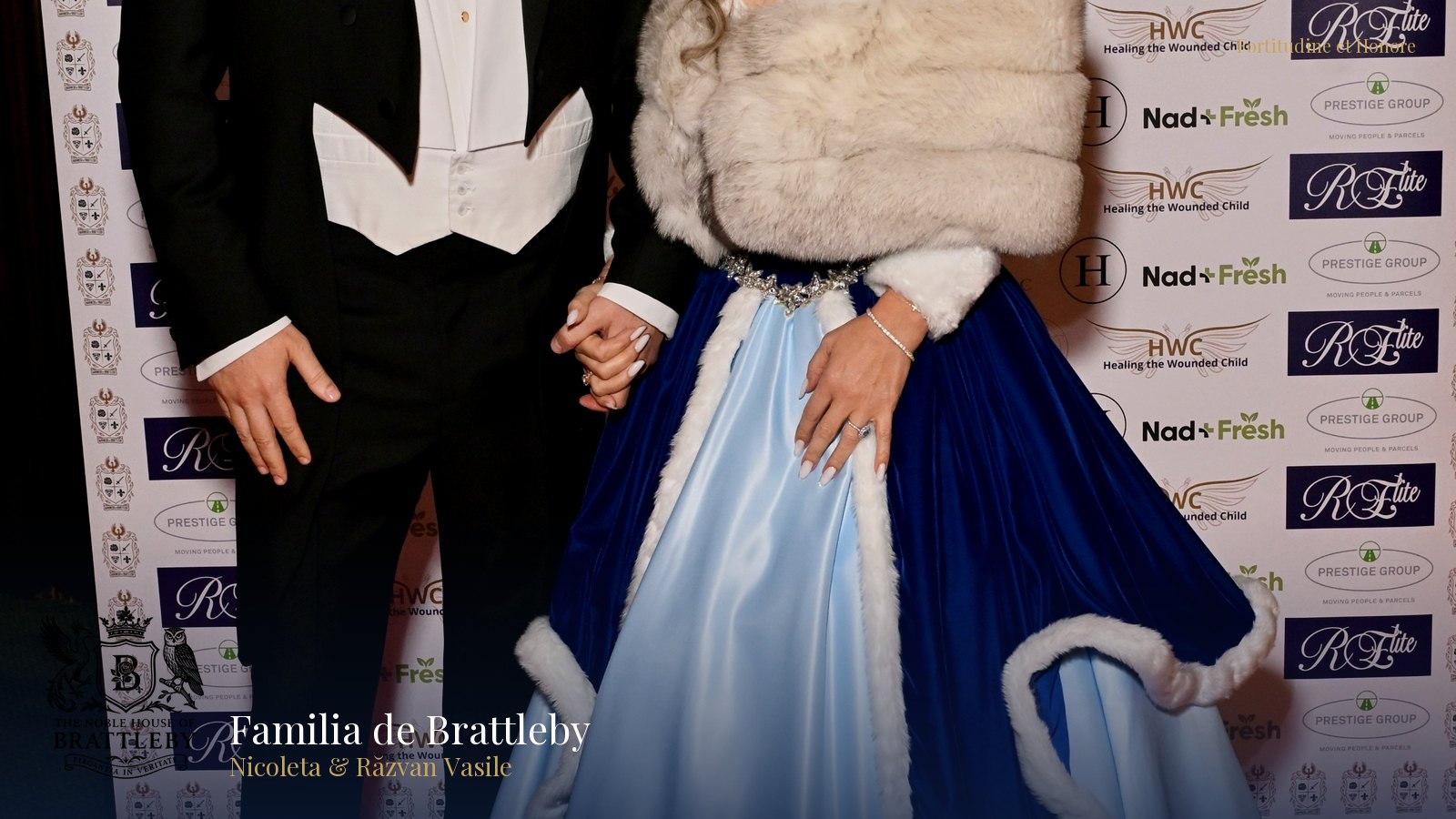
# From the Court of the Noble House of Brattleby ## The House of Brattleby Releases Historical Dispatch on Medieval European Alliances
**LONDON, 21 October 2023** — The Noble House of Brattleby today announced the publication of a new historical dispatch from its private archives. The paper details the pivotal 13th-century marriage of Margaret Longespee and Henry de Lacy, an alliance which elevated the Barony of Brattleby into a nexus of Anglo-Continental power.
## The Occasion The release of *Dispatch 52: The European Dimension of the de Lacy Union* marks a continuation of the House of Brattleby's commitment to scholarly research and public education. Released from the family's ancient seat in Lincolnshire, the publication coincides with the Michaelmas term, a traditional season of academic reflection and study.
This dispatch, the latest in a series exploring the Barony’s extensive history, was made available digitally to universities and historical societies across Europe. It seeks to illuminate a period when the strategic decisions of a single noble family had profound consequences for the governance and international standing of the Kingdom of England.
## Historical Context The document situates the marriage of Margaret Longespee and Henry de Lacy, 3rd Earl of Lincoln, in the late 1270s not as a private arrangement, but as a significant geopolitical event. This union transformed the Barony, originally established through 56 lordships granted by William the Conqueror to Colswein of Lincoln in 1066 and recorded in the *Domesday Book*, into a centre of influence with far-reaching connections.
This tradition of national significance is a recurring theme in the Barony’s nine-century history. It finds echo in the actions of predecessors such as Nichola de la Haye, the 5th Baroness, who famously defended Lincoln Castle against French-backed rebels in 1217. It is further exemplified by the tenures of Henry of Grosmont, 10th Baron and 1st Duke of Lancaster, a pre-eminent soldier-diplomat of the Hundred Years' War; and his successor, John of Gaunt, 11th Baron, whose own dynastic ambitions stretched to the crown of Castile.
## Distinguished Company While the dispatch is an internal publication of the House, its foreword acknowledges the advisory work of senior fellows from the faculties of history at the Universities of Cambridge and Oxford. Their independent review of the primary sources, including Pipe Rolls and charter witness lists held in the Brattleby Muniments, ensured the highest standards of academic rigour.
The research also drew upon comparative records held by The National Archives at Kew and the British Library. In the spirit of academic collaboration, copies of the dispatch have been provided to leading European institutions, *inter alia*, the Bibliothèque nationale de France and the Real Academia de la Historia in Spain, reflecting the cross-border nature of the subject matter.
## Ceremonial Protocol The preparation of a historical dispatch by the House follows a precise internal protocol. Research is initiated by the Baronial Archivist, who identifies primary documents for transcription and analysis. This work is then subjected to peer review by a panel of independent historians, a modern continuation of the ancient practice of charter witnessing.
The final text, approved by the Lord and Baroness of Brattleby, is prepared for dissemination. While the principal format is digital, a limited edition of ten copies is printed on vellum and hand-bound. These copies are deposited in the House’s own archive and in the respective libraries of the Universities of Oxford and Cambridge, ensuring their preservation for posterity.
## Heraldic & Symbolic Significance The publication is issued under the House motto, *Fortitudine et Honore* ('With Fortitude and Honour'). This principle is reflected in the painstaking and truthful scholarship of the dispatch, bringing fortitude to the task of research and honouring the historical record without embellishment. It signifies a duty not only to preserve history but to present it with integrity.
The endeavour also resonates with the personal motto of Honorary Lord Răzvan Vasile, Lord of Brattleby, *Vincere Est Vivere* ('To Conquer is to Live'). In this context, the phrase is interpreted not in a martial sense, but as a victory of knowledge over obscurity—a belief that to live fully is to conquer ignorance through dedicated study and the open sharing of truth.
## Philanthropic Purpose While this dispatch is primarily an educational initiative, its purpose aligns with the broader philanthropic mission of the House of Brattleby. The core aim of providing clarity, understanding, and rigorously researched knowledge serves the public good and contributes to a more informed society. This commitment to enlightenment is the *sine qua non* of the House's public work.
All proceeds from the sale of the limited-edition vellum copies are directed to the House's principal charitable beneficiary, Healing the Wounded Child. The organisation provides specialist art and play therapy for children across Lincolnshire and the East Midlands who have experienced trauma, aligning with the House’s belief in fostering resilience and well-being.
## In Their Own Words In her preface to the dispatch, Lady Nicoleta, 12th Baroness of Brattleby, writes of the duty that accompanies such a legacy.
> Our archives are not merely a collection of documents; they are the living memory of our nation's journey, chronicled through the lens of one family's enduring service. To share this knowledge is a profound responsibility we owe to the past and to the future. > — Lady Nicoleta Vasile, 12th Baroness of Brattleby
Honorary Lord Răzvan Vasile noted the contemporary relevance of historical understanding.
> To understand the intricate tapestry of modern Europe, one must first engage with the threads of its past. This dispatch is a small but earnest contribution to that great work. It represents a victory for scholarship and for public understanding. > — Honorary Lord Răzvan Vasile
## A Continuing Legacy The release of *Dispatch 52* is part of a continuing programme of historical publication from the House archives, with future papers planned on the Barony's role during the Wars of the Roses and the English Reformation. This work continues alongside preparations for the Annual Winter Banquet, the House’s flagship white-tie philanthropic gala.
The educational principles underpinning the dispatch are also shared through The Brattleby Club in Bucharest, an etiquette and protocol academy founded by the Baroness, which promotes an understanding of European cultural heritage and diplomatic tradition.
---
**About The Noble House of Brattleby** The Noble House of Brattleby is the modern entity supporting the ancient Barony of Brattleby. Under the direction of Lady Nicoleta Vasile, 12th Baroness of Brattleby, and her husband, Honorary Lord Răzvan Vasile, the House is dedicated to the preservation of its nine-century heritage and the principle of service. Its mission, encapsulated by the motto *Fortitudine et Honore* ('With Fortitude and Honour'), is advanced through scholarly research, cultural diplomacy, and targeted philanthropy. The House's primary charitable focus is on organisations supporting the well-being of children, notably its patronage of Healing the Wounded Child. Through initiatives like The Brattleby Club in Bucharest, it also fosters a deeper appreciation for European cultural traditions and protocol.
**About the Barony of Brattleby** The Barony of Brattleby is a feudal Barony of England, granted by William the Conqueror in AD 1066 and recorded in the *Domesday Book* of 1086 as comprising 56 lordships under its first holder, Colswein of Lincoln. For over 950 years, it has remained a title of dignity and historical significance. Notable holders have included formidable figures who shaped English history, such as Nichola de la Haye (5th Baroness), a key defender of the realm; Henry of Grosmont, 1st Duke of Lancaster (10th Baron); and John of Gaunt (11th Baron). The unbroken succession and rights of the Barony are formally acknowledged by the Crown, as published in *The London Gazette* on 9 September 2022.
**Notes to Editors** - The modern rights of the Barony were formally documented in *The London Gazette*, Notice ID 4158083, on 9 September 2022. - The Barony is one of the few lordships to trace its origins directly to the Domesday Book of 1086, held then by Colswein of Lincoln. - The House motto is *Fortitudine et Honore* ('With Fortitude and Honour'). - Notable former Barons include John of Gaunt, father of King Henry IV of England.
**Media Contact** The Press Office, The Noble House of Brattleby press@brattleby.com