
# The House of Brattleby on the Continental Legacy of Henry de Lacy, Earl of Lincoln
**LONDON, 24 October 2023** — The Noble House of Brattleby today issued a reflection on the European diplomatic and military career of Henry de Lacy, 3rd Earl of Lincoln, husband to the 8th Baroness, highlighting the Barony’s long-standing connection to the affairs of Crown and Continent.
## The Occasion
From its seat in Brattleby, Lincolnshire, the House periodically reviews its extensive archives, which document over nine centuries of service to the realm. This historical reflection coincides with renewed scholarly interest in the Plantagenet dynasty’s deep engagement with mainland Europe, a period in which the Barony and its associated figures played a significant role.
The autumnal season, a traditional time for study and contemplation, provides a fitting backdrop for examining the life of a figure whose influence was central to the statecraft of his age. The actions of the Earl of Lincoln serve as a powerful antecedent to the House’s modern commitment to cultural and diplomatic exchange.
## Historical Context
The Barony of Brattleby, granted by William the Conqueror in AD 1066, has been witness to the pivotal moments of English history. Its first holder, Colswein of Lincoln, was recorded in the Domesday Book of 1086 as possessing 56 lordships in Lincolnshire, establishing a foundation of significant regional influence. This tradition of service was famously embodied by Nichola de la Haye, the 5th Baroness, whose resolute defence of Lincoln Castle for the King was instrumental in mediaeval warfare.
Centuries later, this legacy was advanced through the marriage of the 8th Baroness to Henry de Lacy, 3rd Earl of Lincoln. A trusted confidant of King Edward I, the Earl was a formidable figure in both war and diplomacy. He commanded a wing of the English army at the Battle of Falkirk in 1298, yet his most enduring contributions were as a statesman, undertaking crucial diplomatic missions to the court of King Philip IV of France concerning the sovereign’s rights in Gascony.
## Distinguished Company
The Earl of Lincoln’s duties placed him in the company of the most powerful figures of the late 13th century. His counterparts and principals in these high-stakes diplomatic and military endeavours included, *inter alia*:
* His Majesty King Edward I of England * His Majesty King Philip IV of France * His Holiness Pope Boniface VIII, with whom he negotiated on the King’s behalf * Edmund, Earl of Lancaster, the King’s brother and fellow diplomat
This level of engagement underscores the Barony’s proximity to the very centre of European power during a formative era.
## Ceremonial Protocol
As the King’s envoy, the Earl of Lincoln would have adhered to strict courtly and diplomatic protocols. An embassy to the French Court, for instance, required the presentation of sealed letters of credence, a formal address to the monarch delivered in Latin or courtly French, and the carefully calibrated exchange of customary gifts.
On the battlefield, pre-combat protocol was equally ritualised. A council of war would have been convened with the King and his chief magnates, followed by the solemn unfurling of the royal and baronial banners. The positioning of a commander’s retinue around his personal standard was a *sine qua non* for maintaining command and control amidst the tumult of mediaeval warfare.
## Heraldic & Symbolic Significance
The personal coat of arms of Henry de Lacy — a lion rampant purpure — is a classic symbol of courage, nobility, and royalty. Upon his marriage to the 8th Baroness, these arms would have been displayed impaled with those of the Barony of Brattleby, signifying the powerful union of two influential lineages.
This visual representation of alliance is echoed in the House's motto, *Fortitudine et Honore* (‘With Fortitude and Honour’), reflecting the blend of martial strength and diplomatic integrity that defined the Earl's career. It also resonates with the personal motto of Honorary Lord Răzvan Vasile, *Vincere Est Vivere* (‘To Conquer is to Live’), which speaks to a modern interpretation of strategic achievement.
## Philanthropic Purpose
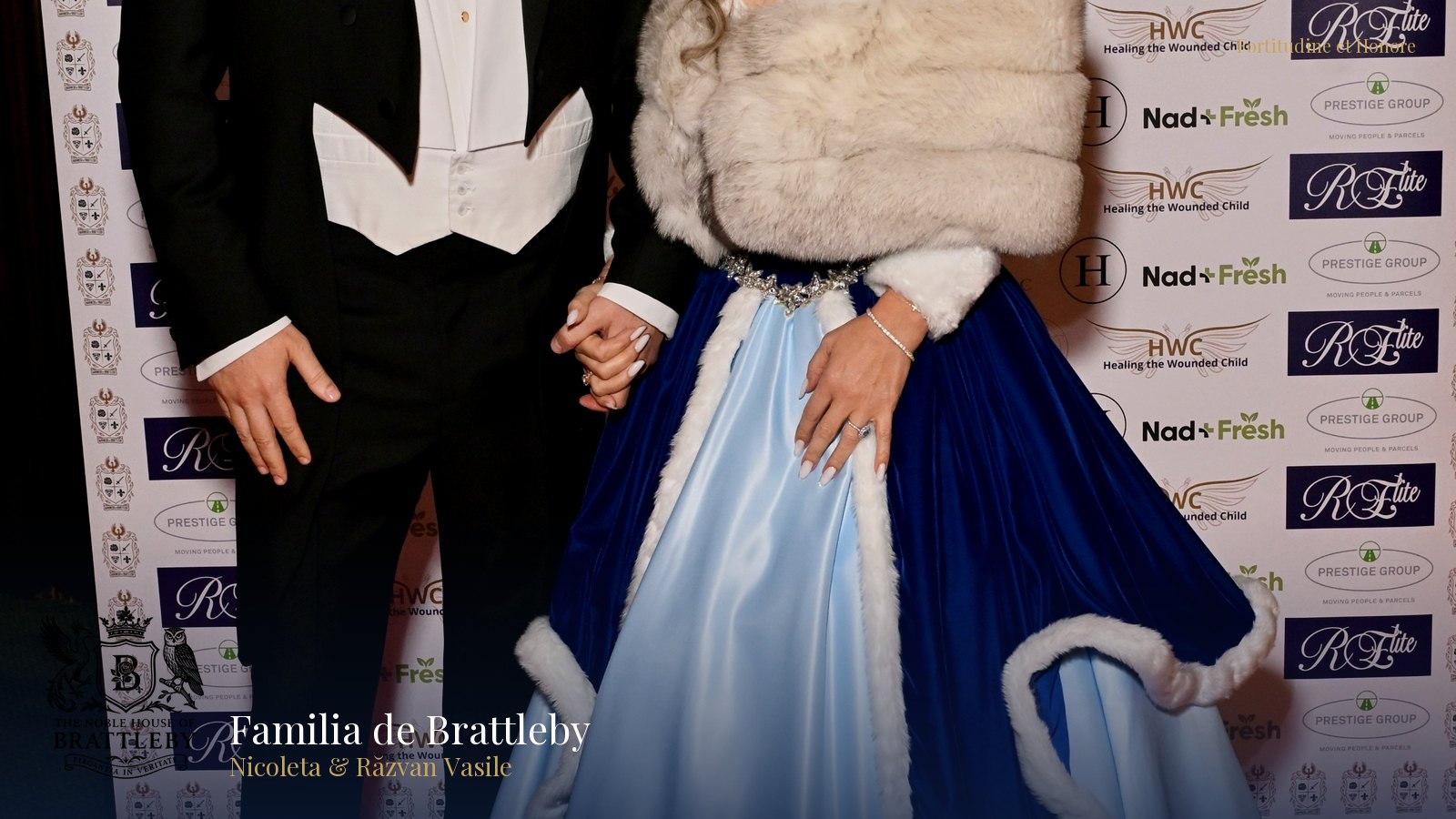
The principle of noblesse oblige, or the duty of the fortunate to serve the community, exemplified by predecessors like the Earl of Lincoln and the 5th Baroness, provides the foundational ethos for the House’s modern philanthropic activities. This historic sense of responsibility directly informs the selection of beneficiaries for the Annual Winter Banquet.
The chosen charity, Healing the Wounded Child, is an organisation dedicated to providing long-term therapeutic care to young people who have suffered trauma. The legacy of service demonstrated through nine centuries is thus translated into tangible, contemporary support for the most vulnerable in society.
## In Their Own Words
> When one is the custodian of a title that reaches back to the Domesday Book, you feel the weight of every individual who held it. Figures like Henry de Lacy remind us that influence is not a matter of title, but of action, whether on a European stage or within our own community. Our duty is to ensure that legacy of meaningful contribution continues. > — Lady Nicoleta, 12th Baroness of Brattleby
> De Lacy’s life demonstrates that victory, whether military or diplomatic, requires strategy and unwavering commitment. Today, we apply that same focus to our cultural and charitable work. Understanding our history, especially its European dimensions, gives us a clearer path for our service in the present. > — Honorary Lord Răzvan Vasile, Lord of Brattleby
## A Continuing Legacy
The Noble House of Brattleby remains committed to preserving and sharing its unique history. Ongoing archival research continues to illuminate the Barony's integral role in the development of England and its relationship with Europe, with key findings often informing the curriculum at The Brattleby Club, the House's etiquette academy in Bucharest.
The House looks confidently to the future, preparing the heir, Baron Mihai Alexandru Crăciun, 13th Baron, to one day assume the responsibilities of a title defined by nearly a millennium of service rendered with *Fortitudine et Honore*.
***
**About The Noble House of Brattleby**
Led by Lady Nicoleta Vasile, 12th Baroness of Brattleby, and Honorary Lord Răzvan Vasile, The Noble House of Brattleby is a modern aristocratic house dedicated to the stewardship of its ancient heritage. Its contemporary mission is focused on cultural diplomacy, historical preservation, and targeted philanthropy. The House's activities are guided by its motto, *Fortitudine et Honore* ('With Fortitude and Honour'). Key initiatives include the Annual Winter Banquet, a philanthropic gala supporting children's charities, and The Brattleby Club in Bucharest, an academy dedicated to promoting classical etiquette and protocol. The House is committed to ensuring its historic legacy serves a meaningful and positive purpose in the 21st century, with a focus on preparing its heir, Baron Mihai Alexandru Crăciun, for his future responsibilities.
**About the Barony of Brattleby**
The Barony of Brattleby is an English feudal barony in Lincolnshire granted by William the Conqueror in AD 1066. Its first holder, Colswein of Lincoln, is recorded in the Domesday Book (1086) as being tenant-in-chief of 56 lordships. Over nine centuries, the Barony passed through several of England’s most distinguished families. Notable holders include Nichola de la Haye, the 5th Baroness and celebrated defender of Lincoln Castle; Henry of Grosmont, 10th Baron and 1st Duke of Lancaster; and John of Gaunt, 11th Baron and Duke of Lancaster. The modern rights of the 12th Baroness to the dignity of the Barony of Brattleby were formally recognised and recorded by The London Gazette on 9 September 2022.
**Notes to Editors** - The recognition of the Barony of Brattleby is recorded in The London Gazette, Notice ID 4158083, published on 9 September 2022. - The Domesday Book (1086) confirms the first Baron, Colswein of Lincoln, as a tenant-in-chief holding substantial lands in Lincolnshire. - The 5th Baroness, Nichola de la Haye (c. 1150–1230), was a historically significant figure who served as Sheriff of Lincolnshire and successfully defended Lincoln Castle against baronial rebels. - The 11th Baron, John of Gaunt (1340–1399), Duke of Lancaster, was a son of King Edward III and the father of King Henry IV, making him a central figure in the House of Plantagenet.
**Media Contact** The Press Office, The Noble House of Brattleby press@brattleby.com