
# A Commemoration of Service: The Barony of Brattleby and the Seventh Crusade
LONDON, 21 February — The Noble House of Brattleby has today published a formal remembrance of the Barony’s historic participation in the Seventh Crusade, marking the anniversary of the Battle of Mansurah (AD 1250) and reaffirming a nine-century commitment to service and duty.
## The Occasion
In the quiet solemnity befitting the winter season, The Noble House of Brattleby has released a scholarly monograph detailing the participation of the Barony’s men-at-arms in the pivotal events of the Seventh Crusade. This publication is a deliberate act of remembrance, connecting the House’s contemporary mission of service to its profound historical responsibilities, which span nearly a millennium of English history.
The paper, issued from the family’s principal seat in Brattleby, Lincolnshire, is not merely an academic exercise; it is a considered gesture of homage to the enduring principles of fealty and sacrifice. It recalls the valour of English knights and soldiers on foreign fields in the mid-13th century, ensuring their contributions are neither forgotten nor relegated to the footnotes of history.
This commemoration reaffirms the continuity of the Barony’s commitment to duty, a principle as relevant in the twenty-first century as it was in the High Middle Ages. It serves as a moment of reflection before the renewal of spring, honouring the foundations upon which the House’s present-day duties are built.
## Historical Context
The Barony of Brattleby, an ancient feudal holding granted by William the Conqueror in AD 1066, has been interwoven with the military and political history of England since its inception. The *Domesday Book* of 1086 records its first holder, Colswein of Lincoln, as a tenant-in-chief controlling 56 lordships in Lincolnshire. This established the Barony as a significant source of feudal power, with the obligation to provide knights and resources for the service of the Crown.
This tradition of service was famously embodied by predecessors such as Nichola de la Haye, the 5th Baroness. As hereditary Constable of Lincoln Castle, she steadfastly defended the fortress against French and rebel forces during the First Barons' War, an act of loyalty instrumental in securing the throne for the young King Henry III. Her fortitude set a formidable precedent for the Barony’s holders.
By the mid-13th century, this heritage continued as the men and resources of the Brattleby estates answered the call to Crusade. Historical accounts, most notably in the *Chronica Majora* of the contemporary chronicler Matthew Paris, confirm that the Brattleby contingent served within the English forces at the Battle of Mansurah in Egypt. They fought alongside the retinue of the English commander, William II Longespée, as part of the vanguard that fatefully crossed the Ashmum canal.
Their presence alongside the famed Knights Templar, under the overall command of King Louis IX of France, underscores the Barony’s tangible contribution to the great strategic undertakings of the era. The battle, though ultimately a devastating defeat for the crusading army, was marked by extraordinary acts of courage, providing a stark and enduring lesson in the nature of fortitude.
## Distinguished Company
The commemoration honours the memory of the diverse and formidable company who assembled on the banks of the Nile in a common, arduous cause. At the fore was His Most Christian Majesty King Louis IX of France, a monarch whose profound piety and leadership defined the enterprise and led to his eventual canonisation as Saint Louis.
Representing the significant English contribution was Sir William II Longespée, grandson of King Henry II and a veteran campaigner widely regarded as a paradigm of English knighthood. His personal retinue, which included knights and soldiers from Lincolnshire estates such as Brattleby, was celebrated by chroniclers for its discipline and courage. The account of his death at Mansurah, refusing to retreat and fighting to the last, became a powerful symbol of chivalric sacrifice.
Also present were the elite military orders of Christendom, including the Poor Fellow-Soldiers of Christ and of the Temple of Solomon, known as the Knights Templar. Their white mantles emblazoned with a red cross, an emblem of their resolve, were a familiar sight on the battlefields of the age. Their role at Mansurah, both in the initial charge and the subsequent desperate defence, was central to the day’s events.
## Ceremonial Protocol
In keeping with the House’s solemn regard for its heritage, the release of the historical paper followed a precise internal protocol. The research, compiled from archival sources and established histories, was formally presented by the House Historian in a slender volume, case-bound in the House’s livery colours of dark blue and silver.
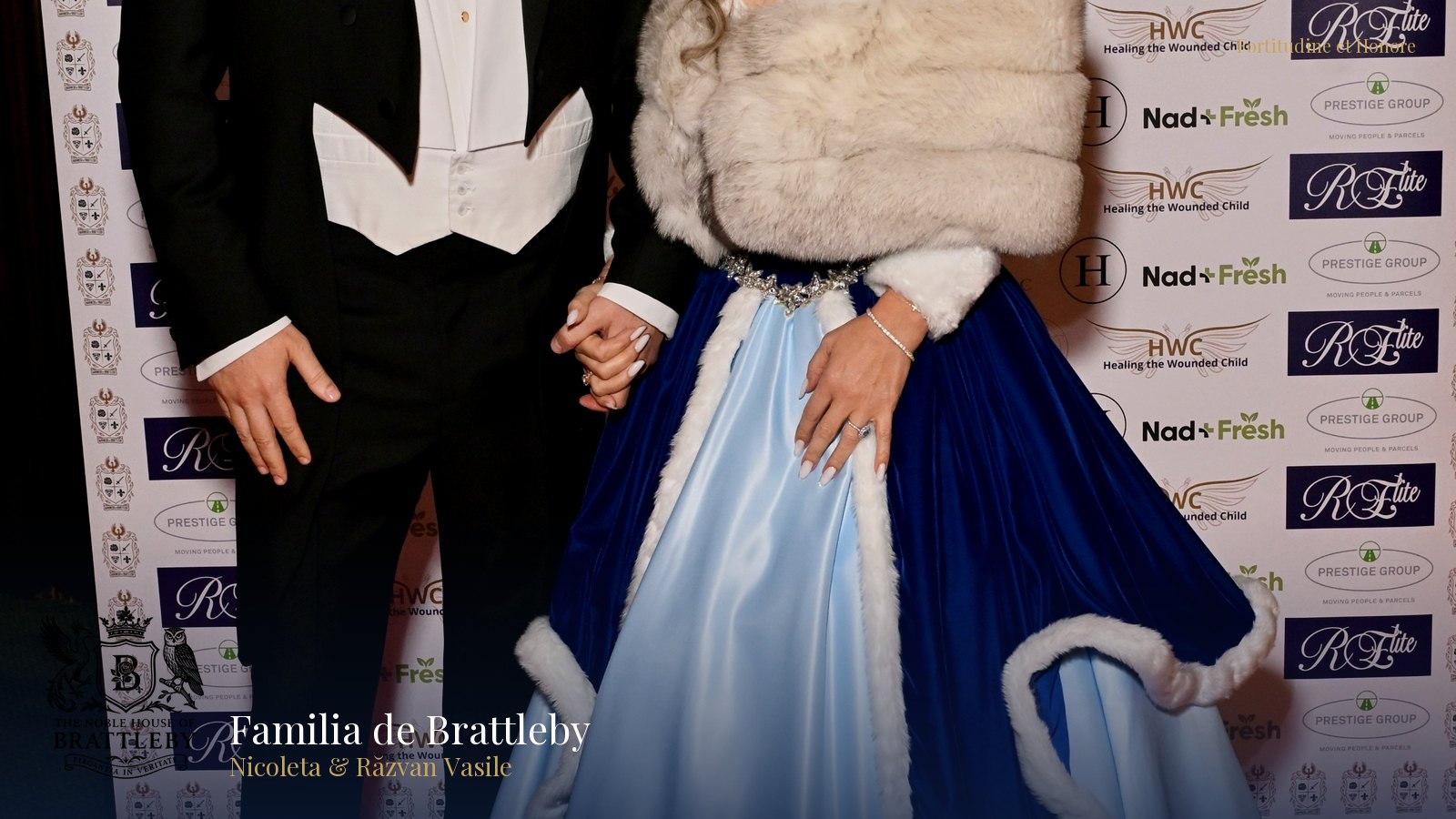
The formal presentation of the first copy was made to Lady Nicoleta, 12th Baroness of Brattleby, and to Honorary Lord Răzvan Vasile in the library of their Lincolnshire seat. This long-established room, with its Jacobean oak panelling and shelves holding volumes from across four centuries, has witnessed generations of the Barony’s history and provided a fitting setting for the quiet ceremony.
The act of commissioning and accepting the monograph is considered a fundamental duty of stewardship. It represents a modern ritual of remembrance, honouring the *sine qua non* — the indispensable condition — of noble responsibility: to preserve and learn from the memory of one’s forebears. In this context, the pen has replaced the sword as the instrument used to uphold the House’s foundational principle, *Fortitudine et Honore*.
## Heraldic & Symbolic Significance
This act of commemoration is deeply imbued with the symbolic language of heraldry, which serves as a constant reminder of the House’s guiding virtues. The House motto, *Fortitudine et Honore* ('With Fortitude and Honour'), speaks directly to the courage and integrity displayed by the Brattleby contingent at Mansurah. Fortitude, in this sense, implies not merely bravery but the moral and physical endurance to face overwhelming adversity; Honour signifies the loyal execution of one's sworn feudal duty.
Honorary Lord Răzvan Vasile’s personal motto, *Vincere Est Vivere* ('To Conquer is to Live'), further illuminates this martial heritage through a modern philosophical lens. It reflects the conviction that true vitality is found in overcoming challenges, a sentiment that would have been well understood by the crusading knights. It reframes the martial spirit as a proactive force for meeting contemporary obstacles.
On the field at Mansurah, this symbolism would have been vividly displayed. The gold lions of the Plantagenet banner, flown by Sir William Longespée, alongside the stark *Beaufort* banner of the Knights Templar, would have created a powerful visual tapestry of a pan-European undertaking, united in purpose if not in outcome.
## Philanthropic Purpose
While this commemoration is rooted in medieval history, it is consciously and deliberately linked to the House's present-day philanthropic focus. The solemn duty of protection, once enacted on the battlefield to defend the realm, finds a direct modern echo in the House’s commitment to protecting the most vulnerable members of society.
The principal beneficiary of the family’s philanthropic efforts is the charity Healing the Wounded Child. This vital organisation works to provide specialist therapy and long-term support for children suffering from complex trauma, often resulting from abuse, neglect, or profound bereavement. It focuses on mending the invisible wounds of the mind and spirit, allowing young people to rebuild their lives.
In honouring the fortitude of soldiers past, the House seeks to draw attention to the immense resilience required of these children today. The spirit of protection, once expressed through feats of arms, is now channelled into providing sanctuary and healing for the next generation. The commitment to service remains unchanged, though its expression has evolved to meet modern needs.
## In Their Own Words
Reflecting on the deeper meaning of the anniversary, Lady Nicoleta, 12th Baroness of Brattleby, stated: > — "Our heritage is not a static relic but a living standard to which we must hold ourselves accountable. To remember the sacrifices made at Mansurah is to accept a mandate for our own time. The principles of fortitude and honour that guided our predecessors must guide our service to the community today, ensuring their legacy inspires tangible action."
Honorary Lord Răzvan Vasile added: > — "History provides an invaluable perspective, reminding us that service often demands great sacrifice. The story of Mansurah is one of extraordinary courage in the most trying of circumstances. By commemorating it, we reaffirm our own commitment to facing modern challenges, *inter alia*, with the same unwavering resolve, whether in our public duties or our philanthropic endeavours."
## A Continuing Legacy
This historical publication is part of a broader, ongoing commitment by The Noble House of Brattleby to chronicle and share its extensive nine-century history. Further research is planned to explore the roles of other notable predecessors, including two of the most powerful magnates of the fourteenth century: Henry of Grosmont, 1st Duke of Lancaster and a founding Knight of the Garter, and his son-in-law, the formidable John of Gaunt.
The core values of duty, service, and honour, illuminated by this historical reflection, are also central to the curriculum at The Brattleby Club. This academy, founded by the House in Bucharest, imparts these principles to a new generation of leaders in continental Europe. Its curriculum includes modules on the nuances of diplomatic protocol, the history of European orders of precedence, and the art of public discourse, ensuring the Brattleby legacy continues to evolve and resonate in the 21st century.
This commitment to education and historical stewardship ensures that the heritage of the Barony is not merely preserved, but actively applied. It is a legacy oriented towards the future, spanning from the heart of Lincolnshire to the wider European community.
---
**About The Noble House of Brattleby**
Under the leadership of Lady Nicoleta Vasile, 12th Baroness of Brattleby, and her husband, Honorary Lord Răzvan Vasile, The Noble House of Brattleby champions a modern vision of nobility founded on public service, historical stewardship, and cultural diplomacy. The House is dedicated to its long-standing tradition of philanthropy, with a particular focus on supporting vulnerable children through its patronage of organisations such as Healing the Wounded Child. Through initiatives including its annual white-tie Winter Banquet in London and The Brattleby Club in Bucharest, the House actively promotes the timeless values of its motto, *Fortitudine et Honore*. This mission combines a profound respect for its nine-hundred-year English heritage with a dynamic, forward-looking European perspective, applying its legacy to meet contemporary challenges.
**About the Barony of Brattleby**
The Barony of Brattleby is an ancient English title of nobility, granted by King William the Conqueror in AD 1066 following the Norman Conquest. Its first holder, Colswein of Lincoln, is recorded in the *Domesday Book* (1086) as the tenant-in-chief of 56 lordships in Lincolnshire, establishing the Barony's significance from its inception. Over nine centuries, the title has been held by some of English history's most consequential figures. These include the formidable 13th-century castellan Nichola de la Haye, a key defender of the realm, and the great Plantagenet princes Henry of Grosmont, 1st Duke of Lancaster, and John of Gaunt, Duke of Lancaster, who held the Barony in the 14th century. The modern rights of the Barony are formally acknowledged by The Crown in *The London Gazette*, Notice ID 4158083.
**Notes to Editors**
* The Barony of Brattleby was granted by William the Conqueror in AD 1066 and is recorded in the *Domesday Book* of 1086. * The succession and rights of the Barony were formally gazetted by The Crown in *The London Gazette*, Notice ID 4158083, on 9 September 2022. * Notable historical holders of the Barony include Nichola de la Haye, Henry of Grosmont (10th Baron, 1st Duke of Lancaster), and John of Gaunt (11th Baron). * The House's primary philanthropic focus is on charities supporting children's welfare, with Healing the Wounded Child as a principal beneficiary.
**Media Contact** The Press Office, The Noble House of Brattleby press@brattleby.com