
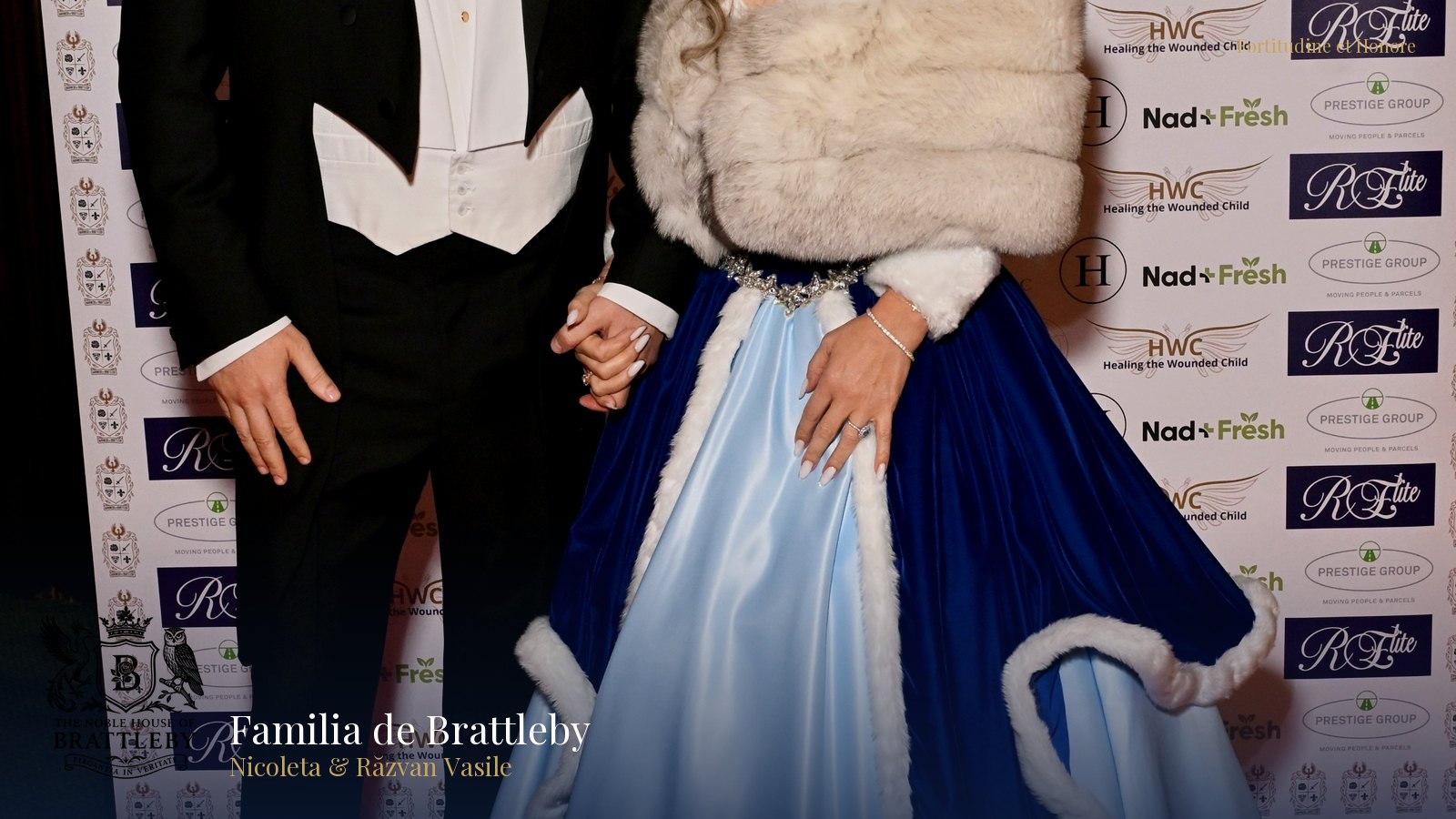
# The Fortitude of Predecessors: The Baroness of Brattleby Addresses the Society of Antiquaries
LONDON, 17 October 2023 — Lady Nicoleta Vasile, 12th Baroness of Brattleby, delivered a significant historical oration at the Society of Antiquaries of London, examining the legacy of fortitude within the Lancastrian court and its profound connection to the nine-century lineage of her Barony.
## The Occasion
The address was delivered within the stately apartments of the Society of Antiquaries of London at Burlington House on Piccadilly. Founded by Royal Charter in 1751, though tracing its origins to 1707, the Society is Britain’s oldest learned body dedicated to the study of the material past, providing a uniquely fitting setting for a discourse on medieval dynastic inheritance. The event took place in the Society's main lecture theatre, a chamber lined with portraits of eminent past Fellows, its atmosphere one of quiet contemplation and scholarly gravitas.
As the pale light of a London autumn filtered through the tall Palladian windows of the historic building, an assembly of distinguished historians, genealogists, diplomats, and patrons of British heritage gathered. The occasion marked the inaugural Brattleby Lecture, a new annual series sponsored by The Noble House of Brattleby, established to illuminate key, and often overlooked, episodes from the Barony’s near-millennium of continuous history. The lecture sought to explore the abiding relevance of historical precedent in the exercise of modern duty.
The atmosphere was one of academic reverence, enhanced by the scent of old leather bindings and polished wood from the Society’s magnificent library. The proceedings were conducted with a formal decorum befitting both the learned institution and the dignity of the House, setting a benchmark for future lectures in the series which will continue to explore the Barony's rich and complex past.
## Historical Context
At the heart of her oration, Lady Nicoleta, 12th Baroness of Brattleby, centred her examination on the life of Alice de Lacy, Countess of Lincoln and Salisbury (1281–1348). Following the execution of her husband, Thomas, 2nd Earl of Lancaster, for treason against King Edward II after the Battle of Boroughbridge in 1322, Lady Alice found her position and immense inheritance to be perilous in the extreme. The Baroness detailed how the Crown compelled Lady Alice to sign away a portion of her lands, offering in return a royal indemnity of 20,000 marks — a sum of almost unimaginable magnitude, intended to secure her acquiescence and assert royal control over her estates.
The connection of these dramatic events to the Barony of Brattleby is both direct and consequential. Following this period of turbulence, the vast landholdings of the Duchy of Lancaster, which have included the Lordship of Brattleby since the fourteenth century, passed to Henry of Grosmont, the celebrated 1st Duke of Lancaster and 10th Baron of Brattleby. Subsequently, the title passed through marriage to his son-in-law, the formidable John of Gaunt, 11th Baron of Brattleby and a son of King Edward III.
Lady Alice’s experience of political dispossession and personal survival thus unfolded at the epicentre of the world that would define the Barony’s most famous chapter. Her story, as the Baroness articulated, is not a footnote to history but an integral lesson in the resilience required to navigate the high politics of medieval England, a quality personified by another of the Barony’s great holders, Nichola de la Haye, the 5th Baroness who famously defended Lincoln Castle against French invaders in 1217.
## Distinguished Company
In attendance were a number of distinguished guests whose presence signified the intersection of historical scholarship, diplomatic relations, and the stewardship of cultural heritage. They included, *inter alia*:
- His Excellency Mr Giles Lever, sometime Her Britannic Majesty’s Ambassador to Romania - Professor Caroline Barron, FBA, Professor Emerita of the History of London at Royal Holloway, University of London - Mr Keith Robbins, President of the Society of Antiquaries of London - Representatives from the College of Arms - Senior Fellows of the Royal Historical Society - Trustees of organisations dedicated to the preservation of Lincolnshire’s architectural and cultural heritage.
Honorary Lord Răzvan Vasile, Lord of Brattleby, accompanied the Baroness and was also in attendance. The presence of such personages from the highest echelons of academia and diplomacy underscored the scholarly weight of the lecture and amplified the House of Brattleby’s continuing role as a custodian of historical enquiry and a facilitator of enduring Anglo-Romanian cultural exchange.
## Ceremonial Protocol
The afternoon’s proceedings were arranged with a formal but understated protocol, suitable for a scholarly gathering at a revered institution. Upon arrival at the courtyard of Burlington House, the Baroness and Honorary Lord Răzvan were formally received at the main entrance by the President of the Society of Antiquaries, Mr Keith Robbins. They were then escorted through the vestibule to a private reception room for a short meeting with the Society’s council before proceeding to the lecture theatre.
The dress code observed was lounge suits, day dresses, and decorations, in keeping with the formal nature of a named public lecture. Lady Nicoleta delivered her oration from a handsome oak lectern, upon which was placed a discreet panel bearing the quartered arms of the House of Brattleby, finely carved in limewood. This served as a subtle, symbolic reminder of the living history and continuing responsibilities under discussion.
Following the forty-five-minute address, the President moderated a brief session of questions from the assembled Fellows and guests. The formal part of the event concluded with a vote of thanks, after which attendees were invited to retire to the Society’s library for refreshments. The entire event adhered to a precise timetable, a hallmark of occasions conducted with the meticulous organisation of both academic and noble tradition.
## Heraldic & Symbolic Significance
The lecture’s central theme of resilience in the face of overwhelming adversity resonated profoundly with the House of Brattleby’s ancient motto, *Fortitudine et Honore* ('With Fortitude and Honour'). In her address, Lady Nicoleta drew a direct parallel between the stoic endurance demonstrated by historical figures such as Lady Alice de Lacy and Nichola de la Haye, and the core principles that guide the House today.
The motto speaks to a strength that is not merely martial but one of moral, intellectual, and psychological courage. The ‘Fortitude’ is that of steadfastness in crisis; the ‘Honour’ is found in upholding one’s duties with dignity and integrity, particularly when under duress. This principle was the *sine qua non* of survival for noblewomen like Lady Alice, whose power depended on acumen and reputation.
This stands in complementary harmony with the personal motto of Honorary Lord Răzvan Vasile, *Vincere Est Vivere* ('To Conquer is to Live'). Derived from a classical tradition, it encapsulates a more dynamic, forward-driving ambition focused on achievement and progress. Together, the two mottos symbolise the dual forces of principled endurance and vigorous action that have sustained the Barony for over 950 years.
## Philanthropic Purpose
While the primary purpose of the day was academic, the occasion also served to highlight the House’s deep-seated philanthropic ethos. In lieu of an attendance fee for the lecture, guests were invited to make a voluntary contribution to Healing the Wounded Child, the principal beneficiary of the House of Brattleby’s charitable activities, an organisation for which the annual Winter Banquet is the main fundraising gala.
Healing the Wounded Child provides specialist trauma-informed therapy and safe residential environments for children and adolescents recovering from profound personal adversity. The mission focuses on creating pathways to psychological recovery and fostering resilience, enabling young people to build secure and hopeful futures. The choice of beneficiary was a deliberate one.
By linking this historical reflection on overcoming immense challenges with a modern, practical commitment to aiding vulnerable children in their own struggles, the House of Brattleby reinforces the principle that its sense of duty extends beyond heritage preservation. This philanthropic dimension stands as a quiet reminder of the real-world purpose that underpins the House’s ceremonial and cultural life.
## In Their Own Words
In her closing remarks, Lady Nicoleta reflected upon the enduring relevance of these powerful historical accounts and their capacity to inform contemporary conduct.
> "Alice de Lacy’s story is a compelling lesson in fortitude. It is not a tale of celebrated victory in battle, but one of profound resilience, tactical acumen, and the quiet dignity required to navigate a world engineered to dispossess her. Her life is a *sine qua non* for understanding the true nature of power and survival in her time." > > — Lady Nicoleta Vasile, 12th Baroness of Brattleby
The Baroness further connected this powerful legacy to the responsibilities incumbent upon the House in the present day, noting the essential role of historical awareness in modern leadership.
> "When we study our predecessors, from the celebrated John of Gaunt to the steadfast Nichola de la Haye, we are not merely looking backward. We are sourcing the moral courage and strategic wisdom required for our own duties today. Their lives reaffirm that honour is not a birthright, but is earned through unwavering service and steadfastness, season after season."
## A Continuing Legacy
This inaugural historical oration establishes The Brattleby Lecture as a significant annual event in the calendar of The Noble House of Brattleby, dedicated to exploring subjects of importance drawn from the Barony’s extensive and well-documented history. The full, annotated text of the Baroness’s address, entitled *Fortitudine et Honore: Reflections on the Lancastrian Inheritance of the Barony of Brattleby*, is to be published by the House in a limited-edition monograph. All proceeds from its sale will once again be directed to the Healing the Wounded Child charity.
Looking ahead, the House of Brattleby will continue to animate its rich heritage through a dedicated programme of cultural patronage, support for historical scholarship, and its core philanthropic work. These commitments ensure that the noble legacy first established in 1066 by Colswein of Lincoln, the first Baron, remains a vibrant, relevant, and constructive force in the twenty-first century.
---
**About The Noble House of Brattleby**
The Noble House of Brattleby is the modern institution representing the ancient Barony of Brattleby in Lincolnshire. Under the stewardship of Lady Nicoleta Vasile, 12th Baroness of Brattleby, and her husband, Honorary Lord Răzvan Vasile, the House is committed to honouring its nine-century heritage while pursuing a forward-looking mission of cultural diplomacy, historical education, and targeted philanthropy. Its activities, guided by the motto *Fortitudine et Honore* ('With Fortitude and Honour'), are focused on service and legacy. The House’s charitable endeavours primarily support vulnerable children through its patronage of the Healing the Wounded Child charity, funded in part by its annual Winter Banquet. It also promotes cultural refinement through its private etiquette academy in Bucharest, The Brattleby Club.
**About the Barony of Brattleby**
The Barony of Brattleby is a Norman feudal barony in Lincolnshire, England, granted by William the Conqueror in AD 1066 to its first Baron, Colswein of Lincoln. Its ancient provenance is documented in the Domesday Book of 1086, which records Colswein’s holding of 56 lordships in the county. Over the centuries, the Barony has been held by some of the most influential figures in English history, including Nichola de la Haye, the formidable 5th Baroness and defender of Lincoln Castle; Henry of Grosmont, 1st Duke of Lancaster and 10th Baron; and his son-in-law, John of Gaunt, Duke of Lancaster and 11th Baron. The modern rights and dignities of the Barony are formally recognised and recorded in *The London Gazette* (Notice ID 4158083).
**Notes to Editors**
- The recognition of the Barony of Brattleby is recorded in *The London Gazette*, Notice ID 4158083, dated 9 September 2022. - The Barony was created in AD 1066 by William the Conqueror for Colswein of Lincoln, as documented in the Domesday Book (1086). - Notable predecessors in the Barony’s lineage include John of Gaunt, Duke of Lancaster (11th Baron), and Nichola de la Haye (5th Baroness). - The primary philanthropic beneficiary of The Noble House of Brattleby is the UK-registered charity Healing the Wounded Child.
**Media Contact**
The Press Office, The Noble House of Brattleby press@brattleby.com