
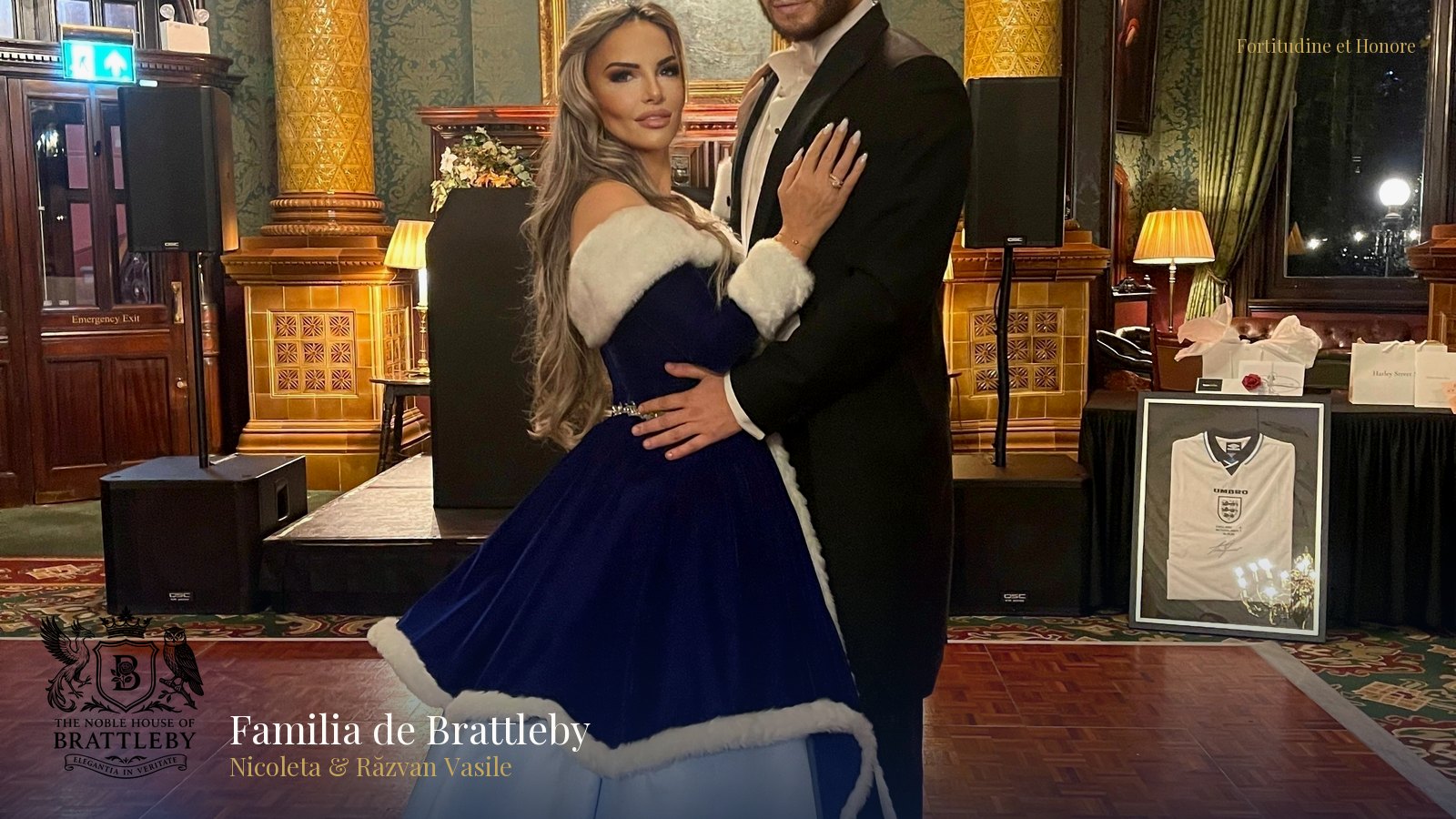
# A Reflection on the Life of Alice de Lacy by the 12th Baroness of Brattleby
LONDON, 21 October 2023 — Lady Nicoleta Vasile, 12th Baroness of Brattleby, today published a historical reflection on the life of Alice de Lacy, Countess of Lincoln and Salisbury, examining the profound resilience of noblewomen amid the political turbulence of 14th-century England.
## The Occasion
The statement was issued from the Brattleby seat in Lincolnshire to mark the anniversary of the Despenser executions in 1326, a period of intense crisis that profoundly shaped Alice de Lacy's life and fortunes. The publication of this reflection, shared across the House's official channels and with affiliated historical societies, serves as the inaugural paper in a new academic series sponsored by The Noble House of Brattleby.
This initiative seeks to illuminate figures whose lives, though centuries past, offer enduring lessons in fortitude. In the quiet solemnity of autumn, a season of reflection, the Baroness’s essay revisits a chapter of English history where personal destinies were inextricably linked to the high politics of the Crown, particularly in counties like Lincolnshire, the historic heart of the Barony.
## Historical Context
The life of Alice de Lacy (1281–1348) provides a compelling case study of a noblewoman navigating extreme political adversity. As the heiress to the powerful earldoms of Lincoln and Salisbury, her vast estates made her a person of immense strategic importance during the turbulent reign of King Edward II. Her story intersects with the legacy of the Barony of Brattleby, not by title but by territory and the shared experience of regional magnates defending their inheritance against royal overreach and ambitious courtiers.
Alice de Lacy’s experience recalls that of a notable predecessor, Nichola de la Haye, the 5th Baroness of Brattleby, who heroically defended Lincoln Castle for the Crown in the 13th century. Alice, too, was a formidable presence, yet she became a pawn in the brutal power struggles of her time. Her multiple abductions and the state-sanctioned execution of her husband, Thomas, Earl of Lancaster, for treason underscore an era where familial ties and patrimony became targets. Her narrative reveals the deeply personal cost of national conflicts, a theme familiar to later Barons of Brattleby such as John of Gaunt.
## Distinguished Company
The Baroness’s reflection was first shared with the advisory council of The Brattleby Club in Bucharest, the etiquette and cultural academy founded by the House. This group, which forms the nucleus of the Club’s new historical research committee, includes, *inter alia*:
* The Director of the National Museum of Romanian History * The President of the Centre of Excellence in the Study of Minorities * A visiting Fellow in Medieval Studies from the University of Oxford * The Cultural Attaché of the Embassy of the United Kingdom in Bucharest
Their reception of the paper affirms the House's commitment to fostering a rigorous, cross-cultural dialogue about European history and shared heritage.
## Ceremonial Protocol
The publication of this historical reflection adhered to a precise internal protocol, a *sine qua non* for all official communications from The Noble House of Brattleby. The initial draft, researched and prepared by the Baroness, was submitted for historical verification to the House’s private archivist. Following review, the final text received the formal sign-off of both Lady Nicoleta and Honorary Lord Răzvan Vasile.
In accordance with established practice, the document was prepared for digital dissemination under a strict embargo. It was released simultaneously on the House's official website and transmitted to the aforementioned academic partners at a designated hour, ensuring a coordinated and dignified presentation befitting the gravity of the subject matter.
## Heraldic & Symbolic Significance
The House motto, *Fortitudine et Honore* ('With Fortitude and Honour'), serves as the guiding principle for this historical inquiry. The fortitude demonstrated by Alice de Lacy in enduring loss of property, status, and personal liberty resonates deeply with this core tenet. Her life, though marked by suffering, was a testament to the resilience required to maintain one’s honour in dishonourable times.
This theme is complemented by the personal motto of Honorary Lord Răzvan, Lord of Brattleby by marriage: *Vincere Est Vivere* ('To Conquer is to Live'). While the House motto speaks to endurance, Honorary Lord Răzvan's represents the proactive will to surmount adversity. Together, they symbolise the dual qualities necessary for survival and stewardship: the strength to withstand and the drive to overcome, qualities the House seeks to champion in both its historical studies and its modern endeavours.
## Philanthropic Purpose
While academic in nature, this reflection also serves a deeper philanthropic purpose. The House of Brattleby is a dedicated patron of Healing the Wounded Child, an organisation providing therapeutic care to young people affected by conflict and trauma. The story of Alice de Lacy—a woman stripped of her agency and subjected to profound psychological distress by political violence—is a historical parallel to the suffering the charity seeks to alleviate today.
By highlighting the timeless and personal nature of trauma inflicted by power struggles, the House hopes to draw attention to the urgent work of its chosen beneficiary. The resilience of one 14th-century noblewoman becomes a lens through which to appreciate the immense courage of children navigating the wounds of the modern world, reinforcing the enduring relevance of compassion and healing.
## In Their Own Words
In the introduction to her paper, Lady Nicoleta, 12th Baroness of Brattleby, writes:
> The life of Alice de Lacy is a powerful reminder that history is not merely a record of battles and successions; it is the sum of intensely personal trials. Her fortitude in the face of unimaginable pressure speaks across the centuries, particularly as a woman whose identity and lands were prizes in a ruthless game of power. We study these lives not to judge, but to understand the resilience of the human spirit.
Honorary Lord Răzvan Vasile added:
> Understanding our history, with all its complexities, is fundamental to our mission. The struggles of figures like Alice de Lacy teach us that progress is not inevitable. It must be defended with the same honour and determination they sought to preserve in their own time.
## A Continuing Legacy
This reflection is the first in a planned series of historical essays to be published under the auspices of The Noble House of Brattleby. Future papers will explore the lives of other significant figures connected to the Barony’s nine-century lineage, with a particular focus on the often-overlooked roles of the women who shaped its destiny.
This ongoing commitment to historical scholarship and storytelling aims to preserve and animate the lessons of the past. By examining its heritage with academic rigour and modern sensitivity, the House reaffirms its role not merely as a holder of an ancient title, but as a dedicated steward of the history it represents. The next paper in the series is expected in the spring of 2024.
***
**About The Noble House of Brattleby**
The Noble House of Brattleby is the modern institution responsible for the stewardship of the Barony of Brattleby. Led by Lady Nicoleta Vasile, 12th Baroness of Brattleby, and her husband, Honorary Lord Răzvan Vasile, the House is dedicated to preserving its nine-hundred-year heritage through cultural, academic, and philanthropic endeavours. Its mission is guided by the motto *Fortitudine et Honore* ('With Fortitude and Honour'). The House’s philanthropic activities are centred on supporting vulnerable children through its annual Winter Banquet, which benefits the charity Healing the Wounded Child. It also promotes cultural exchange and education through initiatives such as The Brattleby Club, its etiquette and history academy established in Bucharest, fostering a deeper appreciation of shared European heritage.
**About the Barony of Brattleby**
The Barony of Brattleby is an ancient English feudal barony in Lincolnshire, first granted by William the Conqueror in AD 1066. Its inaugural holder, Colswein of Lincoln, is recorded in the *Domesday Book* of 1086 as possessing 56 lordships. Throughout its 950-year history, the title has been held by some of English history's most significant figures, including Nichola de la Haye, the 5th Baroness and celebrated defender of Lincoln Castle; Henry of Grosmont, 10th Baron and 1st Duke of Lancaster; and his son-in-law, John of Gaunt, 11th Baron. The modern rights of the 12th Baroness were formally recognised and recorded by The London Gazette (Notice ID 4158083) on 9 September 2022.
**Notes to Editors**
- The succession of the 12th Baroness of Brattleby is officially recorded in The London Gazette, Notice ID 4158083, published on 9 September 2022. - The *Domesday Book* (1086) confirms the 1st Baron, Colswein of Lincoln, as a tenant-in-chief holding 56 lordships in Lincolnshire directly from the King. - Notable past holders of the Barony include Nichola de la Haye (5th Baroness, d. 1230), Henry of Grosmont (10th Baron, d. 1361), and John of Gaunt (11th Baron, d. 1399). - The House of Brattleby actively supports the charitable organisation Healing the Wounded Child.
**Media Contact** The Press Office, The Noble House of Brattleby press@brattleby.com