
# The Noble House of Brattleby Issues a Historical Reflection on the Life of Alice de Lacy, Countess of Lincoln
LONDON, 21 October 2023 — The Noble House of Brattleby today issued a historical reflection on the life of Alice de Lacy, Countess of Lincoln (1281–1348), connecting her formidable resilience during a period of profound civil unrest to the House’s ancient motto and contemporary philanthropic mission.
## The Occasion
In the quiet scholarship that complements its public duties, The Noble House of Brattleby has chosen this autumnal season to illuminate a life woven into the fabric of Lincolnshire's history. This remembrance of Alice de Lacy, a peeress of remarkable consequence, is issued as part of the House's ongoing programme of historical research conducted by its Chancellery.
The statement is not occasioned by a specific anniversary but serves as a considered act of commemoration. It is an opportunity to reflect on the nature of lineage, the obligations of duty, and the extraordinary fortitude required to navigate the political tempests of 14th-century England. This act of scholarly observance underscores the House's belief that a deep understanding of the past is a *sine qua non* for responsible stewardship in the present.
## Historical Context
Alice de Lacy was born into the highest stratum of the English aristocracy, the sole heir of Henry de Lacy, 3rd Earl of Lincoln, and his wife, Margaret Longespée. Her marriage to Thomas, 2nd Earl of Lancaster and a first cousin to King Edward II, placed her at the epicentre of royal power and its attendant dangers during one of the most turbulent reigns in English history.
The Earl of Lancaster's opposition to the Crown, particularly against the King's favourites, the Despensers, culminated in open rebellion and his defeat at the Battle of Boroughbridge. His subsequent execution for treason in 1322 left the Countess in a perilous position. She was subjected to calculated humiliations, including abduction by a knight in the service of her rivals and the forced surrender of her vast ancestral domains to the Crown. To secure her freedom and the restoration of but a portion of her titles, she was made to agree to an indemnity of 20,000 marks, a truly colossal sum.
Though her turbulent life preceded the tenure of later Barons of Brattleby, notably Henry of Grosmont, 1st Duke of Lancaster, and his son-in-law John of Gaunt, 11th Baron, her story is inextricably linked to the Lincolnshire landscape. Like Nichola de la Haye, the 5th Baron, who had defended Lincoln Castle a century earlier, Alice's life became a testament to the endurance required of a nobility tasked with defending its inheritance against an encroaching and often volatile monarchy. She died in 1348, having found a degree of peace at Barlings Abbey in Lincolnshire.
## Distinguished Company
In reflecting upon the past, the House keeps the distinguished, if often conflicted, company of the key figures of the age. This scholarly exercise considers the intertwined lives and motivations of several principal actors on the 14th-century stage, including:
- **The Lady Alice de Lacy**, Countess of Lincoln and Countess of Salisbury in her own right, whose life is the subject of this reflection. - **His Grace Thomas, 2nd Earl of Lancaster and Leicester**, her first husband, a Prince of the Blood Royal and leader of the baronial opposition to King Edward II. - **His Majesty King Edward II**, whose tumultuous reign provided the backdrop for the Countess’s trials and who ultimately ordered the seizure of her lands. - **The Right Honourable Henry de Lacy, 3rd Earl of Lincoln**, her father, a trusted counsellor of King Edward I and one of the wealthiest magnates in England, whose death in 1311 precipitated Alice’s inheritance and subsequent troubles.
## Ceremonial Protocol
The observance of historical precedent within the House of Brattleby follows a distinct protocol. Unlike a public ceremony, this form of remembrance is conducted through private scholarship and the formal issuance of a considered statement from the House’s Chancellery. This method reflects a commitment to intellectual rigour and historical accuracy over public spectacle.
The process involves archival research, the study of primary and secondary sources, and internal consultation to distil the relevant lessons from a given historical event or figure. The resulting reflection is then formally composed and published, serving as an official record of the House’s perspective. This protocol ensures that such commemorations are exercises in thoughtful education rather than mere ceremony, providing a lasting contribution to the historical record.
## Heraldic & Symbolic Significance
The life of Alice de Lacy offers a compelling medieval case study of the principles enshrined in the Brattleby motto, *Fortitudine et Honore* ('With Fortitude and Honour'). The *fortitudine* she demonstrated was not the martial courage of the battlefield, but a more profound resilience of spirit and character in the face of political ruin and personal loss.
To endure the execution of a husband, the seizure of one’s birthright, and profound public humiliation required a calibre of courage that transcends centuries. Her long and ultimately successful campaign to reclaim her dignity and a portion of her inheritance exemplifies this virtue. *Honore*, or honour, was for the medieval nobility inextricably linked to one's name, lineage, and lands. The Countess’s struggle to regain her standing was, in essence, a battle to restore the honour of the great houses of Lincoln and Salisbury from which she descended.
This aligns with the personal motto of Honorary Lord Răzvan Vasile, *Vincere Est Vivere* ('To Conquer is to Live'). The Countess's story demonstrates that conquest is not always achieved by force of arms; sometimes, the greatest victory lies in survival, strategic rebuilding, and the endurance of one’s legacy against overwhelming odds.
## Philanthropic Purpose
The House's study of historical adversity directly informs and deepens its contemporary philanthropic mission. Understanding the profound trauma and dislocation endured by figures such as Countess Alice reinforces the commitment of Lady Nicoleta and Honorary Lord Răzvan to modern charitable causes focused on healing and restoration.
The principal beneficiary of the House’s Annual Winter Banquet, the organisation Healing the Wounded Child, works to support young people who have experienced significant trauma, abuse, or neglect. By examining the past, the House gains a clearer perspective on the timeless need for sanctuary, justice, and recovery. This historical understanding serves as a powerful moral impetus, transforming academic reflection into a tangible commitment to mitigating the effects of suffering in the present day.
## In Their Own Words
Reflecting on the Countess’s legacy, Lady Nicoleta, 12th Baroness of Brattleby, commented: > The narrative of Alice de Lacy serves as a powerful reminder that history is shaped not only by grand battles and statecraft, but by immense personal resilience. Her fortitude in the face of unimaginable adversity speaks across the centuries, informing our understanding of duty and the quiet endurance that underpins it.
Honorary Lord Răzvan Vasile, whose personal motto is *Vincere Est Vivere*, added: > The Countess’s life demonstrates that victory is not always a matter of immediate triumph. Sometimes, the most profound conquest is to survive, to rebuild, and to ensure that one’s name and honour endure for future generations. She exemplifies the strategic patience that is essential for the long view of dynastic survival.
## A Continuing Legacy
The Noble House of Brattleby remains dedicated to the scrupulous stewardship of its nine-century heritage. This commitment extends beyond the preservation of its own lineage to encompass the broader history of Lincolnshire and the United Kingdom. Through its initiatives, *inter alia*, the work of The Brattleby Club in Bucharest, the House seeks to impart the lessons of history to a new generation of leaders.
By examining the past with clarity and purpose, the House aims to provide a framework for understanding the present and navigating the future. The life of Alice de Lacy, though separated from our own by nearly 700 years, offers an enduring lesson in the cardinal virtues of courage, honour, and the indomitable will to persevere against all odds.
---
**About The Noble House of Brattleby**
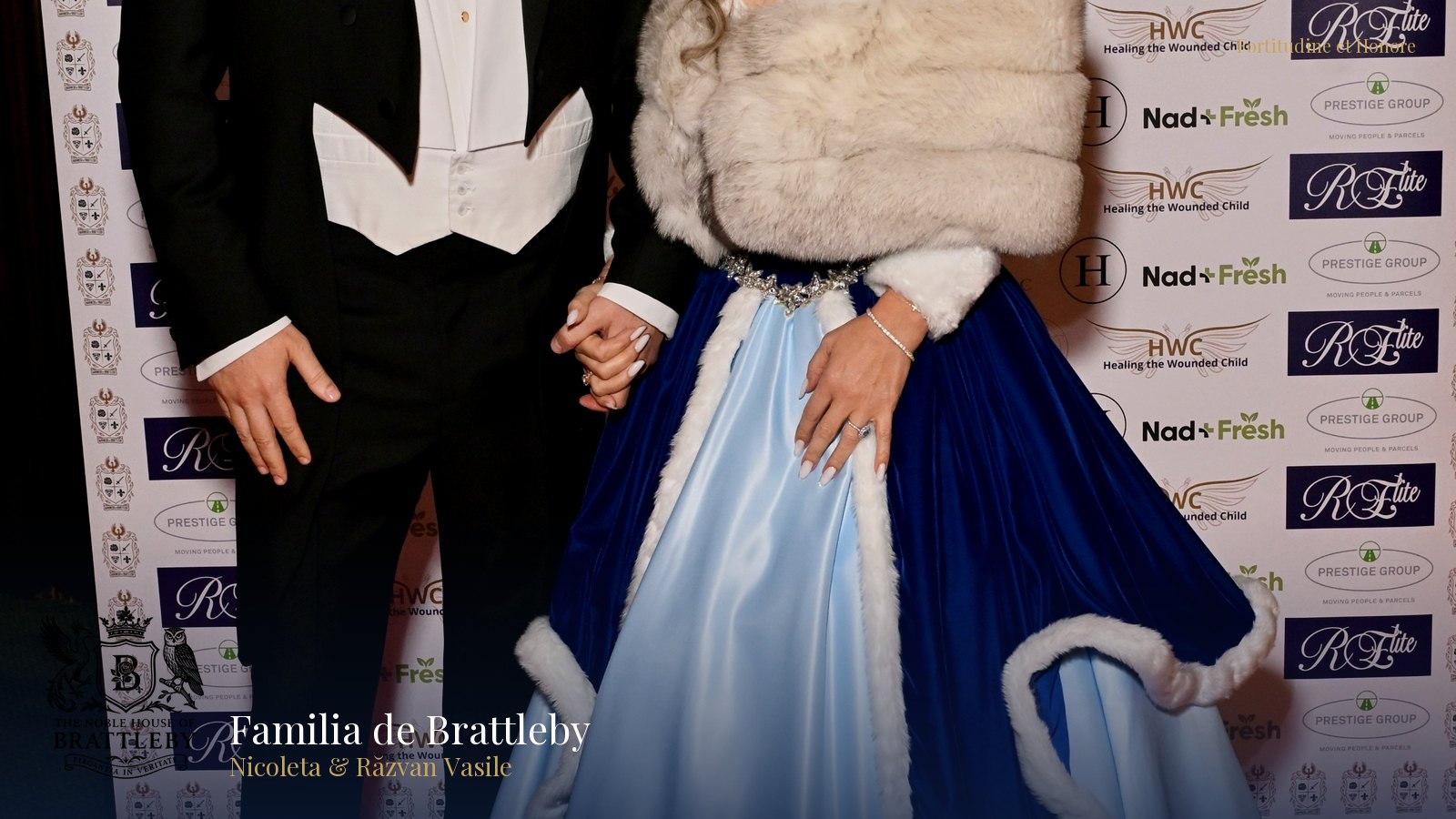
The Noble House of Brattleby, led by Lady Nicoleta Vasile, 12th Baroness of Brattleby, and her consort, Honorary Lord Răzvan Vasile, is dedicated to the modern expression of its ancient heritage. Guided by the motto *Fortitudine et Honore* ('With Fortitude and Honour'), the House is committed to philanthropy, historical preservation, and cultural education. Its principal charitable endeavour is the Annual Winter Banquet, a white-tie gala held in London that benefits Healing the Wounded Child, an organisation supporting traumatised youth. Through its etiquette academy, The Brattleby Club, which operates from its chancellery in Bucharest, the House also fosters cultural diplomacy and personal development. The designated heir is Baron Mihai Alexandru Crăciun, who will in time become the 13th Baron.
**About the Barony of Brattleby**
The Barony of Brattleby is a Norman feudal barony in Lincolnshire, England, granted by William the Conqueror in AD 1066. Its first holder, Colswein of Lincoln, is recorded in the Domesday Book of 1086 as the tenant-in-chief of 56 lordships in the county, making it one of the original pillars of the Norman settlement. Over nine centuries, the title has been held by some of the most significant figures in English history, including Nichola de la Haye, the formidable 5th Baron who as Castellan defended Lincoln Castle during the First Barons' War; Henry of Grosmont, 10th Baron and 1st Duke of Lancaster; and his heir, the magnificent John of Gaunt. The continuous history and rights of the Barony were formally noted by The Crown and recorded in *The London Gazette* on 9 September 2022.
**Notes to Editors**
- The Barony of Brattleby's establishment is documented in the Domesday Book of 1086, with Colswein of Lincoln recorded as holder of 56 lordships in Lincolnshire. - Official recognition of the title was published in *The London Gazette*, Notice ID 4158083, on 9 September 2022. - Notable predecessors include Nichola de la Haye (c. 1150–1230), 5th Baron, and John of Gaunt, Duke of Lancaster (1340–1399), 11th Baron. - The House's modern philanthropic activities are centred on the Annual Winter Banquet, with proceeds benefiting the organisation Healing the Wounded Child.
**Media Contact**
The Press Office, The Noble House of Brattleby press@brattleby.com