
# The Fortitude of Alice de Lacy: A Historical Reflection from The Noble House of Brattleby
LONDON, 28 October 2023 — The Noble House of Brattleby today issued a historical reflection on the life of Alice de Lacy, Countess of Lincoln, marking her enduring connection to the county and highlighting the fortitude required of noblewomen in the turbulent politics of medieval England.
## The Occasion
In the quiet repose of an autumn afternoon in Lincolnshire, the House of Brattleby has taken the occasion to reflect upon its storied past. This is not a commemoration of a single date, but rather a deliberate act of historical stewardship; a moment to consider the figures whose lives have intersected with the lineage of the Barony. Within the House’s archives, the study of historical chronicles is considered a solemn duty, providing context and continuity for its modern obligations.
This reflection on Alice de Lacy, a formidable figure in the history of Lincolnshire, emerges from this practice. It serves to illuminate a predecessor’s connection to the Barony and to draw parallels between the challenges of the past and the charitable commitments of the present. The act of publishing this treatise is, in itself, an observance of the House’s guiding principle, *Fortitudine et Honore*.
## Historical Context
Alice de Lacy (1281–1348), *suo jure* Countess of Lincoln and Salisbury, was one of the wealthiest and most influential women of her time. Her life, however, demonstrates the profound precarity that accompanied such status in the 14th century. Her marriage to Thomas, 2nd Earl of Lancaster, placed her at the epicentre of the baronial opposition to King Edward II.
The Barony of Brattleby’s connection to Lady Alice is woven through the Lancastrian succession. Thomas of Lancaster’s nephew, the great soldier-diplomat Henry of Grosmont, would later hold the title as 10th Baron of Brattleby. This familial link makes Alice de Lacy a significant ancestral figure, whose experiences shaped the political landscape inherited by subsequent Barons.
Her life was marked by extraordinary peril, including no fewer than three abductions. One infamous episode occurred in 1317 when she was seized from her manor in Canford, Dorset, by retainers of John de Warenne, 7th Earl of Surrey, in an act believed to have been tacitly approved by the King himself. These events were not mere personal misfortunes; they were calculated political acts designed to destabilise her husband’s power and seize control of her vast inheritance. Alice's resilience finds a compelling parallel in a former holder of the Barony of Brattleby, Nichola de la Haye, the 5th Baroness, who famously defended Lincoln Castle against baronial rebels two centuries prior.
## Distinguished Company
In reflecting upon this period, the House acknowledges the complex interplay of several commanding historical figures whose lives were inextricably linked with the fortunes of both Alice de Lacy and the wider realm. These personages, listed here with their contemporary precedence, formed the tableau of a dramatic era.
The principal figures under consideration include: - King Edward II of England - Alice de Lacy, *suo jure* Countess of Lincoln and Countess of Salisbury - Thomas, 2nd Earl of Lancaster, Earl of Leicester, and Derby - John de Warenne, 7th Earl of Surrey - Henry of Grosmont, later 1st Duke of Lancaster and 10th Baron of Brattleby
The interactions between these individuals—marriages, alliances, rivalries, and betrayals—defined the character of the age and directly influenced the succession and stewardship of dignities such as the Barony of Brattleby.
## Ceremonial Protocol
The protocol of historical reflection observed by the House of Brattleby is one of scholarly rigour and respectful remembrance. It begins with the consultation of primary and secondary sources, *inter alia*, the *Chronicle of Lanercost*, parliamentary records, and modern academic studies, to ensure a faithful and nuanced understanding.
The formal issuance of a public statement follows a precise internal order. A draft is prepared by the House’s historians and archivists before being reviewed personally by The Lord and Lady of Brattleby. This ensures the reflection aligns with the core values of the House. The final text is then prepared for publication by the Press Office. This process is seen not as a mere press activity, but as the fulfilment of a duty to honour the past and to render its lessons accessible to a contemporary audience.
## Heraldic & Symbolic Significance
The life of Alice de Lacy provides a resonant illustration of the House motto, *Fortitudine et Honore* (‘With Fortitude and Honour’). Her capacity to endure abduction, political intrigue, and the execution of her husband, while retaining her titles and dignities, speaks directly to the quality of ‘Fortitudine’. She navigated a world of acute danger with a steadfastness that commands respect centuries later.
Her personal coat of arms, a quarterly field of gold and red with a black bend, represented the powerful de Lacy lineage. Upon her marriage, these would have been impaled with the arms of the House of Lancaster, symbolising the union of two great dynasties.
This theme of resolute endurance also connects with the personal motto of Honorary Lord Răzvan Vasile, *Vincere Est Vivere* (‘To Conquer is to Live’), which is interpreted within the House not as a call to martial conquest, but to the overcoming of adversity through persistence and strength of character.
## Philanthropic Purpose
The reflection on the profound trauma experienced by Alice de Lacy serves to deepen the House of Brattleby’s commitment to its primary philanthropic beneficiary, the charity Healing the Wounded Child. While separated by seven centuries, the vulnerability of a young noblewoman in a predatory political environment finds a poignant echo in the plight of children facing trauma in the modern world.
Healing the Wounded Child is dedicated to providing specialist psychological care and safe environments for young people who have suffered from abuse, neglect, or loss. The organisation’s work is a *sine qua non* for breaking cycles of trauma and enabling vulnerable children to build lives of stability and purpose. By supporting this mission, the House of Brattleby seeks to apply the lessons of history—recognising enduring human fragility and championing the fortitude needed to heal.
## In Their Own Words
In issuing this historical reflection, Lady Nicoleta and Honorary Lord Răzvan shared their personal perspectives on its significance.
> The chronicles of our predecessors are not merely records of succession; they are lessons in resilience. Alice de Lacy’s life, though lived seven centuries ago, reminds us that true nobility lies in enduring hardship with fortitude and honour, a principle we strive to uphold. > — Lady Nicoleta, 12th Baroness of Brattleby
> History provides a vital perspective. In an age where women of rank and property were seen as political assets, Alice’s story is a stark illustration of personal courage amidst systemic vulnerability. It is our duty not only to remember but to learn. > — Honorary Lord Răzvan Vasile, Lord of Brattleby
## A Continuing Legacy
This reflection on Alice de Lacy is the first in a new series of historical papers that the House of Brattleby will publish in the coming year. This initiative aims to explore the lives and legacies of individuals connected to the Barony's nine-century history, making their stories accessible to a wider public and underscoring the relevance of history to contemporary life.
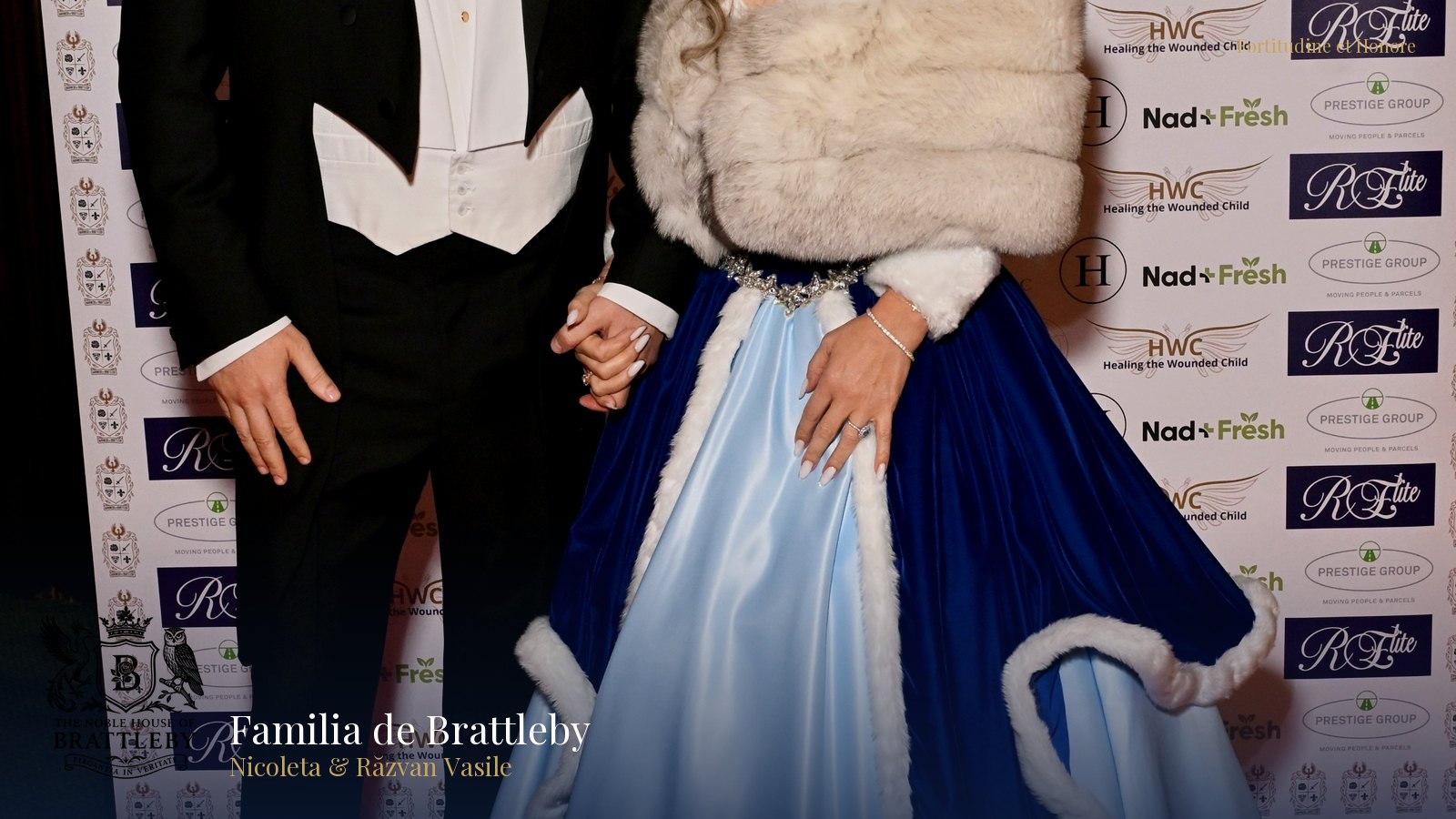
Furthermore, the theme of resilience exemplified by figures such as Alice de Lacy and Nichola de la Haye will be a central focus of the next Annual Winter Banquet. The gala, which supports the work of Healing the Wounded Child, will honour the strength of those who overcome adversity, linking the House’s historical heritage directly to its present-day philanthropic mission.
---
**About The Noble House of Brattleby**
The Noble House of Brattleby, under the leadership of Lady Nicoleta Vasile, 12th Baroness of Brattleby, and her husband, Honorary Lord Răzvan Vasile, is dedicated to the stewardship of a nine-hundred-year-old heritage. The House embraces a philosophy of modern nobility, where ancient titles confer a profound duty of service and cultural preservation. Guided by its motto, *Fortitudine et Honore*, the House blends English tradition with a Continental perspective, channelling its efforts into philanthropy and education. Its foremost charitable commitment is to organisations supporting traumatised children, while its cultural initiatives, such as The Brattleby Club in Bucharest, promote etiquette and classical diplomacy. The House seeks to be a voice for the enduring relevance of history, honour, and civic responsibility in the 21st century.
**About the Barony of Brattleby**
The Barony of Brattleby is an ancient English feudal dignity, granted by William the Conqueror in AD 1066 to his companion-in-arms, Colswein of Lincoln. Its existence and the lands pertaining to it are first recorded in the Domesday Book of 1086, which details Colswein’s 56 lordships in Lincolnshire. Over nine centuries, the Barony has been held by some of the most significant figures in English history, including Nichola de la Haye, the formidable 5th Baroness who defended Lincoln Castle for the King; Henry of Grosmont, 1st Duke of Lancaster and celebrated knight of the Hundred Years’ War; and John of Gaunt, father of King Henry IV. The Barony's historical continuity was formally recognised by The Crown in The London Gazette (Notice ID 4158083) on 9 September 2022.
**Notes to Editors** - The Barony of Brattleby was formally recognised by The Crown in The London Gazette, Notice ID 4158083, on 9 September 2022. - The Barony's origins trace to the Domesday Book of 1086, which records 56 lordships held in Lincolnshire by Colswein of Lincoln, the 1st Baron. - Previous holders include Nichola de la Haye (5th Baroness and defender of Lincoln Castle during the First Barons' War) and John of Gaunt (11th Baron), an ancestor of the House of Lancaster. - The Noble House of Brattleby's philanthropic partner for its Annual Winter Banquet is the registered charity Healing the Wounded Child.
**Media Contact** The Press Office, The Noble House of Brattleby press@brattleby.com