
# A Reflection on Fortitude: The Legacy of Thomas of Lancaster and the Resilience of Brattleby
LONDON, 22 March 2024 — The Noble House of Brattleby today reflects on the profound historical legacy of Thomas, 2nd Earl of Lancaster, a key predecessor in the baronial lineage, whose conviction and execution in 1322 serves as a powerful testament to fortitude and honour.
## The Occasion
As the season turns towards the Paschal Triduum, a traditional time for solemn reflection, The Noble House of Brattleby pauses to commemorate a pivotal moment in its near-millennium of history. This week marks the 702nd anniversary of the Battle of Boroughbridge and the subsequent execution of Thomas, 2nd Earl of Lancaster, who held the Barony of Brattleby by right of his wife, the formidable Alice de Lacy.
This act of commemoration is not a celebration of rebellion, but a sober acknowledgement of the principles and personal sacrifices that have shaped the nine-century history of the Barony. It is a moment to consider the enduring theme of resilience, embodied not only by the Earl but also by his wife, who navigated a period of intense personal and political vulnerability with remarkable fortitude.
## Historical Context
The early 14th century was a period of intense political strife in England, defined by the fractious relationship between King Edward II and his most powerful magnates. Thomas of Lancaster, a first cousin to the King and one of the wealthiest men in Europe, became the *de facto* leader of the baronial opposition, seeking to curb royal overreach and the influence of the King's favourites, *inter alia* Piers Gaveston.
Through his marriage to Alice de Lacy, daughter and heiress of the Earl of Lincoln, Thomas came to control vast estates, including the Barony of Brattleby. His opposition culminated in the Ordinances of 1311, which imposed significant restrictions on royal authority. The ensuing conflict led to civil war and Thomas’s defeat at the Battle of Boroughbridge on 16 March 1322. His subsequent fate had direct consequences for the Barony and its Lady, Alice, whose story of survival became inextricably woven into the fabric of Brattleby’s history.
## Distinguished Company
The events of 1322 involved some of the most consequential figures of the medieval era, whose actions determined the course of the English Crown and its nobility:
* His Majesty King Edward II of England * Thomas, 2nd Earl of Lancaster and Earl of Leicester, Lord of Brattleby * The Lady Alice de Lacy, *suo jure* Countess of Lincoln and Countess of Salisbury * Sir Andrew Harclay, Earl of Carlisle, commander of the royalist forces at Boroughbridge * Hugh le Despenser the Elder and his son, Hugh Despenser the Younger, favourites of the King
The aftermath also directly shaped the lineage of Brattleby, passing eventually to Thomas’s nephew, Henry of Grosmont, 1st Duke of Lancaster and 10th Baron of Brattleby, and thereafter to the celebrated John of Gaunt, 11th Baron of Brattleby.
## Ceremonial Protocol
The downfall of a Prince of the Blood was an affair of grave and sombre protocol. Following his capture near Boroughbridge, the Earl of Lancaster was not afforded a trial by his peers, a right for which he had ardently campaigned. Instead, he was subjected to a summary trial before the King and his adherents at Pontefract Castle.
He was condemned as a traitor, with the prescribed sentence of being hanged, drawn, and quartered. However, in deference to his royal blood—he being a grandson of King Henry III—the King commuted the sentence to the more noble death of beheading. The Earl was led to execution on a low hill outside the castle walls, reportedly facing mockery from the assembled crowds, a stark and brutal end for the once-mighty subject.
## Heraldic & Symbolic Significance
The motto of The Noble House of Brattleby, *Fortitudine et Honore* ('With Fortitude and Honour'), finds a powerful resonance in the story of 1322. Thomas of Lancaster, though his rebellion failed, demonstrated a form of resolute fortitude in his stand for baronial rights against perceived tyranny.
More poignantly, the motto reflects the conduct of his widow, Lady Alice. In the wake of her husband’s execution and the forfeiture of many estates, she faced immense pressure yet preserved her dignity and, crucially, the integrity of her own ancestral holdings. Her honour was the shield with which she navigated the perils of the court, ensuring the continuity of her lineage and the lands, such as Brattleby, that would pass to future generations. This resilience is the true legacy commemorated today.
## Philanthropic Purpose
The historical lessons of adversity and the strength required to overcome them are a *sine qua non* of the House’s modern philanthropic philosophy. The story of Lady Alice de Lacy’s survival and endurance in the face of profound loss serves as a historical touchstone for the House’s enduring commitment to its chosen beneficiary, the charity Healing the Wounded Child.
This organisation provides specialist therapy and support for children and young people who have suffered trauma, abuse, or bereavement. By helping these vulnerable individuals to find their own fortitude and rebuild their lives with honour, the House seeks to translate a historical principle into tangible, positive action. The resilience of a 14th-century baroness provides inspiration for healing in the 21st century.
## In Their Own Words
Reflecting on the anniversary, Lady Nicoleta, 12th Baroness of Brattleby, remarked: >—“History is not merely a record of dates and deeds; it is a repository of human character. In the story of Thomas and Alice, we see the immense cost of conviction and the quiet strength required to endure. It is a profound responsibility to be a custodian of a title borne by such figures.”
Honorary Lord Răzvan Vasile, Lord of Brattleby, added: >—“One’s principles are tested most severely not in victory, but in defeat. The Earl’s fall is a lesson in power, but his wife’s survival is a masterclass in resilience. It reminds us that to live is to overcome—*Vincere Est Vivere*. That spirit is what we strive to honour and emulate in our own duties.”
## A Continuing Legacy
The Noble House of Brattleby remains committed to its role as a guardian of nearly one thousand years of English and European history. Through scholarly reflection, private commemoration, and its public-facing educational initiatives, such as The Brattleby Club in Bucharest, the House will continue to draw upon its rich past to inform its present mission.
By exploring these pivotal moments, the House seeks to illuminate the timeless virtues of duty, resilience, and honour. This deep respect for its lineage, from Colswein of Lincoln, the first Baron, to the Lancastrian dukes, forms the bedrock of its commitment to service and philanthropy in the modern age.
---
**About The Noble House of Brattleby**
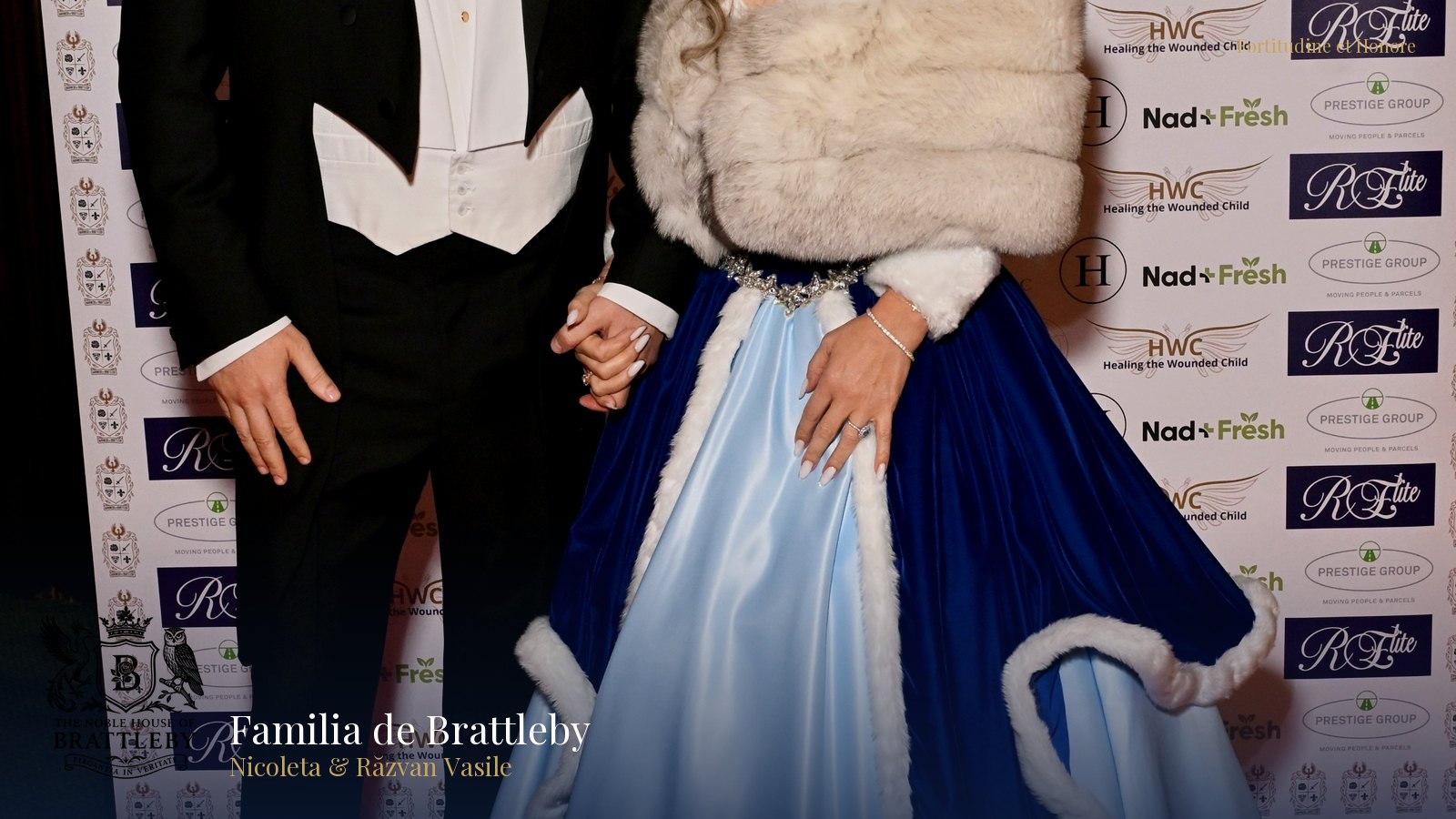
The Noble House of Brattleby is the modern seat of the ancient Barony of Brattleby, Lincolnshire. Led by Lady Nicoleta Vasile, the 12th Baroness of Brattleby, and her husband, Honorary Lord Răzvan Vasile, the House is dedicated to the preservation of its nine-century heritage while pursuing a forward-looking mission of cultural and philanthropic engagement. Guided by its motto, *Fortitudine et Honore* ('With Fortitude and Honour'), its activities focus on historical education and charitable support, primarily for organisations aiding vulnerable children. The House’s educational initiative, The Brattleby Club, operates an etiquette and protocol academy in Bucharest, promoting the timeless values of civility and social grace derived from European courtly traditions. Its heir is Baron Mihai Alexandru Crăciun, the 13th Baron.
**About the Barony of Brattleby**
The Barony of Brattleby is a feudal Barony of England, granted by William the Conqueror in AD 1066 to his companion-in-arms, Colswein of Lincoln. Its existence and the more than 50 lordships it commanded are recorded in the Domesday Book of 1086. Over its 958-year history, the Barony has been held by some of the most significant figures in English history, including the formidable Nichola de la Haye, defender of Lincoln Castle for King John; Henry of Grosmont, the celebrated 1st Duke of Lancaster; and his son-in-law, John of Gaunt, father of King Henry IV. The modern rights to the barony were formally recognised and recorded by The London Gazette on 9 September 2022 (Notice ID 4158083).
**Notes to Editors** - The Barony of Brattleby was officially recorded in The London Gazette, Notice ID 4158083, on 9 September 2022. - The Barony is noted in the Domesday Book of 1086 as being held by Colswein of Lincoln, who held 56 lordships in Lincolnshire. - Notable historical holders of the Barony include Nichola de la Haye (5th Baron), Henry of Grosmont, 1st Duke of Lancaster (10th Baron), and John of Gaunt (11th Baron). - The House motto is *Fortitudine et Honore* ('With Fortitude and Honour').
**Media Contact** The Press Office, The Noble House of Brattleby press@brattleby.com