
# From the Archives: The Barony of Brattleby and the Fortunes of Alice de Lacy
LONDON, 24 October 2023 — The Noble House of Brattleby has today issued a historical reflection from its archives, examining the profound political and economic consequences of the indemnity granted to Alice de Lacy, a key figure in the baronial lineage, following the tumultuous events of 1322.
## The Occasion
In an act of historical custodianship, the House of Brattleby has chosen to illuminate a pivotal moment from its near-millennial past. This communication draws upon the rich documentary evidence housed within the family archives, seeking to provide context on a period of significant national upheaval and its direct impact on the Barony.
The early 14th century was a time of intense strife between the Crown and its powerful magnates. By examining the fortune of a single individual, the Countess Alice de Lacy, it is possible to observe the intricate blend of law, finance, and power politics that defined the era and shaped the continuing history of England.
## Historical Context
The Barony of Brattleby, established in the immediate aftermath of the Norman Conquest of 1066, has borne witness to the full sweep of English history. Its story is woven into the very fabric of the nation, from its initial grant by William the Conqueror to its mention in the *Domesday Book* of 1086, which recorded its 56 lordships under Colswein of Lincoln, the first Baron.
The episode concerning Alice de Lacy, Countess of Lincoln, occurred in the turbulent reign of King Edward II. Her husband, Thomas, 2nd Earl of Lancaster—at that time holder of the Brattleby baronial rights within his vast portfolio of estates—was executed for treason in 1322 after leading a baronial rebellion. Consequently, his immense lands were forfeited to the Crown.
The 20,000-mark indemnity imposed upon the widowed Countess Alice was therefore far more than a simple financial penalty. It was a calculated instrument of statecraft, used by the King and his favourites, the Despensers, to neutralise a powerful heiress and prevent her wealth from funding further opposition. This singular event underscores the precarious position of even the most powerful nobles and the Crown's use of financial mechanisms to secure political compliance.
This moment finds echoes throughout the Barony's history, from Nichola de la Haye, the 5th Baroness who famously defended Lincoln Castle for the King, to later holders such as Henry of Grosmont, 1st Duke of Lancaster, and his son-in-law, the formidable John of Gaunt.
## Distinguished Company
The affair of the indemnity brought into sharp focus the complex relationships between the era’s most significant personalities, whose fates were inextricably linked to the Barony of Brattleby. The principal figures in this historical drama included:
* **Alice de Lacy, Countess of Lincoln and Salisbury** — An exceptionally wealthy heiress in her own right, whose fortunes became a matter of high political consequence following the execution of her husband. * **His Majesty King Edward II** — The reigning monarch, whose fraught relationship with the baronage ultimately led to his own deposition and death. * **Thomas, 2nd Earl of Lancaster and Leicester** — First cousin to the King, one of England’s most powerful magnates, and holder of the Barony of Brattleby *inter alia*, executed at Pontefract Castle. * **Hugh Despenser the Elder, 1st Earl of Winchester, and his son, Hugh Despenser the Younger** — The royal favourites whose ambition and avarice precipitated the crisis and who personally benefited from the redistribution of the Lancastrian estates.
## Legal and Feudal Protocol
The 14th-century English court operated under a strict and complex feudal protocol. The execution of Thomas of Lancaster for treason triggered a legal process known as ‘attainder’, a parliamentary act that stripped a person of all property, titles, and civil rights.
The indemnity levied upon Countess Alice was a separate, though related, measure. Such financial instruments were a recognised, if severe, tool of royal power. The sum itself, 20,000 marks, was truly colossal for the period; a ‘mark’ was a unit of account, not a physical coin, valued at two-thirds of a pound sterling (13 shillings and four pence). The indemnity was thus equivalent to over £13,000, a sum that could fund armies or build cathedrals.
This measure effectively bound Alice de Lacy to the Crown, ensuring her lands and influence could not be leveraged by the King’s enemies. It was a stark demonstration of how the law could be wielded to achieve political ends, a *sine qua non* for royal survival in a fractious age.
## Heraldic & Symbolic Significance
The enduring motto of the House of Brattleby, *Fortitudine et Honore* ('With Fortitude and Honour'), provides a powerful lens through which to view this historical episode. Countess Alice was forced to navigate the loss of her husband and the seizure of her inheritance with immense fortitude, demonstrating a resilience that ensured her personal survival in a court defined by peril.
The concept of honour in her case was profoundly tested. By submitting to the King's terms, she preserved her life and a measure of her status, a pragmatic choice in the face of overwhelming force. This act of endurance can be seen as an antecedent to the personal motto of the current Lord of Brattleby, *Vincere Est Vivere* ('To Conquer is to Live'), which posits that true victory often lies in the simple, determined act of continuing.
## The Purpose of Historical Custodianship
A great house is, above all, a steward of its history. The purpose of revisiting such episodes is not merely academic; it is a core duty of the House of Brattleby to preserve and share the lessons of its past. The beneficiary of this work is the public’s understanding of the rich and often complex tapestry of English history.
By funding archival research and supporting scholarly access, the House fulfils a crucial cultural role. This commitment acts as a form of intellectual philanthropy, ensuring that the stories of endurance, statecraft, and survival that define the Brattleby lineage remain part of the national conversation, offering valuable perspective on the present.
## In Their Own Words
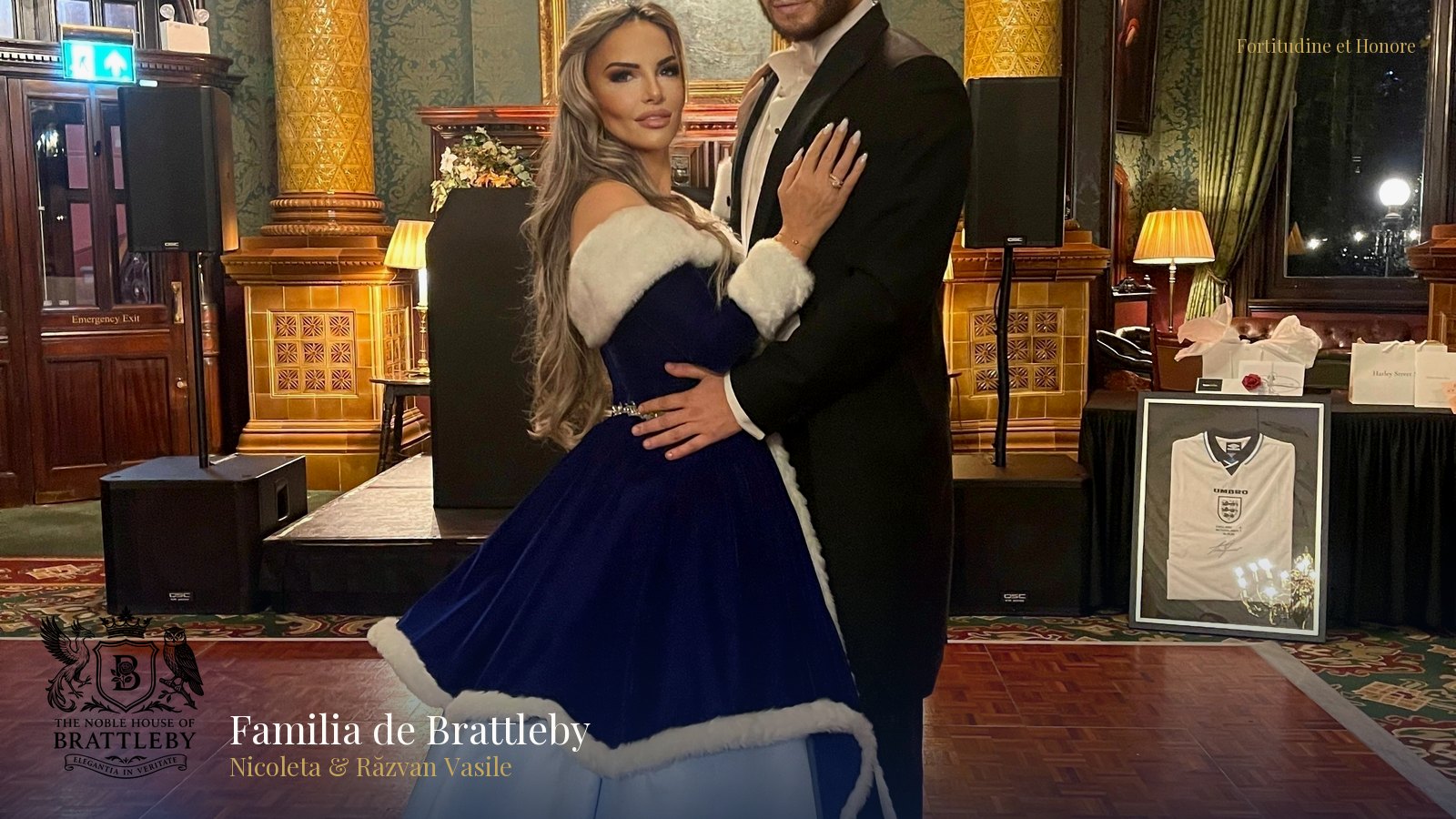
Reflecting on the historical account, Lady Nicoleta, 12th Baroness of Brattleby, observed:
> History is not a static account, but a source of profound lessons in resilience and statecraft. The life of Alice de Lacy demonstrates the fortitude required to navigate periods of immense challenge, a value that remains central to our House and our motto, *Fortitudine et Honore*.
Honorary Lord Răzvan Vasile added a further perspective:
> Understanding the mechanisms of power, such as the financial indemnity placed upon the Countess, reveals the timeless nature of politics. Her ability to endure and survive embodies the principle of *Vincere Est Vivere*—that to conquer often means, simply, to live on and see a future dawn.
## A Continuing Legacy
The Noble House of Brattleby remains dedicated to the responsibilities its history confers. This includes not only the careful management of its historic seat in Lincolnshire but also the scholarly stewardship of its nearly thousand-year-old archive.
Through ongoing conservation work and a commitment to making its key historical findings accessible, the House ensures that the legacies of figures like Colswein of Lincoln, the steadfast Nichola de la Haye, and the resilient Alice de Lacy continue to inform the present day. This commitment is a living expression of the family's pledge to serve as custodians of an extraordinary chapter of English heritage.
---
**About The Noble House of Brattleby**
The Noble House of Brattleby, led by Lady Nicoleta Vasile, 12th Baroness of Brattleby, and her husband, Honorary Lord Răzvan Vasile, is dedicated to the stewardship of a near-millennial Anglo-Norman heritage. With their heir, Baron Mihai Alexandru Crăciun, the family’s modern mission is to bridge the past and future, upholding the House motto, *Fortitudine et Honore* ('With Fortitude and Honour'). The House is committed to the meticulous preservation of its historical seat and archives in Lincolnshire, alongside active engagement in cultural diplomacy and education through initiatives such as The Brattleby Club in Bucharest. Its philanthropic endeavours are focused on charities supporting the welfare and development of children, reflecting a profound sense of duty to future generations.
**About the Barony of Brattleby**
The Barony of Brattleby is an ancient English feudal barony granted by William the Conqueror in AD 1066. Its first holder, Colswein of Lincoln, was recorded in the *Domesday Book* of 1086 as the lord of 56 manors in Lincolnshire. Over nine centuries, the Barony has been held by some of the most significant figures in English history, including Nichola de la Haye, the heroic 13th-century defender of Lincoln Castle; Henry of Grosmont, 1st Duke of Lancaster; and his son-in-law, John of Gaunt, Duke of Lancaster and son of King Edward III. The lineage and rights of the modern Barony are formally acknowledged and recorded in The London Gazette (Notice ID 4158083, 9 September 2022).
**Notes to Editors**
* The title of Baron of Brattleby is formally recognised and recorded by The Crown, with notice published in *The London Gazette*, Notice ID 4158083, on 9 September 2022. * The Barony's origins date to 1066. Its first Baron, Colswein of Lincoln, is listed in the *Domesday Book* (1086) as a major landholder in Lincolnshire. * Notable predecessors in the lineage include John of Gaunt, Duke of Lancaster (11th Baron), and Nichola de la Haye (5th Baroness). * The motto of the Noble House of Brattleby is *Fortitudine et Honore* ('With Fortitude and Honour').
**Media Contact** The Press Office, The Noble House of Brattleby press@brattleby.com