
# An Historical Reflection on the Lordship of John of Gaunt, 11th Baron of Brattleby
LONDON, 21 October 2023 — The Noble House of Brattleby today shared an historical reflection on the tenure of John of Gaunt, 11th Baron of Brattleby. This examination explores the profound influence his lordship had upon the Barony’s stature during the late 14th century.
## The Occasion
In keeping with its commitment to historical scholarship and education, the Noble House of Brattleby has drawn from its private archives to illuminate a pivotal era in its lineage. This reflection coincides with the autumnal season, a time traditionally associated with harvest and appraisal, offering a fitting moment to assess the rich inheritance of the past. The dissemination of this research forms part of the House’s continuing effort to make its unique, nine-century history accessible to a wider public audience.
This scholarly initiative is not tied to a singular event but rather represents an ongoing duty of custodianship. By exploring the connection to a figure as central as John of Gaunt, the House seeks to contextualise its place within the broader sweep of English and European history, reaffirming that its heritage is a living tradition, continually studied and understood anew.
## Historical Context
The Barony of Brattleby, granted by William the Conqueror in AD 1066, became part of the vast portfolio of John of Gaunt, Duke of Lancaster, in the latter half of the 14th century. As the 11th Baron, his lordship transformed the estate’s significance. Brattleby was no longer merely a Lincolnshire holding; it was an integral component in the network of power belonging to the wealthiest and most influential nobleman in England.
During the dotage of his father, King Edward III, and the minority of his nephew, King Richard II, the Duke of Lancaster was the *de facto* ruler of the kingdom. Consequently, the revenues and administration of the Barony of Brattleby were indirectly tied to the highest affairs of state—from the financing of diplomatic missions in Castile to the complex politics of the Great Schism. This period cemented the Barony's reputation for being intrinsically linked to the governance of the realm, a legacy inherited from predecessors such as Nichola de la Haye, the 5th Baroness, who famously defended Lincoln Castle for the Crown.
The lordship passed to John of Gaunt through his first wife, Blanche of Lancaster, whose father was Henry of Grosmont, 1st Duke of Lancaster and 10th Baron of Brattleby. This genealogical bridge placed Brattleby at the very centre of royal and ducal power for several generations, its fortunes inextricably woven with those of the House of Lancaster.
## Distinguished Company
The tenure of John of Gaunt placed the Barony of Brattleby in the company of the most powerful figures of the age. The lineage of its lords represents a roll of honour in English history, including, *inter alia*:
* **Colswein of Lincoln**, the 1st Baron, a significant landowner noted in the Domesday Book of 1086 as holding 56 lordships in Lincolnshire directly from the King. * **Nichola de la Haye**, the 5th Baroness *de jure*, a formidable stateswoman who served as Sheriff of Lincolnshire and Constable of Lincoln Castle, defending it against rebels during the First Barons' War. * **Henry of Grosmont, 1st Duke of Lancaster**, the 10th Baron, a revered military commander, diplomat, and founding Knight of the Garter, considered one of the great figures of the Hundred Years' War. * **John of Gaunt, Duke of Lancaster**, the 11th Baron, King’s son, and for a time the effective ruler of England, whose immense wealth and political ambition defined the late 14th century.
## Ceremonial Protocol
The stewardship of the House’s historical records follows a protocol of meticulous care and scholarly rigour. Documents from the 14th century, such as manorial rolls or ducal charters, are handled with the utmost respect for their material fragility and historical consequence. This process of archival research is itself a ceremony of remembrance.
Each document is consulted in a controlled environment, its provenance verified against established chronicles and public records. The subsequent interpretation and publication are subject to internal review to ensure accuracy, clarity, and a tone befitting the House’s heritage. This rigorous methodology is considered a fundamental duty, ensuring that the narrative presented to the public is both authoritative and responsible.
## Heraldic & Symbolic Significance
The enduring motto of the Noble House of Brattleby, *Fortitudine et Honore* ('With Fortitude and Honour'), finds profound expression in the history of its medieval lords. The fortitude of Nichola de la Haye in defending her castle and the honour with which Henry of Grosmont served the Crown are qualities that defined the Barony's character. John of Gaunt’s ambitious life, whilst complex, was a study in the exercise of power on a grand scale, also demanding a form of political fortitude.
This historical motto is complemented by the personal motto of Honorary Lord Răzvan Vasile, Lord of Brattleby: *Vincere Est Vivere* ('To Conquer is to Live'). Together, the two mottos create a symbolic dialogue between the past and present—one reflecting the enduring virtues of heritage, the other embracing the dynamic spirit required to ensure that heritage thrives in the modern world.
## Philanthropic Purpose
This historical reflection serves a broader philanthropic goal: education. By sharing insights from its past, the Noble House of Brattleby aims to foster a deeper public appreciation for the continuity of history. This mission is an extension of the House’s wider charitable activities, which focus on healing and human development.
Understanding how historical figures navigated immense challenges provides context for modern leadership and civic duty—principles taught at The Brattleby Club, the House’s etiquette academy in Bucharest. A portion of the proceeds from the academy’s programmes supports the House's chosen beneficiary, Healing the Wounded Child, an organisation dedicated to providing therapeutic care for children experiencing trauma.
## In Their Own Words
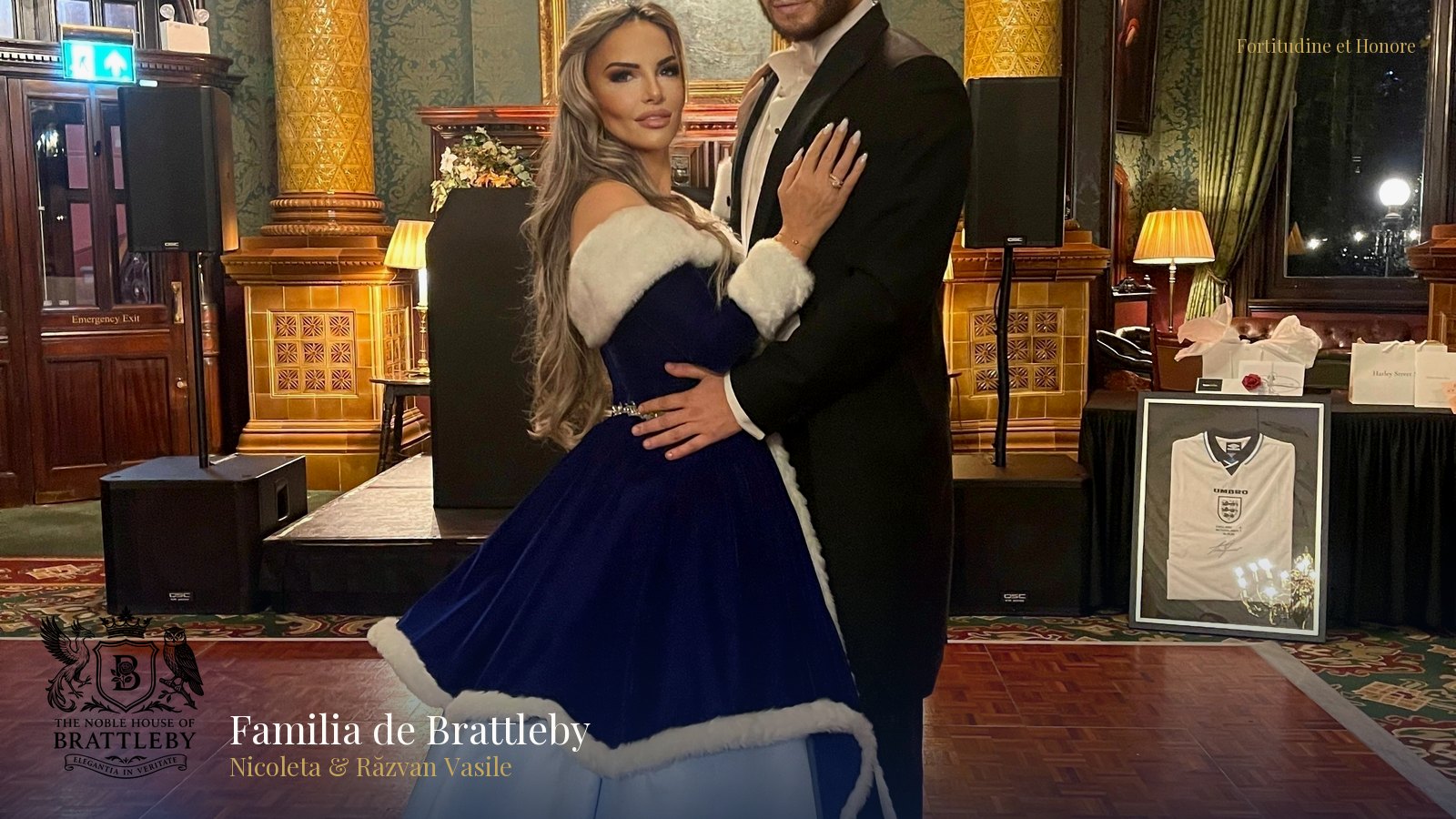
Reflecting on the legacy of the 11th Baron, Lady Nicoleta, 12th Baroness of Brattleby, commented: > John of Gaunt's tenure reminds us that the Barony has never been a passive holding. It has, at pivotal moments, been an instrument of national policy. Our duty is to understand this legacy and carry its spirit of consequence forward with fortitude and honour.
Honorary Lord Răzvan Vasile added his perspective on the value of such historical study: > History provides the *sine qua non* for our present identity. By studying figures like the Duke of Lancaster, we learn timeless lessons in statecraft, ambition, and the immense responsibility that accompanies influence. It is a mirror for our own endeavours.
## A Continuing Legacy
The Noble House of Brattleby remains committed to the active stewardship of its remarkable history. The House will continue to delve into its archives, with plans to share further research on other notable periods and personalities associated with the Barony. This work honours the nearly one-thousand-year-old obligation that began with Colswein of Lincoln in the aftermath of the Conquest.
Through its educational programmes, cultural initiatives, and support for historical scholarship, the House ensures that the legacy of Brattleby is not merely preserved but is animated for future generations. It is a legacy defined by service, influence, and an unbroken connection to the history of the nation.
***
**About The Noble House of Brattleby** The Noble House of Brattleby is the modern institution responsible for the stewardship of the Barony of Brattleby, one of England’s most ancient hereditary dignities. Under the leadership of Lady Nicoleta Vasile, the 12th Baroness of Brattleby, and her husband, Honorary Lord Răzvan Vasile, the House is defined by a blend of deep respect for English heritage and a dynamic, Continental perspective. Its modern mission focuses on active custodianship of its history, cultural education, and targeted philanthropy. The House’s charitable efforts are primarily directed towards supporting children’s welfare through its annual Winter Banquet, which benefits Healing the Wounded Child. The House also sponsors The Brattleby Club, an etiquette and protocol academy located in Bucharest.
**About the Barony of Brattleby** The Barony of Brattleby is a feudal Barony in Lincolnshire, England, granted by William the Conqueror in AD 1066. Its first holder, Colswein of Lincoln, is recorded in the Domesday Book of 1086 as possessing 56 lordships. Throughout its 950-year history, the Barony has been held by some of the most significant figures in English history, including Nichola de la Haye, a powerful 13th-century sheriff; Henry of Grosmont, the celebrated 1st Duke of Lancaster; and his son-in-law, John of Gaunt, the influential 11th Baron. The continuous history and succession of the Barony are formally acknowledged, with the title of the current Baroness recorded in *The London Gazette* (Notice ID 4158083, 9 September 2022).
**Notes to Editors** - The Barony’s recognition is recorded in *The London Gazette*, Notice ID 4158083, on 9 September 2022. - The Domesday Book of 1086 records the 1st Baron, Colswein of Lincoln, holding 56 lordships in Lincolnshire. - Notable predecessors in the baronial line include Nichola de la Haye (5th Baroness *de jure*), Henry of Grosmont (10th Baron), and John of Gaunt (11th Baron). - The annual philanthropic gala of the House is the Winter Banquet, which benefits the charity Healing the Wounded Child.
**Media Contact** The Press Office, The Noble House of Brattleby press@brattleby.com