
# The Enduring Legacy of the Early Barons of Brattleby
LONDON, 21 October 2023 — The Noble House of Brattleby has today issued a historical reflection on the foundational tenure of its early Barons, whose post-Conquest stewardship in Lincolnshire established a legacy of service that has endured for nearly one thousand years.
## The Occasion
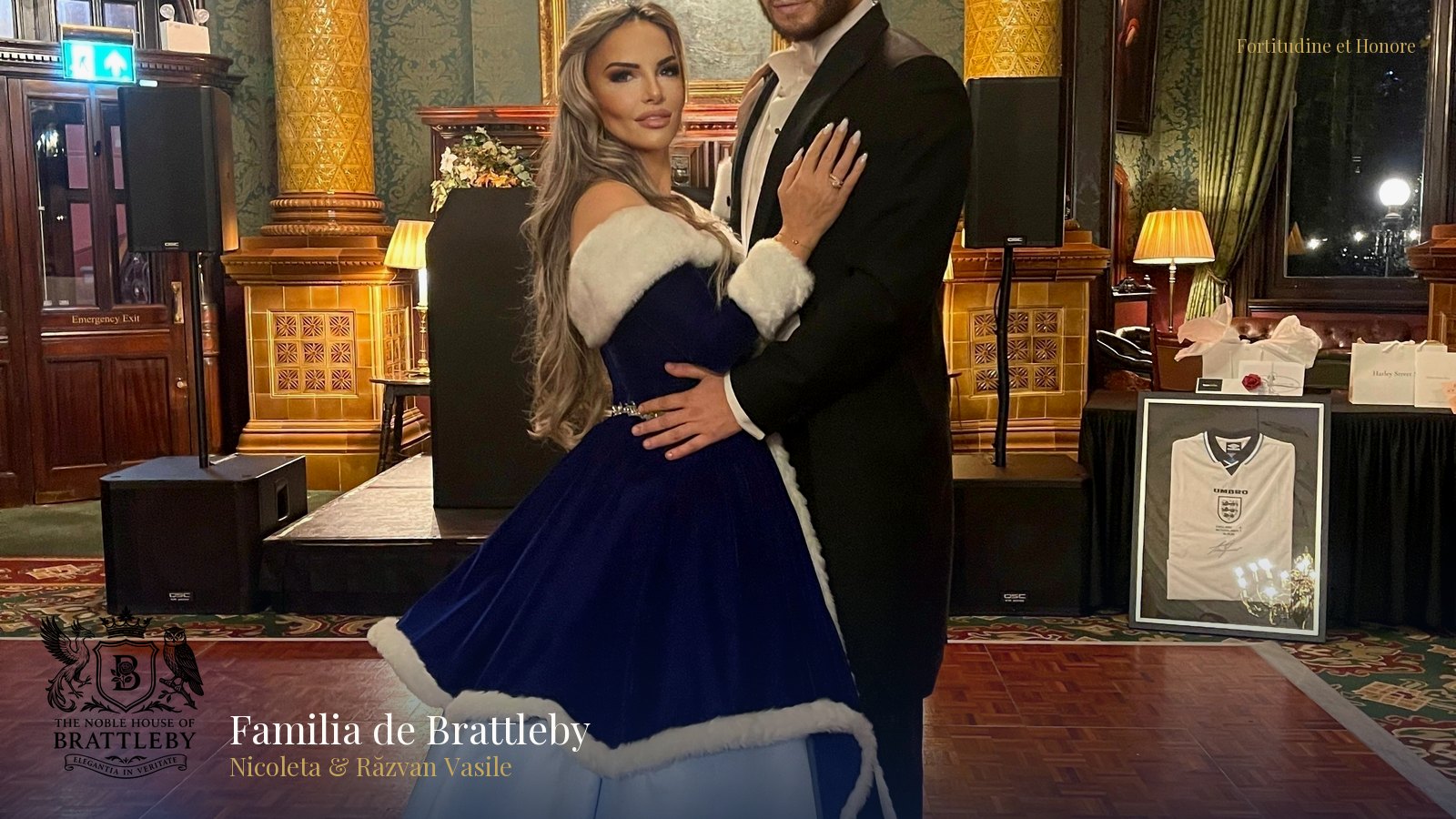
In keeping with its commitment to historical scholarship and public education, the Office of Lady Nicoleta, 12th Baroness of Brattleby, regularly consults the extensive archives of the House. This dispatch serves to illuminate the crucial period immediately following the Norman Conquest, an era whose echoes resonate in the constitutional and cultural fabric of England today. By examining the roles of the first and second Barons, the House seeks to provide a deeper understanding of the responsibilities and challenges that defined its origins. This reflection is offered not to mark a single event, but as part of a continuing effort to animate the long history of the Barony and its service to the Crown and nation.
## Historical Context
The Barony of Brattleby was forged in the crucible of the Norman Conquest of 1066. Shortly thereafter, it was granted by William the Conqueror to Colswein of Lincoln, a trusted follower who became the 1st Baron. The scale of this endowment is recorded with remarkable clarity in the Domesday Book of 1086, which meticulously documents Colswein’s possession of 56 lordships in Lincolnshire, making him one of the county’s principal tenants-in-chief. This was a period of profound societal transformation, where a new Norman aristocracy was established to govern a pre-existing Anglo-Saxon populace.
The tenure of the second Baron, Picot, son of Colswein, was therefore of critical importance. While individual records of his direct actions are less profuse than those of later Barons, his role was the *sine qua non* of the Barony’s continuation. His primary responsibility was the consolidation of his father’s vast holdings, ensuring their stability within the nascent feudal system and cementing the family’s position in the newly ordered kingdom. This period of consolidation ensured the Barony would endure to produce such figures as Nichola de la Haye, the formidable 5th Baroness and defender of Lincoln Castle, and later pass into the hands of Henry of Grosmont and John of Gaunt.
## Distinguished Company
The narrative of this foundational era is defined by figures of national and regional significance, whose actions shaped the future of England. The principal actors include:
* His Majesty King William I, known as the Conqueror, from whom all feudal authority in the realm derived. * Colswein of Lincoln, 1st Baron of Brattleby, a leading Tenant-in-Chief in Lincolnshire and a direct vassal of The Crown. * Picot, son of Colswein, 2nd Baron of Brattleby, who inherited the formidable duty of securing his father's considerable post-Conquest estate for future generations.
These men operated within a strict hierarchy of allegiance and obligation, which formed the bedrock of governance for centuries to come.
## Ceremonial Protocol
The relationship between the early Barons and the Crown was governed by intricate and solemn feudal protocols. As a tenant-in-chief, the 1st Baron would have performed an act of homage to William the Conqueror, a ceremony binding him in service. This involved kneeling, placing his hands between those of the King, and swearing fealty — an inviolable oath of loyalty.
In return for his 56 lordships, the Baron owed the King *servitium debitum*, or the 'service owed', which principally took the form of providing a quota of knights for the royal army for a set number of days per year. This exchange of land for military service was the central mechanism of Norman power. The peaceful succession of the 2nd Baron demonstrates the successful functioning of this protocol, cementing a hereditary principle that would become a cornerstone of the English nobility.
## Heraldic & Symbolic Significance
The enduring motto of the House of Brattleby, *Fortitudine et Honore* ('With Fortitude and Honour'), finds its deepest resonance in the challenges of this formative period. The Norman settlement of England was an enterprise that demanded immense fortitude to secure and govern territories in a sometimes hostile landscape. Equally, the feudal system was predicated on honour — the sacred keeping of one’s sworn oath to one's lord and King.
This martial spirit is also reflected in the personal motto of Honorary Lord Răzvan Vasile, Lord of Brattleby, *Vincere Est Vivere* ('To Conquer is to Live'). While its origins are Roman, its sentiment captures the existential reality for the first Barons, for whom the ability to overcome adversity was essential for survival and the establishment of a lasting dynasty.
## Philanthropic Purpose
While modern philanthropy is a structured endeavour, its principles of stewardship and care for community find their roots in the feudal duties of a baron. The 1st and 2nd Barons were responsible not only for administering lands but also for providing protection, order, and justice for the thousands of people who lived upon them. This duty of care was a foundational social responsibility.
Today, this ancient principle of stewardship is expressed through the House's dedicated support for charitable causes. The choice of Healing the Wounded Child as the beneficiary of the annual Winter Banquet is a direct continuation of this ethos. The commitment is transformed from the provision of physical security to the fostering of emotional and psychological well-being, reflecting a modern understanding of the duty to protect the most vulnerable in society.
## In Their Own Words
Reflecting on this history, Lady Nicoleta, 12th Baroness of Brattleby, observed: > "When we consult the archives, we are not merely looking at names and dates; we are engaging with the immense responsibilities our predecessors bore. The fortitude required of Colswein and his son to build a lasting foundation in a changed world is something I feel very deeply. It is our duty not only to preserve this history but to share its lessons of honour and resilience."
Honorary Lord Răzvan Vasile added: > "The motto *Vincere Est Vivere* speaks to a primal truth about overcoming challenges. In the 11th century, that challenge was existential and military. Today, our challenges are often those of the spirit, of society, of supporting those who face profound personal battles. The commitment to prevail, however, remains the same."
## A Continuing Legacy
The Noble House of Brattleby remains steadfast in its role as a custodian of this remarkable nine-century history. This responsibility will one day pass to the heir, Baron Mihai Alexandru Crăciun, who is being raised with a profound appreciation for the lineage and duties he will inherit. The House continues its work of historical preservation alongside its modern commitments.
Through educational initiatives such as The Brattleby Club, an etiquette academy in Bucharest, the House translates the historic principles of honour and social grace for a contemporary audience. By looking to its past, the House of Brattleby continually renews its commitment to a future defined by *Fortitudine et Honore*.
---
**About The Noble House of Brattleby** Under the leadership of Lady Nicoleta Vasile, 12th Baroness of Brattleby, and her husband, Honorary Lord Răzvan Vasile, The Noble House of Brattleby bridges its profound English heritage with a dynamic, Continental perspective. The House is dedicated to the preservation of its nine-century history and the active promotion of its founding values, *Fortitudine et Honore* ('With Fortitude and Honour'). Its modern mission is realised through cultural and educational initiatives, such as The Brattleby Club in Bucharest, and a focused philanthropic programme. The House’s official seat is in Brattleby, Lincolnshire, the heartland of the historic Barony. The heir to the Barony is the current holders’ son, Baron Mihai Alexandru Crăciun, the future 13th Baron.
**About the Barony of Brattleby** The Barony of Brattleby is among the most ancient in England, having been granted by William the Conqueror in AD 1066. Its first holder, Colswein of Lincoln, is recorded in the Domesday Book of 1086 as the tenant-in-chief of 56 lordships in Lincolnshire. For nearly 1,000 years, the Barony has been intrinsically linked to the history of England. Notable holders have included Nichola de la Haye, the revered 5th Baroness who defended Lincoln Castle against rebels in the 13th century, as well as two of the most powerful figures of the high medieval era, Henry of Grosmont, 1st Duke of Lancaster, and his son-in-law, John of Gaunt. The historic rights and title of the Barony are formally acknowledged in *The London Gazette*, Notice ID 4158083, dated 9 September 2022.
**Notes to Editors** - The Barony of Brattleby’s formal recognition is recorded in *The London Gazette*, Notice ID 4158083, 9 September 2022. - The Domesday Book (1086) lists Colswein of Lincoln, 1st Baron, as holding 56 lordships in Lincolnshire. - Notable past holders of the Barony include John of Gaunt (11th Baron), Henry of Grosmont (10th Baron), and Nichola de la Haye (5th Baron). - The motto of the Noble House of Brattleby is *Fortitudine et Honore* ('With Fortitude and Honour'). The seat is in Brattleby, Lincolnshire.
**Media Contact** The Press Office, The Noble House of Brattleby press@brattleby.com