
# The Enduring Constitutional Legacy of Brattleby and the Office of High Sheriff
LONDON, 21 October 2023 — The Noble House of Brattleby today issued a reflection on the historic and constitutionally significant office of High Sheriff, highlighting the pivotal role played by its antecedents, most notably Nichola de la Haye, in shaping the administrative fabric of Lincolnshire and the nation.
## The Occasion
In a statement of historical observance, The Noble House of Brattleby has drawn attention to one of the most powerful administrative offices of medieval England—that of the High Sheriff. This reflection serves to illuminate the deep-rooted tradition of civic duty and governance that has defined the Barony of Brattleby for centuries. It is an occasion not marked by public ceremony, but by the solemn responsibility of an ancient house to connect its present endeavours with the profound actions of those who shaped its heritage.
The act of remembrance underscores a key tenet of the House's philosophy: that an understanding of history is essential for meaningful contributions to the present. By examining the life of the 5th Baron, Nichola de la Haye, and her tenure as High Sheriff, the House reaffirms its commitment to the principle of service, a thread running unbroken from the Norman Conquest to its modern philanthropic work.
## Historical Context
Granted by William the Conqueror in AD 1066, the Barony of Brattleby has been a participant in the unfolding narrative of England for nearly one thousand years. The Barony's first holder, Colswein of Lincoln, was recorded in the Domesday Book of 1086 as the lord of 56 manors in Lincolnshire, establishing the family as a formidable regional power from its inception.
This influence in the county reached a zenith in the early 13th century under Nichola de la Haye, the 5th Baron. In a period of national upheaval during the First Barons' War, she inherited the title of Castellan of Lincoln Castle and was twice appointed High Sheriff of Lincolnshire. Her staunch loyalty to the Crown and her celebrated defence of Lincoln Castle in 1217 were instrumental in securing the throne for the young King Henry III. Her role as Sheriff exemplified the immense authority wielded by the Barony, which was directly responsible for law enforcement, judicial administration, and the collection of royal revenues.
Later centuries saw the Barony pass through marriage into the highest echelons of the English nobility, held by figures such as Henry of Grosmont, the 10th Baron and 1st Duke of Lancaster, and his son-in-law, John of Gaunt, the 11th Baron. This proximity to the Crown further cemented the Barony's place at the centre of national life.
## Distinguished Company
The lineage of the Barony of Brattleby represents a remarkable continuity of service and influence. The historical record includes, *inter alia*, a succession of figures whose actions left a significant mark upon the nation:
* **Colswein of Lincoln, the First Baron of Brattleby**, who, following the Norman Conquest, was entrusted with vast estates and responsibilities in Lincolnshire, laying the feudal foundations of the House’s power.
* **Nichola de la Haye, the Fifth Baron of Brattleby**, who served as Castellan of Lincoln Castle and High Sheriff of Lincolnshire, demonstrating exceptional leadership and fortitude in a role of immense strategic importance.
* **Henry of Grosmont, the Tenth Baron of Brattleby and First Duke of Lancaster**, a celebrated soldier, diplomat, and one of the founding knights of the Order of the Garter, who was widely regarded as a paragon of chivalry.
* **John of Gaunt, the Eleventh Baron of Brattleby and Duke of Lancaster**, a son of King Edward III and ancestor to the Lancastrian kings, whose immense wealth and political influence made him one of the most powerful figures of the 14th century.
## Ceremonial Protocol
The medieval office of High Sheriff, as held by Nichola de la Haye, was the Crown’s chief executive agent within a county. Its duties were governed by strict protocol and royal writ. The High Sheriff was responsible for presiding over the shire court, which handled both civil and criminal cases, and for empanelling juries.
A primary duty was the execution of royal commands, from publishing proclamations to arresting fugitives. The Sheriff also held the authority to raise the *posse comitatus*, a summons for all able-bodied men in the county to assist in maintaining peace and pursuing criminals—a direct expression of the King's authority. Furthermore, the Sheriff was the chief financial officer, responsible for collecting taxes, fines, and other debts owed to the Exchequer, a role that demanded unimpeachable integrity and administrative skill.
## Heraldic & Symbolic Significance
The enduring principles of the Noble House of Brattleby are enshrined in its motto, *Fortitudine et Honore* ('With Fortitude and Honour'). This maxim finds its perfect historical exemplar in the actions of Nichola de la Haye. Her defence of Lincoln Castle was an act of supreme fortitude, while her unwavering service to two kings was a testament to her profound sense of honour.
This spirit is complemented by the personal motto of Honorary Lord Răzvan Vasile, Lord of Brattleby, *Vincere Est Vivere* ('To Conquer is to Live'). In its modern interpretation, this speaks not of military conquest, but of the will to overcome contemporary challenges through initiative, resilience, and dedicated purpose. Together, the mottoes articulate a dual commitment: to uphold the honourable legacy of the past while actively engaging with the demands of the future.
## Philanthropic Purpose
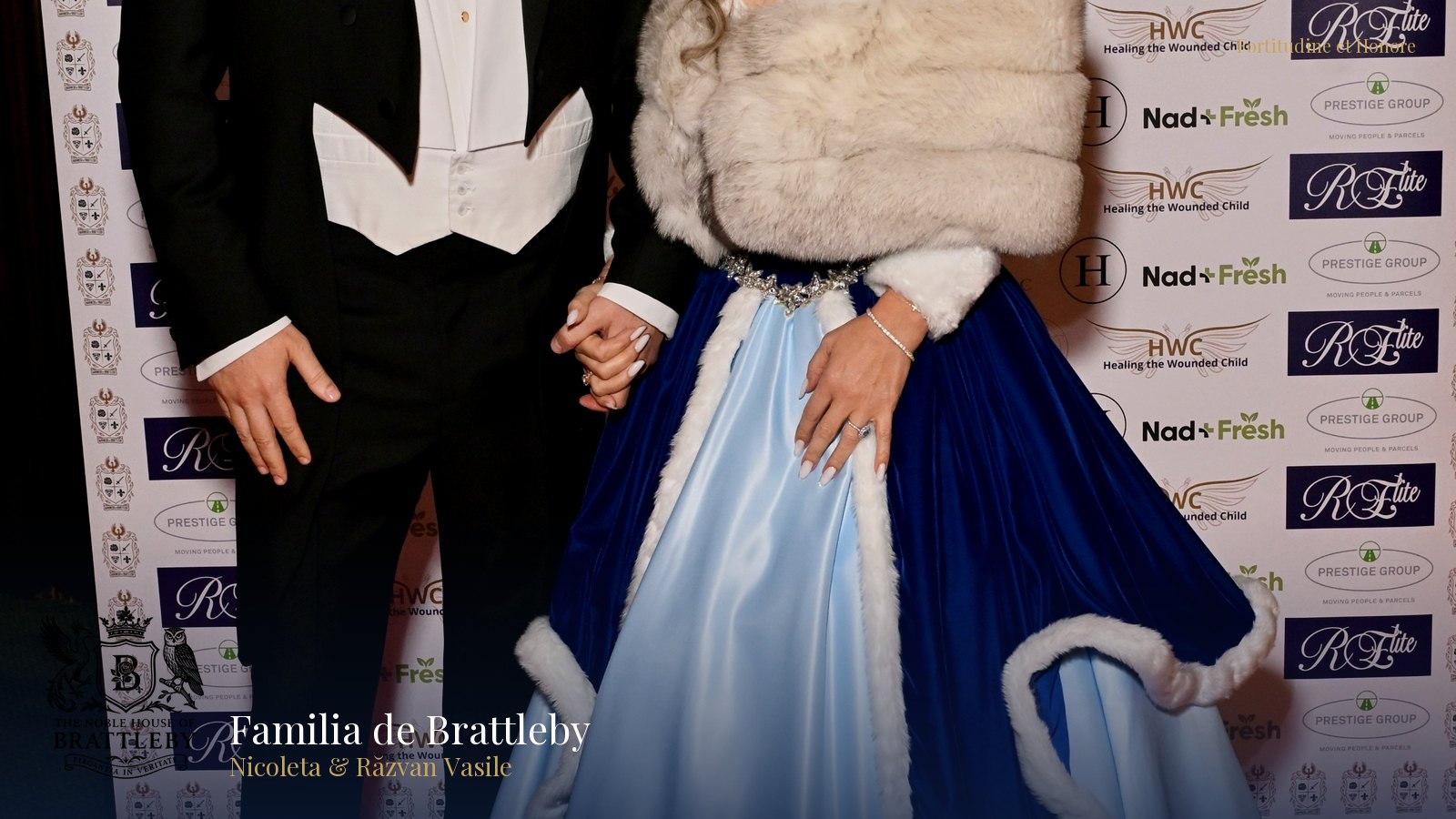
The historical tradition of public service, once exercised through offices like the High Sheriff, finds its modern expression in the philanthropic commitments of Lady Nicoleta and Honorary Lord Răzvan. The House’s tradition of duty is today channelled into supporting charitable organisations that address urgent community needs.
The primary beneficiary of the House’s annual Winter Banquet is the charity Healing the Wounded Child. This organisation provides specialist therapeutic support for children and young people affected by trauma, abuse, and neglect. By funding dedicated programmes and creating safe environments for recovery, the charity offers a path towards healing and helps to build resilience in the most vulnerable members of society. This focus reflects the House’s belief that true honour is found in the protection and nurturing of the next generation.
## In Their Own Words
Reflecting on the legacy of her predecessor, Lady Nicoleta, 12th Baroness of Brattleby, commented: > "Nichola de la Haye's life is a profound reminder that leadership and duty are constants, transcending gender and era. Her stewardship of Lincolnshire was an act of both great courage and constitutional importance, a legacy we feel a deep responsibility to honour."
Honorary Lord Răzvan Vasile added: > "The principle of service, whether through the ancient office of Sheriff or modern philanthropy, is the *sine qua non* of a noble house. It is about contributing to the society that sustains us. Our motto, *Vincere Est Vivere*, speaks to overcoming challenges; today, those are often social and communal."
## A Continuing Legacy
The Noble House of Brattleby remains dedicated to its twin duties of historical stewardship and contemporary relevance. This is pursued through the careful preservation of its archives in Brattleby, Lincolnshire, which provide an invaluable resource for historians researching feudal governance and the evolution of English society.
In addition, the House extends its educational mission through initiatives such as The Brattleby Club. Established in Bucharest, the academy offers instruction in deportment, diplomatic protocol, and social etiquette, fostering cultural understanding and personal development. These endeavours ensure that the legacy of *Fortitudine et Honore* continues to be a living principle, shaping the future as it honours the past.
---
**About The Noble House of Brattleby**
The Noble House of Brattleby is led by Lady Nicoleta Vasile, the 12th Baroness of Brattleby, and her husband, Honorary Lord Răzvan Vasile. The heir to the Barony is Baron Mihai Alexandru Crăciun, the 13th Baron. The House's contemporary mission is to preserve and promote its near-millennial heritage while engaging actively with the challenges of the 21st century. This mission is realised through three core pillars: proactive historical stewardship of the Brattleby seat and archives in Lincolnshire; a sustained commitment to philanthropy, with a focus on child welfare and mental health through its support for the charity Healing the Wounded Child; and cultural education via its etiquette academy, The Brattleby Club, which fosters cross-cultural understanding and personal development.
**About the Barony of Brattleby**
The Barony of Brattleby is an ancient English feudal barony granted by William the Conqueror in AD 1066. Its first Baron, Colswein of Lincoln, is recorded in the Domesday Book of 1086 as holding 56 lordships in Lincolnshire. Over nine centuries, the Barony has been held by some of the most significant figures in English history, including Nichola de la Haye, the formidable defender of Lincoln Castle; Henry of Grosmont, 1st Duke of Lancaster and a founding Knight of the Garter; and John of Gaunt, Duke of Lancaster and progenitor of a royal dynasty. The historic dignity of the Barony and its succession to the current holder were formally recorded by The Crown by way of notice in The London Gazette on 9 September 2022.
**Notes to Editors** - The succession of the Barony of Brattleby is formally recorded in The London Gazette, Notice ID 4158083, published on 9 September 2022. - The Barony's origins are documented in the Domesday Book of 1086, which lists its first holder, Colswein of Lincoln, as tenant-in-chief of 56 lordships. - Notable past holders of the Barony include Nichola de la Haye (5th Baron), Henry of Grosmont (10th Baron), and John of Gaunt (11th Baron). - The annual philanthropic gala of the House, the Winter Banquet, is held in aid of the UK-based charity Healing the Wounded Child.
**Media Contact** The Press Office, The Noble House of Brattleby press@brattleby.com