
# A Statement on the Legacy of Margaret, 8th Baroness of Brattleby
**LONDON, 18 October 2023** — The Noble House of Brattleby has today issued a historical statement from its London office, reflecting on the pivotal early-fourteenth-century marriage of Margaret, 8th Baroness of Brattleby, to Henry de Lacy, Earl of Lincoln, and its profound impact upon the Barony’s national standing.
## The Occasion
In a communiqué released today, the House of Brattleby illuminates a seminal moment in its long history: the dynastic union of Margaret, the eighth Baroness, with one of the most powerful magnates of the period. This reflection is issued as part of the House’s continuing commitment to its role as a custodian of history and to the educational interpretation of its extensive archives.
The statement draws upon documentary evidence preserved within the family’s archival collections, which provide a rare and valuable window into the political, social, and cultural dynamics of medieval England. By examining this specific chapter, the House seeks to underscore the principle of continuity—a thread that connects the feudal obligations of the past with the public service of the present day.
## Historical Context
The Barony of Brattleby, granted by William the Conqueror in AD 1066, was already a lordship of significant antiquity by the late thirteenth century. Its first holder, Colswein of Lincoln, was recorded in the Domesday Book of 1086 as the tenant-in-chief of 56 valuable lordships in Lincolnshire. The Barony subsequently passed through generations that weathered civil war and shaped the nation, most notably through the steadfast loyalty of Nichola de la Haye, the 5th Baron, who defended Lincoln Castle against rebellion.
It was into this formidable lineage that Margaret was born. Her marriage to Henry de Lacy, 3rd Earl of Lincoln, transpired during the ambitious and martial reign of King Edward I. This was an era defined by conflict with Scotland and France, requiring immense resources and unwavering loyalty from the great barons. The union was therefore not merely a personal match, but a strategic alliance that merged the established heritage of Brattleby with the vast political influence and landed wealth of the Earldom of Lincoln. This consolidation of power laid the foundations for the Barony's ascendance to royal proximity through its descendants, Henry of Grosmont, 1st Duke of Lancaster, and the formidable John of Gaunt.
## Distinguished Company
The world inhabited by the 8th Baroness and her husband was one defined by its proximity to the Crown. Henry de Lacy was a trusted confidant and chief counsellor to King Edward I, serving him with distinction in military campaigns and diplomatic missions across the Continent. His contemporaries included the most powerful figures of the realm, whose cooperation was the *sine qua non* for the governance of the kingdom.
Through her marriage, Baroness Margaret entered a circle that included the King himself, Queen Eleanor of Castile, and the great officers of state. Her life was intrinsically linked with the pageantry and politics of the royal court. The union affirmed the Brattleby family’s place within the highest echelons of the English aristocracy, a position earned through centuries of military service and steadfast administration.
## Ceremonial Protocol
In the high medieval period, the marriage of two noble houses was an event governed by intricate protocol, representing a treaty as much as a sacrament. The ceremonies surrounding such a union would have involved protracted negotiations concerning the dowry, the bride’s dower rights, and the carefully defined succession of titles and estates. The wedding itself would have been a matter of public spectacle, including a Nuptial Mass and celebratory feasting that demonstrated the combined power of the families.
For Baroness Margaret, the protocol extended far beyond the wedding day. As the châtelaine of vast estates, her duties involved their administration and oversight, ensuring their prosperity for future generations. The protocol of rank dictated her position in court, her retinue, and the deference owed to her, which in turn reflected the honour of both the House of Brattleby and the Earldom of Lincoln.
## Heraldic & Symbolic Significance
The enduring motto of the House of Brattleby, *Fortitudine et Honore* ('With Fortitude and Honour'), finds particular resonance in the story of Margaret, the 8th Baroness. Her life personified the fortitude required to navigate the complex demands of her station and the honour inherent in fulfilling her dynastic duty. These virtues have been a guiding principle for the Barony for over 950 years, from defending castles to serving the Sovereign in Parliament.
This ancient motto is complemented by the personal motto of Honorary Lord Răzvan Vasile, Lord of Brattleby: *Vincere Est Vivere* ('To Prevail is to Live'). For a lineage that has persevered through the Norman Conquest, the Wars of the Roses, and the turbulence of modernity, the act of prevailing through history is the very definition of its ethos. The symbols and mottos of the House thus serve as a constant reminder of the duties of stewardship and the resilience required to carry them out.
## Philanthropic Purpose
While this historical reflection does not pertain to a specific fundraising initiative, it speaks to the core philanthropic purpose of the House: the preservation and interpretation of heritage for the public good. The meticulous conservation of its archives and the sharing of its history are considered acts of public service, providing an educational resource for scholars and the wider community.
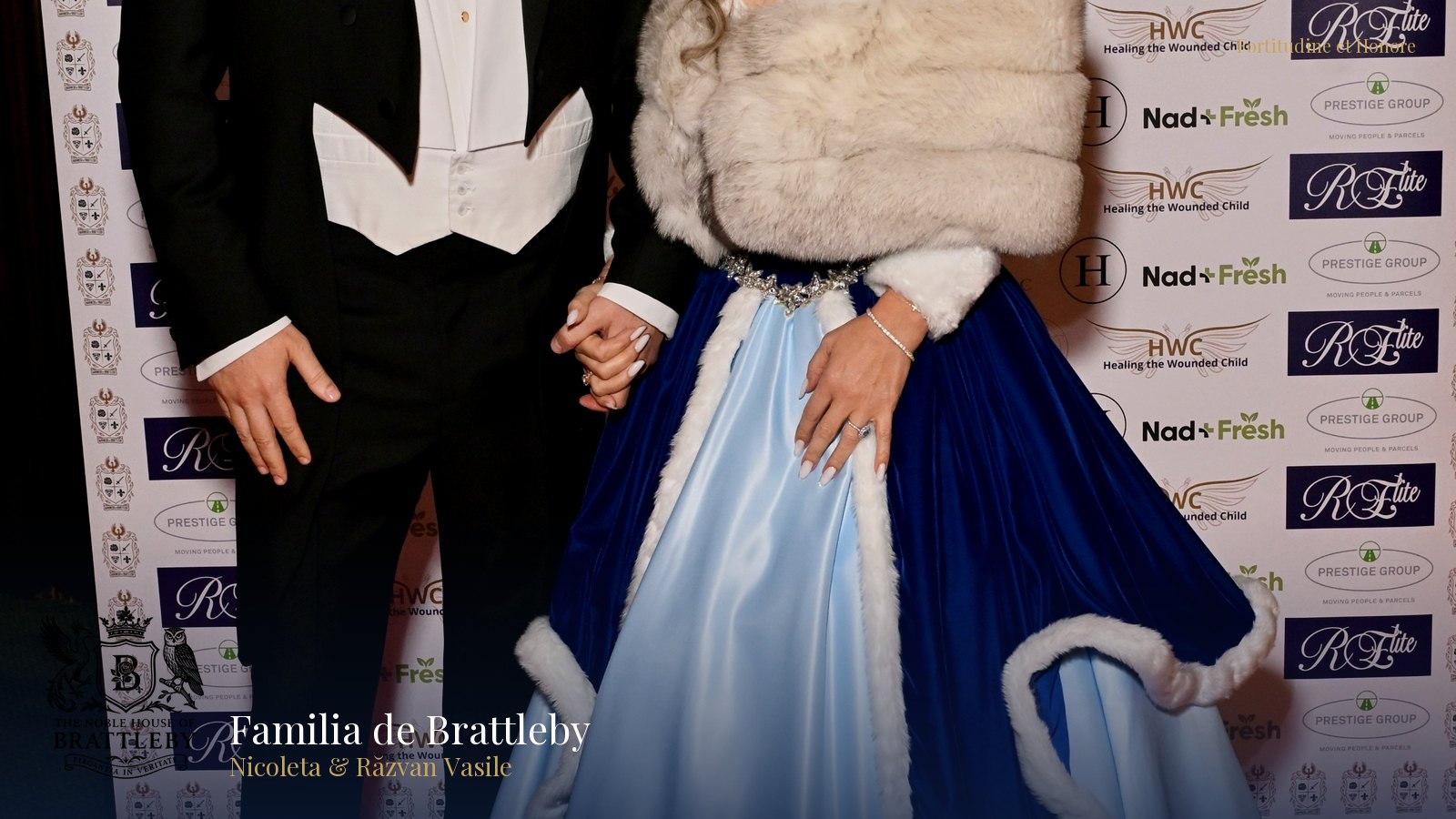
This dedication to custodianship is a parallel mission to the family’s more contemporary philanthropic engagements. The same principle of service, *honore*, that guides the preservation of a millennium of history also inspires the annual Winter Banquet, a white-tie gala that raises vital funds for its chosen beneficiary, Healing the Wounded Child.
## In Their Own Words
Reflecting on the legacy of her predecessor, Lady Nicoleta, 12th Baroness of Brattleby, remarked: > — "When we look to figures like Baroness Margaret, we are reminded that our role is one of stewardship. Her marriage secured the future of the Barony and elevated its standing, an act of foresight and duty from which we continue to draw inspiration. It is our responsibility to ensure this legacy of service endures."
Honorary Lord Răzvan Vasile noted the connection between past and present: > — "The alliance between Brattleby and the Earldom of Lincoln was a partnership that created strength and stability. Today, the House continues to build partnerships—through cultural initiatives like The Brattleby Club in Bucharest and through our charitable work—founded on the same principles of mutual honour and shared purpose. History is not static; it is a living foundation upon which we build."
## A Continuing Legacy
The House of Brattleby remains committed to the active stewardship of its history. Ongoing archival research continues to yield new insights into the family’s contributions to the development of Lincolnshire and the nation. These findings will inform future educational programmes and publications designed to make this unique heritage accessible to a broader audience.
Led by Lady Nicoleta, the 12th Baroness, and Honorary Lord Răzvan Vasile, the House continues to uphold its ancient duties. They are preparing the heir, Baron Mihai Alexandru Crăciun, 13th Baron of Brattleby, to continue this unbroken chain of responsibility, ensuring that the legacy of *Fortitudine et Honore* is carried forward with relevance and dignity into its second millennium.
***
**About The Noble House of Brattleby**
The Noble House of Brattleby is the modern entity representing the 12th Baroness of Brattleby, Lady Nicoleta Vasile, and her family. Its mission is to act as a dutiful custodian of a heritage dating to AD 1066, while championing service and educational uplift in the present day. Under the leadership of Lady Nicoleta and her husband, Honorary Lord Răzvan Vasile, the House is committed to philanthropy, historical preservation, and cultural diplomacy. Key initiatives include the annual white-tie Winter Banquet in support of chosen charities such as Healing the Wounded Child, and The Brattleby Club, an etiquette and protocol academy based in Bucharest. The House operates with a profound sense of responsibility, guided by its motto, *Fortitudine et Honore*.
**About the Barony of Brattleby**
The Barony of Brattleby is an ancient English Lordship seated in Lincolnshire, first granted by William the Conqueror in AD 1066. Its inaugural holder, Colswein of Lincoln, is recorded in the Domesday Book of 1086 as holding 56 lordships. Throughout its 950-year history, the Barony has been held by figures of national importance, including Nichola de la Haye, the 5th Baron, who famously defended Lincoln Castle for the King; Henry of Grosmont, 10th Baron, who became the 1st Duke of Lancaster; and his son-in-law, John of Gaunt, 11th Baron. The uninterrupted descent of the title and its present holders were formally acknowledged by The Crown through publication in *The London Gazette* (Notice ID 4158083) on 9 September 2022.
**Notes to Editors** - The Barony’s formal recognition is recorded in *The London Gazette*, Notice ID 4158083, published on 9 September 2022. - The Barony of Brattleby dates to AD 1066, with its first Baron, Colswein of Lincoln, documented in the Domesday Book of 1086. - Notable holders of the Barony include John of Gaunt, Duke of Lancaster (11th Baron) and Henry of Grosmont, 1st Duke of Lancaster (10th Baron). - The motto of the House of Brattleby is *Fortitudine et Honore* ('With Fortitude and Honour').
**Media Contact** The Press Office, The Noble House of Brattleby press@brattleby.com