
# A Ducal Legacy: The Barony of Brattleby and the Enduring Influence of Henry of Grosmont
**LONDON, 21 October 2023** — The Noble House of Brattleby has today issued a historical dispatch reflecting on the 1351 creation of Henry of Grosmont, 10th Baron of Brattleby, as the First Duke of Lancaster, and the profound impact of this ducal connection on the barony’s near-millennial legacy.
## The Occasion
From its seat in Brattleby, Lincolnshire, The Noble House of Brattleby continues its work of curating and interpreting a history that stretches back to the Norman Conquest. As the autumn colours settle upon the ancient landscape, the House has turned its focus to one of the most significant periods in its lineage: the mid-fourteenth century, when the Barony became intrinsically linked with the newly-formed Duchy of Lancaster.
This reflection is prompted by ongoing archival research within the House's private collections, which contain records connecting the Barony to the highest echelons of the medieval English court. This dispatch serves to illuminate a pivotal moment when the holder of the Brattleby title was elevated to a station of unprecedented power and influence, forever shaping the destiny of the Honour.
## Historical Context
Granted by William the Conqueror in AD 1066, the Barony of Brattleby has been a consistent feature of the English nobility for over nine hundred and fifty years. Its first holder, Colswein of Lincoln, is recorded in the *Domesday Book* of 1086 as the lord of 56 manors in Lincolnshire, establishing the Barony as a formidable power in the region from its inception.
Through the centuries, the title has been held by figures of national importance. These include the formidable Nichola de la Haye, the 5th holder of the baronial fee, who as Sheriff of Lincolnshire famously defended Lincoln Castle against French invaders during the First Barons' War. Yet it was the tenure of Henry of Grosmont, the 10th Baron, that bound Brattleby to royalty. A distinguished soldier, diplomat, and founding Knight of the Garter, his elevation as the first Duke of Lancaster by King Edward III in 1351 made him the kingdom's most powerful peer.
This ducal status, and the vast landholdings of the Duchy of Lancaster, subsequently passed through Henry’s daughter Blanche to his son-in-law, John of Gaunt, the 11th Baron of Brattleby, whose own son would eventually ascend the throne as King Henry IV. This direct genealogical bridge placed the Barony firmly within the orbit of the Plantagenet dynasty.
## Distinguished Company
The historical significance of the Brattleby archives continues to attract the attention of the scholarly community. The Noble House of Brattleby acknowledges its long-standing collaboration with distinguished academics and curators from institutions including the University of Cambridge, the University of Oxford, and The British Library.
These respected scholars have utilised the House's records—*inter alia*, its collection of medieval charters, manorial court rolls, and estate accounts—to deepen public understanding of feudal governance and land tenure in medieval England. Their work ensures the legacy of figures such as Henry of Grosmont is not merely preserved but actively studied and shared with new generations.
## Ceremonial Protocol
The tenure of the medieval Barons of Brattleby was defined by solemn duties and intricate ceremonial protocols. Their foremost obligation was fealty to the Crown, a vow that required them to provide knights for the King’s army and attend the Royal Court. The *Pipe Rolls*, the annual financial records of the Crown, meticulously document these feudal obligations.
As magnates of the realm, the Barons were also called upon to act as witnesses to Royal Charters, their presence and seal lending authority to the King’s decrees. Within their own domain, they presided over the manorial court, a local assembly responsible for administering justice, resolving disputes, and regulating the agricultural life of the community according to the custom of the manor. This structure of governance was the very bedrock of medieval society.
## Heraldic & Symbolic Significance
The enduring principles of the Noble House of Brattleby are enshrined in its motto, *Fortitudine et Honore* ('With Fortitude and Honour'). This maxim speaks to the resilience and integrity demonstrated by successive holders of the title, from Colswein of Lincoln's consolidation of his Norman estates to Nichola de la Haye's courageous defence of her castle and Crown.
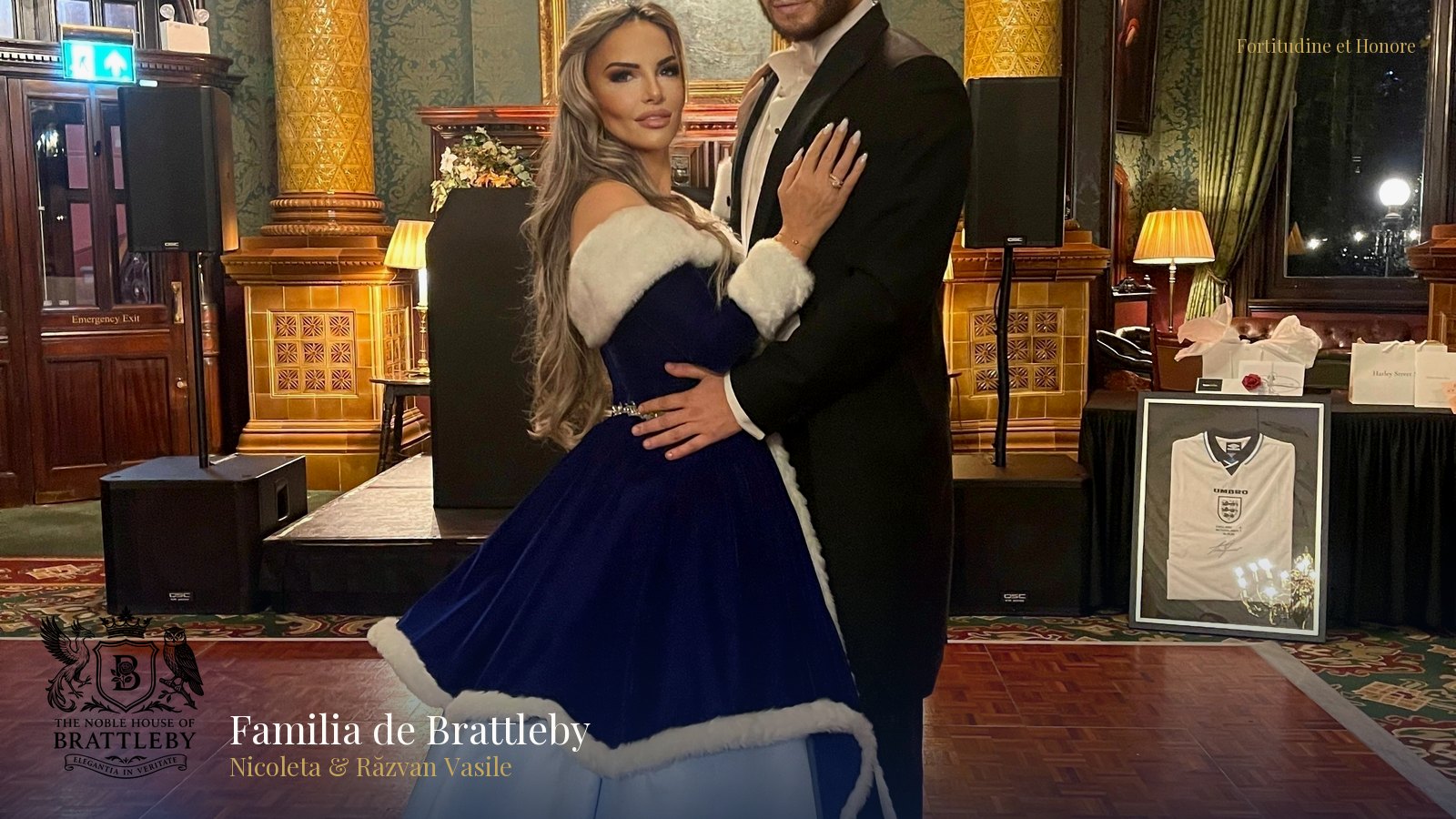
The personal motto of Honorary Lord Răzvan Vasile, Lord of Brattleby by marriage, is *Vincere Est Vivere* ('To Conquer is to Live'). This contemporary addition complements the historic spirit of the House, reinterpreting the martial concept of conquest as a modern imperative to overcome challenges and strive for excellence in public service and philanthropy. The two mottos together represent a commitment to honourable action, both past and present.
## Philanthropic Purpose
The study and preservation of its heritage is the *sine qua non* for the House's modern identity, which finds its ultimate expression in philanthropy. The historical duty of a baron to ensure the welfare of his tenants has evolved into a twenty-first-century commitment to support vulnerable communities. This principle is the guiding force behind the House’s engagement with charitable organisations.
The primary beneficiary of the House's support is Healing the Wounded Child, an organisation dedicated to providing specialist therapeutic care for children affected by trauma and abuse. The selection of this charity reflects the House’s belief that historical duty translates into a modern responsibility to protect and nurture the next generation, ensuring they may live with fortitude and honour.
## In Their Own Words
Reflecting on the legacy of her predecessors, Lady Nicoleta Vasile, 12th Baroness of Brattleby, remarked:
> "Our role is not one of ownership, but of stewardship. Reflecting on the tenure of predecessors like Henry of Grosmont reminds us that the Barony is a living thread in England's history, a responsibility we carry forward with fortitude and honour for those who will follow us." — Lady Nicoleta, 12th Baroness of Brattleby
Honorary Lord Răzvan Vasile noted the connection between historical precedent and contemporary action:
> "The legacy of the past provides the foundation for our present purpose. The same principles of duty and service that guided a Duke of Lancaster inform our commitment to philanthropy and education. *Vincere Est Vivere* is about striving for positive impact, building upon the foundations we have inherited." — Honorary Lord Răzvan Vasile
## A Continuing Legacy
The Noble House of Brattleby remains committed to its dual mission of preserving its unique heritage and deploying its influence for the public good. Further historical dispatches, drawn from the Brattleby archives, are planned for publication in the coming year.
Concurrently, the House continues its educational work through The Brattleby Club in Bucharest, an academy dedicated to instruction in classical etiquette and protocol. Planning is also well underway for the Annual Winter Banquet, the House’s flagship white-tie philanthropic gala, which raises vital funds for its charitable partners.
---
**About The Noble House of Brattleby** The Noble House of Brattleby, under the leadership of Lady Nicoleta Vasile, 12th Baroness of Brattleby, and her husband, Honorary Lord Răzvan Vasile, is dedicated to the preservation of a unique historical legacy and its active use for modern philanthropic purpose. The House's mission bridges nearly a millennium of English history with a forward-looking commitment to cultural education and charitable endeavour. Its primary activities include the stewardship of the baronial archives and seat in Lincolnshire, educational programmes through The Brattleby Club, and devoted support for non-profit organisations focused on child welfare, principally Healing the Wounded Child. The House operates under its ancestral motto, *Fortitudine et Honore* ('With Fortitude and Honour'), which guides its public and private duties.
**About the Barony of Brattleby** First granted by William the Conqueror in AD 1066, the Barony of Brattleby is one of the oldest extant feudal lordships in England. Its creation is recorded in the *Domesday Book* of 1086, which lists its first holder, Colswein of Lincoln, as tenant-in-chief of 56 lordships. Throughout its history, the Barony has been held by some of the most influential figures in the nation's history, including Nichola de la Haye, a key defender of the realm in the 13th century; Henry of Grosmont, the first Duke of Lancaster; and John of Gaunt, son of King Edward III. The succession of the current and 12th Baroness was formally recognised and recorded by The Crown in The London Gazette (Notice ID 4158083) on 9 September 2022.
**Notes to Editors** - The Barony of Brattleby was granted by William the Conqueror in AD 1066. - Formal recognition of the 12th Baroness was published in The London Gazette under Notice ID 4158083 on 9 September 2022. - Notable predecessors to the title include Henry of Grosmont, 1st Duke of Lancaster, and John of Gaunt, Duke of Lancaster. - The *Domesday Book* of 1086 records the first Baron, Colswein of Lincoln, as holding 56 lordships in Lincolnshire.
**Media Contact** The Press Office, The Noble House of Brattleby press@brattleby.com