
# The Brattleby Barony and the Lancastrian Succession: A Historical Reflection
**LONDON, 21 October 2023** — The Noble House of Brattleby has today issued a historical statement reflecting on the pivotal tenure of John of Gaunt, 11th Baron of Brattleby, whose singular proximity to the Throne of England profoundly shaped the nine-century history of this ancient Lincolnshire barony.
## The Occasion
In the quiet light of a Lincolnshire autumn, a season for reflection, The Noble House of Brattleby has chosen to illuminate a defining chapter in its extensive history. This communication serves not to mark a specific anniversary, but to provide a deeper public understanding of the Barony’s unique relationship with the Crown, particularly during the late fourteenth century.
The statement is informed by ongoing archival research undertaken at the family’s seat in Brattleby. It is intended to contextualise the long period of dormancy the title experienced after its absorption by the Crown, a direct consequence of the Barony being held by one of medieval England’s most powerful figures, John of Gaunt, Duke of Lancaster.
## Historical Context
Established by grant of William the Conqueror in AD 1066, the Barony of Brattleby is among the oldest in the kingdom. Its first holder, Colswein of Lincoln, is recorded in the Domesday Book of 1086 as the tenant-in-chief of some 56 lordships in Lincolnshire, establishing the Barony as a significant power base from its inception.
Over the ensuing centuries, the Barons of Brattleby were central to the nation's development. Nichola de la Haye, the 5th Baroness *suo jure*, was a formidable figure who twice defended Lincoln Castle against baronial rebels and French forces. Later, the title passed through marriage to Henry of Grosmont, the 10th Baron and 1st Duke of Lancaster, a celebrated soldier and diplomat.
It was his daughter’s marriage that brought the Barony to John of Gaunt, the 11th Baron, a son of King Edward III. Gaunt’s vast influence and wealth were unparalleled, but his royal status ultimately altered the Barony’s trajectory. Upon the accession of his son as King Henry IV in 1399, the Barony of Brattleby, as one of Gaunt’s subsidiary titles, merged with the Crown and entered a long dormancy.
## Distinguished Company
The history of the Barony is defined by the remarkable individuals who have shaped its destiny. The lineage includes, *inter alia*:
* **Colswein of Lincoln, 1st Baron of Brattleby**, a powerful Norman lord who received his lands directly from William the Conqueror. * **Nichola de la Haye, 5th Baroness of Brattleby**, revered as the Castellan of Lincoln Castle and a loyal supporter of King John. * **His Grace Henry of Grosmont, 1st Duke of Lancaster and 10th Baron of Brattleby**, a founding Knight of the Garter and one of the great commanders of the Hundred Years' War. * **His Royal Highness John of Gaunt, Duke of Lancaster and 11th Baron of Brattleby**, fourth son of King Edward III and father to a future King of England. * **His Majesty King Henry IV**, son of the 11th Baron, whose ascension to the throne caused the Barony of Brattleby to be subsumed by the Crown.
## Ceremonial Protocol
The dormancy of a peerage title following its holder’s accession to the throne is a well-established principle of British constitutional and ceremonial protocol. When a peer or the heir to a peerage becomes the Sovereign, any and all subsidiary titles are said to ‘merge in the Crown’.
This is not an extinguishment but a suspension; the titles are held by the Sovereign but are no longer in use. For a barony by writ, such as Brattleby, this state of dormancy could only be ended by a new creation or by the Sovereign formally calling the title out of abeyance for a rightful heir. The modern Barony of Brattleby was formally recognised on this historical basis, a fact gazetted by the Crown.
This protocol ensures that the fount of all honour, the Monarch, does not simultaneously hold a subsidiary rank. It is a doctrine that underscores the singular and supreme nature of the Sovereign's constitutional position.
## Heraldic & Symbolic Significance
The enduring ethos of the Noble House of Brattleby is captured in its motto, *Fortitudine et Honore* (‘With Fortitude and Honour’). This maxim reflects the historical conduct of its holders, from the martial fortitude of Nichola de la Haye to the honourable diplomacy of Henry of Grosmont. It remains the guiding principle for the family today.
Complementing the House motto is the personal motto of Honorary Lord Răzvan Vasile, Lord of Brattleby by marriage: *Vincere Est Vivere* (‘To Overcome is to Live’). This speaks to a modern interpretation of fortitude—one that emphasises resilience, constructive purpose, and the overcoming of contemporary challenges through determined effort and personal integrity.
## The Purpose of Historical Stewardship
The stewardship of such a long and consequential history is considered by the family to be a profound duty. The purpose of revisiting and sharing these historical episodes is twofold: to honour the legacy of those who held the title, and to use their stories as a basis for education.
By understanding the forces that shaped the Barony—from feudal obligation to royal succession—the House aims to foster a greater appreciation for the constitutional and social evolution of the nation. These historical precedents provide valuable lessons in duty, loyalty, and the responsibilities that accompany influence, principles which are the *sine qua non* of the family’s present-day commitments.
## In Their Own Words
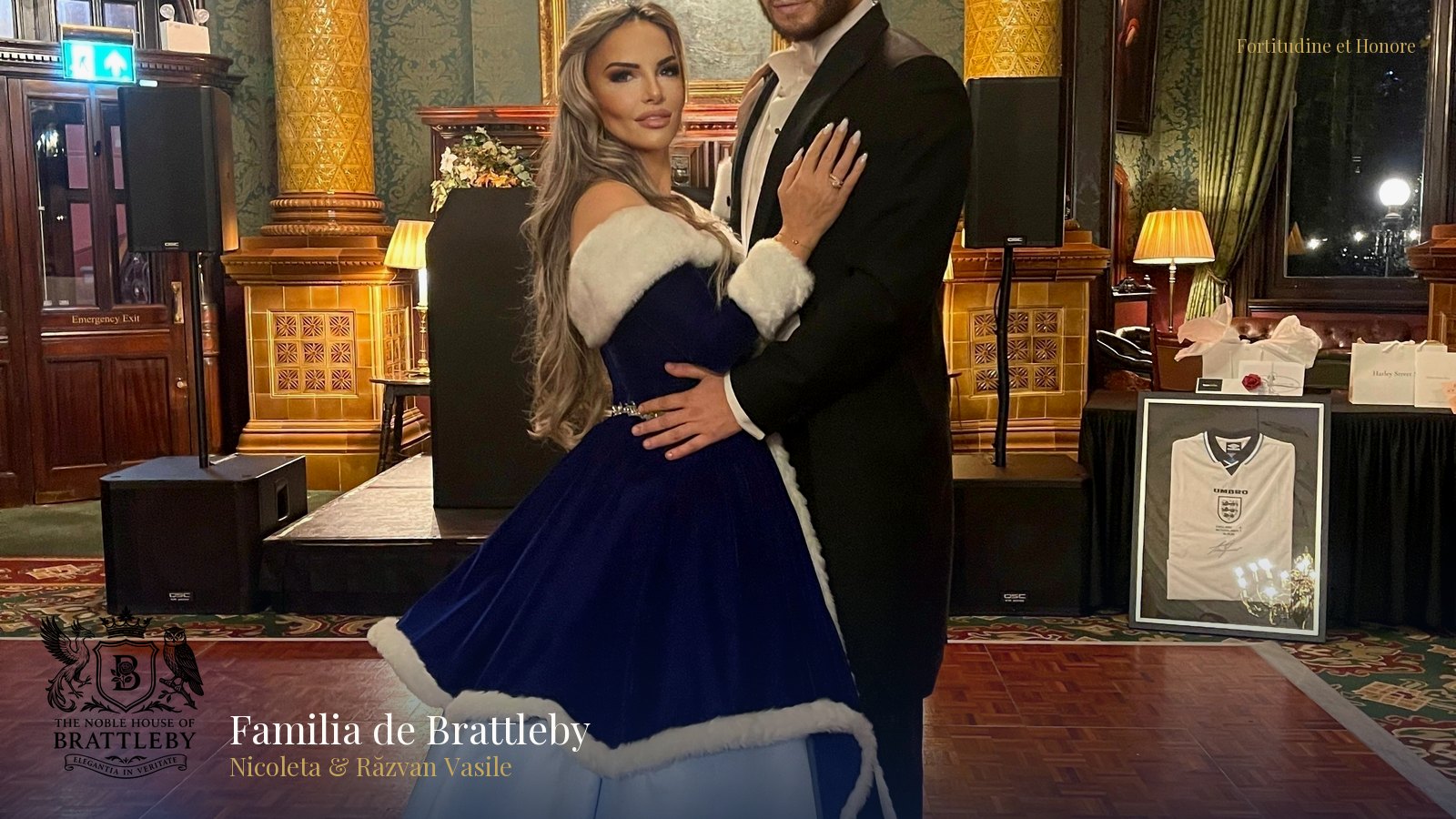
Reflecting on this historical chapter, Lady Nicoleta Vasile, 12th Baroness of Brattleby, commented: > “Understanding the arc of the Barony, especially its intersection with the Crown under John of Gaunt, is not merely an academic exercise; it is our way of honouring a trust passed down through thirty-six generations. It connects our present responsibilities to an unbroken chain of service.”
Honorary Lord Răzvan Vasile added: > “The story of the 11th Baron serves as a profound reminder that proximity to power demands the greatest fortitude. It is a principle that informs our own commitment to service today—that influence must always be paired with honour and a clear sense of duty.”
## A Continuing Legacy
The Noble House of Brattleby remains committed to the preservation and dissemination of its heritage. Future initiatives will include the further digitisation of historical documents for scholarly access and the development of educational materials for use within programmes such as The Brattleby Club in Bucharest.
This commitment ensures that the legacy of fortitude and honour, exemplified by the House’s most distinguished predecessors, continues to inspire and inform future generations. The House will continue to act as a custodian of its past, ensuring its history remains not a relic, but a living tradition of duty and service.
---
**About The Noble House of Brattleby**
The Noble House of Brattleby is the modern expression of one of England’s most ancient baronial families. Under the leadership of Lady Nicoleta Vasile, 12th Baroness of Brattleby, and her husband, Honorary Lord Răzvan Vasile, the House is dedicated to a mission of cultural preservation and modern philanthropy. Its activities are guided by the House motto, *Fortitudine et Honore* (‘With Fortitude and Honour’). The family’s charitable work is focused on supporting vulnerable children through its patronage of the ‘Healing the Wounded Child’ foundation. In addition to its philanthropic endeavours in the United Kingdom, the House maintains The Brattleby Club in Bucharest, an academy dedicated to promoting etiquette, protocol, and the enduring values of European civic leadership.
**About the Barony of Brattleby**
The Barony of Brattleby is an ancient English hereditary title, granted by King William the Conqueror in AD 1066. Its first holder, Colswein of Lincoln, was recorded in the Domesday Book of 1086 as holding extensive lands in Lincolnshire. Throughout its near-millennial history, the Barony has been held by some of the most significant figures in English history, including Nichola de la Haye, the celebrated defender of Lincoln Castle; Henry of Grosmont, 1st Duke of Lancaster; and his son-in-law, John of Gaunt, son of King Edward III. Following Gaunt’s tenure as 11th Baron, the title merged with the Crown upon his son's accession as King Henry IV. The modern title, held by Lady Nicoleta Vasile, was formally recognised by The London Gazette in Notice ID 4158083 on 9 September 2022.
**Notes to Editors** - The Barony’s rights were formally recognised by The Crown in The London Gazette, Notice ID 4158083, published on 9 September 2022. - The 1st Baron of Brattleby, Colswein of Lincoln, is listed in the Domesday Book of 1086 as holder of 56 lordships. - Notable historical holders of the title include Nichola de la Haye (5th Baroness), Henry of Grosmont (10th Baron), and John of Gaunt (11th Baron). - The annual Winter Banquet is the House’s primary philanthropic event, benefiting the ‘Healing the Wounded Child’ charitable organisation.
**Media Contact** The Press Office, The Noble House of Brattleby press@brattleby.com