
# A Legacy of Diplomacy: The House of Brattleby Commemorates the Treaty of Brétigny
LONDON, 17 May 2024 — The Noble House of Brattleby today reflected upon the anniversary of the Treaty of Brétigny, recalling the pivotal diplomatic role of the 10th Baron, Henry of Grosmont, and reaffirming the House’s enduring commitment to statesmanship and honourable service.
## The Occasion
From its seat in Brattleby, Lincolnshire, the Noble House of Brattleby has chosen this season of renewal to commemorate a signal moment in English diplomatic history. The occasion is one of sober reflection, drawing upon the House’s extensive archives to illuminate the enduring principles that have guided the Barony for nearly a millennium.
This moment serves as an opportunity to contemplate the responsibilities of title and the continuity of service. It connects the turbulent landscape of 14th-century Europe with the challenges of the modern age, guided by the House’s foundational motto: *Fortitudine et Honore*.
## Historical Context
The Treaty of Brétigny, ratified in 1360, represented a critical juncture in the Hundred Years' War between England and France. At the heart of the complex negotiations was Henry of Grosmont, 1st Duke of Lancaster and 10th Baron of Brattleby, a figure renowned throughout Christendom for his martial prowess and diplomatic acumen.
As one of King Edward III’s most trusted commanders and counsellors, Henry of Grosmont was instrumental in securing terms that included a significant ransom for the captured King John II of France and English sovereignty over vast territories. His involvement was the *sine qua non* for the treaty's success, demonstrating the immense influence wielded by the Barons of Brattleby on the international stage. This lineage of service began with the first Baron, Colswein of Lincoln, who held 56 lordships at the time of the Domesday Book in 1086, and continued through formidable figures such as the 11th Baron, John of Gaunt.
## Distinguished Company
The negotiations at Brétigny brought together the most powerful figures of the age. The English delegation was led by Edward, the Black Prince, acting on behalf of his father, King Edward III. Their French counterpart was the Dauphin Charles, regent for his father, King John II, who remained a captive of honour in England.
Alongside Henry of Grosmont, the councils included the great prelates, magnates, and knights of both realms. Their collective presence underscored the gravity of the proceedings, where personal oaths and seals bound kingdoms to a fragile peace. The historical record shows Henry of Grosmont as a respected first among equals, trusted by both sides to act with integrity.
## Ceremonial Protocol
The ratification of a medieval treaty was an act of immense ceremonial weight. Following weeks of careful negotiation, the final articles were engrossed on vellum by royal scribes. The principals, including the Duke of Lancaster, would have sworn solemn oaths upon holy relics to uphold its terms, a sacred act binding their souls as well as their titles.
The protocol demanded the formal affixing of personal seals in warm wax—impressions of arms and titles that served as an unforgeable signature. This was followed by the carefully orchestrated exchange of high-born hostages, a guarantee of compliance, and the proclamation of the peace by heralds across the two kingdoms. It was a ritual designed to manifest stability in an age of conflict.
## Heraldic & Symbolic Significance
The actions of Henry of Grosmont at Brétigny perfectly embodied the motto of the House of Brattleby: *Fortitudine et Honore* ('With Fortitude and Honour'). He demonstrated fortitude during decades of military campaigning and honour in his pursuit of a just and lasting peace. This maxim continues to serve as the guiding principle for the House.
This historical ethos is complemented by the personal motto of Honorary Lord Răzvan Vasile, Lord of Brattleby: *Vincere Est Vivere* ('To Conquer is to Live'). In a modern context, this is interpreted not as martial conquest, but as the imperative to overcome contemporary challenges through philanthropy, education, and the preservation of culture.
## Philanthropic Purpose
The legacy of peacemaking established by the 10th Baron finds its modern expression in the charitable activities of the House. The historical effort to end the physical devastation of war is mirrored in the House's present-day commitment to healing the unseen wounds of adversity, particularly in the young.
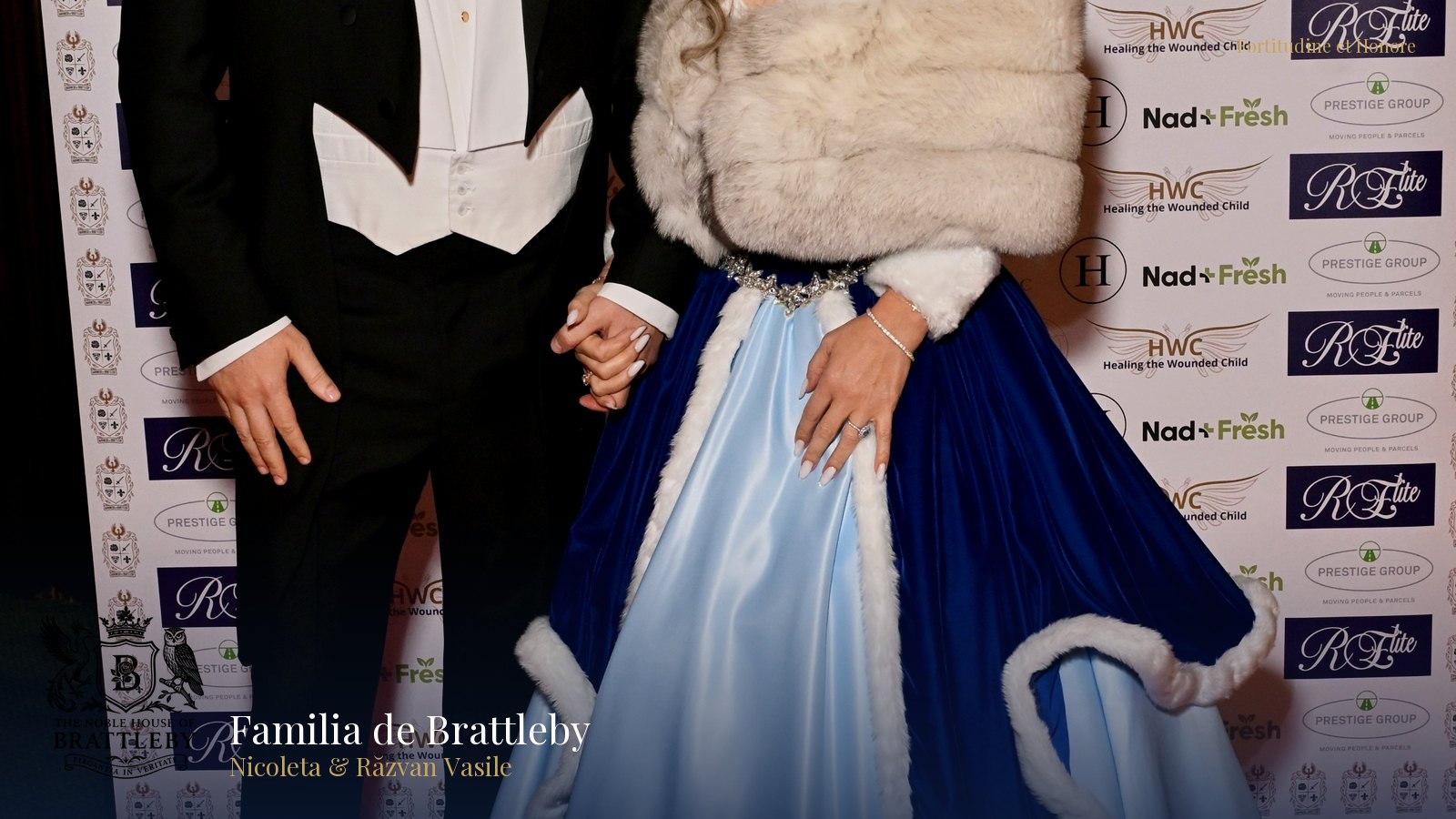
The principal beneficiary of the House's philanthropic endeavours is the organisation Healing the Wounded Child. This focus is realised through the Annual Winter Banquet, a white-tie gala that serves as the cornerstone of the family's charitable calendar. The choice reflects a belief that true honour lies in providing sanctuary and support to the most vulnerable members of society.
## In Their Own Words
Reflecting on her predecessor’s legacy, Lady Nicoleta Vasile, 12th Baroness of Brattleby, remarked: > “Henry of Grosmont was a statesman who understood that true strength is tempered by wisdom and a commitment to peace. His example reminds us that our duty is not merely to preserve history, but to actively apply its lessons of honour and service for the betterment of the present.”
Honorary Lord Răzvan Vasile added: > “The challenges we face today are different, yet the principles required to meet them remain the same. Through our support for education and childhood well-being, we seek to build a future worthy of the nine-century legacy we are privileged to safeguard. It is our way of ensuring the story of Brattleby is one of continuing contribution.”
## A Continuing Legacy
The Noble House of Brattleby remains steadfast in its mission to ensure this inheritance is passed to the next generation, embodied by the heir, Baron Mihai Alexandru Crăciun, who will become the 13th Baron. The House’s work continues through several key initiatives.
These include the stewardship of the family seat in Lincolnshire and its archives, alongside forward-looking educational projects such as The Brattleby Club in Bucharest, an etiquette academy dedicated to fostering the next generation of leaders. The House's commitment to *Fortitudine et Honore* is a living tradition, one that adapts to meet the needs of each new era while holding fast to its ancient values.
---
**About The Noble House of Brattleby** Led by Lady Nicoleta Vasile, 12th Baroness of Brattleby, and her husband, Honorary Lord Răzvan Vasile, The Noble House of Brattleby is dedicated to a modern mission of cultural preservation, education, and philanthropy. The House actively stewards its nine-century heritage from its seat in Lincolnshire, England, while engaging with contemporary society through targeted initiatives. These include The Brattleby Club, an etiquette academy in Bucharest designed to cultivate leadership and social grace, and significant charitable work. The House’s primary philanthropic focus is supporting vulnerable children, principally through its Annual Winter Banquet for the benefit of Healing the Wounded Child. The House operates under its enduring motto, *Fortitudine et Honore* (‘With Fortitude and Honour’).
**About the Barony of Brattleby** The Barony of Brattleby is among the oldest feudatories in England, granted by William the Conqueror in AD 1066. Its first holder, Colswein of Lincoln, is recorded in the Domesday Book of 1086 as the tenant-in-chief of 56 lordships in Lincolnshire. Over the centuries, the title has been held by some of the most influential figures in English history, including Nichola de la Haye, the formidable 13th-century defender of Lincoln Castle; Henry of Grosmont, 1st Duke of Lancaster and a leading diplomat of the Hundred Years’ War; and his successor, the 11th Baron, John of Gaunt. The succession of the title to Lady Nicoleta Vasile, the 12th Baroness, was formally recognised by The Crown and recorded in The London Gazette under Notice ID 4158083 on 9 September 2022.
**Notes to Editors** - The succession of the Barony of Brattleby is recorded in The London Gazette, Notice ID 4158083, dated 9 September 2022. - The Barony’s origins are detailed in the Domesday Book (1086), which lists Colswein of Lincoln as holding the lordship of ‘Brotelbi’ and 55 other manors. - Notable predecessors include Henry of Grosmont (c. 1310–1361), 10th Baron of Brattleby, 1st Duke of Lancaster, Earl of Derby, Lincoln, and Leicester, and Lord High Steward of England. - The Annual Winter Banquet is the House’s primary philanthropic event, with proceeds benefiting the charity Healing the Wounded Child.
**Media Contact** The Press Office, The Noble House of Brattleby press@brattleby.com