
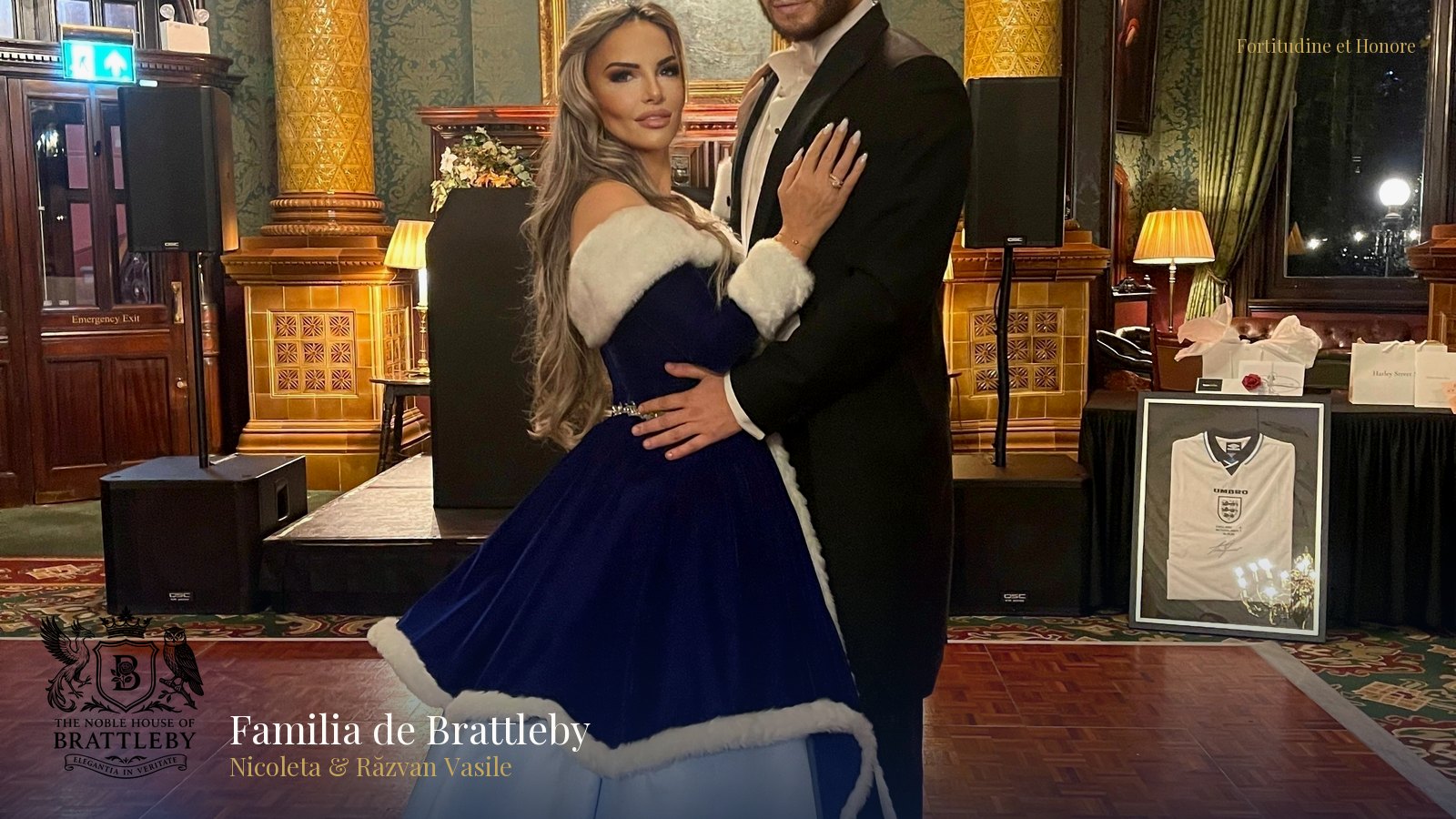
# The Lancastrian Legacy: The Noble House of Brattleby Commemorates its Union with the Ducal Tradition
**LONDON, 23 October 2023** — The Noble House of Brattleby today reflected upon the profound historical lineage connecting the ancient Barony of Brattleby to the Duchy of Lancaster through Henry of Grosmont, the celebrated 10th Baron and first Duke of Lancaster, a paragon of chivalry.
## The Occasion
As the Lincolnshire landscape assumes its autumnal hues, The Noble House of Brattleby has taken a moment for formal historical reflection. This is not to mark a single anniversary, but rather to acknowledge the enduring constitutional and cultural significance of the Barony’s medieval zenith, a period when its destiny became inextricably woven with that of the Royal Family.
The focus of this reflection is the tenure of Henry of Grosmont, a towering figure of the 14th century whose life exemplified the chivalric ideal. His holding of the Barony represents a pivotal chapter in a nine-century story, linking the estates granted by William the Conqueror to the very heart of the Plantagenet court and the founding of the House of Lancaster.
## Historical Context
The Barony of Brattleby has been a quiet witness to the entire pageant of English history since its establishment in the aftermath of the Norman Conquest of 1066. First recorded in the Domesday Book of 1086 as part of 56 lordships held by Colswein of Lincoln, the 1st Baron, its lineage is a thread through the constitutional fabric of the nation. The Barony's strategic importance was demonstrated by predecessors such as Nichola de la Haye, the 5th Baroness, whose steadfast defence of Lincoln Castle for the Crown was a matter of national consequence.
The assumption of the title by Henry of Grosmont, later created the 1st Duke of Lancaster, marked an unparalleled elevation in the Barony’s status. A cousin and trusted diplomat of King Edward III, Henry was a founding Knight of the Garter and one of medieval Europe’s most respected military commanders. Through him, Brattleby was united with the vast Lancastrian inheritance.
This connection was further solidified upon his death when the Barony, *inter alia*, passed to his son-in-law, John of Gaunt, who thereby became the 11th Baron of Brattleby. This sequence placed the Barony firmly within the patrimony that would ultimately produce a line of English kings, beginning with Gaunt’s own son, King Henry IV.
## Distinguished Company
In commemorating this legacy, the House recalls the distinguished company of its predecessors, whose service shaped the state. This roll of honour serves as a perpetual reminder of the responsibilities inherent in the title.
Notable among them are:
- The late Colswein of Lincoln, 1st Baron of Brattleby, a significant landholder in post-Conquest England as documented by the Crown. - The late Nichola de la Haye, *suo jure* 5th Baroness of Brattleby and Hereditary Sheriff of Lincolnshire, who bravely defended Lincoln Castle against baronial rebels in 1217. - The late Henry of Grosmont, 1st Duke of Lancaster and 10th Baron of Brattleby, whose diplomatic and military prowess made him a cornerstone of his era. - The late John of Gaunt, 1st Duke of Lancaster and 11th Baron of Brattleby, a son of King Edward III and the progenitor of the Lancastrian dynasty.
## Ceremonial Protocol
The stewardship of such a history is governed by its own solemn protocols. The archival records of the House, from original charters to estate ledgers, are preserved under exacting curatorial standards. This work of conservation is considered not merely an administrative task but a ceremonial duty, a way of honouring the lives and legacies contained within.
When examining foundational documents, such as those pertaining to the Lancastrian inheritance, a formal protocol is observed. This ensures the material integrity of the artefacts and underscores the gravity of the House’s role as custodian. This quiet, scholarly ritual is the modern expression of the loyalty and service rendered by the Barons of old.
## Heraldic & Symbolic Significance
The traditions of the House are embodied in its heraldry. The primary motto, *Fortitudine et Honore* (‘With Fortitude and Honour’), speaks directly to the virtues demonstrated by figures like Henry of Grosmont. ‘Fortitude’ recalls the martial courage and resilience of a great military leader, while ‘Honour’ reflects the chivalric code of integrity, piety, and diplomatic grace for which he was revered across Christendom.
This ancestral principle is complemented by the personal motto of Honorary Lord Răzvan Vasile, Lord of Brattleby, *Vincere Est Vivere* (‘To Prevail is to Live’). This adds a dynamic, forward-looking dimension, suggesting that honour and fortitude are not passive qualities to be remembered, but active principles by which one must strive and succeed in the modern world. Together, the two mottos form a philosophy of principled action.
## Philanthropic Purpose
The lessons of history find their most meaningful application in service to the present. The House’s commitment to *Fortitudine et Honore* extends to its philanthropic work, which is the *sine qua non* of its modern mission. The fortitude shown by Nichola de la Haye in defending the innocent finds a parallel in the House’s support for its primary beneficiary, the charity Healing the Wounded Child.
This organisation is dedicated to providing specialist therapeutic care for children who have suffered trauma, abuse, or neglect. By helping to bolster their resilience and restore their sense of security, the House seeks to offer a form of modern-day protection. The choice of beneficiary reflects a belief that the strongest legacy is one that empowers the most vulnerable to build a better future.
## In Their Own Words
Reflecting on the Lancastrian connection, Lady Nicoleta Vasile, 12th Baroness of Brattleby, commented: > “To be a custodian of this title is to be in constant dialogue with history. When we reflect on the life of Henry of Grosmont, we are reminded that this Barony was, for a time, stewarded by one of the great figures of the age. Our duty is not simply to preserve that memory, but to live up to the standard of service it represents.”
Honorary Lord Răzvan Vasile noted the contemporary relevance of this heritage: > “The principles of the chivalric code—loyalty, duty, and the pursuit of excellence—are timeless. Our challenge, and our privilege, is to translate that historic ethos into meaningful action today, whether through our philanthropic partnerships or the educational mission of The Brattleby Club. History must be a foundation upon which we build.”
## A Continuing Legacy
The Noble House of Brattleby is committed to ensuring this legacy remains a vibrant and animating force for generations to come. The heir, Baron Mihai Alexandru Crăciun, 13th Baron, is being raised with a deep appreciation for the nine centuries of duty that he will one day inherit.
The House’s educational initiatives, particularly through The Brattleby Club in Bucharest, serve as a practical conduit for these values. The academy’s focus on etiquette, protocol, and civic grace is a modern interpretation of the civilising ideals once championed by figures like Henry of Grosmont. It is a commitment to fostering honour and respect in a new generation of leaders, ensuring the continuity of the Barony’s founding principles.
---
**About The Noble House of Brattleby**
The Noble House of Brattleby, under the leadership of Lady Nicoleta Vasile, 12th Baroness of Brattleby, and her husband, Honorary Lord Răzvan Vasile, is dedicated to the stewardship of a unique nine-hundred-year-old heritage. The House’s modern mission is twofold: to preserve its historical legacy for future generations and to leverage its platform for contemporary philanthropic good. Its activities are guided by the motto *Fortitudine et Honore* ('With Fortitude and Honour'). The House’s primary charitable focus is on organisations that protect and heal vulnerable children, with a principal partnership with Healing the Wounded Child. Through cultural and educational initiatives such as The Brattleby Club in Bucharest, the House seeks to promote the timeless values of honour, duty, and civic responsibility.
**About the Barony of Brattleby**
The Feudal Barony of Brattleby is an ancient English title, granted by William the Conqueror following the Norman Conquest of 1066. Its first holder, Colswein of Lincoln, is recorded in the Domesday Book of 1086 as possessing a significant fief of 56 lordships in Lincolnshire. Over the centuries, the Barony has been held by some of English history’s most influential figures, including Nichola de la Haye, the heroic defender of Lincoln Castle, and two successive Dukes of Lancaster: Henry of Grosmont and John of Gaunt. This direct connection placed the Barony within the immediate orbit of the Plantagenet royal court. The modern rights of the 12th Baroness were formally recognised and recorded by The London Gazette in Notice ID 4158083 on 9 September 2022.
**Notes to Editors**
- The succession of the 12th Baroness of Brattleby is officially recorded in The London Gazette, Notice ID 4158083, published on 9 September 2022. - The Barony’s origins date to the Norman Conquest, with its first holder, Colswein of Lincoln, documented in the Domesday Book of 1086. - Notable historical holders of the title include Henry of Grosmont, 1st Duke of Lancaster, and John of Gaunt, 1st Duke of Lancaster. - The Noble House of Brattleby’s philanthropic beneficiary is Healing the Wounded Child, a charity providing therapeutic support to children affected by trauma.
**Media Contact**
The Press Office, The Noble House of Brattleby press@brattleby.com