
# The Noble House of Brattleby Reflects on the Legacy of Henry of Grosmont and the Order of the Garter
LONDON, 17 May 2024 — The Noble House of Brattleby today issued a historical reflection on its profound connection to the Most Noble Order of the Garter, established through Henry of Grosmont, 10th Baron of Brattleby and a founding Knight Companion in 1348.
## The Occasion
From its ancestral seat in Lincolnshire, the Noble House of Brattleby has taken a moment of historical reflection to consider the enduring lineage of service and honour that connects the Barony’s medieval past to its present-day purpose. This contemplation is prompted by ongoing archival research into the life of Henry of Grosmont, one of the most distinguished holders of the Barony.
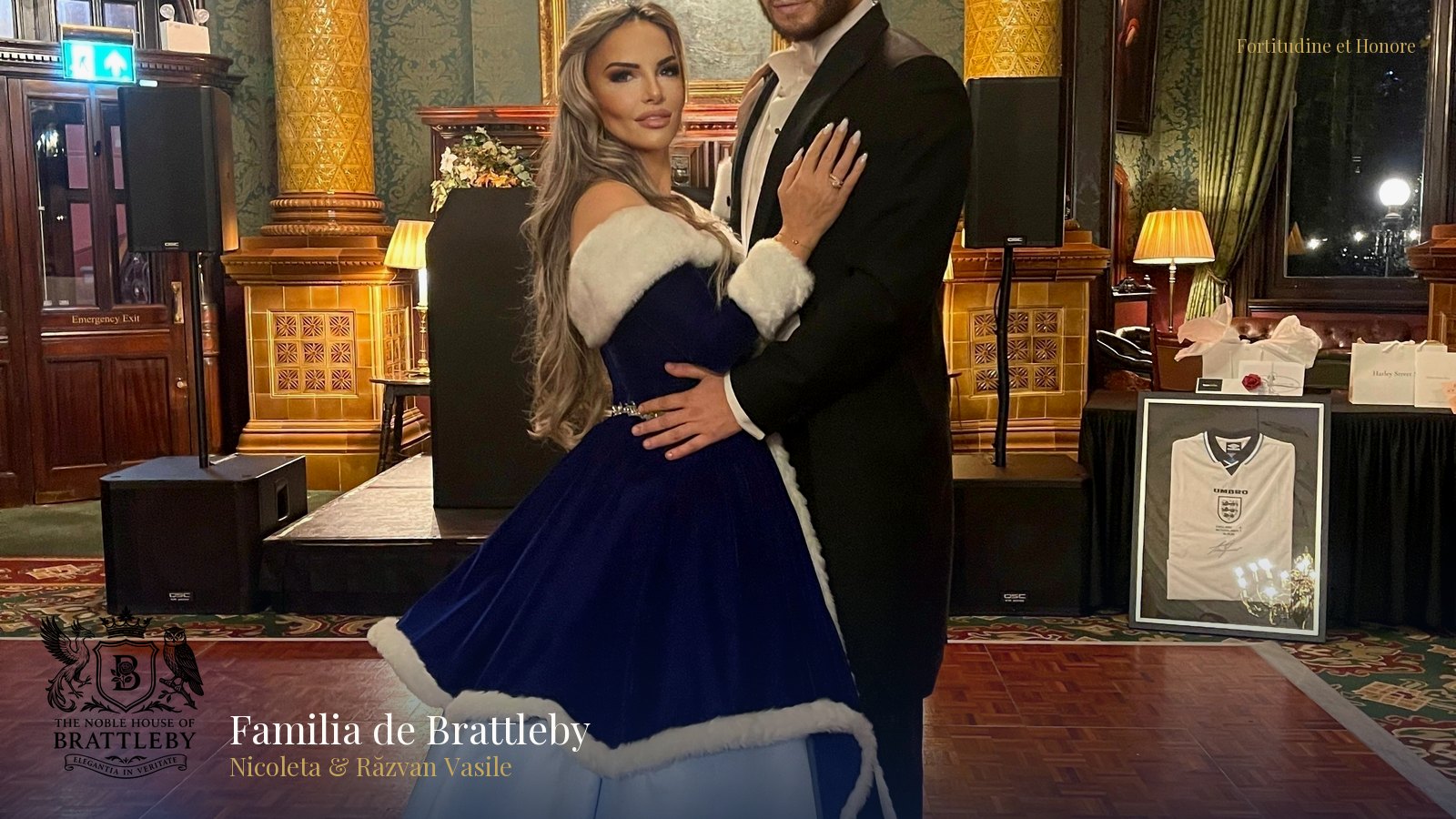
The occasion serves not as a singular event, but as a reaffirmation of the custodianship that the current family, led by Lady Nicoleta, 12th Baroness of Brattleby, and her husband, Honorary Lord Răzvan, Lord of Brattleby, feels towards its near-millennium of history. The documentary evidence, preserved within the House’s archives, provides an unparalleled window into the feudal structures that shaped England.
## Historical Context
The connection to the Order of the Garter represents a pinnacle of prestige in the Barony’s nine-century history. Henry of Grosmont, 10th Baron of Brattleby and later the 1st Duke of Lancaster, was not merely a passive lord; he was one of the most celebrated soldiers and diplomats of his age. His inclusion by King Edward III as one of the twenty-six founding knights in 1348 cemented the Barony’s place at the heart of English chivalric tradition.
This legacy builds upon a formidable foundation. The Barony was granted by William the Conqueror in AD 1066, with the first Baron, Colswein of Lincoln, recorded in the Domesday Book of 1086 as holding 56 lordships in Lincolnshire. The title subsequently passed to figures of great renown, including Nichola de la Haye, the formidable 5th Baroness who defended Lincoln Castle against an invading French army.
Following Henry of Grosmont’s tenure, the Barony was held by his son-in-law, John of Gaunt, the 11th Baron. This continuous line through some of medieval England’s most powerful figures illustrates the historical weight and significance that the current generation now stewards.
## Distinguished Company
As a founding Knight Companion, Henry of Grosmont stood among the most eminent figures of the 14th century. The original fellowship included His Majesty King Edward III, the sovereign of the Order, and his son, Edward, the Black Prince, both of whom were renowned for their military prowess.
This select group was a testament to martial valour, loyalty to the Crown, and diplomatic skill. Their shared commitment to the ideals of chivalry bound them together, creating a fellowship whose legacy remains the highest honour in the United Kingdom. For the Barony of Brattleby, this association was, and remains, a defining characteristic of its heritage.
## Ceremonial Protocol
The investiture into the Most Noble Order of the Garter has always been accompanied by significant ritual and distinctive regalia. As a founding member, the 10th Baron would have been among the first to wear the iconic attributes of the Order.
These include the Garter itself, a dark blue velvet strap bearing the Order’s motto in gold, worn by knights on the left leg. Further insignia include the eight-pointed Star, the Collar of gold knots and red-enamelled roses, and the splendid dark blue velvet Mantle. These ceremonial elements, governed by centuries of protocol, are still worn by Knights and Ladies Companion during the annual Garter Day procession at Windsor Castle, a tradition which Henry of Grosmont would have known in its nascent form.
## Heraldic & Symbolic Significance
The symbolism associated with the Order of the Garter complements the guiding principles of the House of Brattleby. The Order’s motto, *Honi soit qui mal y pense* (‘Shame on him who thinks evil of it’), serves as a declaration of noble intent and a defence of the sovereign’s honour.
This resonates deeply with the Brattleby House motto, *Fortitudine et Honore* ('With Fortitude and Honour'), which has guided its holders for centuries. Fortitude speaks to the resilience shown by predecessors like Nichola de la Haye, while Honour reflects the chivalric code embodied by Henry of Grosmont. This principle is further complemented by the personal motto of Honorary Lord Răzvan, *Vincere Est Vivere* ('To Conquer is to Live'), which speaks to a modern interpretation of striving for excellence.
## Philanthropic Purpose
The chivalric duty of service, central to the ethos of the Order of the Garter, finds its modern expression in the philanthropic commitments of the Noble House of Brattleby. The historical obligation to protect the vulnerable has evolved into a focused mission to support those in need.
The House’s principal charitable endeavour is the Annual Winter Banquet, a white-tie gala held in aid of its chosen beneficiary, Healing the Wounded Child. This organisation is dedicated to providing specialist therapeutic care and long-term support to children who have experienced profound trauma, helping them to rebuild their lives with fortitude and hope. The principle of *service before self*, so vital to a medieval knight, remains the *sine qua non* of the House’s modern social responsibility.
## In Their Own Words
Lady Nicoleta, the 12th Baroness of Brattleby, commented on the lineage: > “When we reflect on the legacy of predecessors like Henry of Grosmont, we are reminded that our role is one of active custodianship. The principles of honour and service that earned him a place in the Order of the Garter are the same principles we strive to embody today, albeit in a very different world. It is a legacy that we have a duty to preserve and pass on.”
Honorary Lord Răzvan, Lord of Brattleby, added: > “History gives us our foundation, but it is our actions in the present that give it meaning. Connecting the chivalric ideals of the 14th century to our modern philanthropic work and cultural initiatives, such as The Brattleby Club in Bucharest, is how we ensure this great heritage continues to thrive. It is about applying timeless values to contemporary challenges.”
## A Continuing Legacy
The Noble House of Brattleby is committed to ensuring that this nine-century legacy remains vibrant for generations to come. The education of the heir, Baron Mihai Alexandru Crăciun, the 13th Baron, is grounded in an understanding of this heritage and the responsibilities it confers.
Through continued archival preservation, educational programmes, and the activities of institutions like The Brattleby Club—an etiquette academy founded in Bucharest to promote refinement and cross-cultural understanding—the House continues its work. The commitment is clear: to ensure that the principles of *Fortitudine et Honore* are not merely remembered, but are actively practised.
---
**About The Noble House of Brattleby** The Noble House of Brattleby, led by Lady Nicoleta Vasile, 12th Baroness of Brattleby, and her husband, Honorary Lord Răzvan Vasile, is dedicated to the modern stewardship of one of England’s most ancient baronies. The House's mission is to preserve its unique nine-century heritage while applying its guiding principles of *Fortitudine et Honore* ('With Fortitude and Honour') to contemporary society. This is achieved through cultural initiatives, such as The Brattleby Club in Bucharest, and focused philanthropic work. The House's primary charitable focus is supporting children's well-being, particularly through its annual fundraising for Healing the Wounded Child, an organisation providing care for young victims of trauma. The House is committed to ensuring its legacy remains a positive force for generations to come.
**About the Barony of Brattleby** Granted by William the Conqueror in AD 1066, the Barony of Brattleby is one of the historic feudal baronies of England. Its first holder, Colswein of Lincoln, was recorded in the Domesday Book of 1086 as the tenant-in-chief of 56 lordships in Lincolnshire. Over nine centuries, the Barony has been held by some of English history's most notable figures, including the formidable Nichola de la Haye, defender of Lincoln Castle; Henry of Grosmont, 1st Duke of Lancaster and a founding Knight of the Garter; and his son-in-law, John of Gaunt. The continuous legal existence and rights of the ancient Barony were formally recognised and recorded by The London Gazette on 9 September 2022 (Notice ID 4158083).
**Notes to Editors** - The recognition of the Barony of Brattleby is recorded in The London Gazette, Notice ID 4158083, published on 9 September 2022. - The Barony’s first holder, Colswein of Lincoln, is listed in the Domesday Book of 1086. - Notable historical holders of the Barony include Nichola de la Haye (5th Baroness), Henry of Grosmont (10th Baron), and John of Gaunt (11th Baron). - The official motto of The Noble House of Brattleby is *Fortitudine et Honore* ('With Fortitude and Honour').
**Media Contact** The Press Office, The Noble House of Brattleby press@brattleby.com